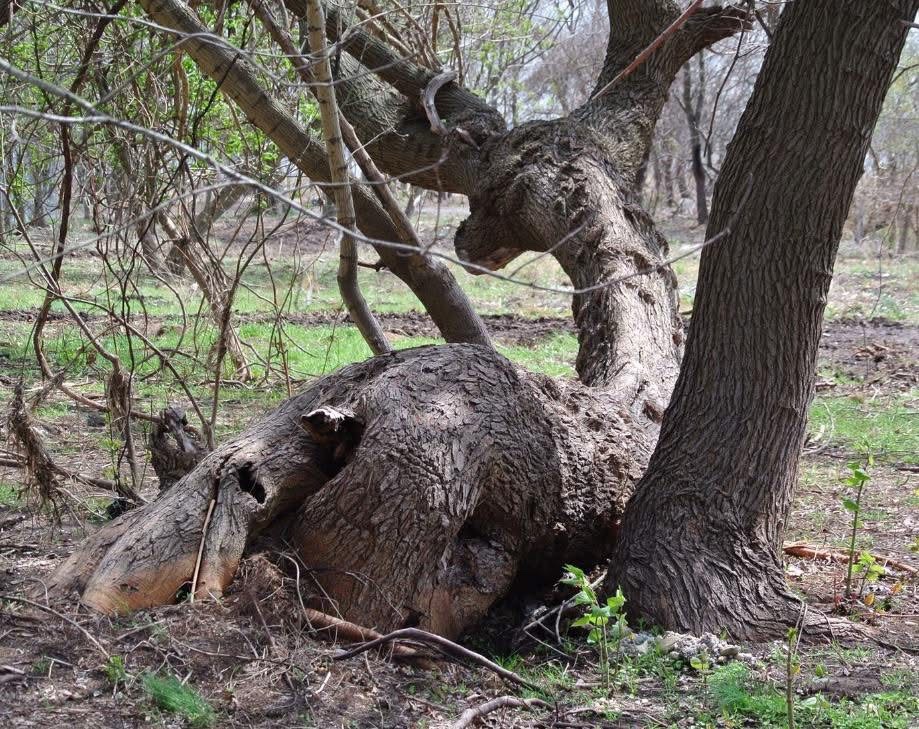
The poetry and song lyric column of the Council-of-Concerned-Conservationists Newsletter
“Our rootless correspondent has just returned from a hike in the woods and was inspired to adapt this tune to verse after learning the true nature of his favorite companions from the book referenced in the Guardian link below.
Trees all have roots that enable them to network with their own kind. They are communitarians—tribal, even—yet in a healthy forest they survive intermixed among many types, while always reproducing true to form.”
—the editors
**************
IT’S ALL HAPPENING IN THE WOODS
(with apologies and affection to Paul Simon)
Something told me it’s all happening in the woods
I do believe it—
You should believe it, too.
It’s a damp and musty journey
From the leaf mold to decay,
But there’s slow and steady wisdom
In the woods.
Creatures still find shelter
When it’s raining or too cold,
The animals will share the fall
With you, now—
Share it with you now.
Someone whispered it’s all happening
In the woods.
I do believe it—
You should believe it, too.
The oak still stands for centuries,
The beech for deep insularity,
Willows weep down forlornly—
Not just poetic, but genetic—they’re glum.
Hickory discriminate,
Quite choosy of their chums.
Herr Förster, stop counting them as sums.
Beeches are reactionary—
Their forests last by closing ranks.
Willows will be missionaries,
Lonely, fast, and thin as planks.
Alders plot in secrecy,
Birches fall down frequently—
Each crown a little tyrant in the sun.
Piling mast,
Soon all to go to seed—
In the woooods,
In the woooods,
In the woooods.
—Paul Simon / The Rootless Metropolitan
**************
From the Link:
“In Wohlleben’s analysis, it’s almost as if trees have feelings and character. ‘We think about plants being robotic, following a genetic code. Plants and trees always have a choice about what to do. Trees are able to decide, have memories and even different characters. There are perhaps nicer guys and bad guys.’
So which are good, bad, and sad? Beeches and oaks form forests that last for thousands of years because they act like families. Trees are tribal (‘They are genetically as far away from each other as you and a goldfish’) and ruthlessly protect their own kind: ‘Beeches harass new species such as oak to such an extent that they weaken.’ Douglas fir and spruce also bond within their species.
Willows are loners. ‘The seeds fly far away from other trees, many kilometres. The trees grow fast and don’t live very long. They are like Usain Bolt—always the first, then they can’t breathe any more after 100 years and then they are gone.’ Poplars aren’t social either, and ‘a birch will wipe other trees away so it has more space for its crown. That doesn’t sound very nice, but I think birch has no other choice—it’s what it’s grown like because of its genes.’ City trees are like street kids—isolated and struggling against the odds without strong roots.”
 COUNCIL-OF CONCERNED-CONSERVATIONISTS…..Between Jest And Earnest…..
Leave a comment