Council-of-Concerned-Conservationists Newsletter
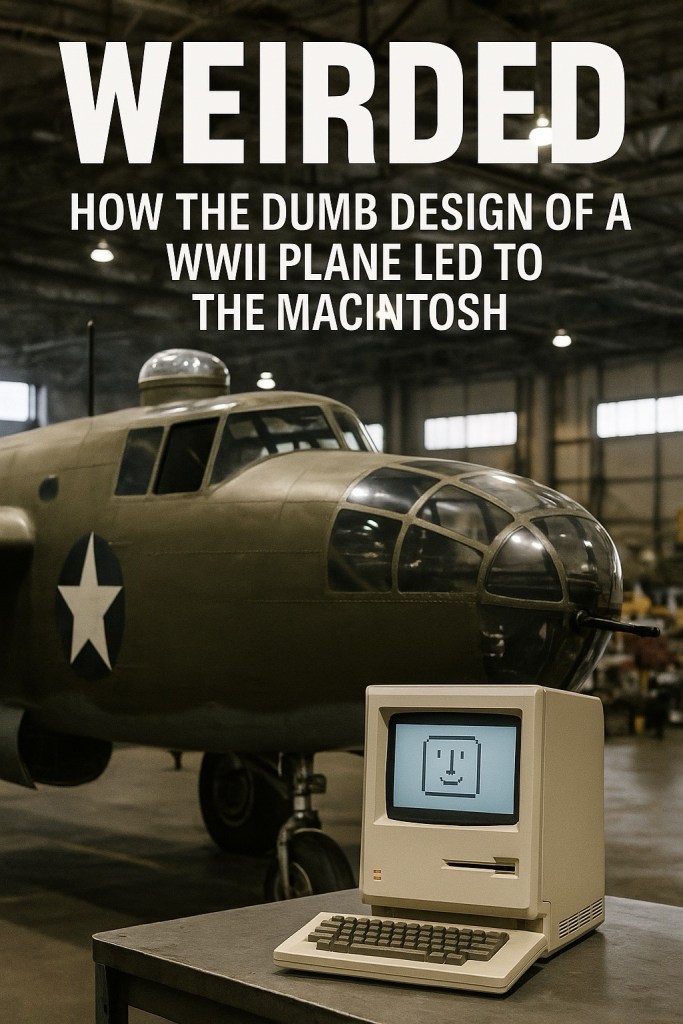
Once again, we found ourselves unsure how to classify the following story. Should it fall under LOST IN THE DETAILS, the science and tech column by Dr. Nate Chaural and his assistant, Phil Owsiever? Or does it belong in Sgt. Pepe’s Lonely Hearts Club Bund, our romance and relationship advice column?
Some of the smaller minds among us—those who can’t zoom out to see the bigger schematic—suggested handing it off to WHIZZBANG: Tech Talk from the C-of-C-C Perspective, our gadget gossip bureau. But our Editor, from his second-story perch, decided to take it on himself.
⸻
“It may have started as user-friendly. That’s not the relationship anymore.”
While contemplating the WIRED article, we were reminded of McLuhan’s eerie foresight:
“Man becomes the sex organ of the machine-world, just as the bee is to the plant world, enabling its reproduction and evolution… The electric age simply makes this union visible. In earlier times, man extended his body with tools—partial, fragmentary extensions. Now, with electronic technology, he wears his brain outside his skull, his nerves outside his skin. New tech breeds new man… A recent cartoon showed a child telling his baffled mother, “I’m going to be a computer when I grow up.” Humor is often prophecy.”
— Essential McLuhan, pp. 264–265
It’s not quite a love affair anymore—more like a pet relationship. You think the dog is yours, but it has you. You feed it. Clean up after it. Obey its bark. Likewise, we house and serve our machines. And they—like well-trained terriers—shape us.
Will machines one day truly own us? Perhaps. Or maybe that’s just evolution’s next joke: in a future filled with smog and waste, the breathable species might be silicon-based.
But as McLuhan reminds us, the truth doesn’t have to be beautiful or terrifying. Sometimes, it’s just funny. And that’s the scariest part.
—J. St. E.
⸻
Selected Passages from WIRED:
“Since computers are so smart, wouldn’t it make more sense to teach them about us, instead of the other way around?”
“… When new gadgets make assumptions about how we behave, they force unseen choices upon us. They don’t merely defer to our desires. They shape them.”
“… Friction has value: it makes us question whether we do in fact need the thing we want. Friction is the path to introspection. Infinite ease becomes the path of least resistance; it saps our free will. We must become cannier, more critical consumers of the user-friendly world. Otherwise, we risk blundering into more crashes—ones we’ll only understand after the worst has already happened.”
**************
Source:
 COUNCIL-OF CONCERNED-CONSERVATIONISTS…..Between Jest And Earnest…..
Leave a comment