NOMINATIVE DETERMINISM,
or
NAMING IS DESTINY
The “EErie” Canal ran straight through the Burned-Over District—turning a trade route into a highway for revivals, radicals, and ideas that set America’s hair on fire
**************
**************
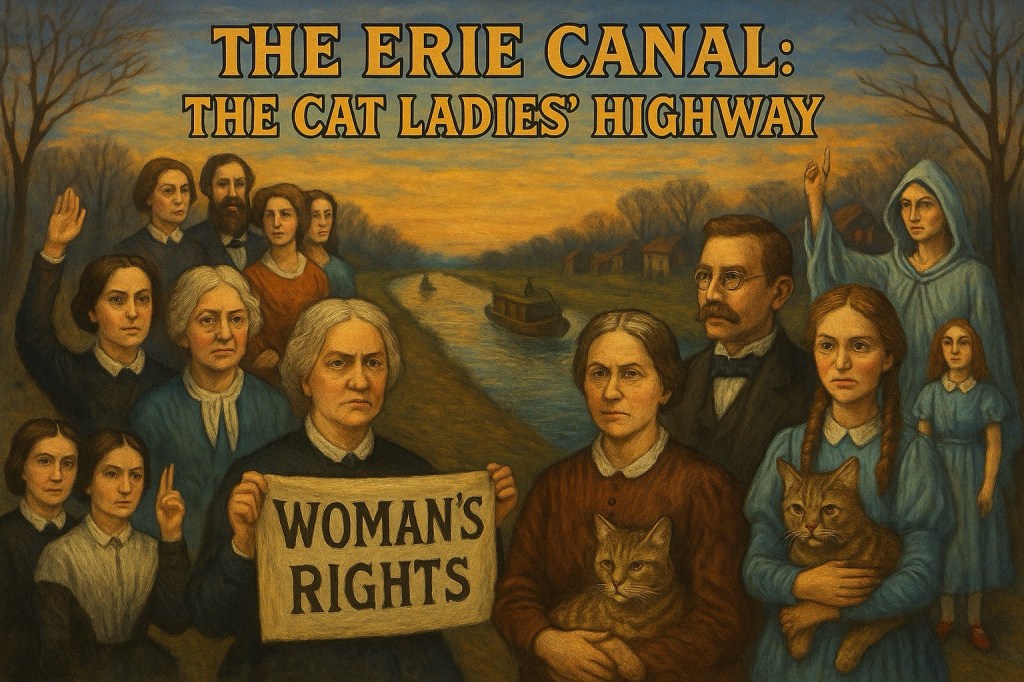
The name “Erie” traces back to the Iroquois word erielhonan, meaning “long tail,” inspired by the Eastern cougar that once roamed the region. The Erie people were associated with cats — fitting, perhaps, given the region’s eventual legacy as a breeding ground for what could be called the original “cat ladies” of social upheaval.
This area, known as the Burned Over District due to its endless waves of spiritual revivals, gave rise to a radical cultural shift — one that’s had far-reaching, and arguably corrosive, consequences.
Let’s connect the dots: the Erie Canal wasn’t just a trade route. It became a corridor of ideology, transporting not only goods but ideas that disrupted traditional values. The canal cut through the heart of this “Crucible of Ferment,” fueling movements that flipped social norms upside down.
It started innocuously enough — the Fox Sisters with their table rapping séances, sparking the spiritualist craze. From there, things spiraled. Seneca Falls birthed the women’s rights movement, an event that seemed noble on the surface but planted seeds of discord. The Shakers, Oneida Community, Mormons, and the Society of Universal Friends — all sprouted from this same strange soil, each pushing unconventional (some would say unnatural) views of gender roles, marriage, and family.
The feminists, led by figures like Elizabeth Cady Stanton and Susan B. Anthony, weren’t satisfied with advocating for basic legal equality. Their rhetoric became increasingly anti-family and anti-male, positioning men not as partners, but as oppressors. The traditional family unit — the backbone of civilization — started to erode.
L. Frank Baum, author of The Wizard of Oz, was yet another product of this region’s influence. His mother-in-law, Matilda Joslyn Gage, was a radical suffragist who rejected not just male authority but religious authority as well. Baum’s Oz? A fantasy world ruled by powerful women, while the male characters are weak or foolish. Coincidence? Maybe not.
What’s the end result of this canal-driven social experiment? Look around. The modern world reflects the chaotic echoes of this era: fragmented families, disillusioned men, and an epidemic of lonely, unfulfilled women who were promised empowerment but found emptiness instead.
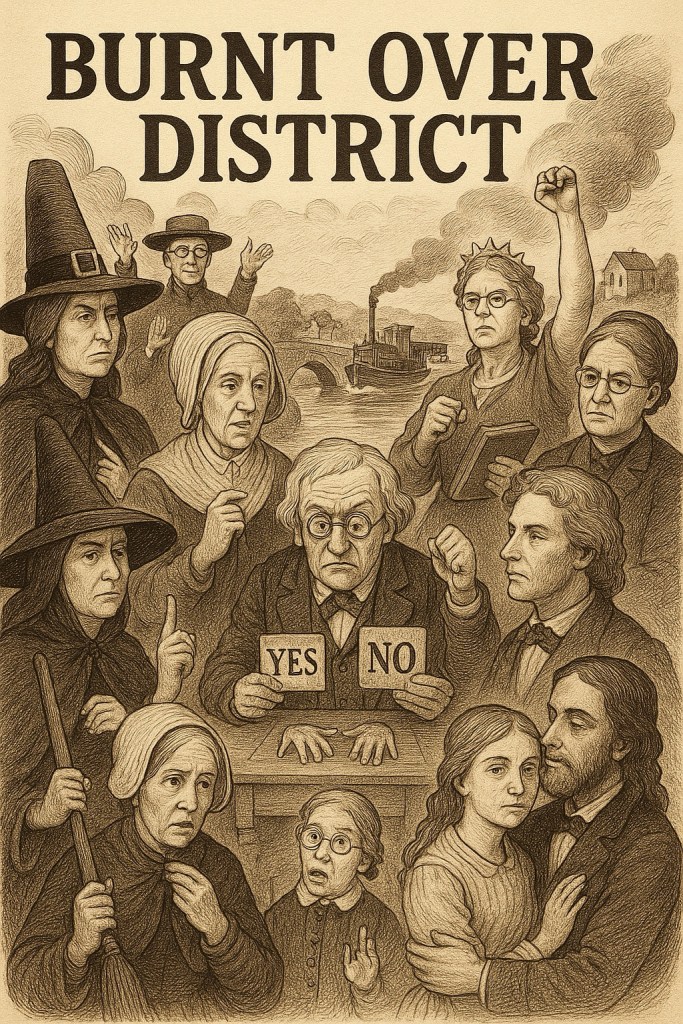
And the irony? The region’s name foretold it all. Erie — or should we say Eerie — indeed. What began as a highway for commerce became a highway for cultural upheaval, leaving us with a society that feels increasingly strange, unsettled, and unmoored from its roots.
NOMEN EST OMEN. The name was a warning. We just didn’t listen.”
—Eugene Bodeswell, C-of-C-C Ethnographer
 COUNCIL-OF CONCERNED-CONSERVATIONISTS…..Between Jest And Earnest…..
Leave a comment