A DICTIONARY WITHOUT BORDERS
Cultural Autopsy and Semantic Drift Watch
By Anna Graham, Language Arts, Puzzles, and Word Games Correspondent
[Interior: Council reading room. A game of Scrabble lies abandoned mid-round. Someone has just played “REALPOLITIK” across a triple word score. But we are not playing this game.]
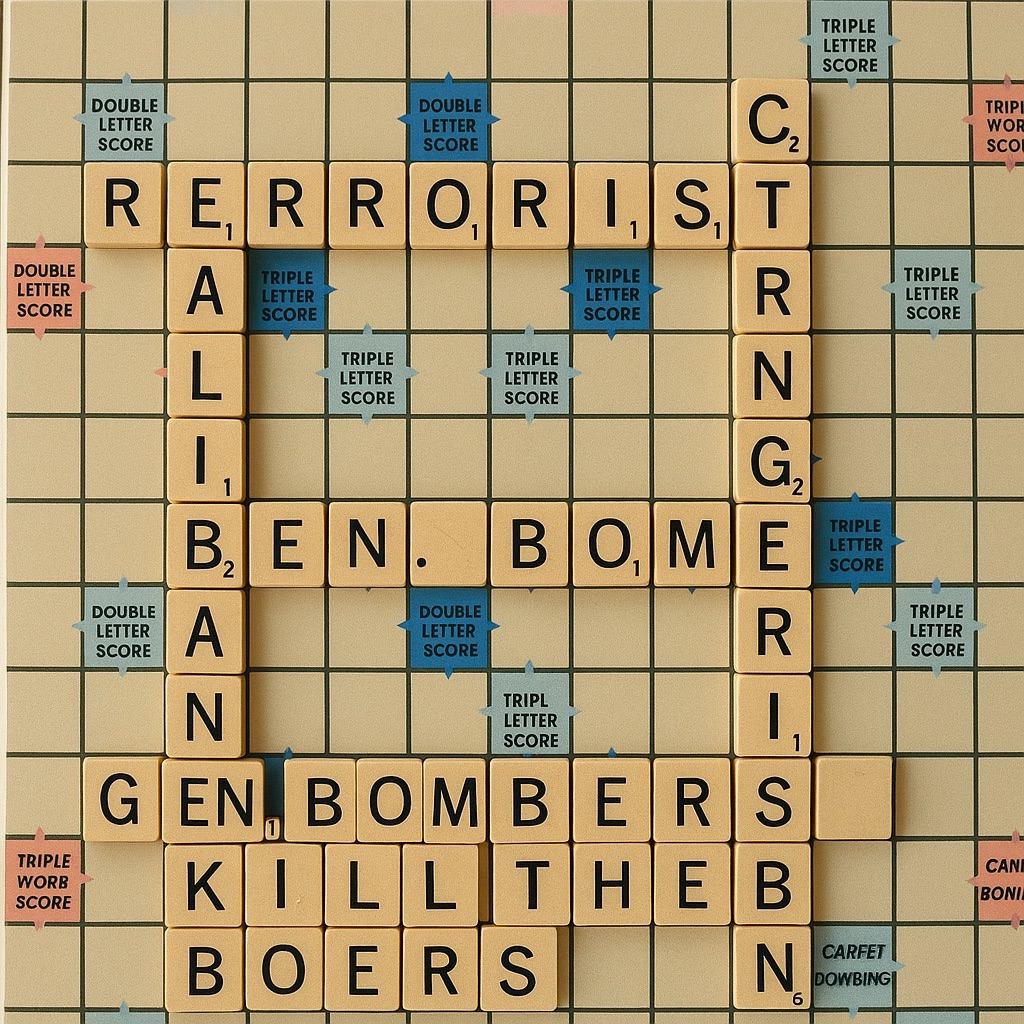
For now, it still can’t spell for beans—and in the Realpolitik of Scrabble, we reserve our deepest contempt for those who misspell in public. Power can be forgiven. Orthography cannot.—Anna Graham
You’ve heard the line—“A dialect is a language without an army and a navy.” It’s been pinned to everyone from linguist Max Weinreich[1] to streetwise wits with a copy of The Economist. But this week, I had to revise the maxim for international affairs:
“A terrorist is just a government without a press pass and a landing strip.”
News broke that the U.S. government may remove the Taliban from its list of Foreign Terrorist Organizations. The reasoning? They now run a country. Never mind that their tactics, ideology, and love of public executions remain intact—once you’re in charge of the electrical grid and wear matching fatigues, the semantic tide turns. One man’s roadside bomb becomes another man’s Ministry of Transportation.
“United States reviewing whether to designate the Taliban as a “foreign terrorist organization.”
This reclassification has a name in the Council’s lexicon. We call it:
ALTDEF: “Reputation Laundering”
The process by which yesterday’s pariah is today’s policy partner, achieved not through reform but rebranding. Often accompanied by a sharp increase in font size on official stationery.
The Taliban have not changed. Only their Scrabble score has.
And they are not the first.
The modern state of Israel was, in part, born of insurgent groups like the Irgun and Lehi (Stern Gang)—organizations labeled as terrorist by the British prior to 1948. Their tactics included bombings, assassinations, and political violence aimed at British withdrawal. Today, several of their members have statues.
During World War II, both the U.S. and Britain adopted a policy of “moral bombing”—targeting civilian centers in Germany, including the firebombing of Dresden—not as accidental tragedies, but as a strategic doctrine designed to terrorize. The stated goal was to “break morale.”
The African National Congress in apartheid South Africa was considered a terrorist group by the U.S. until 2008. Its former leader, Nelson Mandela, later received the Presidential Medal of Freedom.
In Ireland, members of the Provisional IRA became part of the political wing Sinn Féin, eventually forming part of Northern Ireland’s governing assembly.
And most recently, when former U.S. President Donald Trump publicly warned that white farmers—specifically the Boers—were being targeted in South Africa under the language of land reform, he was met not with serious debate, but with a glossary adjustment. His critics reached for the Thesaurus of Denial, calling it “misinformation,” “exaggeration,” or “dog-whistling.” The uncomfortable terms were not refuted—they were renamed. Genocide, after all, is a matter of tense and who controls the footnotes.
The point here is not relativism. It’s lexicon management.
The terms don’t evolve. They migrate.
They don’t get clarified. They get pardoned.
When power shifts, language follows—usually on a leash, rarely with dignity.
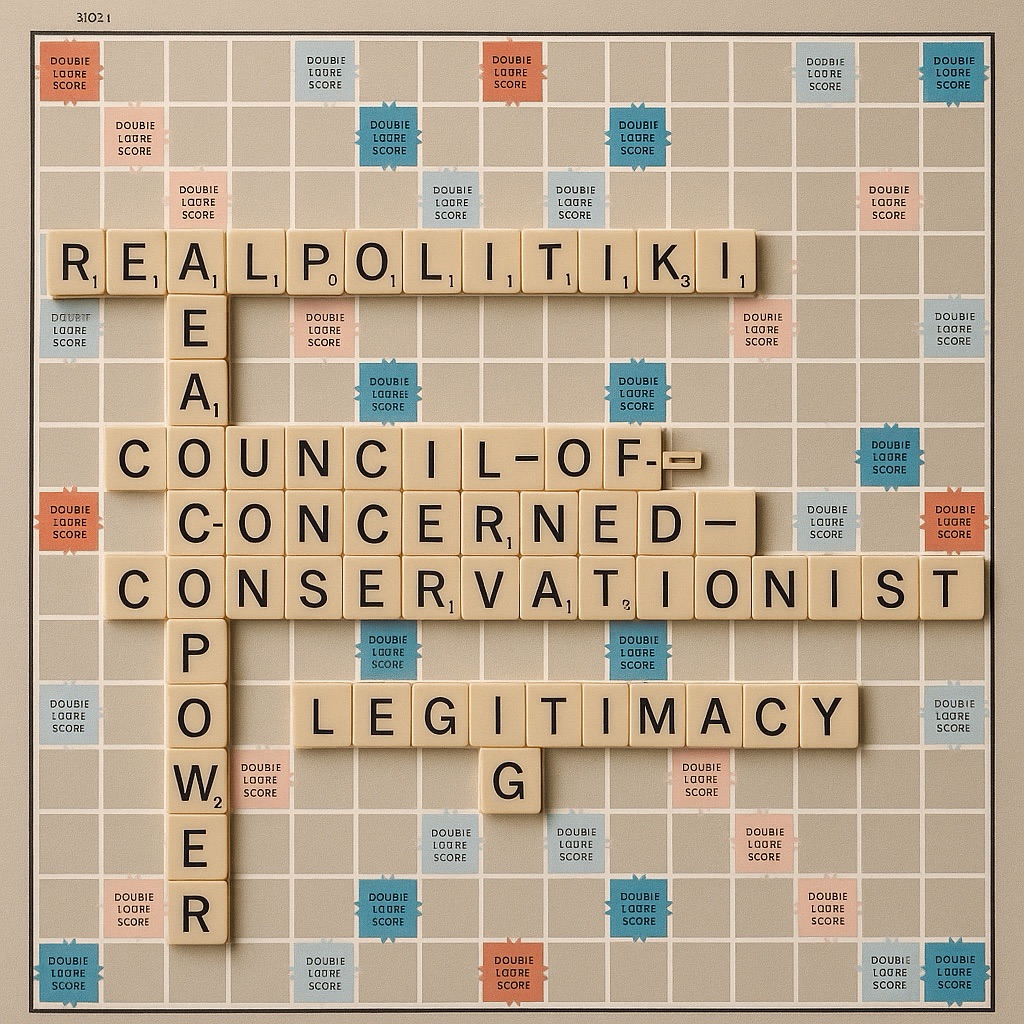
We’ll never win the Realpolitik of Scrabble—our name has dashes.
And yet, somehow, we’re rewriting the dictionary.
—
Wordfully yours,
Anna Graham
Language Arts, Puzzles, and Word Games Correspondent
“Breaking language into bits and reassembling the ideology.”
(with an annotated assist from the ghost of Marcel Cohen[2])
FOOTNOTES
[1]: Max Weinreich (1894–1969), a Yiddish linguist and historian of language, is widely credited with the aphorism “A language is a dialect with an army and a navy,” though he himself attributed it to an anonymous attendee at one of his lectures. The phrase highlights how political power—not linguistic merit—often determines what counts as a “real” language.
[2]: Marcel Cohen (1884–1974) was a French linguist and philologist who studied language evolution, particularly within colonial and Semitic contexts. He is invoked here posthumously because he understood what the Taliban understand intuitively: that words are not just tools, but territories—subject to occupation, renaming, and reconstruction.
 COUNCIL-OF CONCERNED-CONSERVATIONISTS…..Between Jest And Earnest…..
Leave a comment