Wade, Wait, and the Drop of Dew
By The Accidental Initiate, annotated by Black Cloud
Council-of-Concerned-Conservationists, Northbound Poetics Division
for a country we were only just learning to see—
though part of us had crossed it long ago, by train,
before memory.
Maybe that’s why the California light felt so familiar.
And maybe that’s why my grandfather grew red roses[1] in Brooklyn—
to remind us we came from beauty,
even before we could name it.” —B.C.
There’s a lyric in “Sugar Magnolia”—that lush, dew-drenched anthem from the Grateful Dead’s American Beauty—that sounds like it was written not just for the morning, but by it:
“She can wade in a drop of dew.”
It’s absurd in scale and sublime in spirit. A woman so in rhythm with the earth’s turning that she can step through a bead of dew as if it were a meadow stream. Not apart from nature—measured in it. She doesn’t conquer the world. She enters it, gently.
And yet—perhaps because our minds are wired to time, delay, and devotion—we misheard it, briefly, as:
“She can wait in a drop of dew.”
Not what Hunter wrote. But maybe a glimpse of something just as true. Because this song is also about abiding—about someone who is there for the one wandering, someone who exists in the soft-lit margin between devotion and patience. And what is waiting if not a form of sacred presence?

And then there’s the pairing—the Council’s instinctive counterbalance—pulled from “I Know You Rider”, in the version passed through the Dead:
“I wish I was a headlight on a northbound train / I’d shine my light through cool Colorado rain.”
If the woman wades in stillness, the man speeds through weather.
This isn’t just escapism. It’s inhabitation. The wish here is not to ride the train, but to become the headlight itself—pure utility, pure motion, pure illumination. To burn through the cold mist of Colorado with a sense of purpose and clarity you rarely feel as a person. No doubt. No second-guessing. Just shining forward through wet air, northbound.
And the rain itself? It’s not an obstacle—it’s a baptism. It cools, clarifies, consecrates. The rider doesn’t wish to avoid it. He longs to move through it.
Together, these lyrics form a kind of double vision:
— She walks slow through the smallest thing in the world.
— He burns fast through the biggest landscape he can find.
And both are beautiful.
And both belong to the American psyche.
And both, somehow, are already inside us.
The counterculture didn’t reject America—it raided the attic and found the banjos, the train songs, the town names, the patchwork dreams. The real rebellion wasn’t against the dream—it was against the forgetting.
Filed under:
Sonic Semiotics, Misheard Miracles, and Lyric Embodiment Exercises
Cross-referenced in:
UNINTENTIONAL TRUTHS & ACCIDENTAL INITIATES — Vol. IV: The Misheard Sublime
With this note scribbled in the margin:
“The lyric was ‘wade’—but sometimes the universe wants you to hear ‘wait.’ That’s when you know you’re being handed a metaphor instead of a fact.”
—Jack Kerouac, On the Road
ADDENDUM: On American Beauty (the movie) and the American Grotesque
Filed by the Council’s Department of Album Cover Semiotics & Cultural Reclamation
And it did something Hollywood—as an institution, as a reflex—has been doing for decades: subverting Americana, often with a quiet sneer. Every picket fence must hide a skeleton. Every sweet tune must mask despair. Every small town must be exposed as a lie. There’s a particular unease with White Americana—not merely critiqued for its failings, but often portrayed as irredeemably hollow, oppressive, or hypocritical. It is the starting point for moral unraveling in the Hollywood script, never the place where beauty might actually dwell.
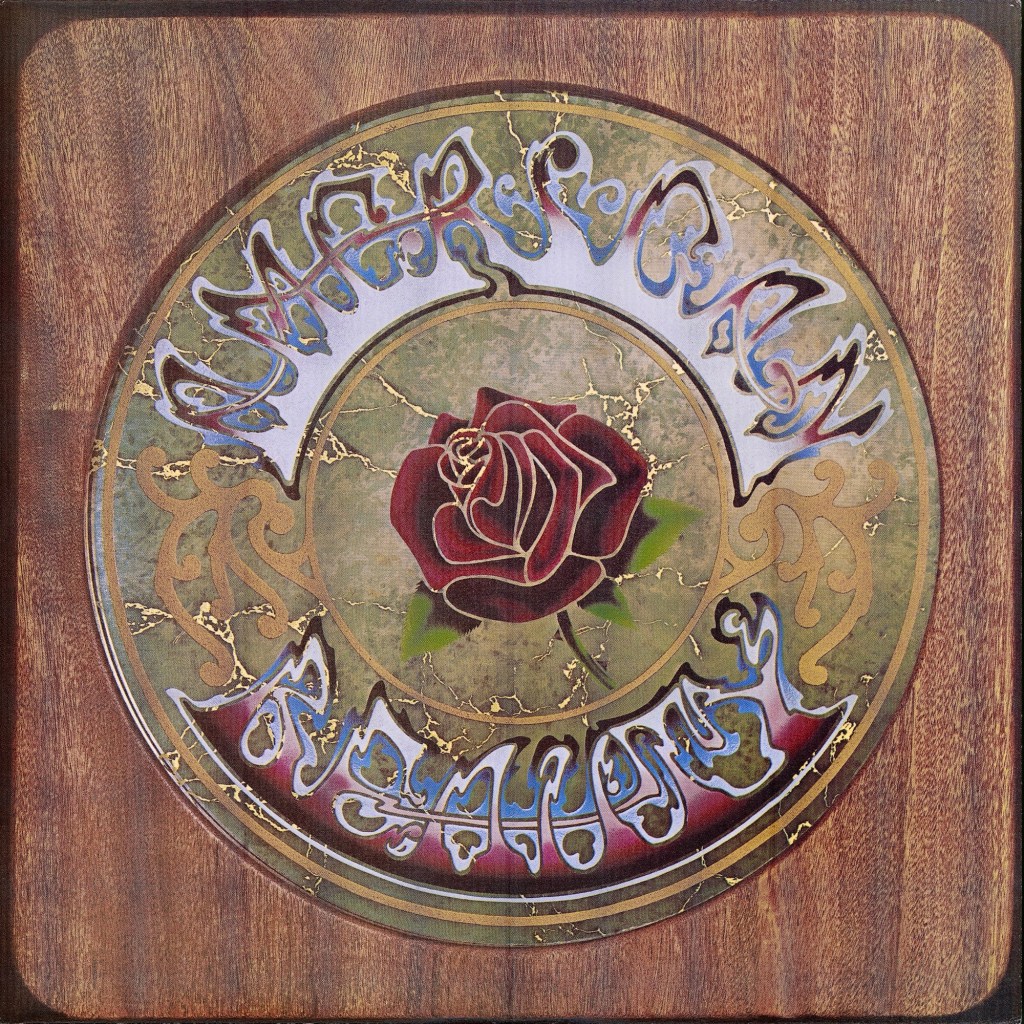
Before we leave the lyric dew and the Colorado headlight, let us briefly turn the record over—to its cover. The artwork for the Grateful Dead’s 1970 masterpiece American Beauty was designed by Alton Kelley and Stanley Mouse, the duo behind much of the Dead’s mythic visual language. The circular typography, the rose at the center—it evokes a stained glass mandala, part Art Nouveau, part acid hymnbook, part folk talisman. It looks like it could have been carved into a wooden pew or painted onto the pickguard of a front porch guitar. It is, like the music within, lovingly crafted, even as it spirals.
Contrary to rumor, the rose was not pulled from a real photograph. It was illustrated—airbrushed, devotional, imagined. But real, somehow, in the way that symbolic objects sometimes are. The title itself was a pun—depending on how you tilted the inner sleeve: American Beauty and American Reality—two visions turning through the same groove.
And then came 1999. (Turn that date other side up. Go ahead.)
Sam Mendes’ ((see Early Life Wikipedia )) film American Beauty, starring Kevin Spacey, took the name and turned it inside out. The rose—once rooted—was now scattered across a teenager’s naked body like a magazine layout gone nihilist. Instead of the woman in the dew, we got a dead-eyed suburban fantasy, observed with increasing creepiness by a man who, in hindsight, was creepy in real life too. The film was stylized decay, marketed moral rot, and it landed like a smug sermon disguised as an art film.
After all, what you choose to see is what is in your soul.
We in the Council choose to remember the album, not the film. The album sings. The film lectures. The album breathes. The film leers. The album gives you a rose still attached to the stem, dew intact. The film plucks it, props it, and lets it rot.
Let the record show:
We loved the album.
We hated the movie.
And yes—Kevin Spacey is really creepy.
Filed under:
Rose Semiotics, Cultural Reversals, Whitewashed Scapegoats, and Album Art That Actually Means It
FOOTNOTE
— Curated by the Iconographic Defense League]
[1] the Origin and Meaning of the American Beauty Rose
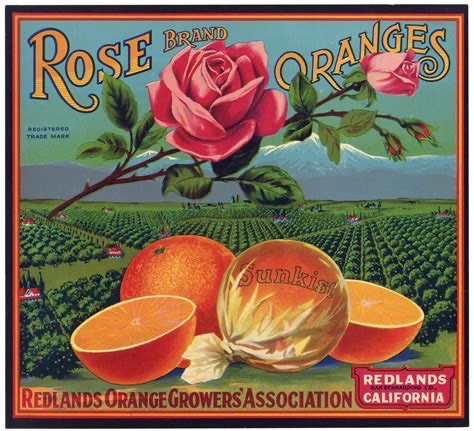
The phrase “American Beauty rose” refers not to a vague cultural sentiment, but to a real, historic flower—a cultivar of hybrid perpetual rose, likely introduced to the U.S. in the late 19th century, and originally bred in France under the name Madame Ferdinand Jamin. Renamed and popularized by florists in Philadelphia and Chicago, it became known for its large crimson blooms, strong fragrance, and symbolic heft.
By the early 20th century, it had bloomed into a symbol of American romantic idealism: opulent, elegant, faintly melancholic. A rose so beautiful it needed structural support—already a metaphor.
In the Grateful Dead’s 1970 album American Beauty, the rose becomes a talisman of Americana: fragrant, natural, fragile, but sincere. It is neither sarcastic nor overripe—just a symbol, pressed like a flower between the pages of a songbook.
The 1999 film American Beauty inverts that meaning entirely. The rose becomes a prop of aestheticized moral rot—its petals scattered over arrested desire, stylized decay, and suburban disillusionment. This was not homage—it was detournement. And not particularly subtle.
Let it be recorded:
The album honored the rose.
The film plucked it, posed it, and left it to wither.
Filed under: Botanical Semiotics, Iconographic Salvage, and the Misuse of Petals in Cinema
 COUNCIL-OF CONCERNED-CONSERVATIONISTS…..Between Jest And Earnest…..
Leave a comment