On Fairy Circles, Burial Grounds, and What Tries to Bloom.
(Who is now in the process of researching and writing his memoir, provisionally titled: MY QUEST: From Rotogravure, To Mimeograph, To Smeared Print And Staple — My Search For Knowledge Through The USPS To The Internet)
“Though nothing can bring back the hour
Of splendor in the grass, of glory in the flower
We will grieve not, rather find
Strength in what remains behind.”
—William Wordsworth, Ode: Intimations of Immortality
Close call today.
I nearly stepped into the center of a fairy ring—fairy as in elf or pixie. In a sense, I did. I approached it from the pavement, paused, and intuitively avoided walking into the grassy center. Perhaps this instinct protected me.
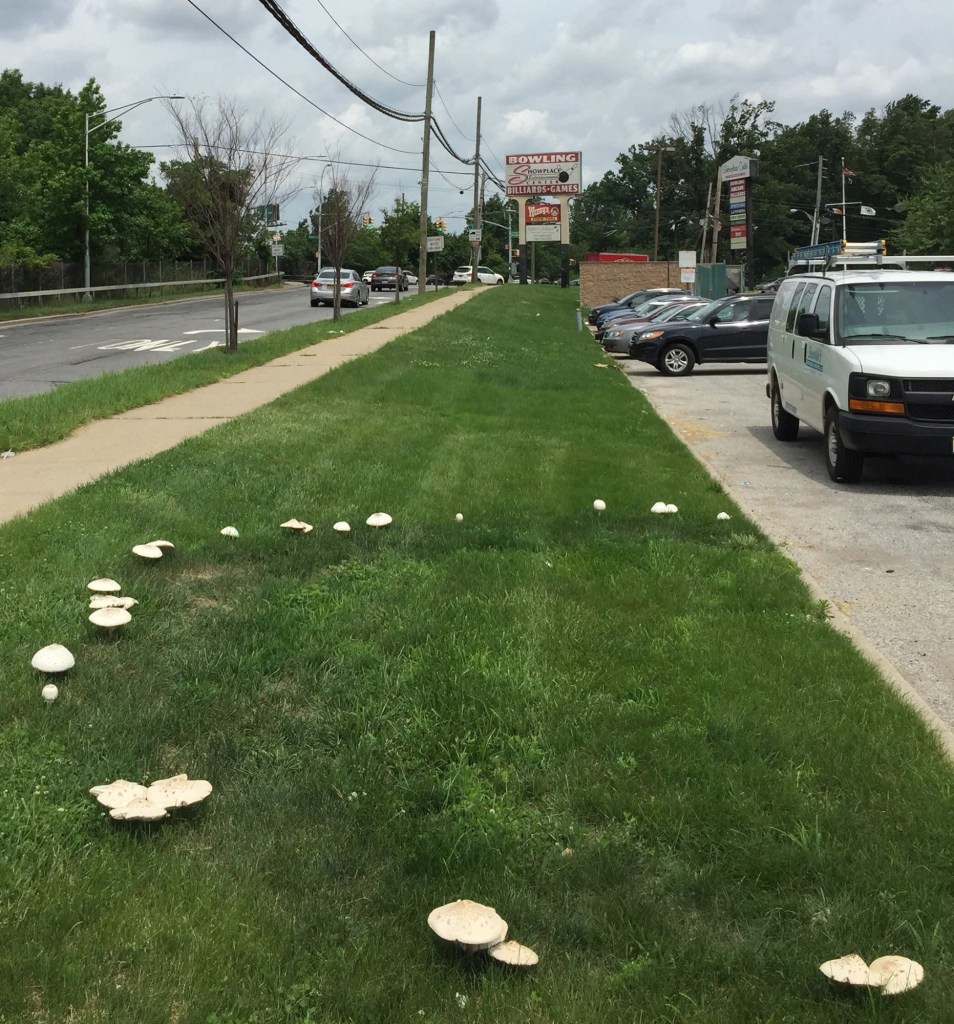
Folklore warns that stepping into the heart of such a ring invites misfortune—or an early death. Since I am no longer young, perhaps I’ve aged out of that particular peril. Or perhaps the danger isn’t so literal.
What appears above ground—the delicate curve of mushrooms—is merely the visible trace. The true being, the mycelium, lives hidden beneath the surface. Some of these fungal networks are ancient. They lie dormant for decades, erupting in bloom only when conditions demand it—often in response to environmental stress. One theory holds that the organism, sensing threat, enters reproductive overdrive in a final bid to survive. Uh oh. That last sentence resonates in other aspects of my life
This ring lives within sight of the Ye Olde Sylvan Grove Burial Ground, recently cleared and restored by the Friends of Abandoned Cemeteries of Staten Island. Just beyond it, barely a stone’s throw away, sprawls the Fresh Kills Landfill—a site with layers upon layers of buried meaning.
It was here that the remains of the Twin Towers were brought following the attacks of 9/11. The debris was sifted in temporary structures atop the landfill, with forensic teams searching day and night for fragments of human remains and evidence. A procession of dump trucks moved in a slow, unbroken rhythm—carrying memory and grief into the earth.
The destruction of 9/11 was more than a catastrophe. It was, in many ways, the most dramatic and effective example of what Southern Italian revolutionary Carlo Pisacane called propaganda of the deed—a political theory where action itself becomes the message.[1]
Now, under those landfill mounds, that deed ferments. Organic decay mingles with historical trauma. It is a compost heap of memory. And like the mycelium, it may fruit again—though we may not recognize its bloom when it comes.
This corner of Staten Island is also the site of the first linoleum factory in the United States. And—coincidentally or not— the film, Splendor In The Grass was shot here.[2] A movie about lost innocence, sexual repression, and the American longing for beauty just out of reach. A reel of dreams projected over synthetic floors.
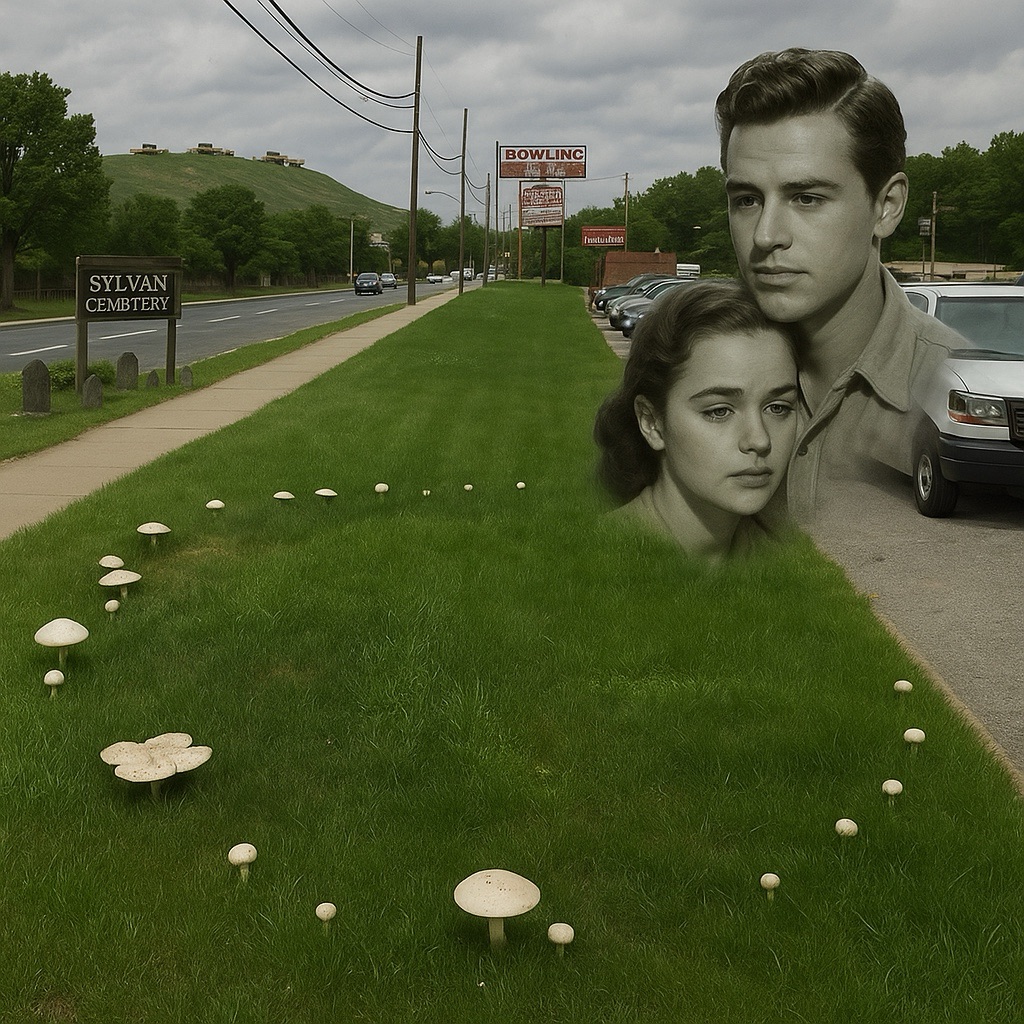
It struck me, standing between a fairy ring and a forgotten graveyard, that everything around me was buried—but not gone. The mycelium sleeps beneath the ring, waiting to bloom. The old linoleum factory has vanished, but the synthetic idea of it lingers, curling up like old flooring in the memory. The rubble of 9/11 was sifted just up the hill, its remains buried in a landfill still cooking below the surface, composting a national trauma. Even the Sylvan Grove cemetery—abandoned, then restored—feels less like a place of rest than a memory insisting on return. Maybe that’s all burial ever is: not erasure, but layering. A kind of fungal archive, where the past keeps trying to fruit.
Footnotes
[1]: Carlo Pisacane (1818–1857) was an Italian patriot and socialist who theorized that dramatic revolutionary acts could awaken political consciousness among the masses. See Carlo Pisacane – Wikipedia.
[2] See “Staten Island Splendor” by Russ Smith, Splice Today. Link here. Offers firsthand description of the Splendor in the Grass filming locations in Travis, Staten Island, including the old Loomis house site at Victory Boulevard and Roswell Avenue.
 COUNCIL-OF CONCERNED-CONSERVATIONISTS…..Between Jest And Earnest…..
Leave a comment