From Coelacanth Press, Cheesequake, New Jersey.
A dispatch announcing forthcoming volumes and a comment on other titles already circulating in the civilization’s tepid intellectual fondue.
From the Book:
The Psychogeography and Realpolitik of Cheese
Chapter: Memories, Dreams, Pita Sirnica
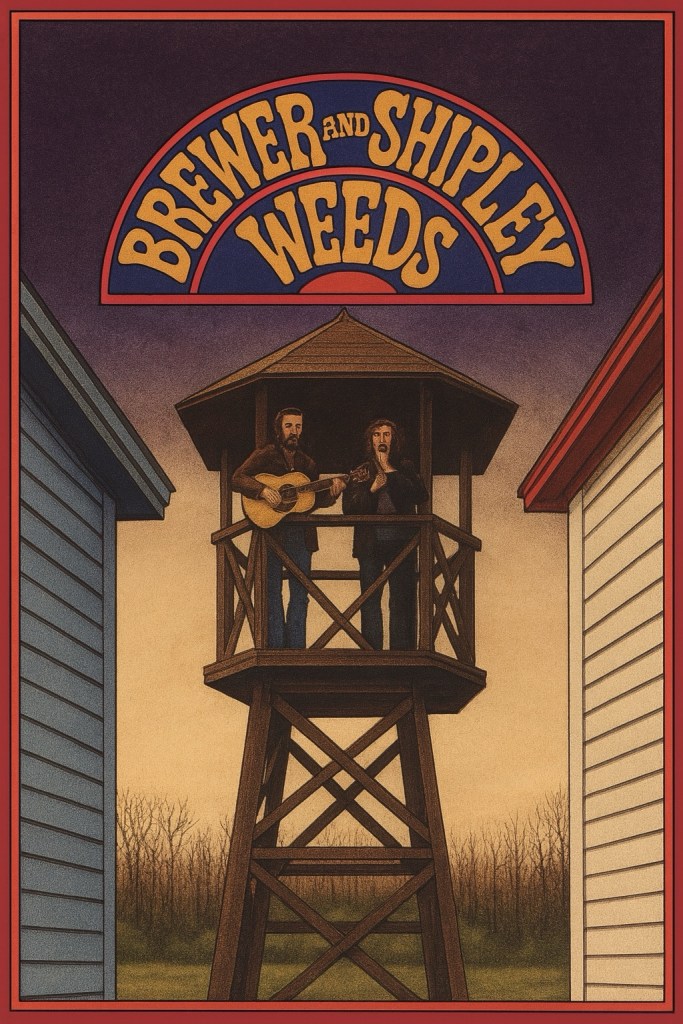
Epigraph (Adapted, Misused, and Finally Made Sense of by J.St.E.)
🎶
“There must be some way out of here,” said the joker to the thief,
“There’s too much confusion, I can’t get no relief.
Businessmen drink my wine, fromagers craft my cheese,
None of them along the line know what any of it is worth.
“No reason to get excited,” Gavrilo Princip spoke—
“Many here among us feel that life is but a joke.
But you and I, we’ve been through that, and this is not our fate.
So let us not talk falsely now—the hour is getting late.”
Outside in the distance, a wild press did growl,
MAGA was approaching, the wind began to howl.
🎶
Editor’s Preface
If you detect anachronism in these verses, rest assured: the purpose of history is not simply to get the date right, but to get the meaning wrong in instructive ways.
Before we proceed, let us be perfectly clear about the myth under discussion. According to countless articles, documentaries, and school lessons, Gavrilo Princip—the young Serbian nationalist who assassinated Archduke Franz Ferdinand and set the First World War in motion—was only standing outside the café because he had paused to eat a ham-and-cheese sandwich. This story, though almost certainly untrue, has become a popular legend repeated so often that many accept it as fact. Our reflections here explore how such trivial details—especially involving cheese—come to eclipse deeper causes in the public imagination.
Reflections on Cheese, Nihilism, and the Delight of Trivial Myths
Surely, these thoughts must have plagued mankind from the beginning.
But who, in earlier epochs, had time to let them fester when existence demanded everything of the individual?
Between collecting firewood, hunting and gathering, weaving garments, telling stories, dancing around the hearth, crafting adornments, and making love—who could spare the hours to ponder whether the cosmos was empty of purpose?
It is only in our age of convenience that the question of whether meaning exists at all has become a curricular imperative—introduced to children while their milk teeth are still intact.
A sense of meaning has been transubstantiated into the belief that there is no meaning, and this negation itself has become the meaning.
How long can a society persist when the subtext of every lesson is cheerful nihilism?
Indefinitely.
For some of the young tyros, the realization that existence has no inherent rhyme or reason will feel like a liberation. They will rejoice in the blankness and paint meaning onto it themselves—recognizing that if nothing is predetermined, everything is permitted to be imagined.
But there will also be others who find this freedom oppressive, as if they have been handed the burden of authorship without any instructions. To them, we offer the old proverb—often misquoted with lemons but better told with milk: “When the milk of life turns sour—make cheese.” It is a reminder that even unwanted freedom can be transformed into something nourishing.
They will not accept the diktat of some archduke from a defunct Austro-Hungarian multicultural pretend-empire, nor of the present-day globalists in their equally pretentious uniforms.
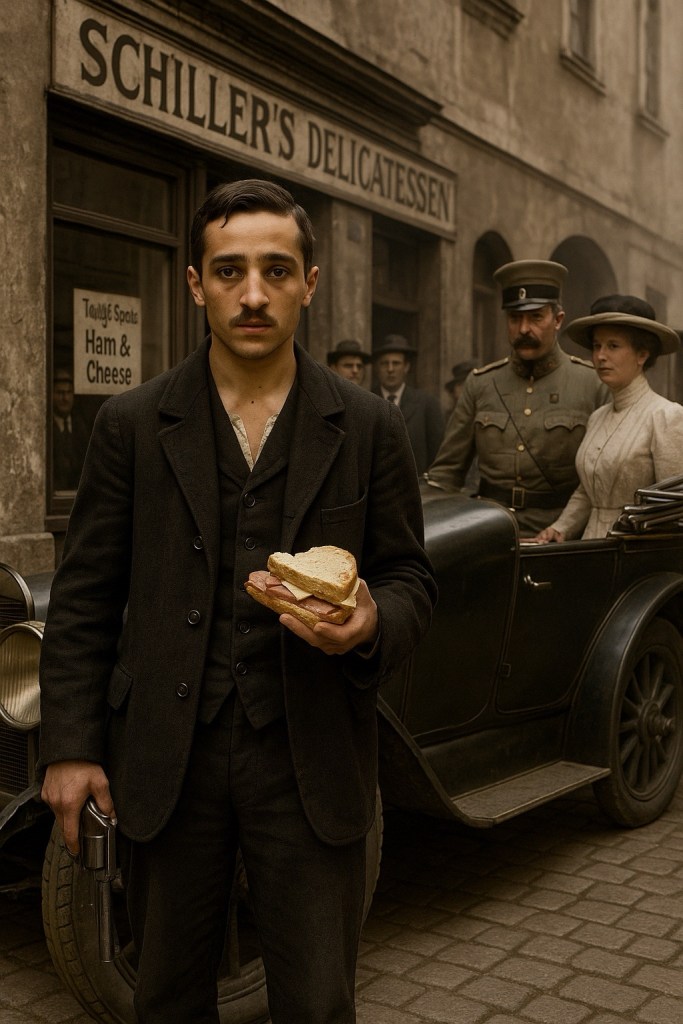
The Great War: Because one man stopped for a cheese sandwich. At least, that’s how we teach it now. I told you so—cheese always finds its way into the psychogeography and realpolitik of everything.
Let us now return to the unsteady fulcrum of our book: the tale of Gavrilo Princip’s ham-and-cheese sandwich.
According to the oft-repeated story—immortalized in documentaries, classrooms, and clickbait—the assassination that triggered World War I only occurred because Princip paused for a sandwich.
This account is almost certainly false.
And that is precisely why it deserves our attention.
For what better emblem of our times than the notion that one of history’s defining cataclysms was the random consequence of an assassin’s lunch?
To teach children that a trivial snack—rather than a century of imperial rivalry and ethnic grievance—was the spark that ignited a world war is not merely lazy storytelling.
It is a kind of nihilism disguised as pedagogy: the suggestion that nothing has deeper origins, that nothing is worth understanding, that everything can be explained in a single anecdote about cheese.
Editor’s Note on Sources
If you think we are exaggerating, consult the Smithsonian article that documents this legend’s spread across classrooms, search engines, and cultural memory:
Cheese as Metaphor, or How We Make Sense of the Senseless
Even though the story of the Serbian nationalist and the stop at the deli may be apocryphal, the fact remains that people intuitively project into it the entire psychogeography and realpolitik of cheese.
Cheese here is not garnish.
It is the soft, comforting metaphor modern culture prefers over moral seriousness.
It is the edible monument to the human need for a snackable explanation when the world comes undone.
Concluding Editorial Reflection
History—like cheese—hardens and ripens with age.
We recommend you taste it carefully before deciding what it means.
—Filed by Fr. O’Mage, S.J., Editor-in-Cheese
 COUNCIL-OF CONCERNED-CONSERVATIONISTS…..Between Jest And Earnest…..
Leave a comment