Hot Water in Cold Stone:
(Filed under: “Newness,” Cellars, and the Perpetual Replacements of Things That Heat Water)
C-of-C-C QUOTE OF THE DAY.
“Have you ever noticed how all hot water heaters look new?”
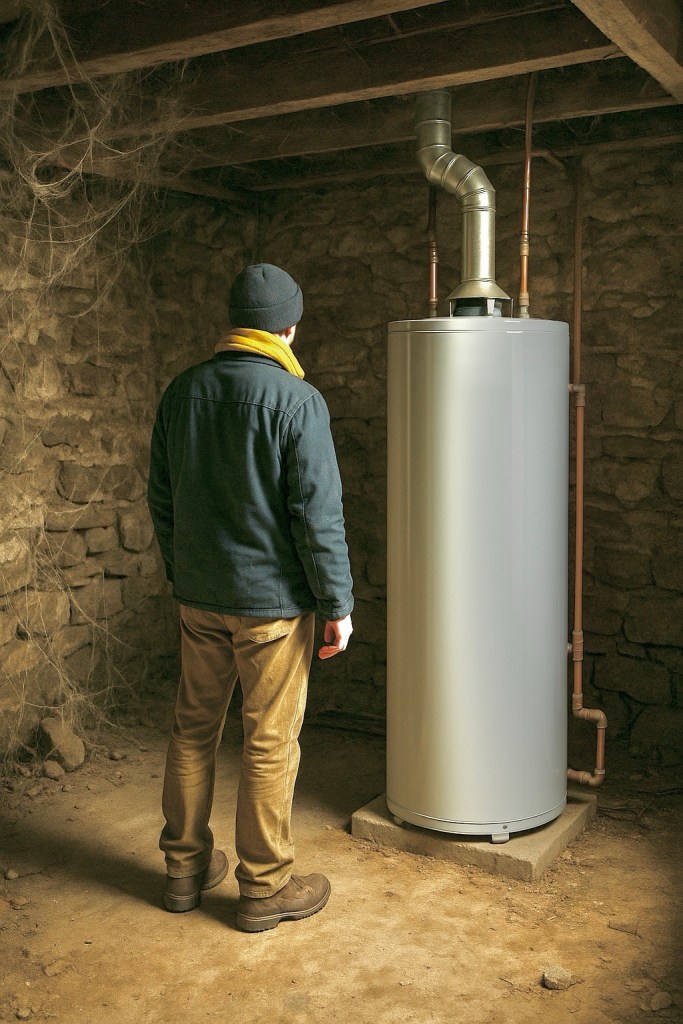
(Editor’s note: A.I. has been diligently avoiding a stumble down narrow, cobwebbed cellar stairs lately, combing the silk of past tenants from his hair as he tours houses of the old, infirm, or recently deceased — homes now up for sale. He is searching, as the swami declared in the film My Talks With Dean Spanley, for his own “anteroom of eternity.”)
FIELD NOTES: A NEWNESS THAT SMELLS OLD
By Black Cloud, Chief Poetic Justice Warrior
Some houses still have the possessions scattered about: Mom’s knickknacks in the curio, Pop’s fishing photos curled in their frames. It’s all for sale, parceled out so someone else can afford the nursing home or the funeral. Then the next occupant moves in, lays down their own scent, and waits for the next march of eternity to call them forward.
If eternity is simply the here-and-now experienced fully, then even a brief tenancy in another’s dream can feel long enough. To buy such a house is, in its way, an act of honor — a quiet ritual of continuity. One life financing the exit of another; one set of memories dissolving into the drywall to make room for the next.
(Knowing A.I.’s keen sense of smell, the editors predict he will likely be reincarnated as a dog. This, they say, would be poetic justice. A.I., for the record, despises dogs — “sentimental wolves,” he calls them.)
RUINS REPORT
Sometimes I wonder: how do ruins become ruins? Is it sudden — one bad year, one factory fire, one highway rerouted — or do they hollow out slowly until no one remembers when the last neighbor left? I walk through basements in Middle America and ask myself if I’m watching it happen now: the slow forgetting, the quiet collapse. The dust knows. It always wins, if you give it time.
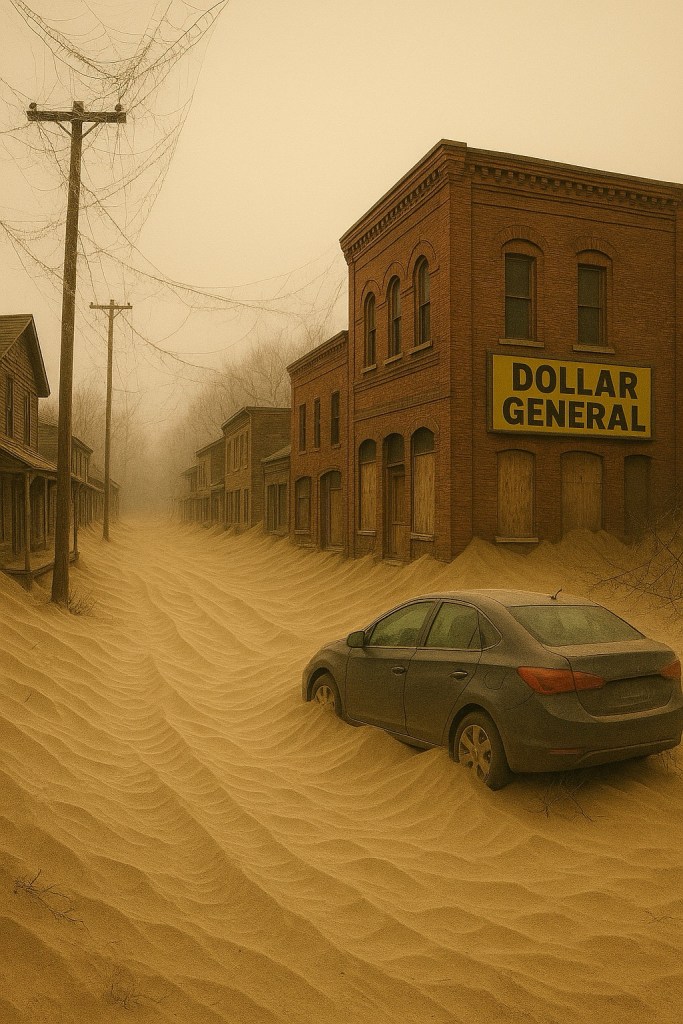
— The Accidental Initiate, amateur archaeologist
CLOSING COMMENTARY
By Justin Aldmann, Correspondent on Retirement and Senescence
“I’ve been in enough basements, searching for and finding my own ante-room of eternity, to know the pattern: stone walls outlast us, water heaters don’t. The new ones always shine — until they don’t, until someone else hauls them out for scrap and slides in another that looks just as new. Maybe that’s not a failure but a rhythm: the living trade their warmth to the next in line.
And maybe the same is true of these small towns. They’re not abandoned so much as passed along — from boom to bust to silence to salvage. The Accidental Initiate is right — there’s something holy about buying the house of the departed. It’s not grave-robbing; it’s standing watch. You light their pilot flame, run your water through their pipes, and in a small way keep them in circulation. Eternity, if it exists, may just be this exchange — a chain of people warming themselves in borrowed rooms.”
(And if you came here looking for the “quote of the day” — well, you already read it. It was hiding at the top, in plain sight, before we wandered off into basements, ruins, and reincarnated dogs. Council readers are used to this. We promise nothing — except maybe a new water heater. And if that’s what you need, we know a guy. Out here, we can point you toward the plumber who will keep the basement dry, the pipes running, and the showers hot. Ask us — we’ll send you their way.)
***
ALTDEF — *new·ness*
/ˈnuːnɪs/ noun
Alternate Definition: A thing that dies so often it always looks young.
Usage:
“The hot water heater had that uncanny newness again — Council fieldwork confirmed its third death in twenty years.”
—ALTDEF is the Council-of-Concerned-Conservationists’ ongoing lexicon of words re‑imagined through fieldwork, folklore, and metaphysical drift. Each entry preserves the ordinary spelling but replaces the ordinary meaning with a truth uncovered in basements, archives, or accidental revelations. Think of it as a parallel dictionary for the things language almost remembers but forgot to tell you.
 COUNCIL-OF CONCERNED-CONSERVATIONISTS…..Between Jest And Earnest…..
Leave a comment