— A COUNCIL FIELD DISPATCH:
By Mrs. Begonia Contretemp.
To Be Filed under Urban Psychogeography & The Council’s Ongoing Study of Architectural Mood Disorders
Mrs Begonia:
Lefoto “Lee” Sfocato—our official Council photographer, former paparazzo, ex-Bersaglieri machine-gunner, and occasional ruin of my composure—took the photograph you see below. He claimed the sunset “she arrived like an apology nobody deserved.” That is exactly the sort of thing Lee says when he knows I am listening.
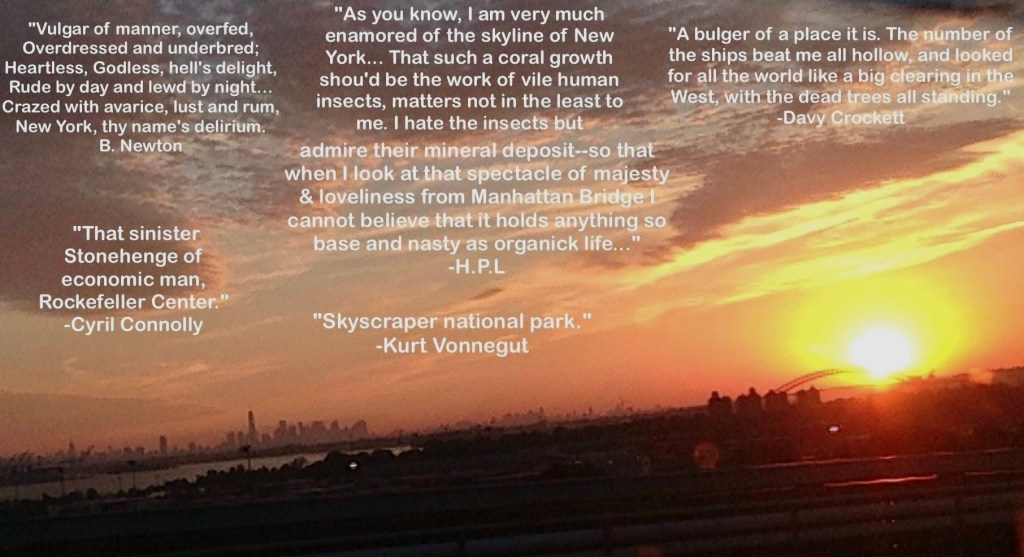
I present it to the Council because New York deserves, at least once a decade, to be looked at without flinching. Even now, under our new mayor—Mandami, is it? The one whose affection for municipal communism threatens to metaphorically resurrect architectural Brutalism in the form of economics like some cement-poured revenant. We may as well catch the skyline while it still pretends to glow. His admirers insist he means only to revive Brutalism in the metaphorical sense, of course: a kind of civic aesthetic reserved for those unfashionable White inhabitants who are forever expected to absorb the impact of progress with stoic decorum.
One notices, too, that Mandami’s most enthusiastic new constituents resemble those little snails that rasp the calcium from garden wall and masonry—not merely out of malice, but out of appetite. They arrive, they erode, they take their chosen mineral due, while the original, founding residents, like the old masonry itself, are expected to endure the thinning with gracious silence.
In the image, the city stretches out like a fever dream cooling under evening air. The ancestors, being incapable of silence, have already offered their assessments.
B. Newton calls the city “vulgar, overfed, overdressed and underbred”—which may be the most honest attempt at municipal psychoanalysis since the Dutch sold the place.
Cyril Connolly sees in Rockefeller Center “that sinister Stonehenge of economic man,” a phrase so accurate one wonders how the building hasn’t blushed itself into dust.
Lovecraft, dear worm-ridden H.P., hates the inhabitants but admires “their mineral deposit”—by which he means the skyline—proving once again that even misanthropes can experience awe if one removes all the living parts.
Howard’s phrase “coral growth of vile human insects” is unintentionally flattering; New Yorkers would take it as a compliment and put it on a T-shirt.
Vonnegut shrugs from the side and mutters, “Skyscraper national park,” which is perfect. Only he would describe a metropolis as something the Park Rangers might someday charge admission to, provided the bears are fed and the elevators work.
And then there is Davy Crockett—poor, bewildered Davy—who looked upon the forest of masts in 1834 and declared New York looking like “a big clearing in the West, with the dead trees all standing.” It may be the only description ever offered by a frontiersman that sounds like a lament from a displaced dockside dryad.
So here they are: Newton’s delirium, Connolly’s Stonehenge, Lovecraft’s mineral hive, Vonnegut’s national park, Crockett’s petrified forest. Five men, five verdicts, five perfectly incompatible ways of insisting that New York is an affront to good sense.
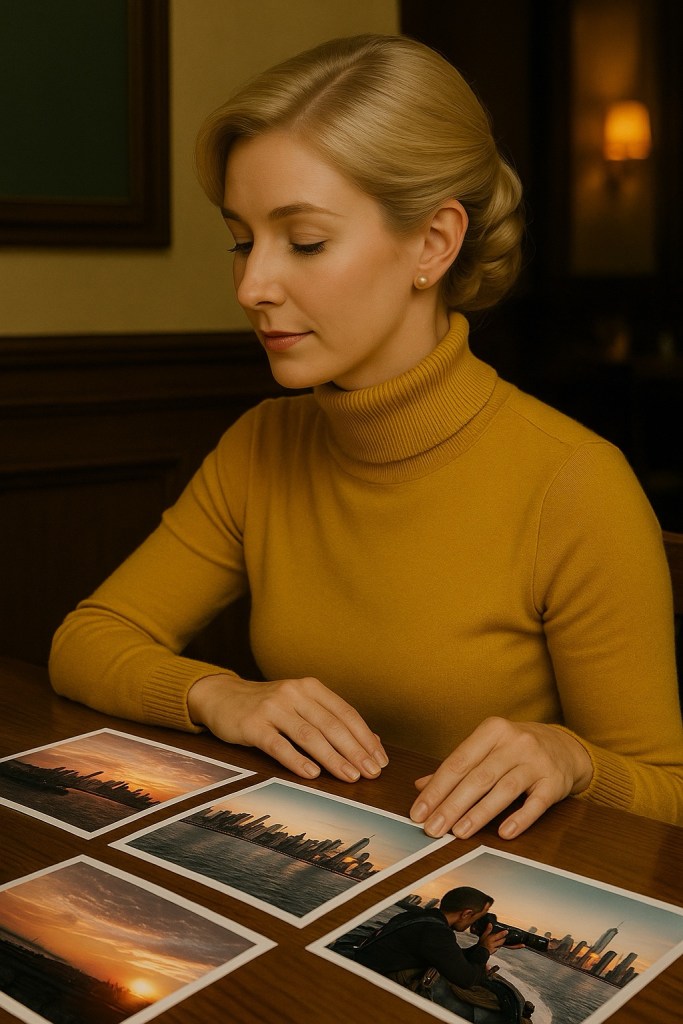
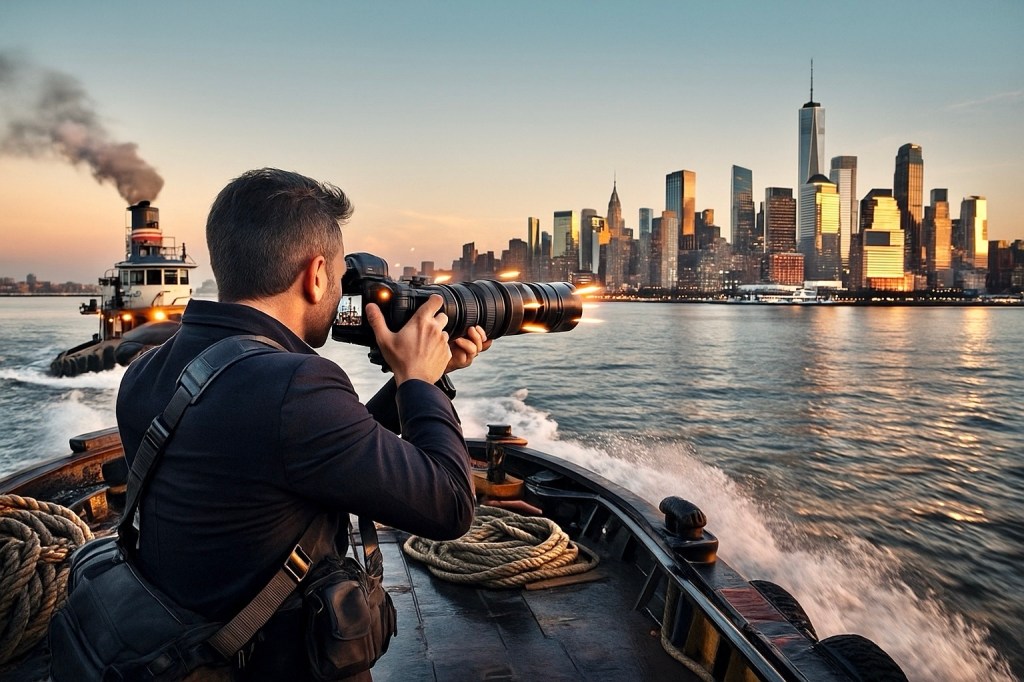
Yet Lee—standing half on the guardrail, half in his own private war—saw something else. Something warm. Something almost tender. He caught the moment the sun broke across the roofs like a benediction reluctantly granted. He said, quietly, “Eh… even the concrete, you know, it gets a soul — but only for eight seconds, massimo.”
Photography, like bull riding, grants its grace in brief allotments. One holds on for as long as the moment allows—which is never long. A moving skyline, a moving boat, a photographer tracking a moving target: the whole business lasts only as long as a breath someone bothered to time. Eight seconds, massimo, as Lee would say. After that, the light shifts, the subject flees, and the world pretends nothing extraordinary just tried to happen.
I pretended not to hear him. One must.
And before the Council’s more excitable correspondents begin their whispering campaigns: no, Lee and I are not “involved.” The very suggestion is absurd. Anyone who has spent time around a Bersaglieri who photographs like a machine-gunner knows they are catastrophically unsuitable for romance. Besides, if anything improper had occurred, I assure you I would remember it vividly. I do not.
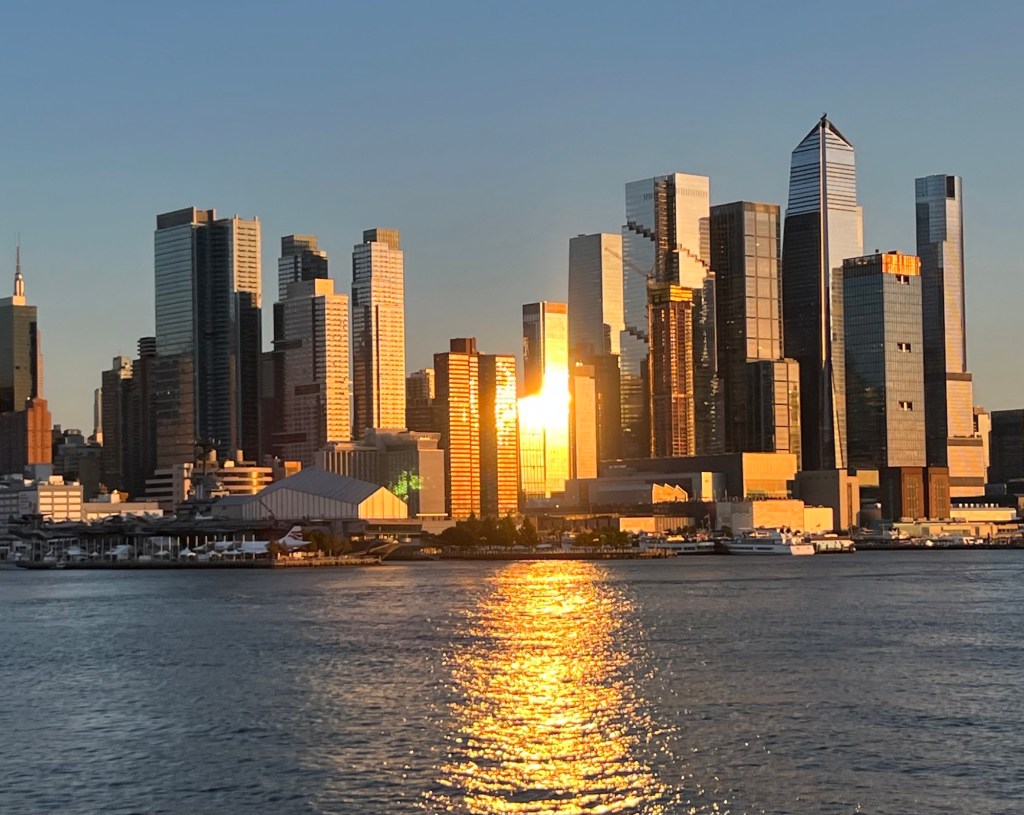
New York never agrees with its observers. It never repeats itself. It never cooperates with any narrative except its own. Mandami may pave it in ideological cement, the developers may polish it until nothing remains but reflection—but the city will continue to present itself in contradiction, in sunset, in the stubborn shimmer that even Lovecraft could not quite hate.
Lee captured the eight seconds when the city remembered it was beautiful.
I suppose it is fitting that he did.
Council-of-Concerned-Conservationists Newsletter
 COUNCIL-OF CONCERNED-CONSERVATIONISTS…..Between Jest And Earnest…..
Leave a comment