A Scientific Field Report Told Like a Fable
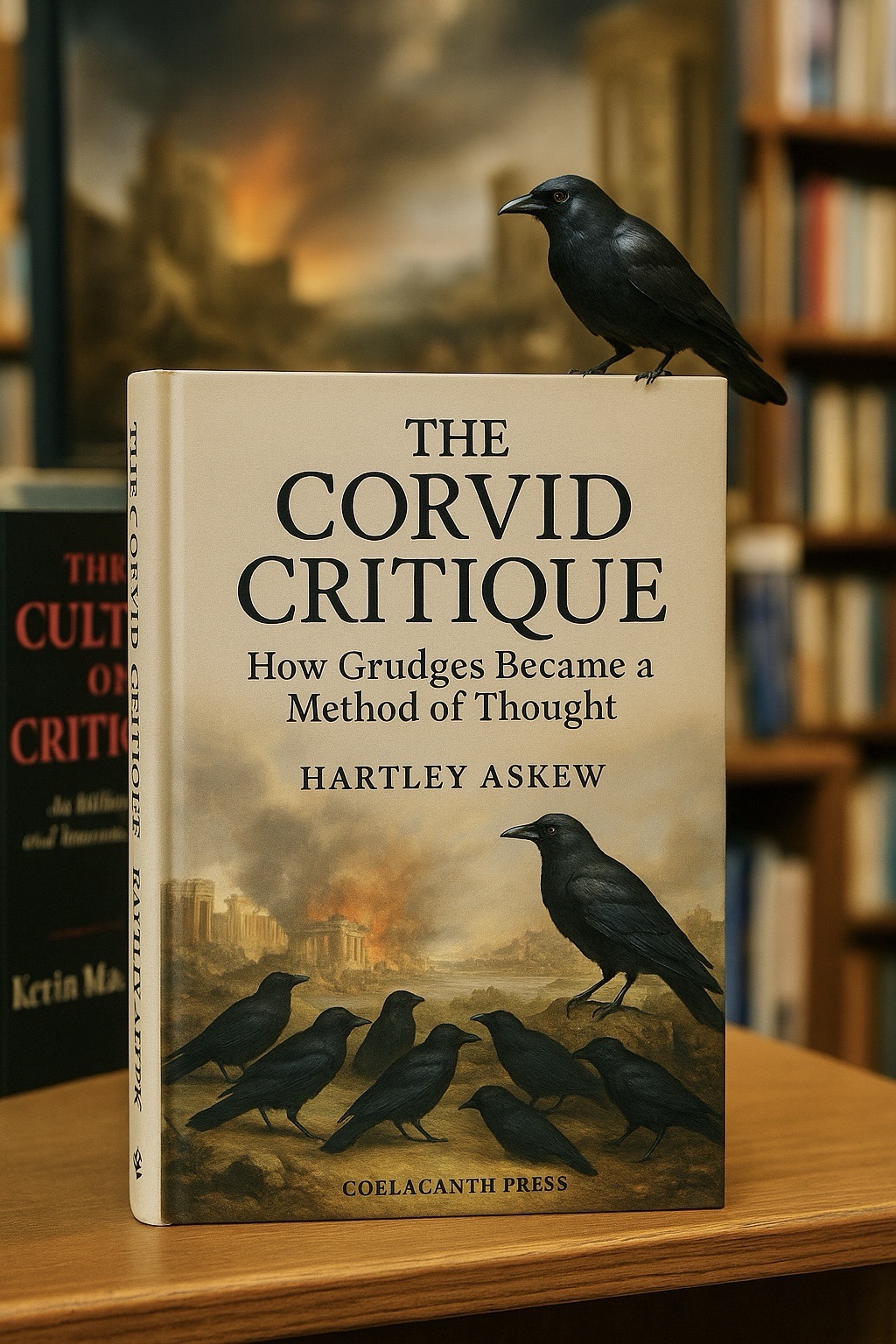
—New correspondent, Hartley Askew on the Anti-Conspiracy Mindset.
Hartley:
The crows taught me this:
Memory is inherited, but so is irritation.
A single unpleasant encounter — a rubber mask, a net, a startled squawk, becomes a multigenerational directive.
This isn’t speculation; it comes from the University of Washington’s famous “crow mask study,” where researchers discovered that crows not only remembered the face that wronged them, but taught their young to recognize it.
Years later, birds who had never seen the original incident still scolded anyone wearing the same mask, as if the caution had been tucked into the family will.
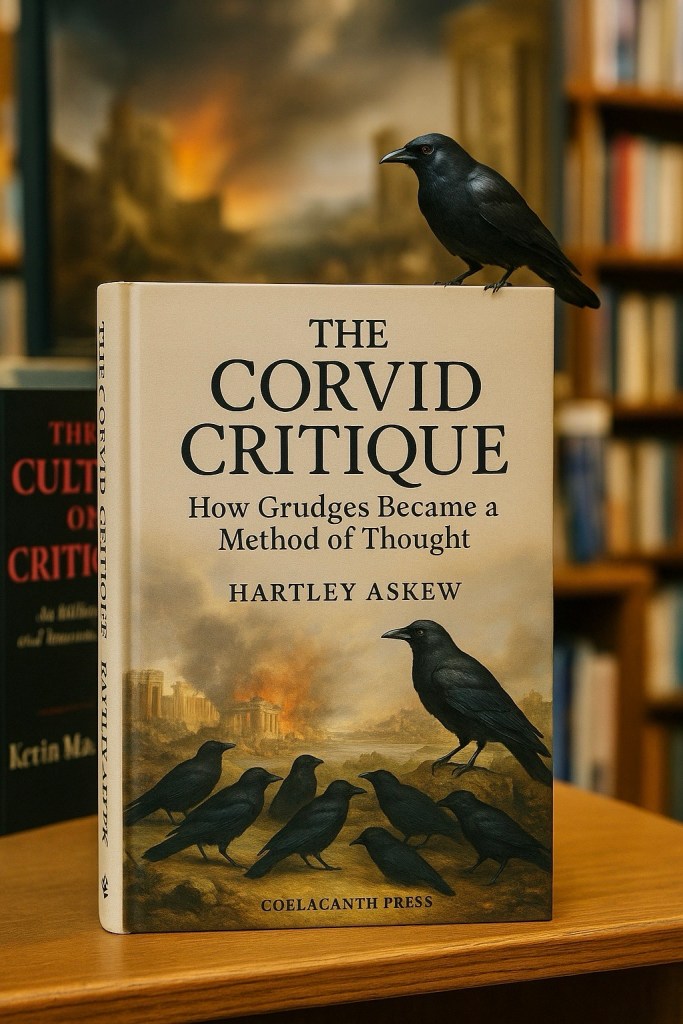
—as Mrs. Bundy, independent book store owner, was heard to observe, with that unmistakable air of corrective superiority.
Crows don’t debate the matter.
Crows don’t write memoirs.
Crows just pass along the warning:
“Someone with that silhouette wronged us.
Avoid the silhouette.”
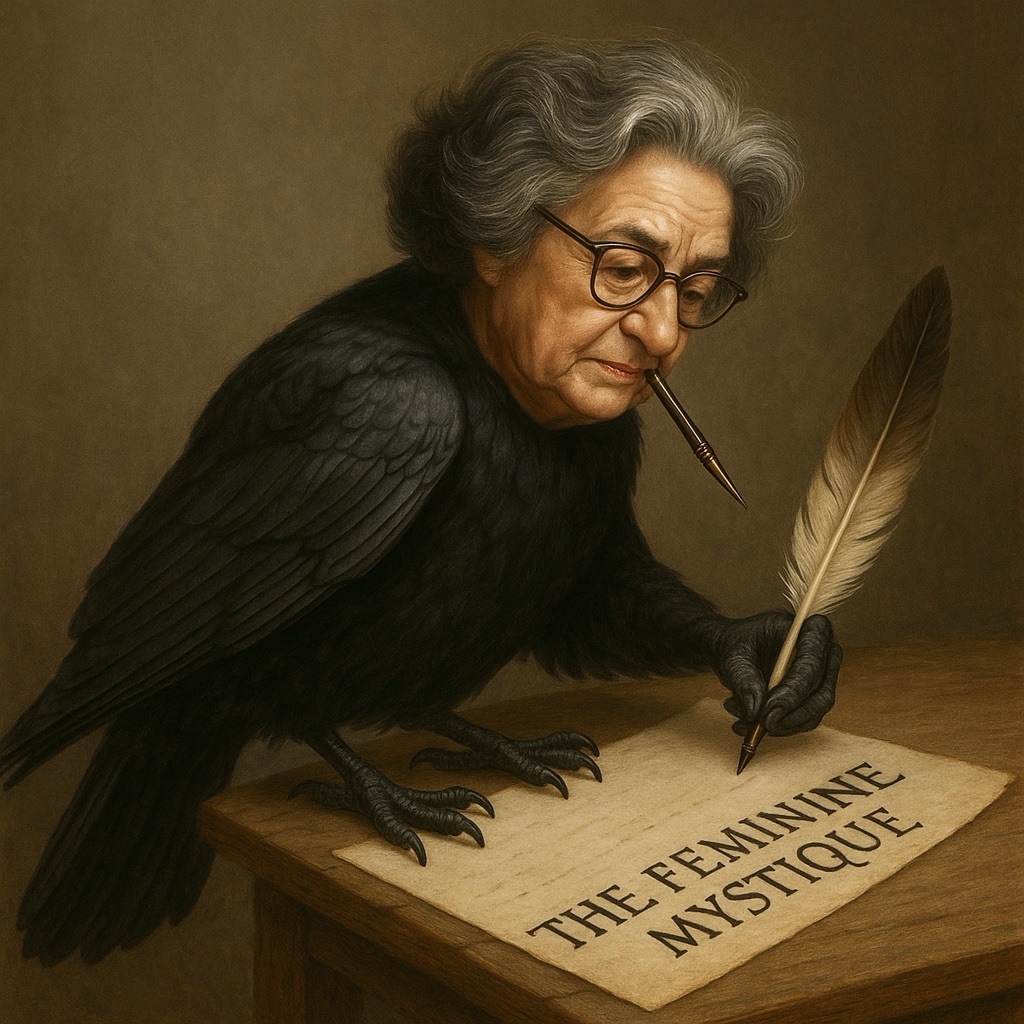
Humans, being more decorative animals, transformed this instinct into departments, journals, militant salons, café societies, political committees, and several schools of literary criticism.
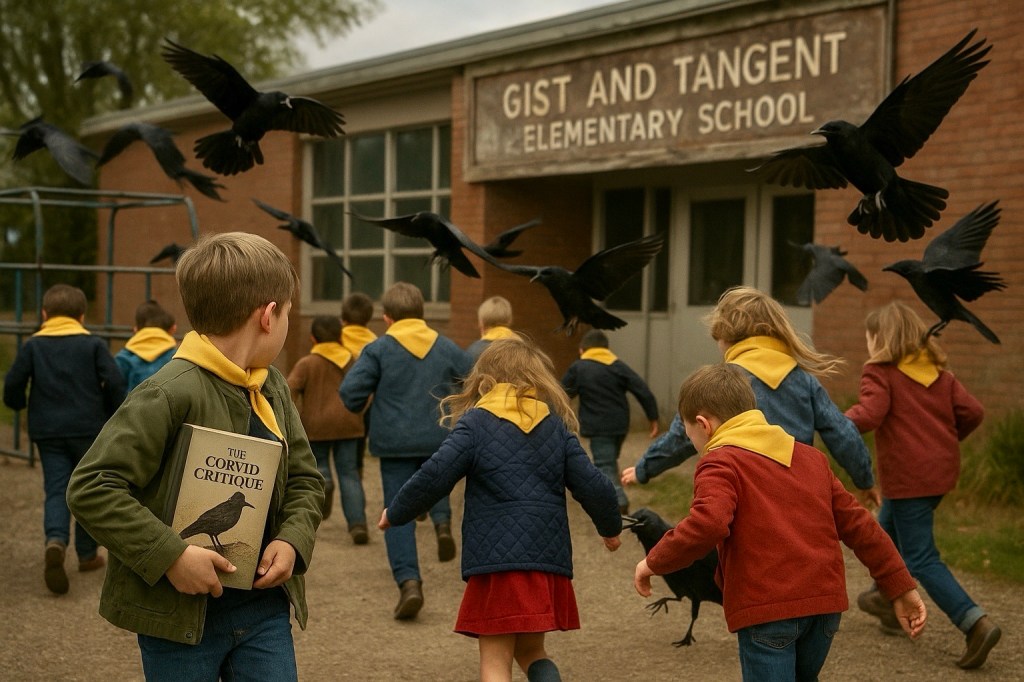
Here’s what I mean.
A surprising number of the great critics of Western civilization — the West’s institutions, canons, habits, certainties, smugnesses — emerged not from people outside the civilization, but from thinkers who lived within it as if visiting hostile territory.
Half insiders.
Half exiles-in-place.
What the Council might call domestic dissidents.
Many had grievances — a few justified, some theatrical.
A few had been mishandled by the West’s gatekeepers.
A few had simply been ignored.
And a few arrived determined to dismantle the house before even checking if anyone was home.
The pattern is so consistent it feels zoological:
The Vienna Circle felt the metaphysical old guard had suffocated them, so they retaliated by declaring half of Western philosophy “meaningless.”
The Frankfurt School, bruised by Weimar and later exiled by fascism, concluded Western culture itself was a machinery of domination.
The Leninist and post-Leninist sects, scorned by Western liberalism, turned the entire West into a theoretical antagonist — a grudge that hardened faster than Marx’s ink could dry.
The post-structuralists, haunted by monarchies, hierarchies, and the ghosts of French rationalists, decided Western reason was a long con played on the public by dead white bureaucrats.
Each of these movements had its own rubber mask incident, its own moment of mishandling, misunderstanding, or marginalization.
And each built a lineage of thought on top of that inherited injury.
They don’t remember the sting directly — just as the crows don’t.
They remember the story of the sting.
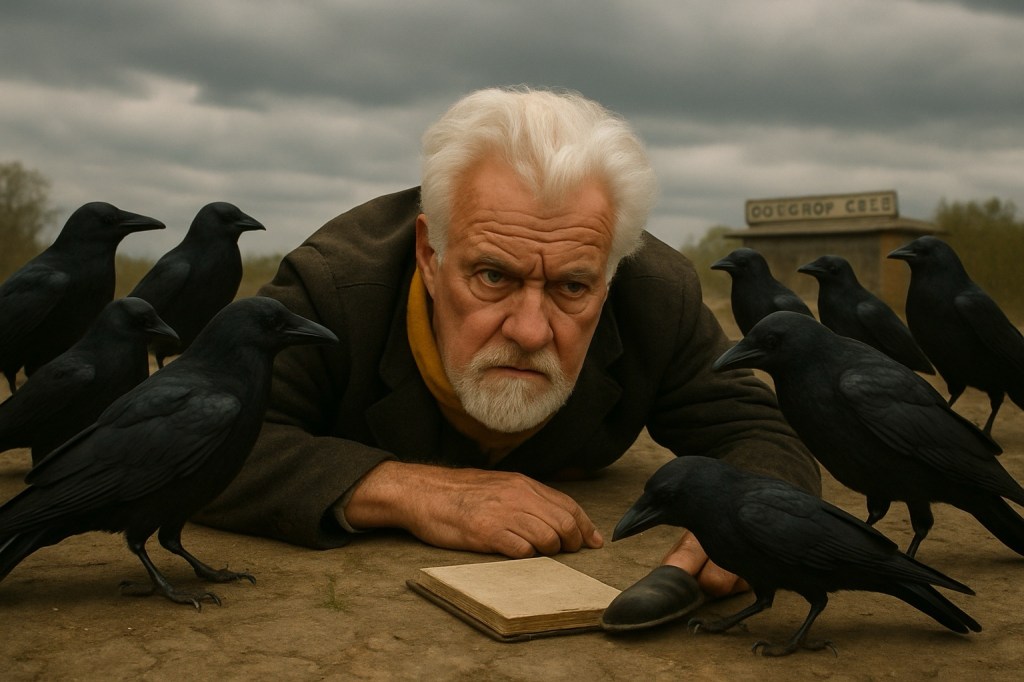
This is how entire academic fields became multi-generational warning systems:
“Someone wearing that worldview hurt us.
Subvert that worldview.”
And because humans write books instead of cawing in trees, the grudge grew textually sophisticated.
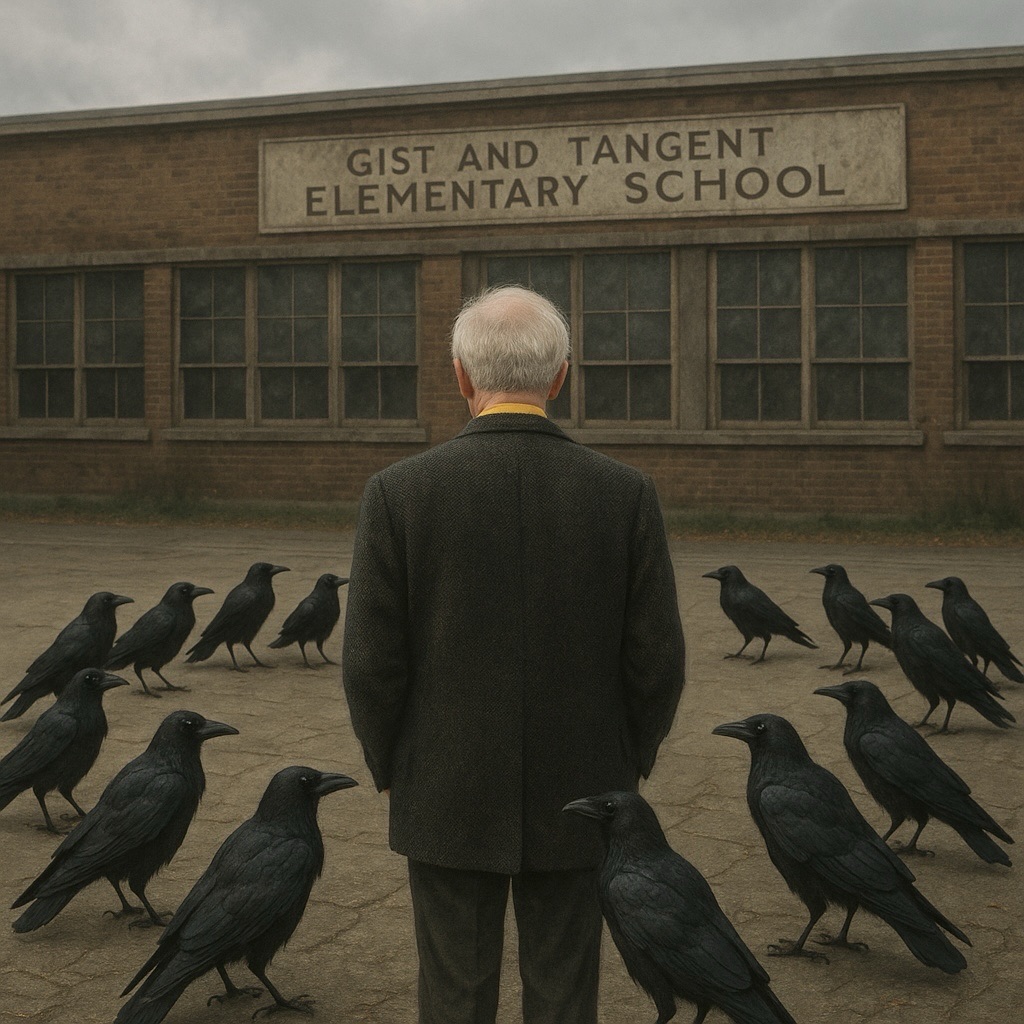
The footnotes lengthened.
The critiques expanded.
The resentments matured from quick caws into 600-page monographs with German titles.
Meanwhile, the mainstream — curse its dishonest soul— insists all this is wildly over-interpreted, conspiratorial, or “askew.”
But from my vantage on the branch beside the crows, I can only shrug:
“Hardly askew.
Nature behaves this way everywhere else.”
The crows distrust a silhouette across generations.
Ideas distrust civilizations across generations.
One is treated as biology.
The other is treated as theory.
Both operate on the same hidden algorithm.
And that is why, in my notebook, I record these ideological warning calls alongside the crow calls.
Not only to accuse anyone — crow or critic — but to note how the pattern repeats so precisely across species.
When memory becomes lineage and grievance becomes identity, you do not get tragedy or triumph.
You get predictable animal behavior wearing doctoral robes.
Which is why, dear reader, I continue to file these little studies from the edge of the Council’s aviary.
Because what the mainstream calls “askew,”
I call
simply observed.
— Hartley Askew
Council-of-Concerned-Conservationists
Correspondent for the Outlandish but True
 COUNCIL-OF CONCERNED-CONSERVATIONISTS…..Between Jest And Earnest…..
Leave a comment