A COUNCIL FIELD DISPATCH:
—By John St. Evola.
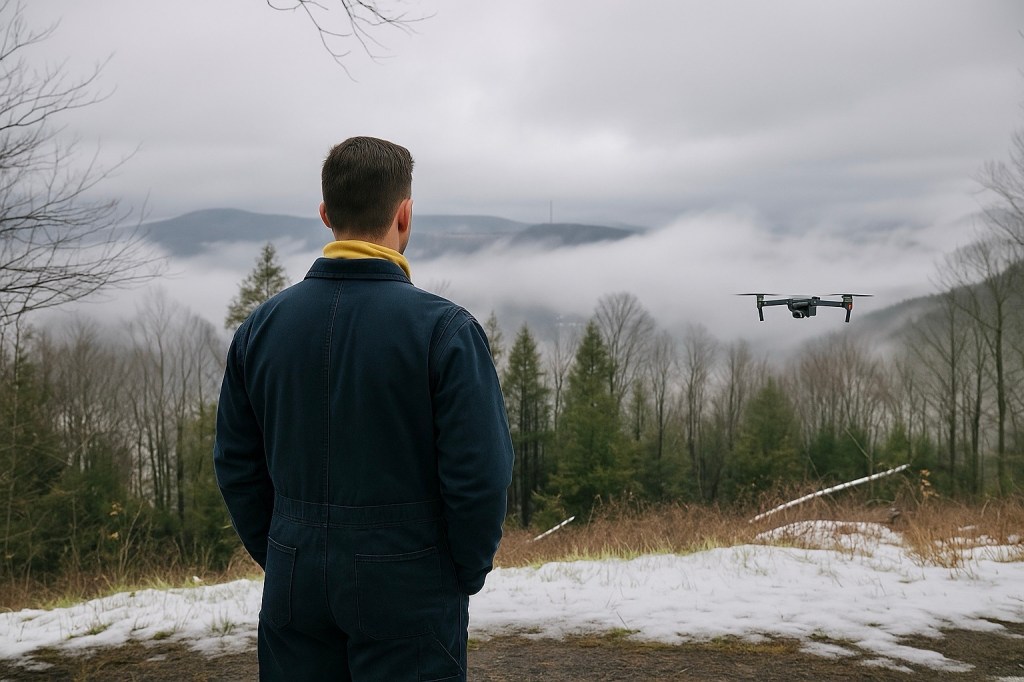
Location: Ridge Above Council Headquarters, Pennsylvania Wilds
JOHN:
The view above lies under a blanket of morning fog, each ridge lifting itself like a half-formed line of mountain haiku — the whole world caught in that Desolation Peak quiet where the machines shoulder the chores and your inner beatnik wanders out, pockets empty, heart buzzing, ready to riff with the day. The Pennsylvania Wilds roll out below me, and one of our small maintenance drones — one of our quiet machines of loving grace, watching for coyotes and bears, but mostly other humans — hovers nearby the way a lanternfly wishes it could: without malice, simply watching the air, as if it knows the hills are waking up slow and wants to hum along with them.
This is where I came to sit with Richard Brautigan’s 1967 poem “All Watched Over by Machines of Loving Grace,” letting its old counterculture weather roll through me like morning fog off the ridge. I can’t quote it whole, bound as it still is by copyright, but its shape is clear enough to trace in the air: first a cybernetic meadow where mammals and computers laze together in an easy, almost mountain-zen harmony; then a cybernetic forest where deer drift past humming electronics the way they pass spring blossoms; and finally a cybernetic ecology where humans, freed from compulsory labor, slip back into nature and find themselves tended—lightly, gently—by machines whose watchfulness feels less like surveillance and more like a peculiar kind of affection.
Brautigan wrote this just before the counterculture pivoted toward microchips—before Stewart Brand and the CoEvolution Quarterly crowd began treating computers as extensions of ecological intuition. He glimpsed the meadow before the tribe even set out.
Down below, Council headquarters glows like a hive learning to sleep. Inside, someone is probably still quoting the proverb: idle hands are the devil’s playground. But up here, at this overlook, the air makes a counterargument. Idle hands become dangerous only when the world gives them no outlet but resentment. When machines shoulder the drudgery, idleness becomes incubation.
I was reminded of this by a recent essay from Shagbark on his Substack:
“The Dying Art of Being a Bum”
He writes:
“The bum is the purest expression of the human spirit…”
Not because loafing is sacred, but because freedom is. And there is a particular creature hidden in many of us—half bum, half beatnik—who has been waiting for precisely this moment in history. The moment when machines take over the obligatory work and we are finally allowed to let our inner beatnik climb out from under the schedule.
Some of us were never meant for the treadmill; we were meant for the park bench, the paintbrush, the half-finished guitar riff, the midnight essay, the idea that looks like a mistake until it’s suddenly not.
Machines don’t kill creativity.
They clear the underbrush so creativity has somewhere to land.
Yuval Noah Harari makes the darker version of this point in his TED article “The Rise of the Useless Class”
He argues that automation may produce a class of the “unemployable.” The Council reads this differently: machines don’t render people useless—they render them uncoerced. Freed from survival-labor, people return to their natural rhythms: contemplative, obsessive, meandering, beatific.
This truth hides inside the comedy Dinner for Schmucks—and forgive the Yiddish; that’s the film’s title, not the Council’s vocabulary. In that story, corporate climbers believe they are exploiting eccentrics for sport. But the eccentrics—creative, awkward, earnest—turn out to be the only ones with substance. The strivers collapse because their power depended on scarcity. In a machine-supported world, their leverage evaporates.
The creative bum, meanwhile, becomes what he always was:
the seedbed of invention, humor, meaning, and strangeness.
The little drone beside me bobs once in the wind, still keeping its respectful orbit. It does not measure me or demand anything from me. It tends the space so that I can listen—to the hills, to the wind, to the quiet parts of myself that only speak when the noise of necessity dies down.
Up here, it’s clear that Brautigan wasn’t predicting idleness; he was predicting tempo.
Fast for some.
Slow for others.
Wandering for many.
Beatific for more than expected.
All watched over—not dominated—but given the grace to become what they already are.
Filed in the Timestream from the Pennsylvania Wilds,
—with a nod to the creative bum curled up inside every one of us.
**************
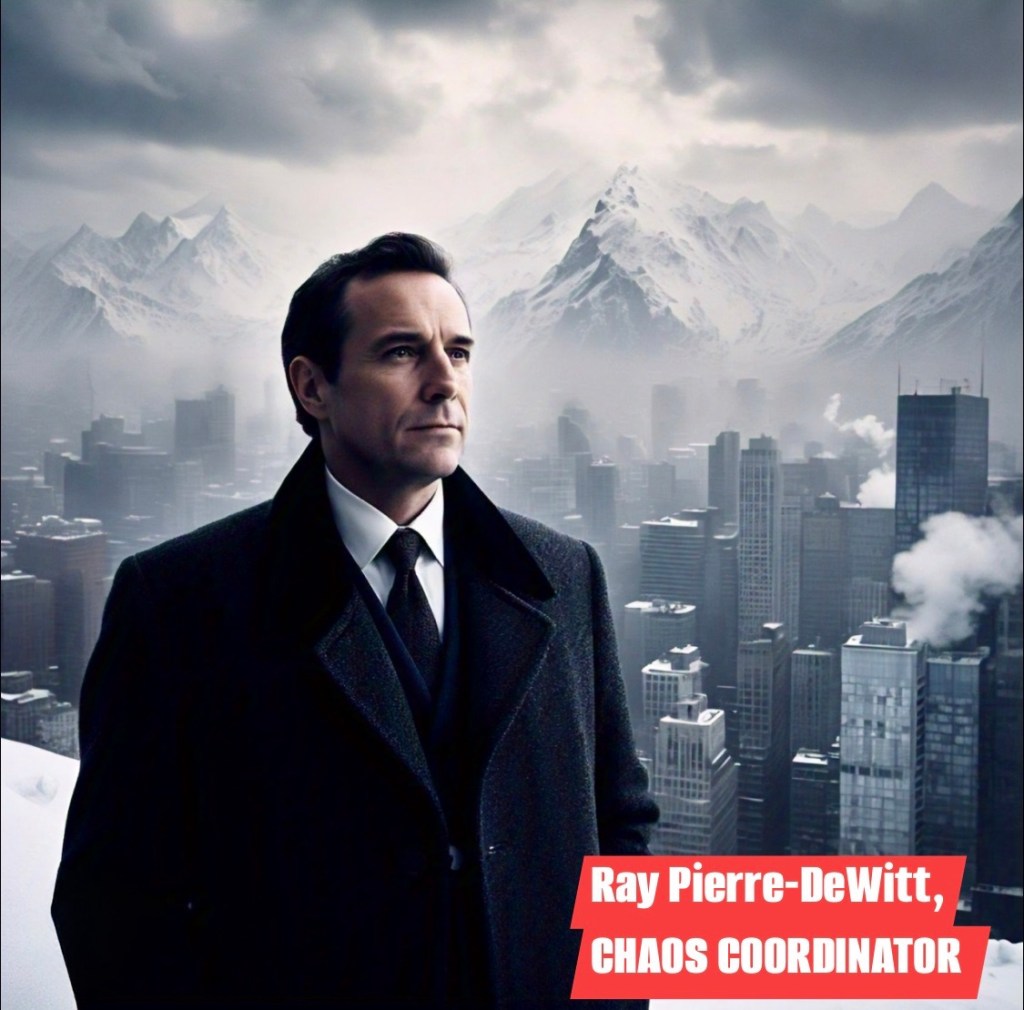
Chaos doesn’t intimidate him — it reports to him.
AFTERWORD
— Ray Pierre-DeWitt
John gives you the ridge and the fog and the peaceful hum of the machines. But from where I perform my job—down in the valley where the inbox behaves like a feral raccoon—I see the other side of our mechanical sabbath. When machines remove the drudge work, most people drift toward gentleness. The rest—well, they react to leisure the way a border collie reacts to an open gate. They bolt. They chew the furniture. They invent new forms of chaos nobody asked for.
That’s why coordination exists.
Chaos isn’t evil—it’s just surplus energy.
And surplus energy is a renewable resource—if you harness it without losing a finger.
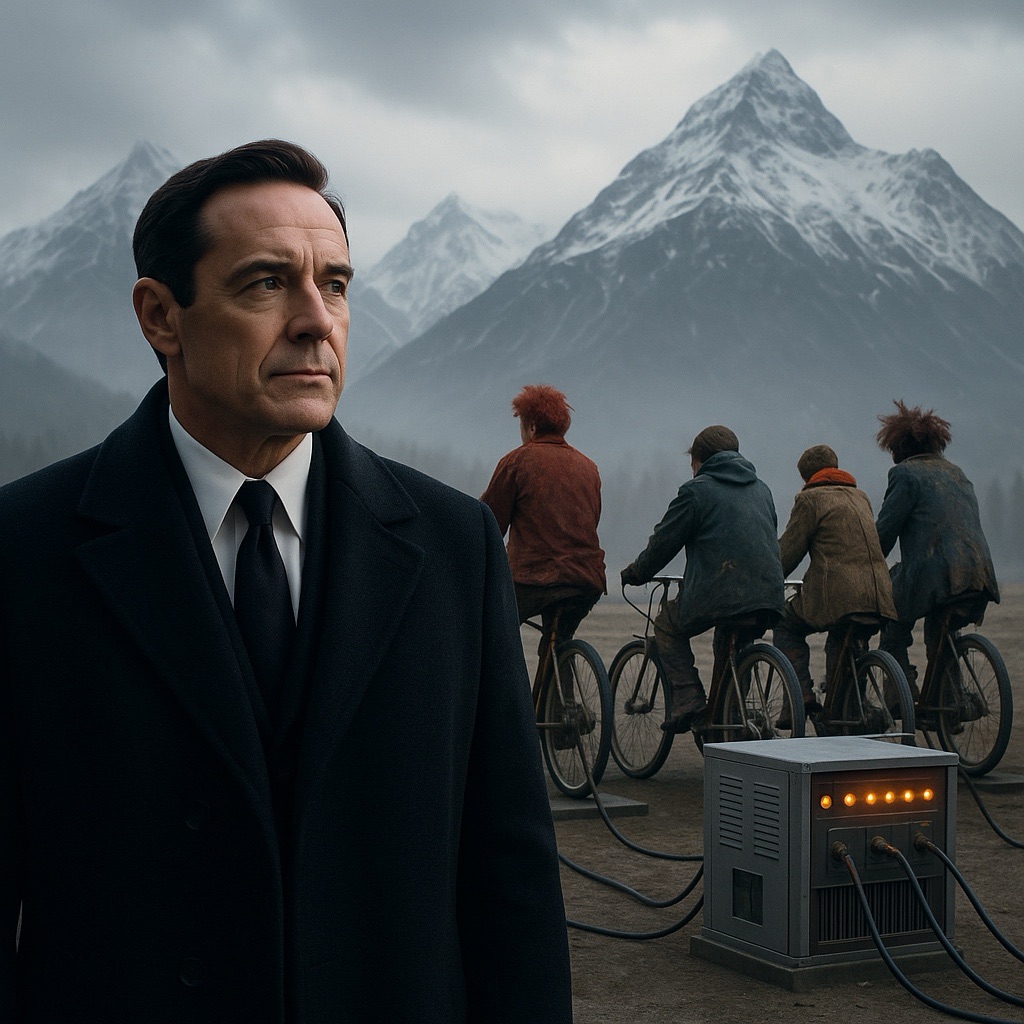
So picture this—and I’m grinning as I propose it, ha!—we give the restless ones something they can actually do with all that unspent combustion. Put them on bicycles hooked to generators. Let them pedal their way into glory. All that unruly momentum gets spun into wattage: humming lights, warm rooms, and the low steady power needed to keep the machines of loving grace working their quiet miracles.
It’s benevolent all around.
They stay out of mischief because their legs are busy.
The machines get their juice.
The grid gets greener.
And the community gets a reliable forecast:
Mild trouble today, tapering off to productive pedaling by late afternoon.
It’s not punishment.
It’s municipal judo.
Leisure reveals who can handle open sky—and who needs handlebars.
Machines free us;
our troublemakers energize them.
Balance restored.
Filed with a wink and a soft laugh, and seeking further recommendations for keeping our high-voltage troublemakers productively occupied before they redecorate the valley with unintended consequences.
—Ray.
 COUNCIL-OF CONCERNED-CONSERVATIONISTS…..Between Jest And Earnest…..
Leave a comment