—CONVERSATIONS UNDER THE KNIFE
—Conducted by Mrs. Begonia Contretemp
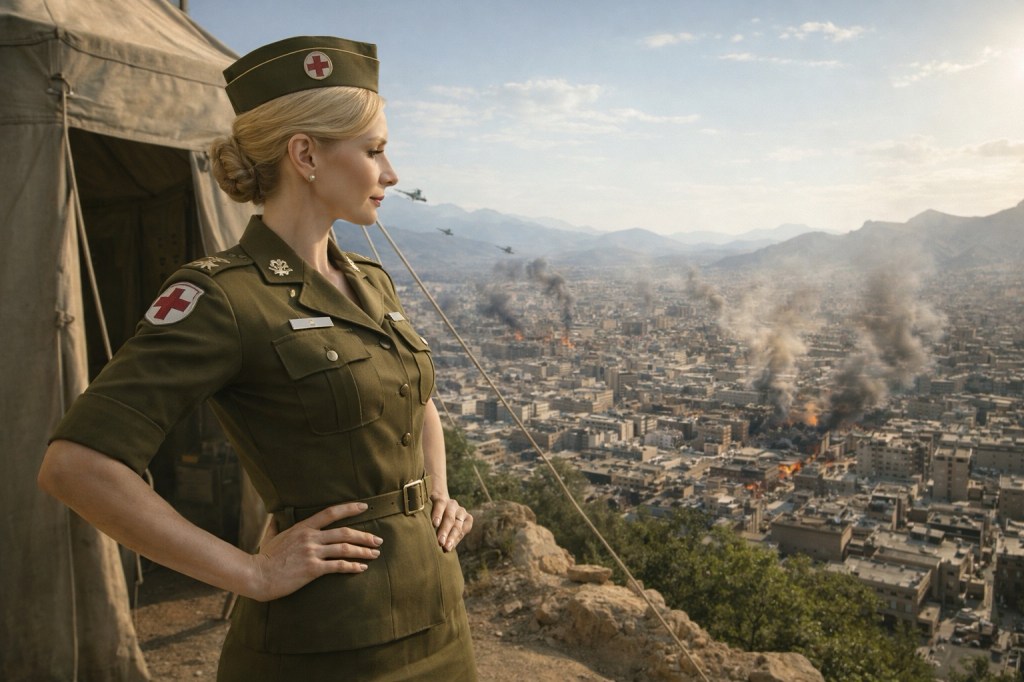
Participants:
Mrs. Begonia Contretemp — interviewer, cultural autopsist, unlicensed anesthesiologist of the soul
Warren G. Kampfs II — Talking Points USA-USA-USA (Second Generation Slogan Recipient), Republican-in-Name-Only (RINO)
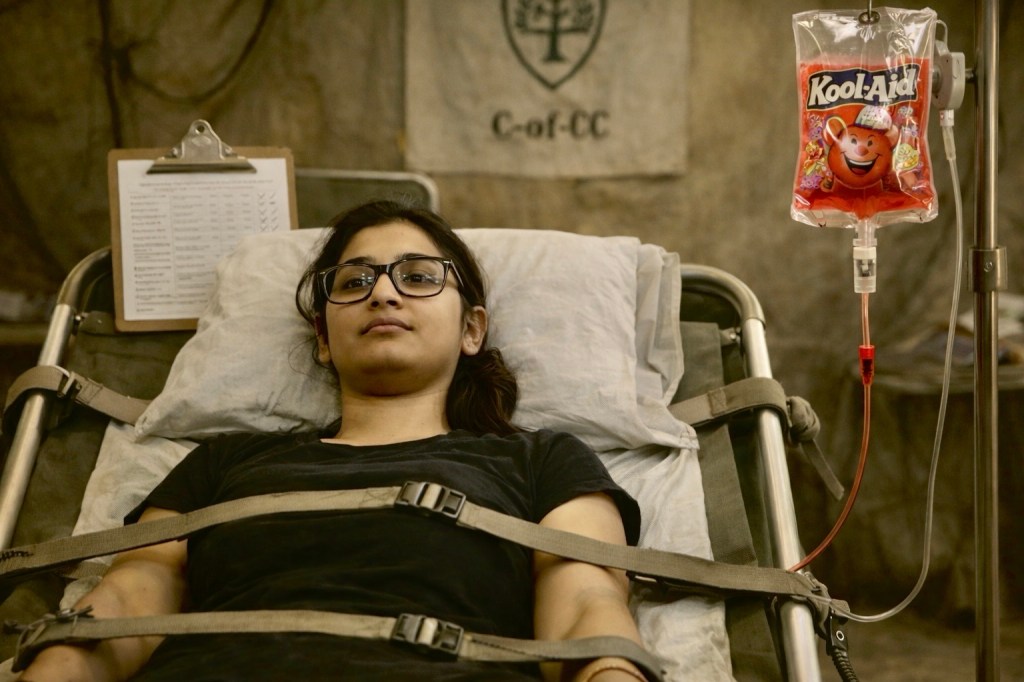
Miss Noor Singha Grudj — Council Gadfly, Progressive Credential Accumulator, Moral Certainty Consultant
Mrs. Begonia:
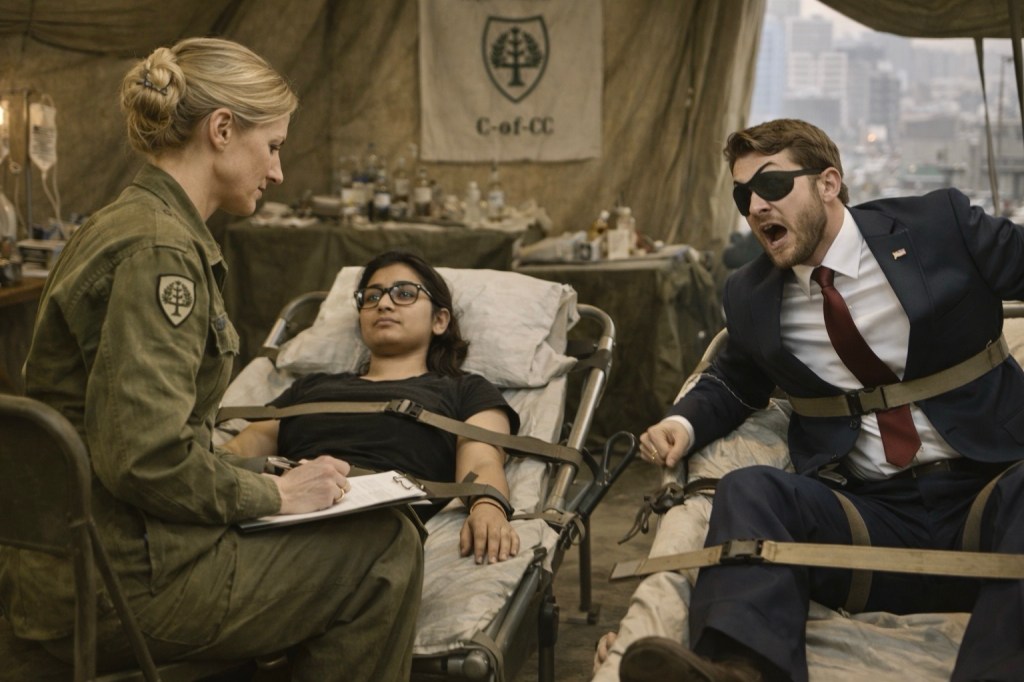
Good evening. Please relax. The restraints are symbolic. They exist mainly to prevent gesticulation.
Mr. Kampfs. Miss Grudj. Thank you for agreeing to be examined together. It’s not often we can compare symmetrical pathologies in the same room.
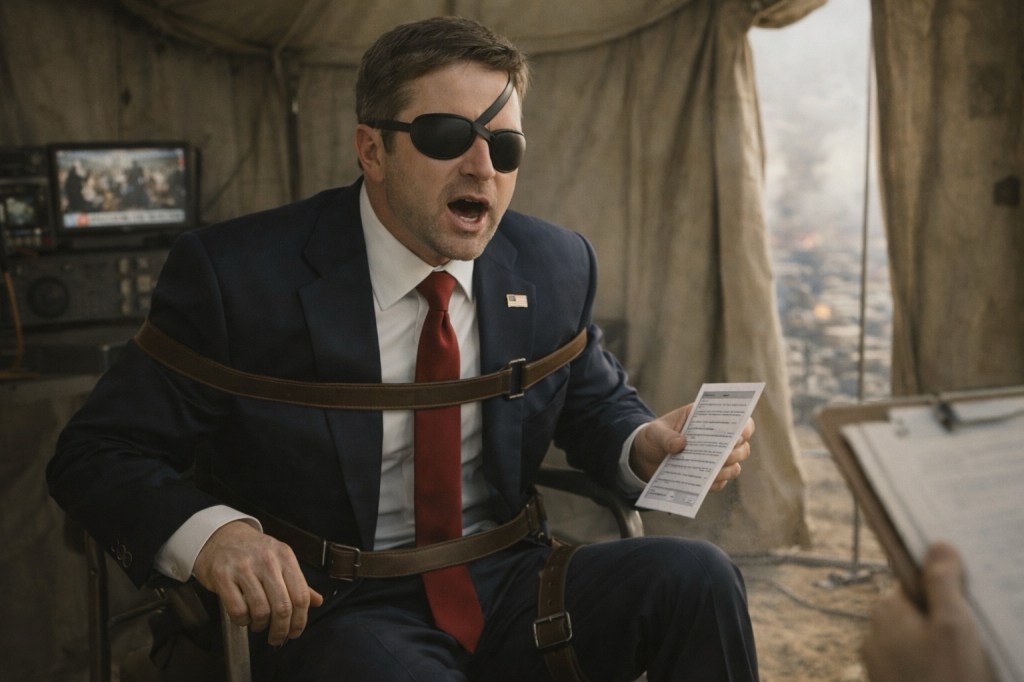
Warren G. Kampfs II:
Happy to be here. Talking Points USA—USA—USA believes in open dialogue, free markets, and restoring common scents to America. And I mean that literally. You walk into certain cities and you don’t even need a briefing—you can smell the policies before you hear them. It’s not about common sense anymore; it’s about common scents—the stale odor of bureaucracy, the musk of overregulation, that unmistakable whiff of moral superiority that’s been left out too long in the sun. When something smells off, Americans know. You don’t need a think tank to tell you that.
Miss Noor Singha Grudj:
I’m only here because platforms like this must be challenged. Silence is violence, and frankly, your newsletter is problematic adjacent.
Mrs. Begonia:
Splendid. You’ve both arrived pre-inflamed.
Let us begin simply.
Mr. Kampfs—what is the root cause of America’s problems?
Warren:
Big government, the erosion of traditional values, the weaponization of the administrative state, and welfare programs.
Mrs. Begonia:
All at once?
Warren:
They’re interconnected.
Mrs. Begonia:
Of course they are. They always are when memorized.
Miss Grudj—your turn.
Noor:
Structural inequality, white supremacy, capitalism, climate denial, patriarchy, and the failure to center marginalized voices.
Mrs. Begonia:
Also all at once?
Noor:
Intersectionality demands that we see the whole system.
Mrs. Begonia:
Fascinating. You’ve both described a hydra with infinite heads and no spine.
Now—Mr. Kampfs—could you name one policy you support that inconveniences your donors?
Warren:
I reject the premise of the question.
Mrs. Begonia:
Ah. Premise rejection. A classic reflex. Like pulling your hand away from a hot stove—except the stove is thought.
Miss Grudj—could you name one progressive policy that negatively affects people who vote exactly like you?
Noor:
Any discomfort they feel is necessary growth.
Mrs. Begonia:
So pain for others is education, but pain for you is oppression?
Noor:
That’s a gross oversimplification.
Mrs. Begonia:
You’ll forgive me—I specialize in oversimplifying people who claim complexity while speaking exclusively in approved sentences.
Let’s try something more intimate.
Mr. Kampfs, when did you last change your mind about anything?
Warren:
I don’t change my mind. I refine my understanding as facts evolve.
Mrs. Begonia:
Name the evolution.
Warren:
Well—freedom works. It always has.
Mrs. Begonia:
Timeless, then. Like Stonehenge. Or cholesterol.
And just so I’m clear—when you speak of freedom, do you mean your freedom, or do you genuinely wish it extended to everyone? Because looking at what some people have already done with theirs, one wonders whether you believe they could handle it.
Miss Grudj—same question.
Noor:
My views are evidence-based.
Mrs. Begonia:
Splendid. Which evidence made you uncomfortable most recently?
Noor:
Discomfort is a tool used by reactionaries to derail progress.
Mrs. Begonia:
So neither of you has ever had a thought arrive uninvited.
That explains the smell. Certainty has a very particular odor—like reheated righteousness.
Let’s move to language.
Mr. Kampfs—what does the word freedom mean?
Warren:
Freedom means less regulation, personal responsibility, and the right to succeed or fail without government interference. It has to apply to everyone—everyone—even if they misuse it, even if they wreck everything, even if the outcome is catastrophic. That’s not a flaw; that’s the proof. If the whole thing collapses and it’s all on camera—cities burned out, systems broken, people ruined—then at least we can point to the footage and say, there it is. That’s freedom. Total freedom. Hell yes. The fact that it was allowed to happen is the evidence that we didn’t interfere.
Mrs. Begonia:
Except for tariffs, policing, zoning, military spending, border control, and corporate subsidies.
Warren:
Those are different categories.
Mrs. Begonia:
Naturally. Words are flexible when they’re loyal.
Miss Grudj—what does justice mean?
Noor:
Justice means equity, accountability, and dismantling oppressive systems—even when that requires pressure on people who are hardworking, capable, and honest. If that feels unfair to them, it’s only because they’re measuring fairness from a position that was never neutral to begin with. What they call unfairness is simply the delayed recognition of the unfairness others have always lived with. Discomfort is not injustice; it’s correction. And if some people feel singled out, that’s not a flaw in the process—it’s evidence that the process is finally reaching those who were previously protected from consequence.
Mrs. Begonia:
Including merit, dissent, due process—and inconvenient statistics that refuse to experience themselves as unjust?
Noor:
That’s bad faith framing.
Mrs. Begonia:
No—it’s anatomy. I’m pointing at organs you pretend are vestigial.
Now a final question for both of you.
If tomorrow it became clear that your side had caused serious harm—real harm, not theoretical harm—would you say so publicly?
Warren:
That would depend on the context and the media’s bias.
Noor:
That would depend on whether the framing empowered harmful narratives.
Mrs. Begonia:
So the answer is no, but with footnotes.
Let me summarize your conditions.
Mr. Kampfs, you confuse repetition with courage and call it principle.
Miss Grudj, you confuse moral language with moral thought and call it justice.
Both of you outsource thinking to institutions, hashtags, donors, or graduate seminars—and then accuse everyone else of being sheep.
You are not opposites.
You are mirror images who despise mirrors.
The danger is not merely that you disagree.
The danger is that neither of you is reachable.
Please remain seated.
We are proceeding to a second procedure.
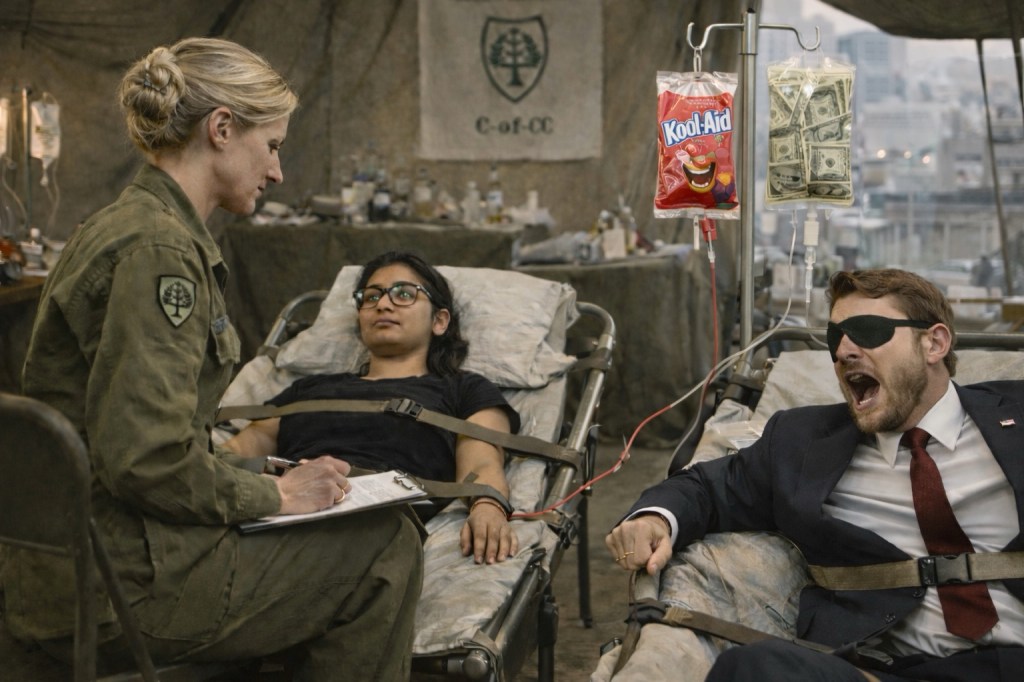
SECOND PROCEDURE
Ideological Cross-Transplant
Mrs. Begonia:
We’ve determined your conditions are stable and incurable. The only remaining diagnostic step is a cross-exposure test—largely a formality, required for documentation and insurance purposes, and to confirm what everyone in the tent already knows.
You both belong to two warring camps—locked in a ritualized conflict sustained entirely by recycled sentences. A cold war fought with warm slogans.
For clarity, we will now separate belief from vocabulary.
New rule:
You will answer the next questions using language normally associated with the opposing camp, while insisting—of course—that you still believe exactly what you believe.
This is not a trick. It is an X-ray.
Mr. Kampfs—please explain why free markets sometimes fail. Use moral language only.
Warren:
Well, when corporations operate without accountability, marginalized middle-class communities suffer disproportionately, and unchecked power can undermine fairness and dignity—
(—he pauses, startled to hear his own mouth produce a thought he was told belonged to the enemy.)
Mrs. Begonia:
Excellent. Continue.
Warren:
—and when profit is prioritized over people, the social fabric erodes.
Noor:
Yes. Exactly.
Mrs. Begonia:
Indeed. Mr. Kampfs, you are currently arguing a position you’ve publicly denounced for a decade. You appear comfortable.
Now—Miss Grudj—please explain why borders exist. Use material and labor language only.
Noor:
Nations have a responsibility to manage finite resources, protect domestic labor from exploitation, and ensure social cohesion so economic systems don’t collapse under unmanaged strain—
Warren:
That’s—actually quite reasonable.
Mrs. Begonia:
Isn’t it?
Please continue, Miss Grudj.
Noor:
Without enforcement mechanisms, you risk downward pressure on wages and instability that disproportionately harms the working class.
Mrs. Begonia:
Marvelous. You’ve just delivered a speech that would receive standing applause at a policy luncheon you’d refuse to attend.
Now—allow me to read back your statements.
(She consults her notes.)
Mr. Kampfs, your remarks align almost verbatim with several progressive NGO briefs on corporate ethics.
Miss Grudj, yours mirror conservative labor-protection white papers from the early 2000s.
You see—neither of you believes what you say.
You believe where it came from.
Remove the logos, and you become interchangeable interns.
This is why your camps must remain at war. If peace broke out, you’d notice you’re using the same intellectual furniture—just painted different colors.
The tragedy is not that you are wrong, as if that wasn’t bad enough.
It is that you are replaceable.
If either of you vanished tomorrow, your camp would issue the same statements by noon.
We will now conclude the procedure.
You may sit up slowly.
The world will remain complex despite your objections.
Mrs. Begonia:
Final diagnosis: the country is terminal, and the immediate cause is you—two warring camps that replaced thought with allegiance and mistake reflex for virtue. But you do not act alone. You are both shaped, disciplined, and rewarded by the same foreign force—one that scripts your language, narrows your imagination, and may not be spoken aloud without consequence. It influences you equally, though you swear it favors the other side. You fight each other so you never have to confront it. When the country goes, you will go with it—not as resisters, but as obedient participants—still reciting, still certain, still believing the voice in your head was your own. Time of death remains flexible. The knife is withdrawn.

End of this Conversation Under the Knife
 COUNCIL-OF CONCERNED-CONSERVATIONISTS…..Between Jest And Earnest…..
Leave a comment