—A Forward Observation from Nomansland
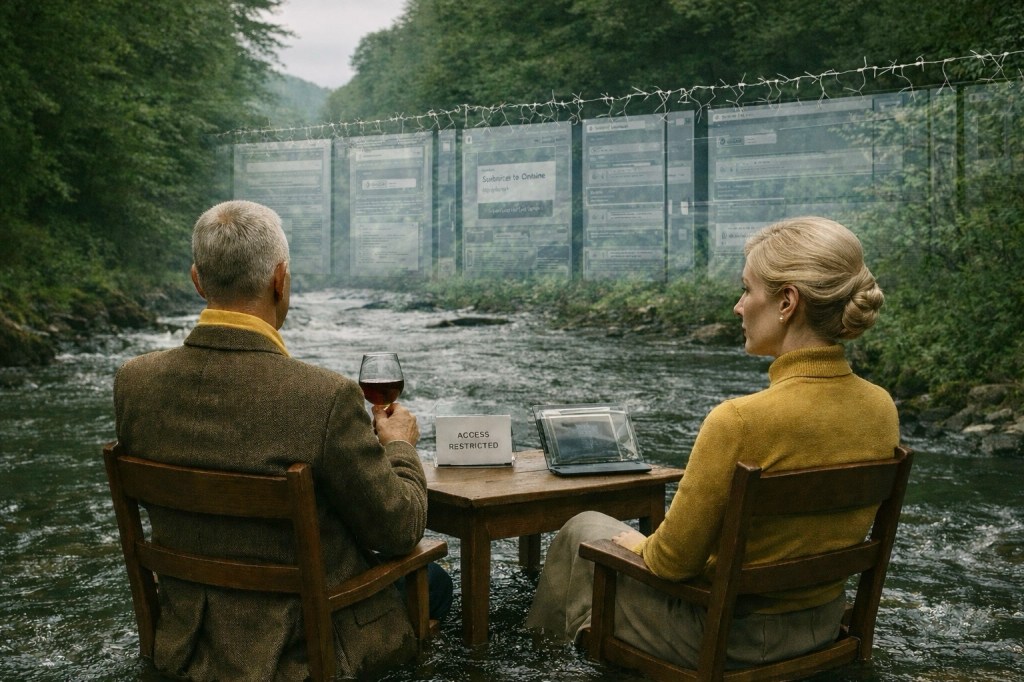
—A Conversation Under the Wire
Mrs. Begonia Contretemp (introducing):
Today we place Peter R. Mossback under the knife—not because he is unwell, but because he has an inconvenient habit of standing where history is trying to hurry past. Readers may know him as the Council’s Athwart Historian: a man who does not chase the current, but waits to see what floats by once it has exhausted itself. Peter has written recently on barriers, insulation, and the strange ways history protects people without asking permission. Peter, try not to bleed.
Peter R. Mossback:
I’ll do my best. History rarely hits where it aims anyway.
Mrs. Begonia:
You’ve argued that the Iron Curtain, for all its brutality, inadvertently protected Central and Eastern Europe from Americanization and cultural flattening. That’s an unfashionable claim.
Mossback:
Unfashionable things often survive longer. The Iron Curtain was imposed to control people, not to preserve them. And yet, by blocking saturation—advertising, consumer ideology, endless novelty—it spared millions from being submerged in it. People longed for American culture. They mythologized it. But they weren’t marinated in it.
Longing is different from saturation. Longing sharpens. Saturation dulls.
Mrs. Begonia:
And you see a parallel today.
Mossback:
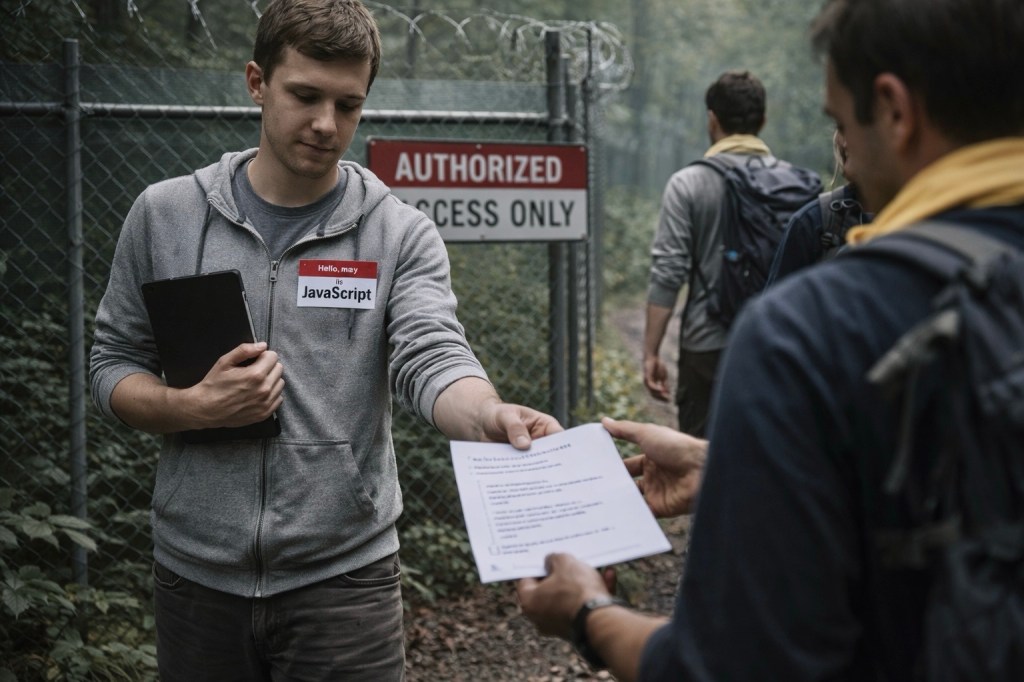
Yes—only softer, quieter, and therefore more effective. The paywall.
Mrs. Begonia:
The new Iron Curtain.
Mossback:
Exactly. And it’s no accident that the phrase first appeared in Slovakia—where journalists themselves joked about a coordinated national paywall as the new Iron Curtain. People who lived behind the original recognize the silhouette immediately. I only discovered that comparison during my research, after the idea had already formed by looking at function rather than metaphor; it didn’t inspire the argument so much as confirm it, one of those moments where history quietly nods back and says, yes, you’re seeing the shape correctly.
What fascinates me is that the paywall now protects readers from establishment blather in precisely the same accidental way. Not by censorship. By inconvenience.
Mrs. Begonia:
Meaning?
Mossback:
Meaning the people who will not pay to cross it are spared the constant moralizing, the managerial tone, the ambient urgency of the old liberal order. They are not forbidden to enter. They simply don’t bother.
And so they are protected—from saturation, from flattening, from being talked at rather than persuaded.
Mrs. Begonia:
Yet they still long for it, don’t they? Or at least for its prestige.
Mossback:
Of course. Just as people once longed for Levi’s and Coca-Cola. The establishment still exists as myth, headline, screenshot, secondhand authority. But not as a daily presence shaping habits and assumptions.
That’s the irony history delights in: the barrier creates desire without exposure.
Mrs. Begonia:
Editors would say the paywall is necessary for survival.
Mossback:
And they’re right, financially. But culturally it’s counterproductive. Institutions confident in their authority seek exposure. Institutions in decline retreat into subscription management.
The paywall says, we believe our readers already agree with us and can afford to keep us afloat. It no longer says, we expect to persuade the undecided.
Mrs. Begonia:
So Nomansland appears.
Mossback:
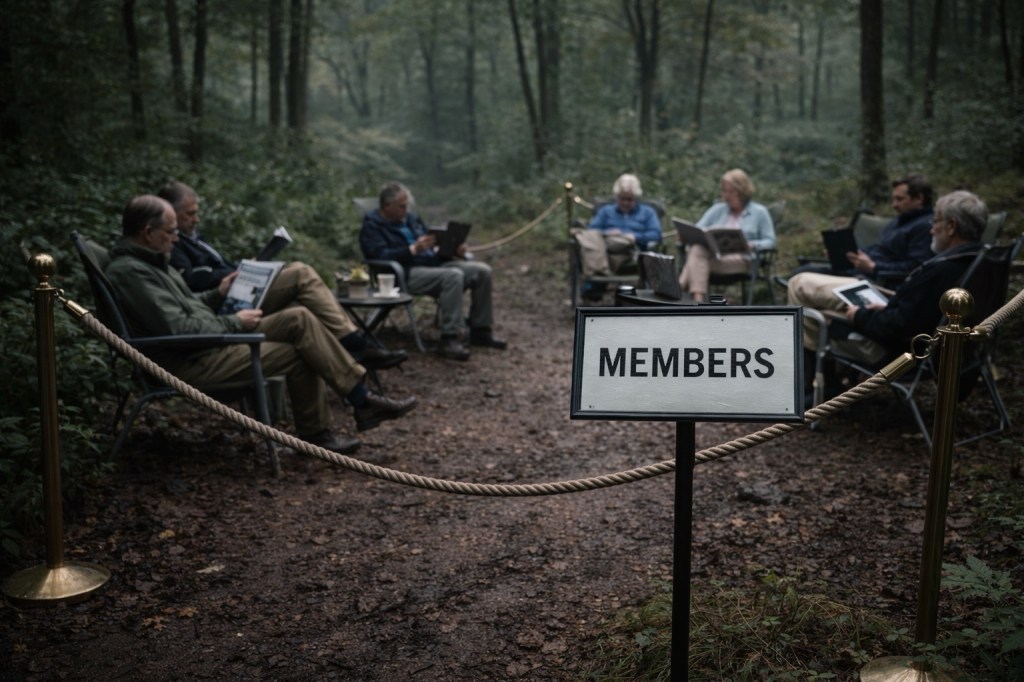
Yes. The abandoned middle. The vacated commons. The space where persuasion once crossed borders. Not conquered—simply left behind.
And just as after World War II, history has created a buffer zone no one intended. A place where people are neither converted nor coerced—only spared.
Mrs. Begonia (closing):
Which suggests a final discomforting thought: that the old establishment has not been overthrown, but quietly insulated—its influence reduced not by resistance, but by a monthly fee.
A curtain once required barbed wire. Now it requires a credit card. And in both cases, history achieved something no one planned: protection by exclusion.
(Knife withdrawn. Nomansland remains.)
**************
POSTSCRIPT:
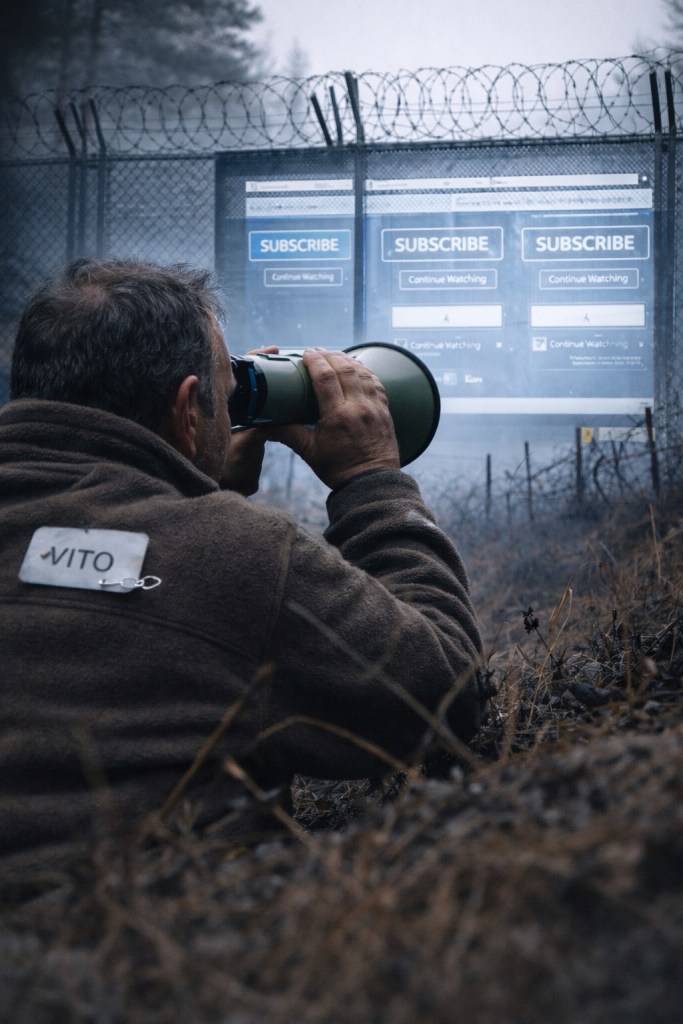
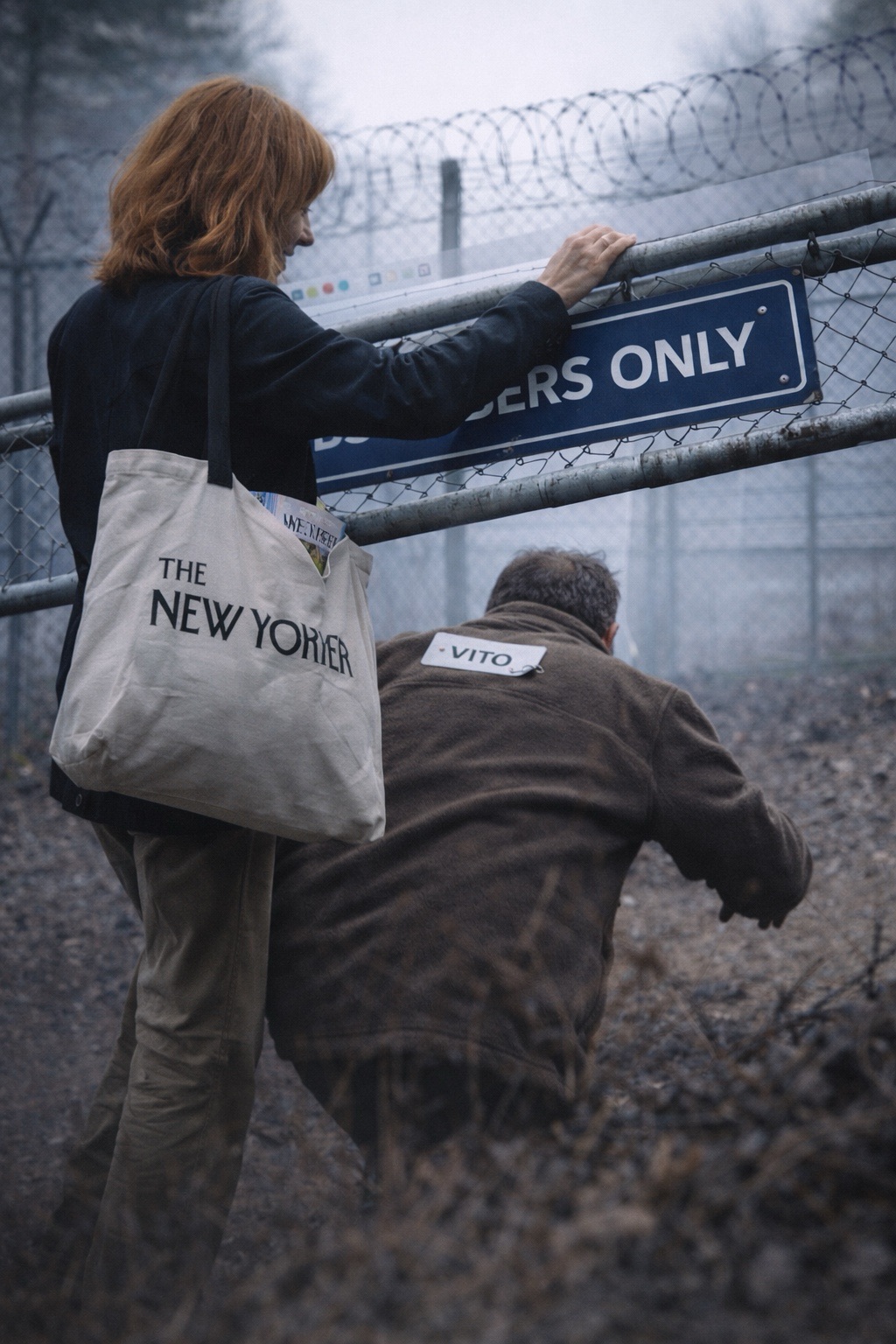
COMRADES—THIS IS VITO.
I went forward. Past the gate. Into Nomansland. It’s quiet out here. No arguments. No persuasion. Just old headlines echoing behind glass.
People keep asking—after hearing what Peter Mossback laid out—if the paywall might actually save the liberal establishment. Like maybe the curtain keeps them protected in there. Preserved. Still running the show.
Doesn’t look that way from where I’m standing.
Here’s what I can tell you from the field: the gate keeps the regulars comfortable, but nobody new is crossing. Power, in the sense that actually matters—influence—needs foot traffic. Needs noise. Needs people bumping into it whether they want to or not. You can’t govern from behind a subscription screen.
So yes—the paywall protects us from the blather. But it also protects the blather from reality. And that’s a bad trade if you’re trying to matter.
Nomansland isn’t a forward base. It’s the place influence used to walk through.
VITO OUT—
(pause — static)
—WAIT, HOLD IT—VITO AGAIN FROM NOMANSLAND.
Send me the JavaScript tool—the quiet one. The one that makes it look the other way. This barrier isn’t iron, it’s script. A surface instruction telling the page what not to show. They could lock it hard if they wanted to. They don’t.
That’s the point. The gap is intentional. It screens for a certain kind of reader—the curious, the technically fluent, the ones who know how to look past the first instruction without making a scene. A paywall that says not everyone, but also not just anyone.
I’m going in closer to hear what they say when they think they’re among their own.
Could be dangerous work—prolonged exposure, ideological spores, the usual. But I really want to read the new Susan Orlean piece in The New Yorker. I’m willing to risk the infection for that—just to be clear, not from her article.
—VITO OUT—WORKING PAST THE SCRIPT.

 COUNCIL-OF CONCERNED-CONSERVATIONISTS…..Between Jest And Earnest…..
Leave a comment