—A Council Note on Context and Occasion
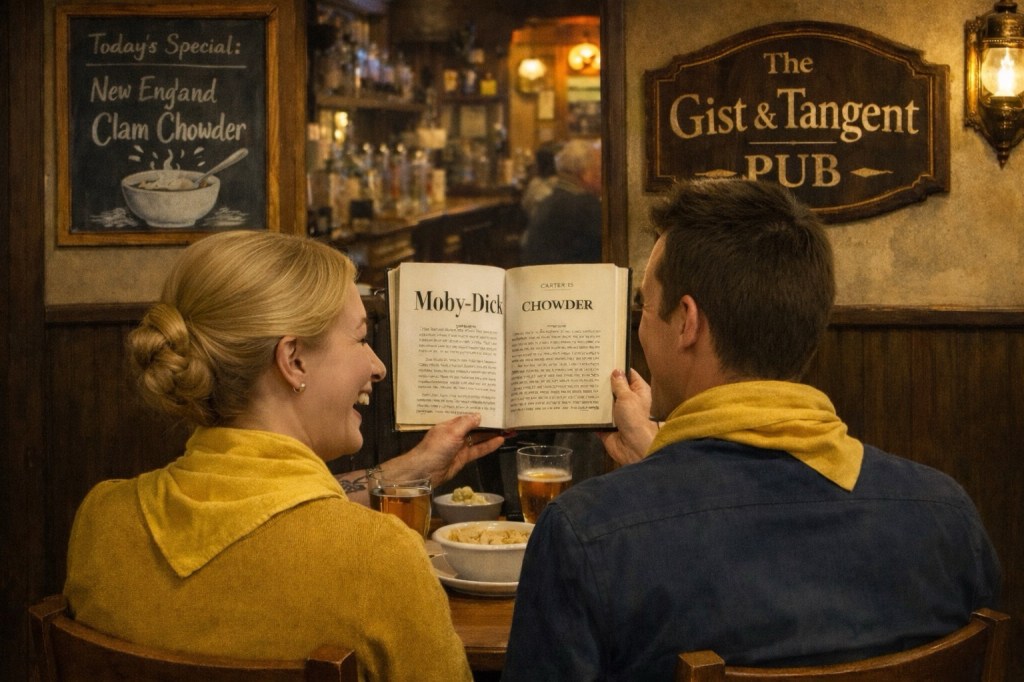
The following exchange arises from a familiar modern ritual: a public encounter with a classic text, followed by a spontaneous outbreak of present-day moral self-congratulation. In this case, the scene is a live reading of Moby-Dick, and the moment is one of Melville’s most quietly destabilizing reversals—when Ishmael entertains the possibility that he may be the true savage, not Queequeg.
An observer, writing afterward, records the audience reaction. The Council reproduces the passage here in full, not to quarrel with its accuracy, but to address what it reveals about how Melville is now being filtered, applauded, and subtly diminished—praised not for what he was doing, but for how neatly he can be made to flatter the present.
What follows is a response from the curb rather than the lectern.
—Ray Pierre-DeWitt

***
“Admittedly, there were moments during the marathon when I sensed the presentist mask reasserting itself. For instance, when Ishmael postulates that perhaps he himself, and not a South Pacific cannibal like his ‘bosom friend’ Queequeg, is the genuine ‘savage’, a cheer arose from the crowd. A young man behind me tittered: ‘That’s actually pretty progressive!’ as though satisfying 21st-century progressives should have been among Melville’s objectives in conceiving the character of Ishmael.”
The Council Riposte

—Filed by Vito Haeckler, Man-on-the-Street:
Yes, the young man laughed.
Yes, he called it “pretty progressive.”
And yes—that tells us far more about him than about Herman Melville.

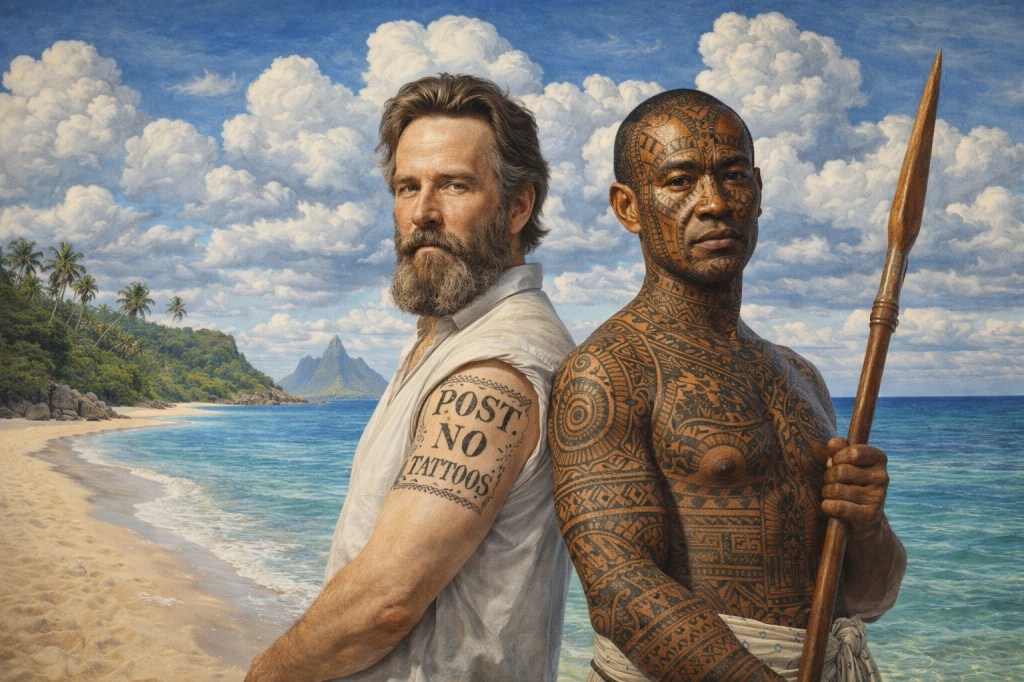
When Ishmael wonders whether he is the savage and not Queequeg, this is not Melville trying to curry favor with a future audience. It’s Melville doing something older, harder, and far less comfortable: turning the moral lens inward, toward himself and the White civilization that formed him.
That reflex did not originate in the 21st century.
It did not require applause.
And it certainly did not wait for a permission slip from history.
It came out of a culture that still believed self-examination was a sign of strength, not treason.
The titter misunderstands the move. It assumes moral insight only matters if it anticipates our slogans. But Melville wasn’t writing toward us. He was writing through his own moment—using its language, its theology, its racial categories, and its contradictions to ask a question that never stops being dangerous: who is the barbarian, really?
That question does not erase a civilization.
It tests whether it deserves to endure.
What gets lost in the laugh is this: Melville did not disown his people in order to make the point. He didn’t place himself above them. He stayed inside the house and checked the beams. He trusted his inheritance enough to interrogate it.
That isn’t self-loathing.
That’s cultural adulthood.
The cheer mistakes humility for compliance. Melville’s insight feels “progressive” only because our moment has grown so thin that any serious inward judgment now looks like a concession to fashion of the Other.
Melville paid a cost for that judgment.
He risked being misunderstood.
He risked being ignored.
He risked being wrong.
If that capacity for inward moral reckoning came out of the White culture he inhabited—and that we still inhabit—then perhaps the proper response isn’t to sneer at the house while living in it, but to recognize that the house still stands because someone once bothered to test its foundations.
Melville didn’t write to please us.
He wrote to see clearly.
The laughter is just evidence that clarity remains unfashionable.
Council-of-Concerned-Conservationists
 COUNCIL-OF CONCERNED-CONSERVATIONISTS…..Between Jest And Earnest…..
Leave a comment