Definitions as encountered, not prescribed
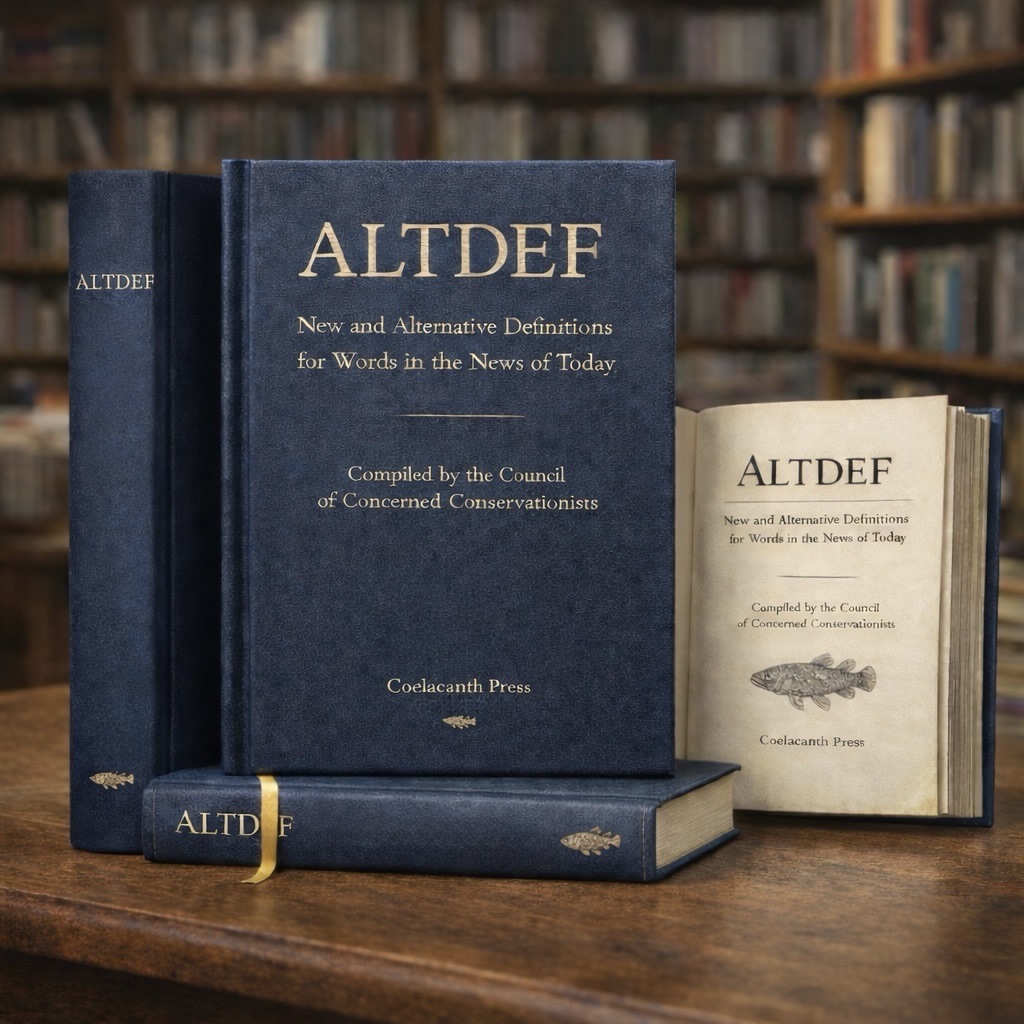
Fundamental, adjective
From Latin fundare — to found; fundamentum — base, groundwork.
Forming the necessary base or core; of central importance. Often presented as self-evident, and increasingly met with equally self-evident replies.
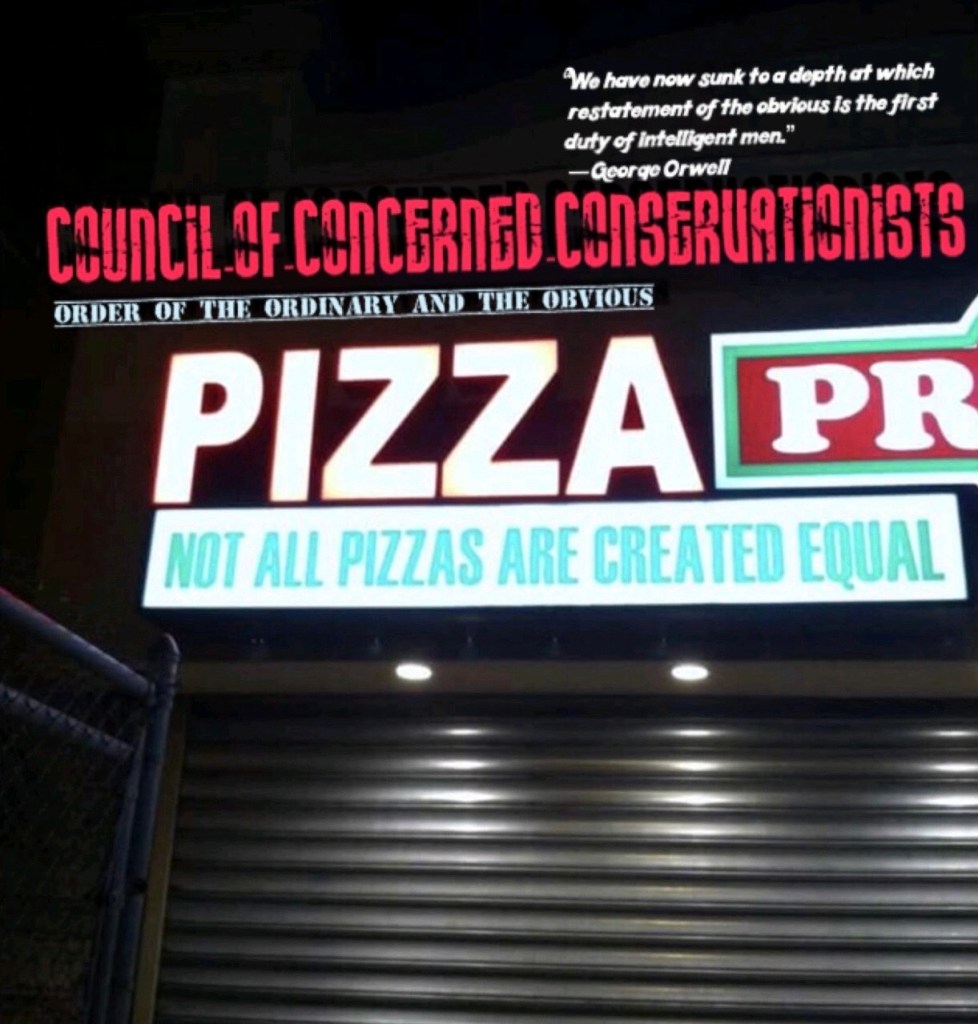
(Common contemporary riposte: “Not all pizzas are created equal.”)
See also: fundamentalist —
One who insists that a founding text is complete, closed, and immune to revision.
Examples include:
• One who believes in a literal interpretation of scripture, such as a member of the Church of the Enlightenment, founded in France, or a member of one of its American branches who treats Reason as revelation.
• A civic fundamentalist who regards the Declaration of Independence of the Founding Fathers as settled metaphysics rather than a historical argument—accepting the precept that “all men are created equal” as fact without questioning how, when, or by whom that claim was first asserted.
Fund-a-mental, verb (informal; contemporary)
To purchase books, merchandise, or products from advertisers who support ideological media ecosystems—formerly talk-radio shows hosted by neo-con shock jocks, now migrated intact into the podcast economy.
Example:
“He fundamentals by buying the books, the supplements, and the frozen pizza advertised between episodes.”
(See above definition of fundamentalist.)

Addendum: Nominative Determinism (Field Note)
FUND•A•MENTAL
When separated from its Latin dignity and allowed to stand naked in modern English, the word begins to misbehave.
Fund — to supply money.
A — an indefinite article, doing very little work.
Mental — of the mind; unstable; unwell; unhinged.
Read not etymologically, but phonetically and behaviorally, the word appears to issue a quiet instruction:
Fund a mental.
Which is to say:
direct resources, attention, and purchases toward those who exhibit certainty, intensity, and moral fervor—especially when packaged as fundamentals.
This is not how the word was meant.
It is, however, how the word now functions.
Nominative determinism does not claim destiny is fixed.
It observes that names, once released into culture, begin to recruit behavior.
In this sense, fundamentalism is not merely belief.
It is an economic activity.
—Marco Buchmann, Lexical Field Editor
 COUNCIL-OF CONCERNED-CONSERVATIONISTS…..Between Jest And Earnest…..
Leave a comment