—(by Vito Haeckeler, C-of-C-C Newsletter Man-On-The-Street)
(Finally, I have my own column—this one inspired by a favorite phrase around the Newsletter: “taking umbrage.”)
Now is the time we should be giving umbrage instead of just taking it.
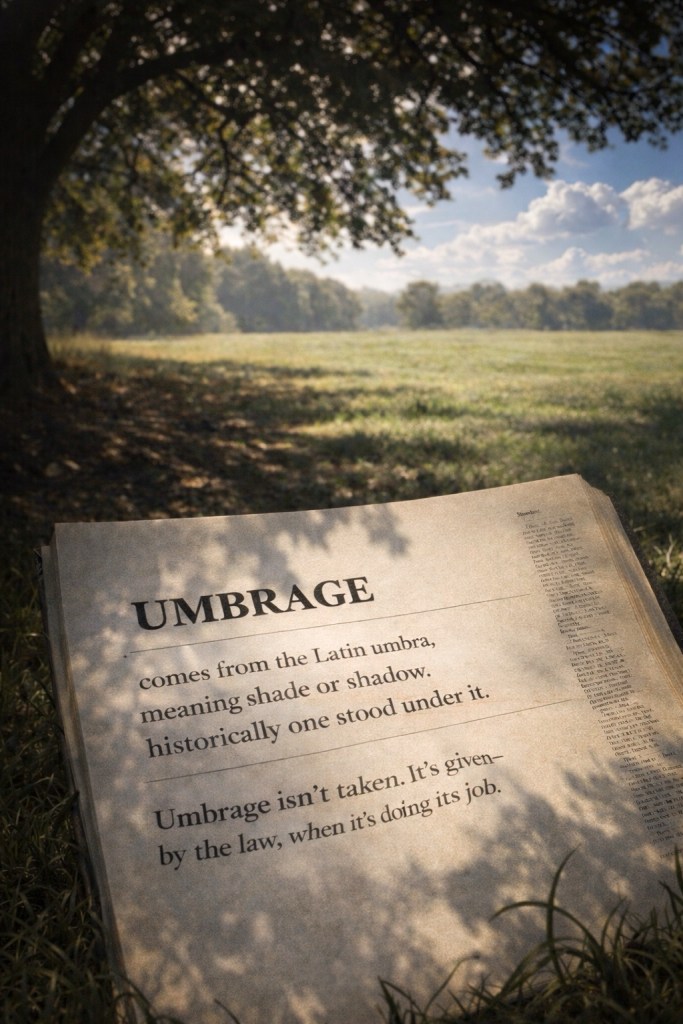
Let them live under our shadow.
We will provide the heat.
Where to begin?
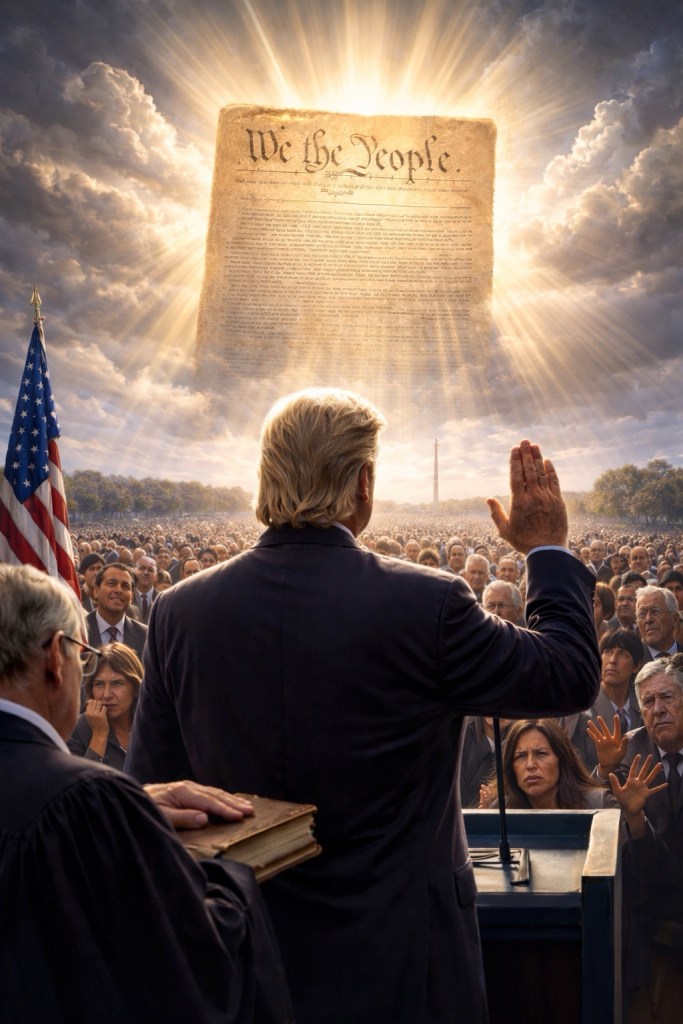
The Presidential Oath of Office:
“I do solemnly swear (or affirm) that I will faithfully execute the Office of President of the United States, and will to the best of my ability, preserve, protect and defend the Constitution of the United States.”
The President takes an oath to preserve, protect, and defend the Constitution. There is also the requirement to faithfully execute the Office of President. What the oath does not spell out is a duty to the American people as people—or even explicitly to the homeland itself.
We’ve always assumed that obligation was implied in whatever the “Office of President” consists of. So we tried to find out what that actually means.
We asked Google: “What does the Office of the President of the United States consist of?”
We were directed to the White House website:

That led us on.
So we went back to the Constitution itself. Nowhere in Article II does it explicitly state that the President has a duty to the people who make up the United States. His duties, as spelled out, are to the Constitution.
Which raises a question: is the Commander-in-Chief role only operative insofar as it defends the territory that contains the Constitution? What about the people living inside it?
The Preamble does take us back to flesh and blood:
“We the People of the United States, in Order to form a more perfect Union, establish Justice, insure domestic Tranquility, provide for the common defence, promote the general Welfare, and secure the Blessings of Liberty to ourselves and our Posterity, do ordain and establish this Constitution for the United States of America.”
The men who endorsed the document clearly said it was for “ourselves and our Posterity.”
Those guys were too smart by half. They took too much for granted. They left too much to assume—which, in case you didn’t know, can also be read as ass-(of)-u-(and)-me. There, I’ve spelled it out.
What they left unsaid mattered because interpretation does not occur in a vacuum. It occurs inside a cultural atmosphere. Laws are not self-executing machines; they are read, applied, and enforced by people shaped by the assumptions of their time.
The Constitution works beautifully when the interpreters share roughly the same cultural frame as the authors—or at least a recognizable descendant of it. When that alignment holds, interpretation feels like stewardship. When it breaks, interpretation becomes substitution.
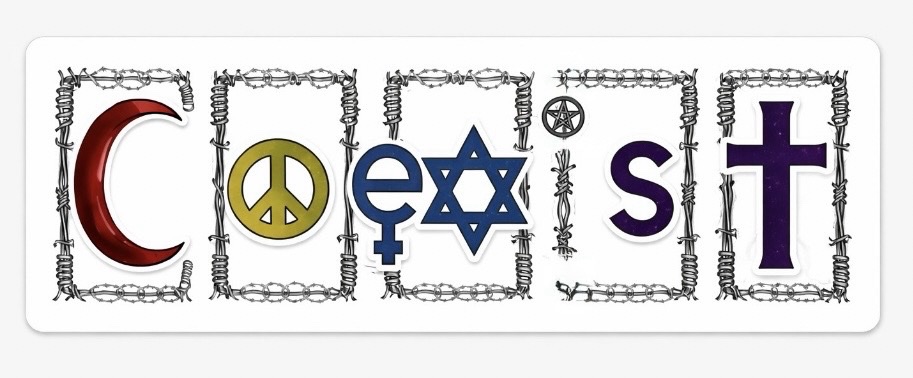
Available soon.
This is not a claim about intent. It is a claim about structure.
And structure matters when things stop being theoretical and start blocking streets.

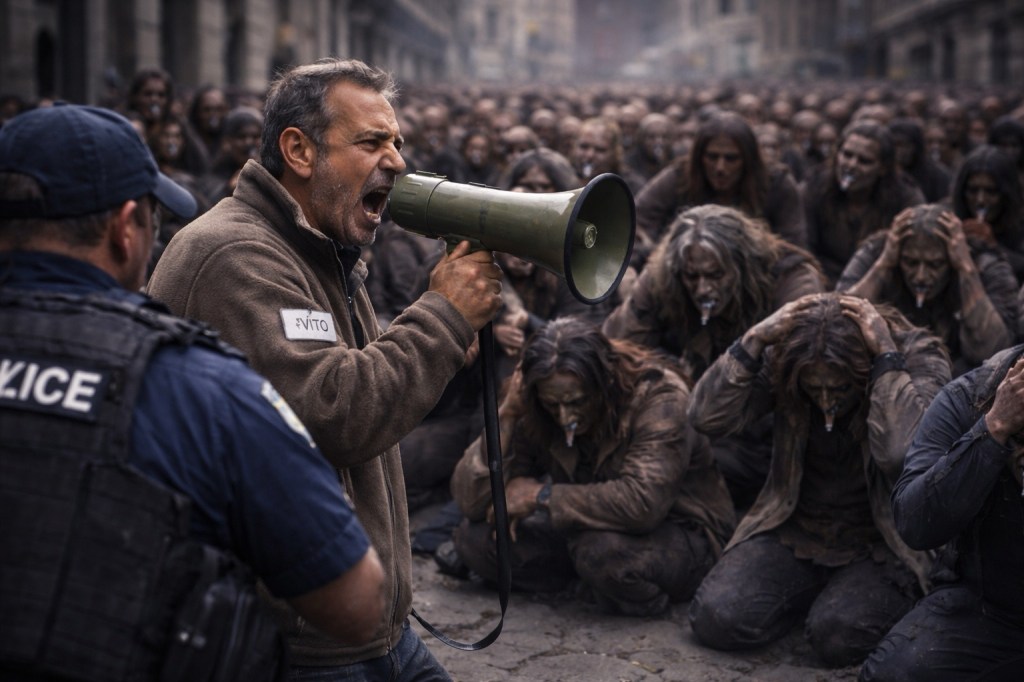
If the President wants to show loyalty to the people, he does not need to improvise or emote. He does not need slogans or performances. He needs to do the job the oath actually describes. When duly constituted law-enforcement officers are legally enforcing the law—apprehending individuals with criminal records or outstanding warrants—and they are obstructed, there is no room for decorating around the problem. That is not debate. That is interference. Restoring order so the law can be enforced is not a betrayal of the people; it is the mechanism by which the people are served. You don’t protect a house by arguing in the doorway while it’s on fire.
Over time, large changes can take place not through direct electoral mandate but through accumulated administrative decisions, judicial readings, and policy habits that emerge gradually, often without a single moment where the public is asked to affirm the whole direction at once. What is presented as continuity can feel, to those living through it, like replacement by interpretation or worse yet—immigration.
This is not only a claim about motive. It is a claim about drift.
When meaning is left implicit, power migrates to whoever defines the atmosphere in which the text is read.
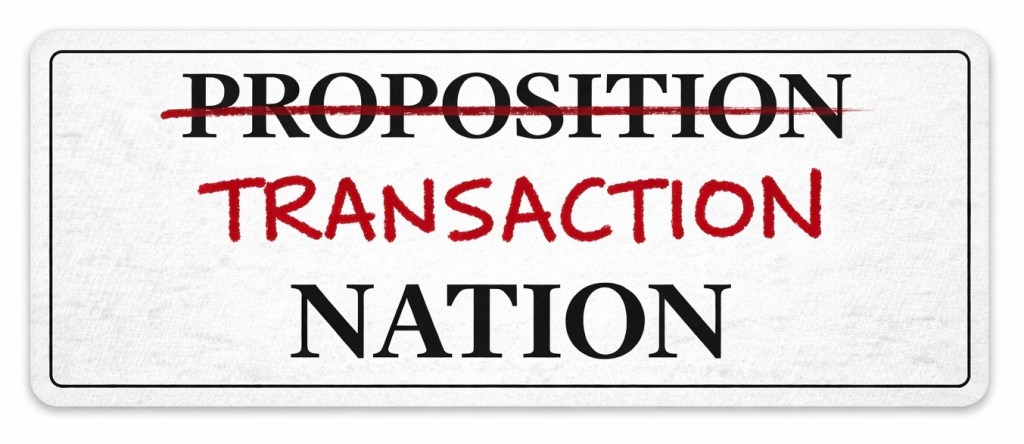
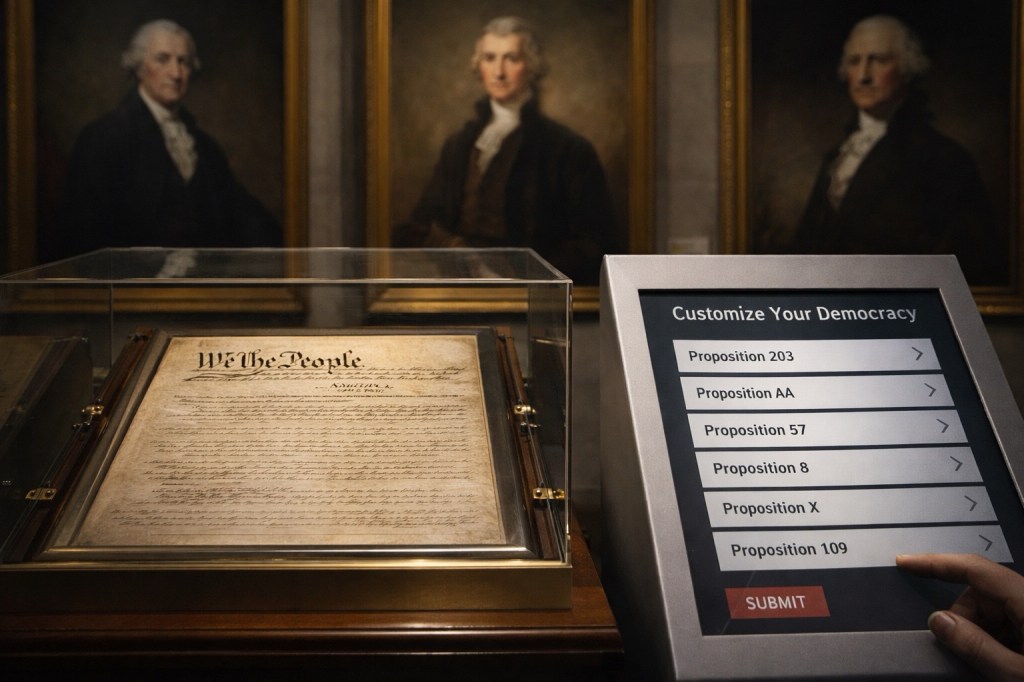
This is where we stand now, in what has become the Proposition Nation. It is no coincidence that the word proposition is used when making a certain monetary transaction for something that was once thought to be more sacred in nature—something done for the good of society at large, not as a negotiated sale.

A lot of confusion could have been avoided if they had specified what their “posterity” actually consisted of. To be fair, they did try to play catch-up.
The Naturalization Act of 1790 restricted citizenship to free White persons. Then the Nationality Act of 1952—also known as the McCarran-Walter Act—removed racial exclusions.
So no, we really can’t blame the founders alone for the original document or the subsequent Acts.
But here we are.
The law isn’t a suggestion, and the people aren’t served by letting it get shouted down.
 COUNCIL-OF CONCERNED-CONSERVATIONISTS…..Between Jest And Earnest…..
Leave a comment