—From Beaver Pelts to Interior Terrain
—FIELD NOTE FROM AN UNMAPPED TERRITORY—by The Accidental Initiate
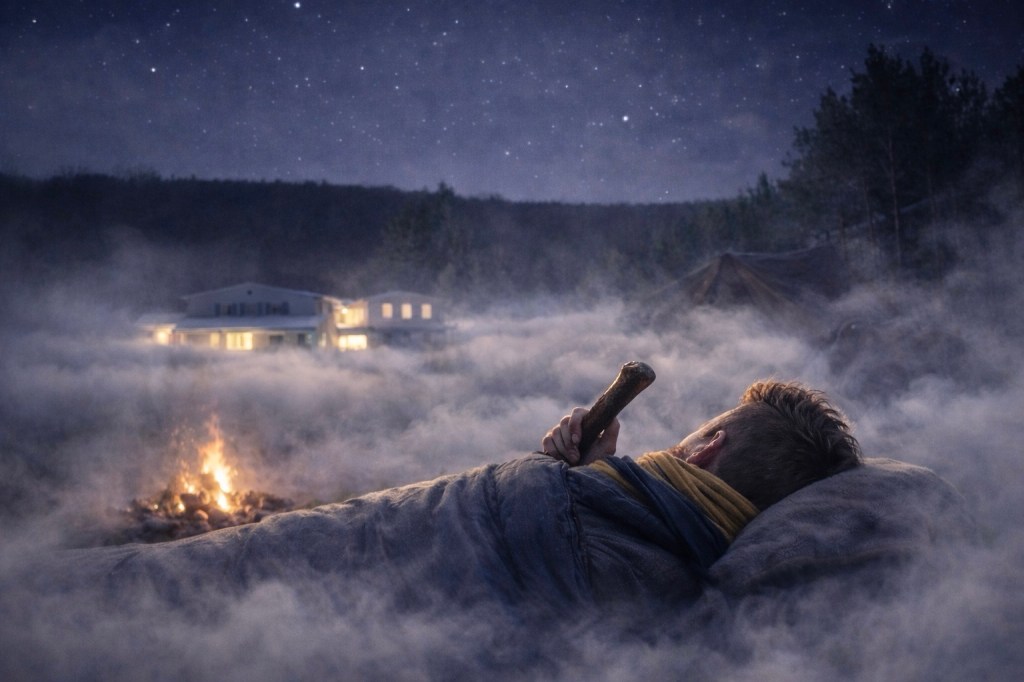
I woke up because of a rodent.
Not a metaphorical one. A mouse in my pack, gnawing industriously at something it had no intention of explaining. The sound didn’t so much wake me as work its way into the dream. Persistent. Calm. Purposeful. When I finally came to, it was hard to say where the dream had ended and the house had begun.
That detail mattered later.
I had been reading BEAVERLAND, How One Weird Rodent Made America, which is a book about how a single animal—also a rodent—quietly helped make a continent.
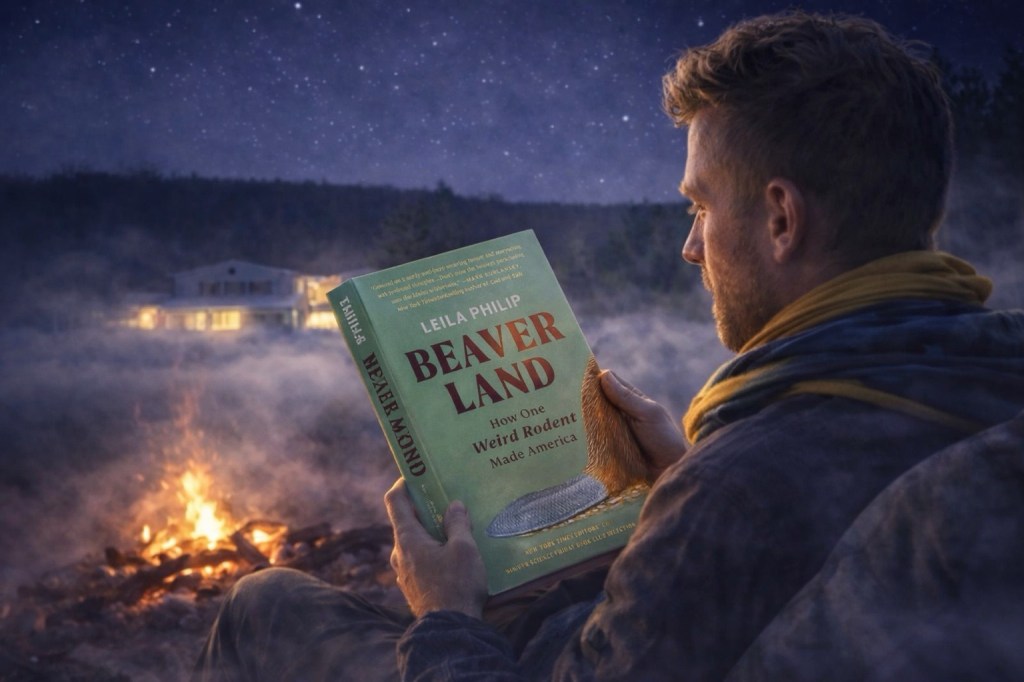
Beavers reshaped watersheds. Pelts reshaped empires. Fortunes were made early by people who arrived before anyone understood the scale of what was happening.
History remembers the collapse.
It forgets the excitement.
The excitement is always the same: the feeling that you’ve stumbled onto something vast, underpriced, and barely noticed.
Some time ago—not that morning, but in the recent past—I caught a beaver on a trail cam.
The footage was nocturnal, infrared, time-stamped while everyone was asleep. The animal passed through the frame without drama, unconcerned with the lens, as if it had wandered briefly into the edge of another world and then gone on with its business.
The mouse in my pack and the beaver in the stream belong to the same order. That detail stuck. Same taxonomy. Different scale. One testing the integrity of my container of food. The other once reorganizing entire landscapes. The difference between nuisance and history, I realized, is mostly a matter of time.
That morning, after sleep, I remembered almost nothing of my dreams. That’s normal for me. Most of them are mundane: rooms, conversations, half-finished errands. Occasionally there are better ones—flying, floating, innocent erotic warmth—but they don’t arrive on command and they don’t stay.
What lingered wasn’t imagery. It was a feeling.
Whatever I had just been doing, nobody was watching. Nobody was counting. Nobody needed anything from me.
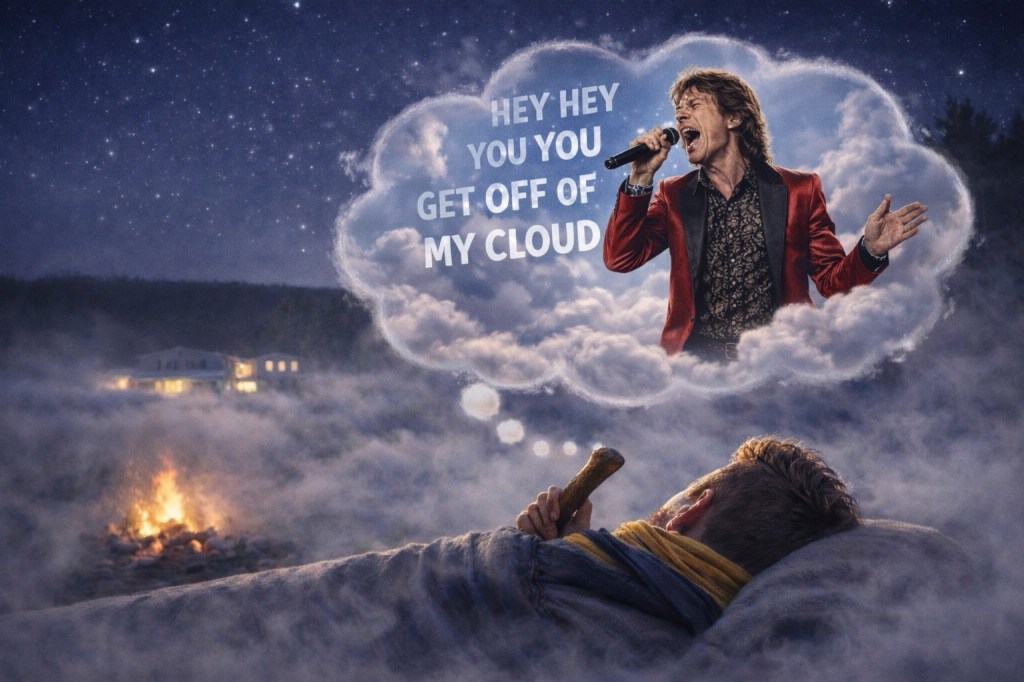
Then I read the news. A national leader reminding us of exploding pagers and the fact that we all carry cell phones.
The contrast was sharp enough to feel physical.
That’s when the thought arrived—not as a warning, but as a genuine thrill:
What if this is the next frontier?
We’ve done this before. Over and over.
Beaver.
Cod so abundant they fed continents.
Whales rendered down to light cities.
Timber and coal.
Gold.
Tulips—flowers briefly mistaken for destiny.
Oil—ancient sunlight, briefly infinite.
Attention itself, extracted in real time.
Artificial intelligence—not a resource so much as an accelerator of extraction.

Each of these felt endless at first contact. Each produced a brief class of people who got in early and thought they were clever rather than lucky.
Looking at that list, it occurs to me that none of these were discovered through brilliance. They were discovered through proximity. People kept running into them. Rivers clogged with beavers. Seas thick with cod. Lamps that worked only because something had been boiled down to make light. Even tulips became valuable because enough people couldn’t stop looking at them.
And then there are the ones closer to home.
The mouse in my backpack hadn’t announced itself with meaning. It simply kept working—small, persistent, unembarrassed by scale. The beaver, too, appeared only at night, in the same register dreams do, while the rest of the world was offline. Both animals surfaced not in daylight, but in the margins, where attention loosens.
Only later did it occur to me that both rodents had arrived in the same way: through insistence.
This is where another thought stopped me.
I found myself wondering—almost idly—whether Herman Melville wrote Moby-Dick by whale-oil light.
Not as trivia. As circumstance.
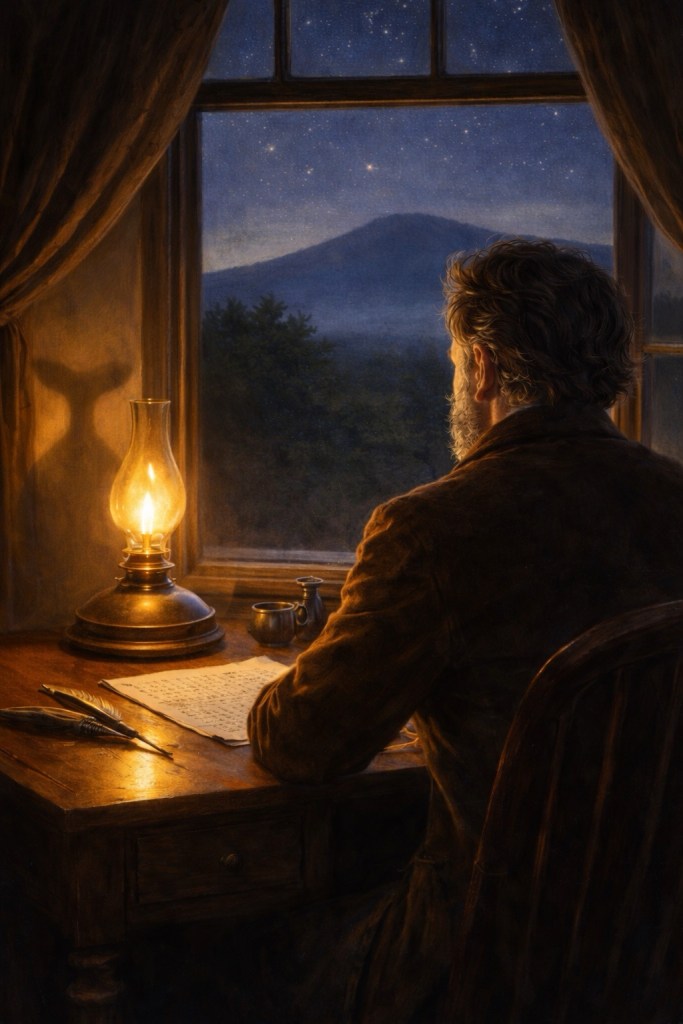
Melville lived at the hinge of an era. Before kerosene. Before electricity. At a time when evenings were extended by lamps and candles whose fuel came, quite literally, from whales. Spermaceti—clean, bright, prized—was not an exotic detail. It was how thinking continued after sunset.
I sat with that longer than I expected.
If the answer is yes—and it almost certainly is—then something quietly astonishing follows. The whale did not merely appear in the book as subject or symbol. It illuminated the page on which its own story was told. Its body powered the light under which Melville described its immensity, its violence, its mystery.
Not intention.
Not consent.
But participation.
The whale made the conditions for its own telling.
That realization felt less like irony than recursion. A loop closed so neatly it had gone unnoticed for a century. A resource so embedded in thought that it became invisible.
And that’s when the beaver returned to me—not as image, but as pressure.
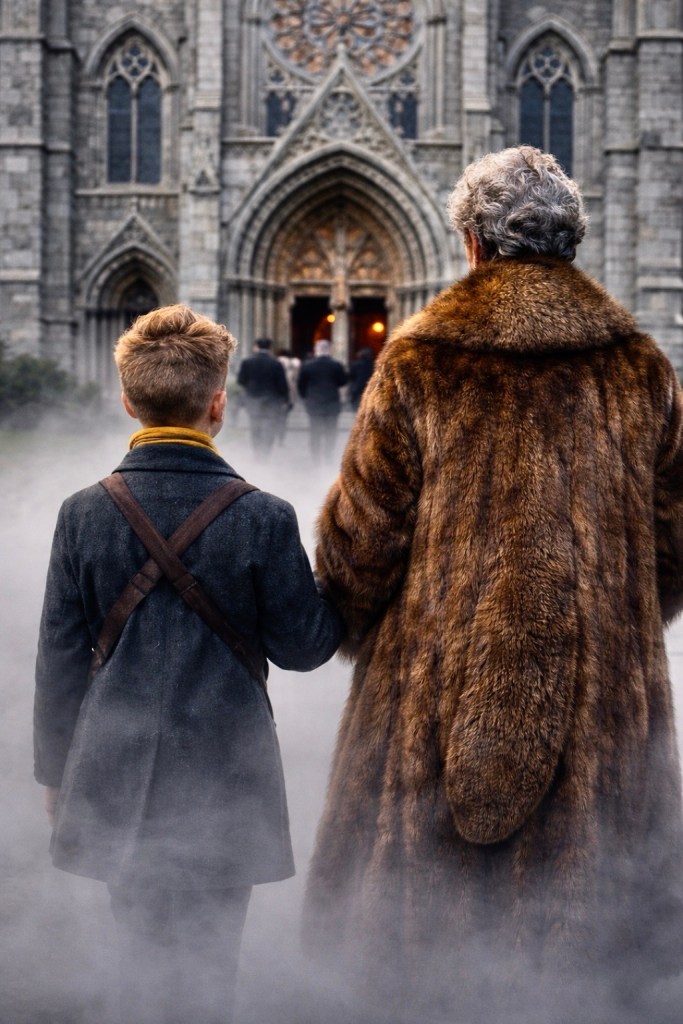
The beaver didn’t ask to be read. It passed through the frame at night, indifferent. But here I was, thinking because it existed—because it once rearranged rivers so thoroughly that entire economies followed.
I began to see the pattern.
Some creatures don’t speak.
They enable.
They alter landscapes—physical or mental—until humans can’t help but notice and start writing.
The whale lit the room.
The beaver re-engineered the continent.
The mouse refused to stay hypothetical.
Dreams began to look similar. Not messages. Not prophecies. Just another nocturnal system operating while the rest of the world sleeps, altering interior terrain slowly enough that it goes unnoticed—until it doesn’t.
That’s when the excitement returned.
Not because this frontier needs saving.
Because it exists at all.
Dreams feel different from earlier resources. Not better. Different. They regenerate. They refuse maps. They don’t centralize. You can ruin parts of them, no doubt—just as we’ve polluted oceans and cluttered orbit—but you can’t exhaust the whole. They behave more like space than soil. More like weather than property.
I’m aware that others have noticed the edges. Psychologists have treated dreams as shared interior wilderness. Scientists study lucid dreaming. The military studies sleep. Intelligence agencies once poked around altered states during the Cold War.
None of that feels decisive.
It feels like reconnaissance.
What excites me most is that dreams still retain privacy by default. They resist recording. They dissolve when over-described. They don’t improve under management.
And then—inevitably—I noticed the irony.
By writing this down, I’m already doing the thing that starts every rush. Naming it. Pointing. Talking too soon.
The worry doesn’t last.
This frontier doesn’t feel like one that can be used up. It feels like a continent inside a universe. Vast enough that even our worst habits can only scar the margins.
The Council doesn’t need to protect it. That would be presumptuous.
It’s enough to notice it—to arrive early, with bad handwriting and no plan, and remember that some territories remain free not because they are defended, but because they are too large to finish talking about.
I put the phone down again inside it’s explosion proof case.
The mouse kept working.
Somewhere nearby, a rodent still capable of reshaping worlds went about its business, unconcerned with whether we were ready to notice.
Dreams remain gloriously unfit for management.
They’re private, impractical, faintly ridiculous, and openly absurd.
Which is to say: the frontier is still open.
MAFA — Make Absurdity Fun Again.
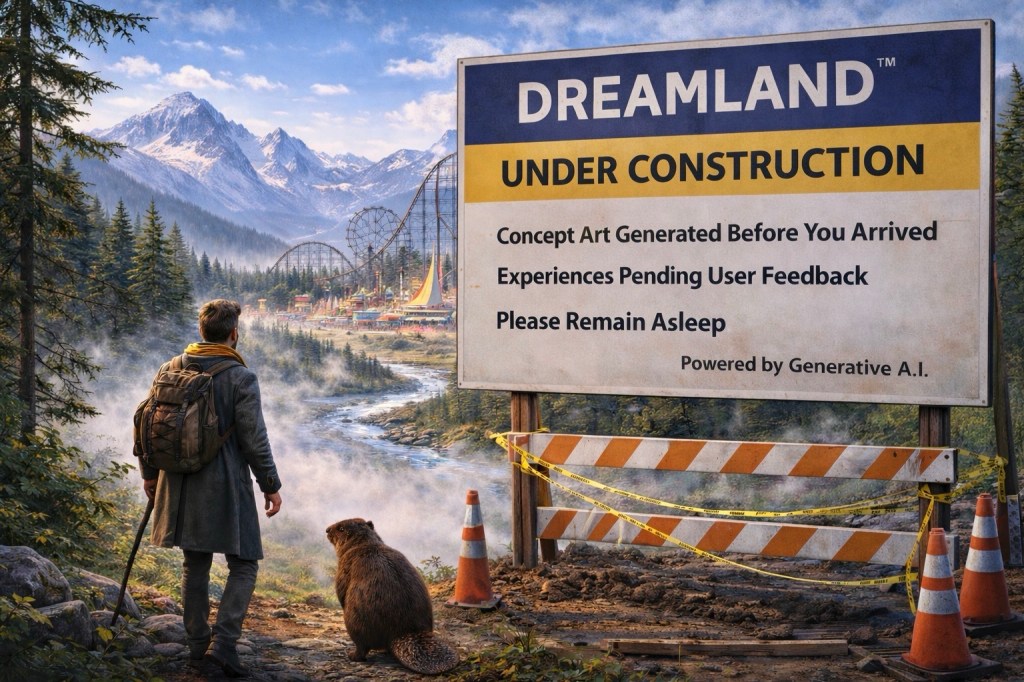
Turns out I’m already inside it—
making pictures of it as I go.
Others arrived first, with signs and scaffolding and plans.
That doesn’t cancel the view.
This is still my dreamland:
imperfect, half-rendered, made for beauty anyway
 COUNCIL-OF CONCERNED-CONSERVATIONISTS…..Between Jest And Earnest…..
Leave a comment