—Dedicated to Living Wood, Living Traditions, and the Generative Power That Makes Both Possible
—A Conversation Under the Links and the Stump
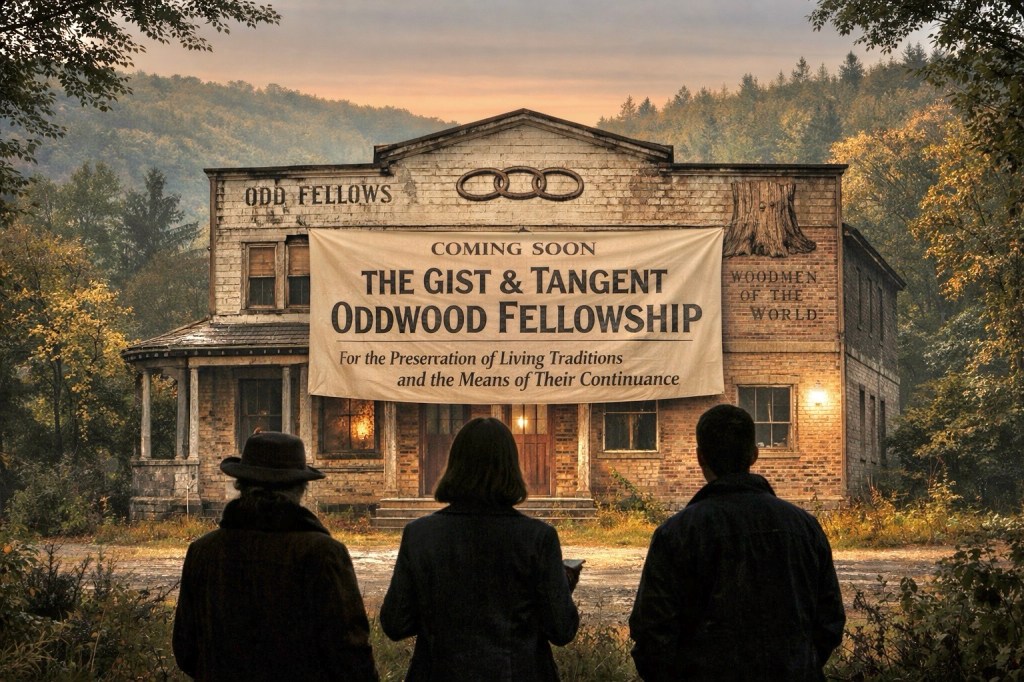
An Archival Review in Advance of Purchase
The Council-of-Concerned-Conservationists was reviewing the building before the papers finalized.
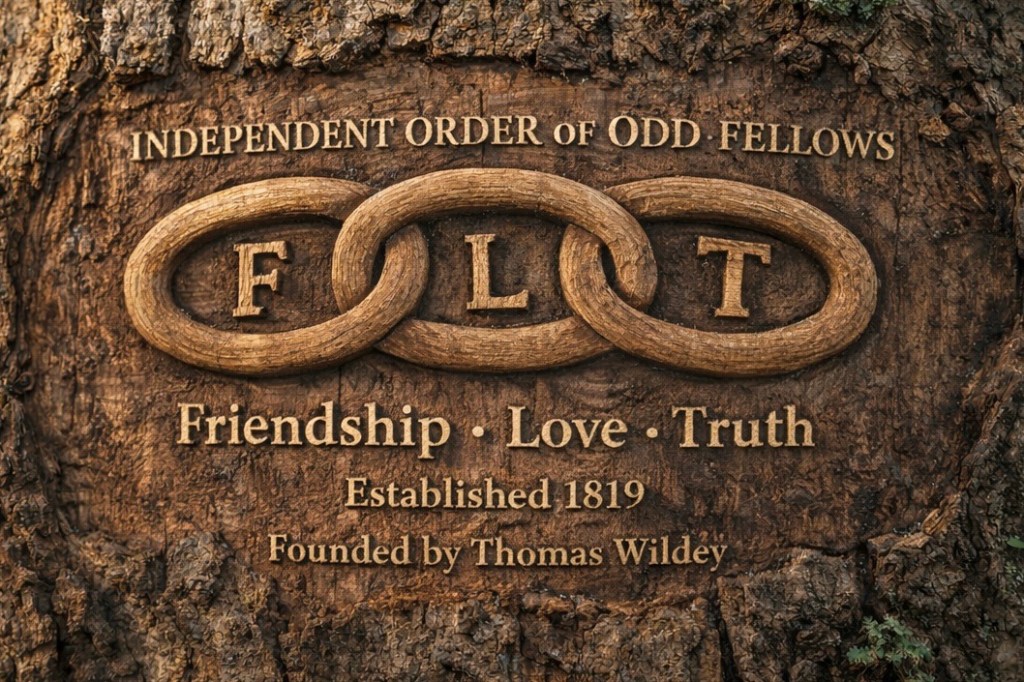
The hall stood at the edge of town, shuttered but intact, bearing the faint palimpsest of two benevolent societies that had once shared its space: the Independent Order of Odd Fellows and the Woodmen of the World. Their painted signs had faded, but their symbols remained—triple links, clasped hands, carved trees, and stone stumps marking the acceptance of mortality and mutual obligation.
The names themselves were literal rather than mysterious. The Independent Order of Odd Fellows were called “odd” because, at the time of their founding, they organized mutual aid across trades, denominations, and social classes—an unusual practice in an era when benevolence was typically confined to one’s own kind. They were “odd fellows” because they did not match, yet chose obligation anyway.
The Woodmen of the World took their name from frontier imagery rather than secrecy. Their symbols—trees, axes, logs, and stumps—were reminders of labor, mortality, and continuity. A life was something grown, worked, and eventually cut down, but not erased. Their famous tree-stump grave markers made the point plainly: the individual falls; the forest endures.
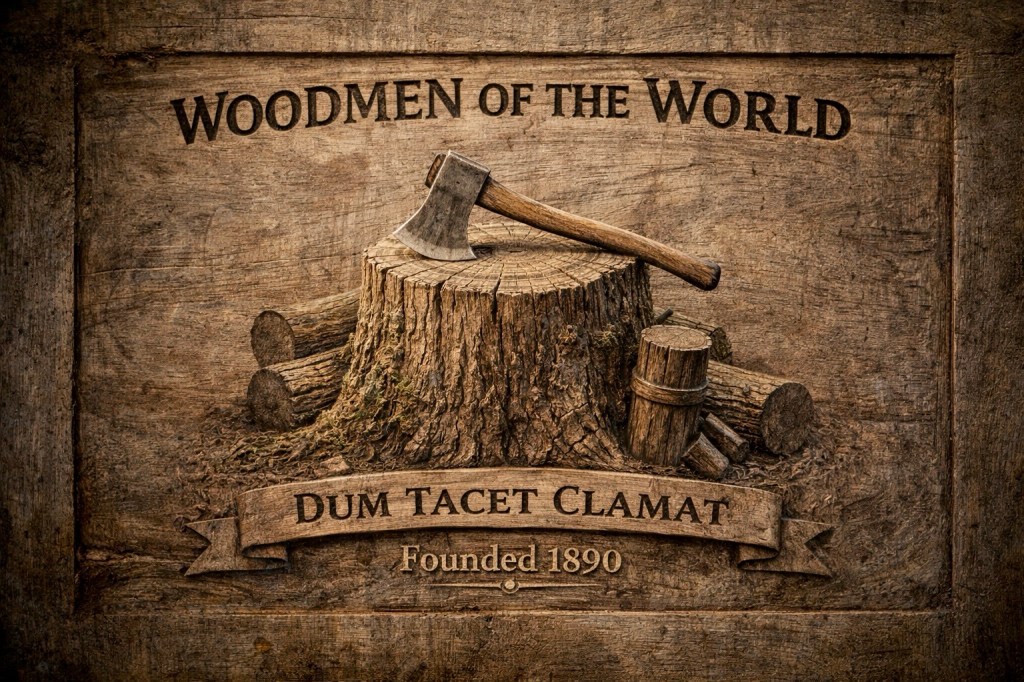
A Woodmen motto expressing the belief that a life of labor and obligation leaves a visible record without spectacle.
In both cases, ritual oddness was not designed to elevate members above others, but to bind them to practical duties—care for the sick, burial of the dead, and support for families left behind.
These organizations were not secret societies in the modern sense. They were fraternal benefit societies, common in the nineteenth and early twentieth centuries, created to provide life insurance, burial assistance, aid to widows and orphans, and social support long before the welfare state existed. Their rituals were symbolic and theatrical, sometimes strange, but explicitly moral. Initiation was meant to impress responsibility, not to confer power.
The Council-of-Concerned-Conservationists intended to preserve the hall and incorporate elements of these traditions into a new benevolent society—one oriented toward civic memory, restraint, and care rather than influence or prestige.
As part of the archival review, a small dinner was held inside the hall to assess what was worth saving.
Mrs. Begonia Contretemp attended as the Council’s aesthetic and cultural assessor.
Dr. Faye C. Schüß was invited to provide historical and anthropological context on ritual and initiation.
The Accidental Initiate was present to assist with documentation and to ask, when necessary, for clarification.
The contrast that evening was explicit.
They were not investigating crimes.
They were not making allegations.
They were comparing two documented traditions of initiation:
The benevolent, outward-facing rituals of civic fraternal orders And the well-documented hazing rituals of elite universities and fraternities, including secret societies such as Skull and Bones, whose initiation practices—while varying in detail—have been publicly reported for decades to include humiliation, enforced secrecy, symbolic transgression, and ordeals designed to accelerate loyalty and belonging.
The purpose was not to claim equivalence.
It was to examine plausibility.
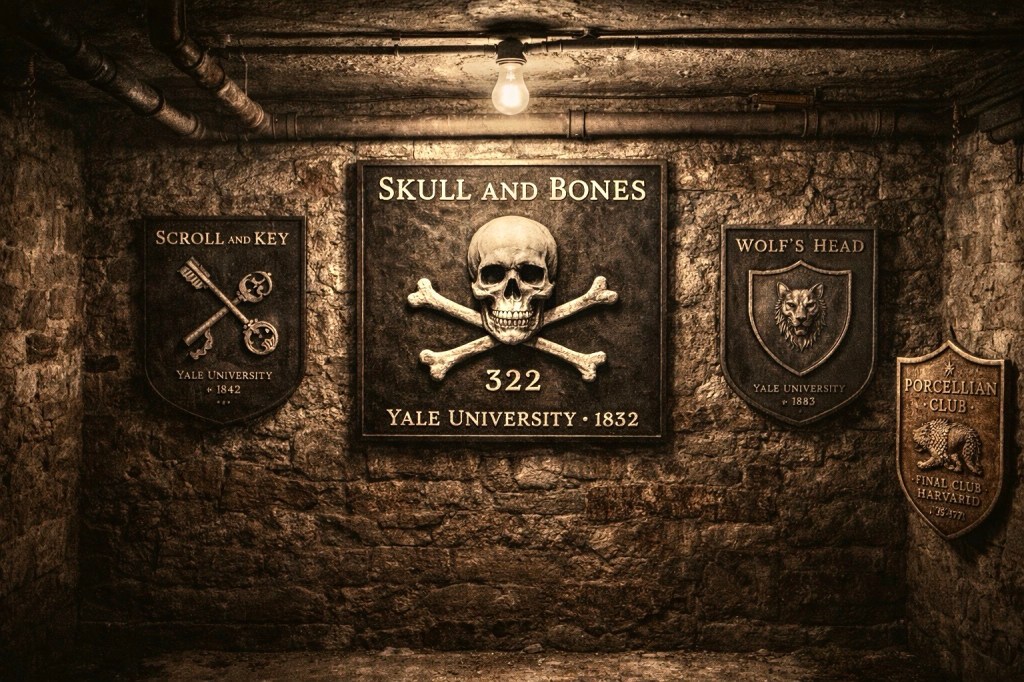
The Dinner
The hall had been unlocked an hour before dusk. Light filtered through high windows clouded by time and good intentions. A long table had been assembled from what remained. The meal was simple.
Mrs. Begonia surveyed the room:
“One forgets how much effort was once expended to teach people to care for one another.”
Dr. Faye placed her folder beside her plate.
Dr. Faye:
“Ritual was the storage medium for obligation.”
The Accidental Initiate glanced at the walls.
Accidental Initiate:
“I always thought secret societies were—darker than this.”
Mrs. Begonia smiled:
“Only if one confuses secrecy with menace. These societies hid nothing shameful. They hid what was solemn.”
They began.
Mrs. Begonia:
“Odd Fellows initiations involved blindfolds, symbolic journeys, moral instruction. Woodmen rituals emphasized mortality, continuity, and mutual aid. One was unsettled briefly so that one might later be dependable.”
“The oddness had a destination.”
Dr. Faye nodded.
Dr. Faye:
“Symbolic discomfort paired with prosocial obligation produces durable cohesion.”
The Accidental Initiate wrote this down.
Dr. Faye continued, deliberately:
“By contrast, elite university fraternities and secret societies—again, documented ones—have long employed initiation practices involving humiliation, enforced silence, endurance trials, the compelled consumption of unpleasant or degrading substances, simulated or actual nudity, sleep deprivation, and degradation framed as character formation.
The Accidental Initiate looked up:
“And those accounts are verified?”
Dr. Faye:
“Publicly reported. Repeatedly. Often defended as tradition.”
Mrs. Begonia did not react with shock.
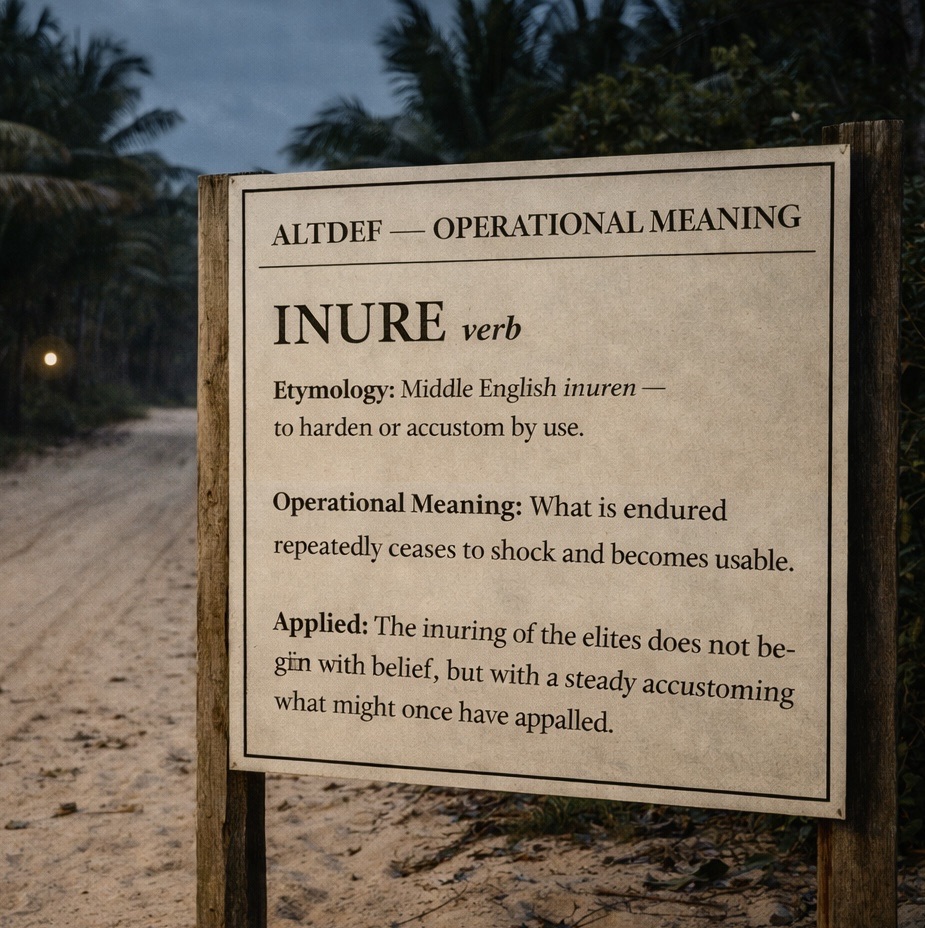
Mrs. Begonia:
“The difficulty is not that discomfort exists. It is that obligation disappears.”
She gestured around the hall.
Mrs. Begonia:
“In the older fraternal orders of the Odd Fellows and the Woodmen, ritual was endured to learn whom one would later serve. In elite institutions, ritual is endured to be chosen.”
The Accidental Initiate hesitated.
Accidental Initiate:
“But no one is saying these practices lead to anything worse.”
Mrs. Begonia set down her knife.
Mrs. Begonia:
“No. And no one needs to.”
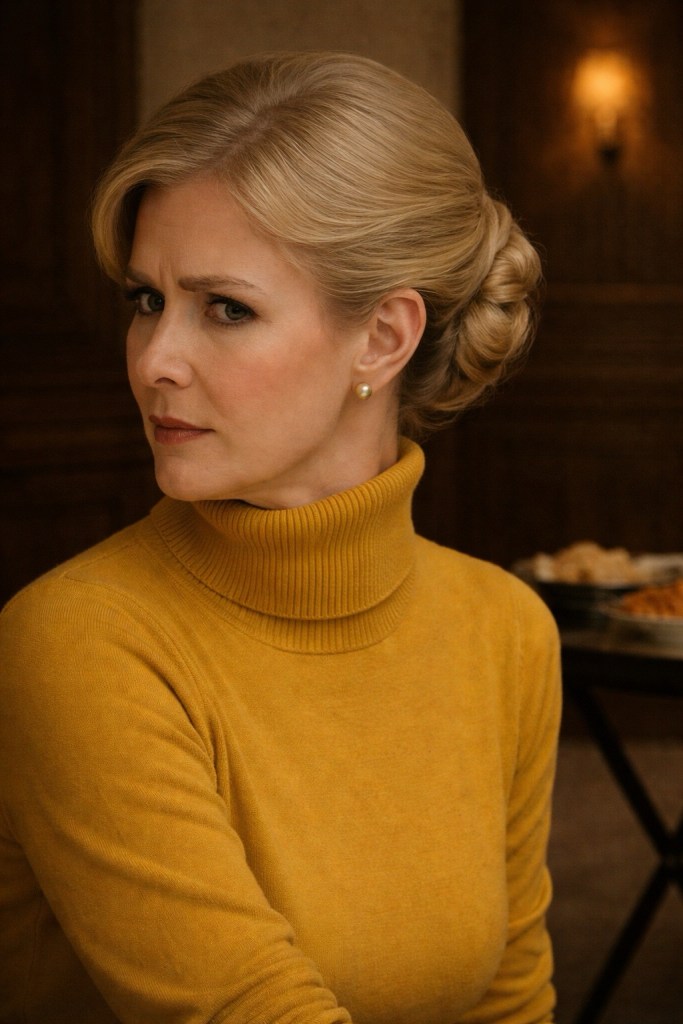
Dr. Faye folded her hands.
Dr. Faye:
“Training alters thresholds of surprise.”
Mrs. Begonia nodded:
“That is the point worth preserving.”
The Accidental Initiate frowning slightly:
“So the issue isn’t belief.”
Mrs. Begonia:
“No, dear.”
She met his eyes.
Mrs. Begonia:
“It is plausibility.”
A pause.
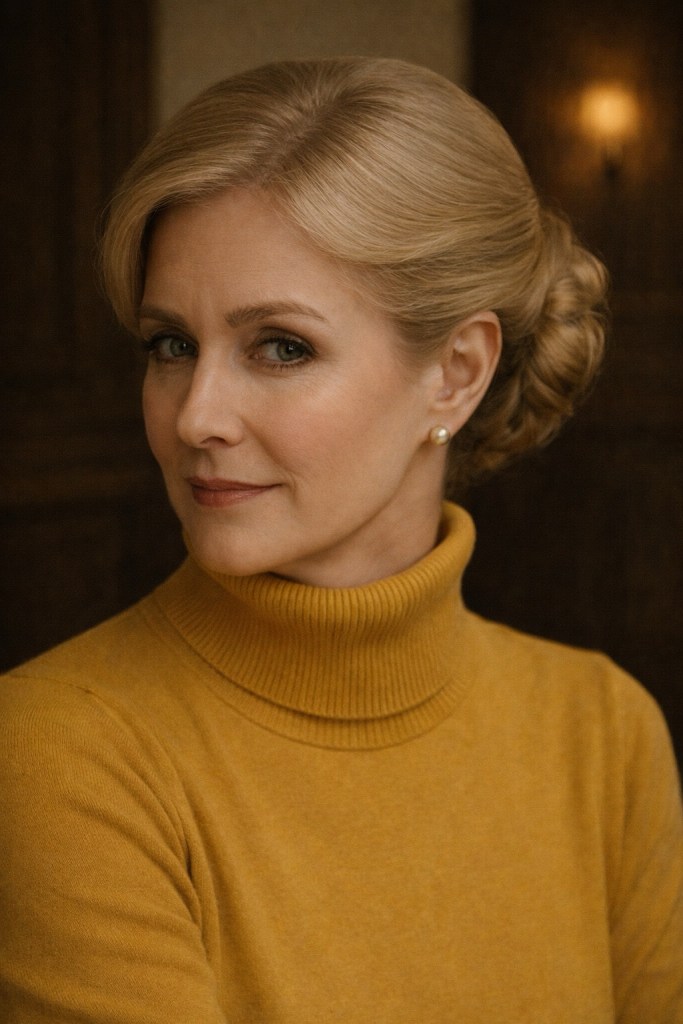
Mrs. Begonia:
“One must be careful to distinguish between believing something happened and recognizing that it would not shock someone trained this way.” (a remark delivered with the expectation of being overheard).
The room absorbed this quietly.
As they prepared to leave, the Accidental Initiate looked once more at the symbols—carefully carved, unashamed, meant to be remembered.
Accidental Initiate:
“So we’re preserving more than a building.”
Mrs. Begonia smiled.
Mrs. Begonia:
“Yes. We are preserving the idea that ritual once pointed outward.”
They locked the hall behind them.
No accusations were made.
Nothing was exposed.
But the reader should be left with a recalibrated sense of what no longer surprises—and why.
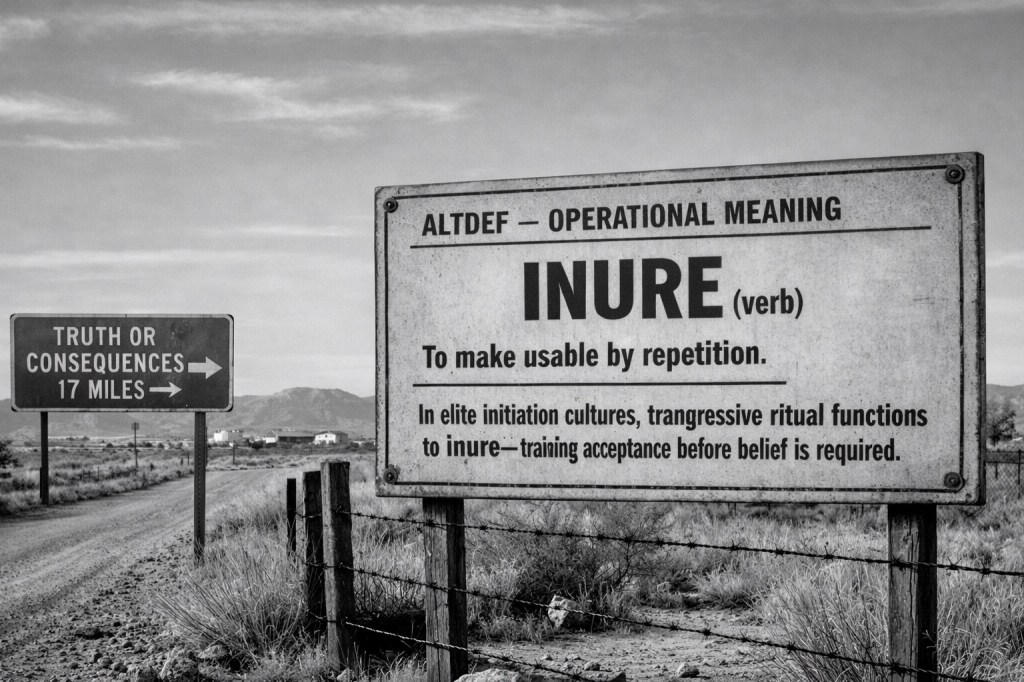
Some thresholds are crossed once. Others are crossed until they no longer register. You are now entering the Plausibility Zone.
 COUNCIL-OF CONCERNED-CONSERVATIONISTS…..Between Jest And Earnest…..
Leave a comment