—A Council Field Dispatch
(Route 6 to Route 66)
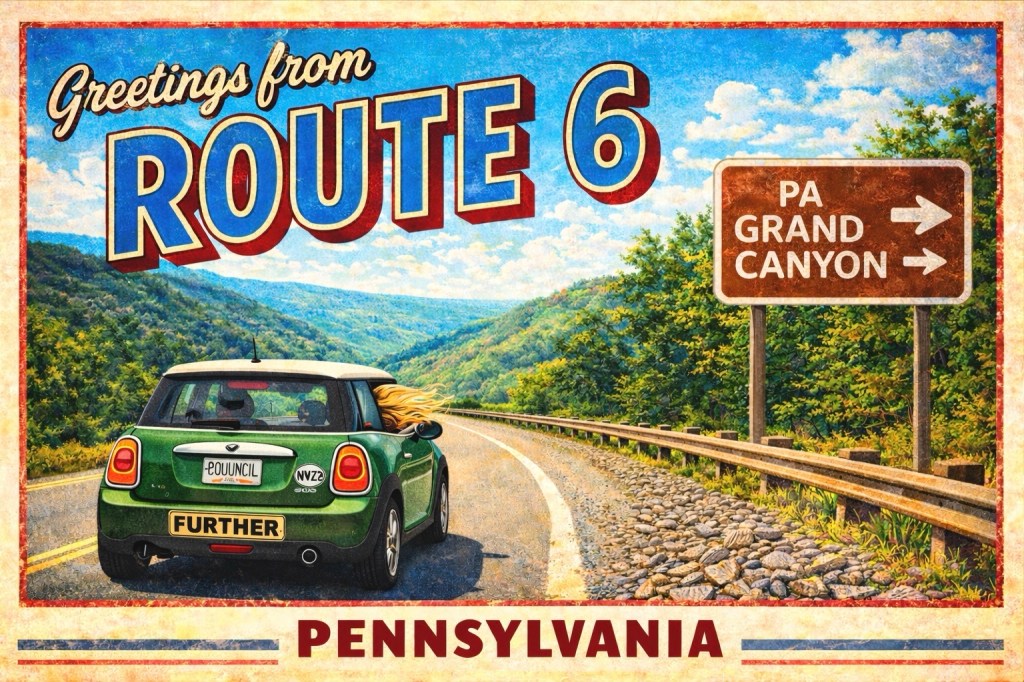
Mrs. Begonia Contretemp had been dispatched by the Nouvelle Vague Zwischenschaft (NVZ) with a precise directive:
Define America.
She arrived in a British Racing Green Mini Cooper, rain freckling the windshield, collar fastened, hair pinned, notebook prepared.
Bear Mountain, New York.
Sleet.
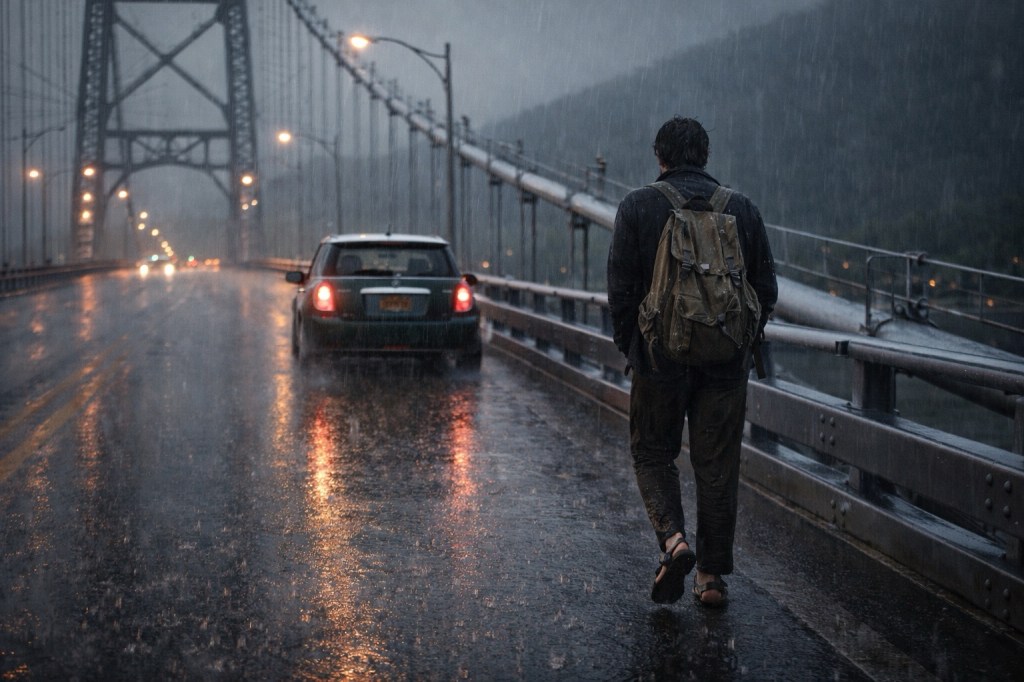
A man stood on the shoulder in huarache sandals. In winter. . .Grinning as though weather were optional. She rolled down the window.
Mrs. Begonia:
You appear improperly shod for the season.
Jack:
Shoes are a suggestion. Roads are a command.
Mrs. Begonia:
Are you Mr. Kerouac?
Jack:
Depends who’s asking.
Mrs. Begonia:
The Nouvelle Vague Zwischenschaft.
He laughed.
Jack:
Sounds expensive.
She unlocked the door.
Mrs. Begonia:
Get in.
He slid into the passenger seat, sandals dripping sleet, steam rising from wool.
They drove.
Pennsylvania Route 6 unfolded westward like a sentence too long for grammar.
Mrs. Begonia:
I was sent to observe America’s contradictions.

Jack:
You won’t find America in Washington. You’ll find it on the shoulders of roads.
A Subaru overtook them with a bumper sticker among many:
MEAN PEOPLE SUCK.
Jack slapped the dashboard.
Jack:
There! Haikus of the highway!
Mrs. Begonia:
Haikus require seventeen syllables.
Jack:
Seventeen syllables or three seconds at seventy miles per hour — same pressure.
She wrote it down: Haikus of the highway.
Mrs. Begonia:
I saw that phrase, MEAN PEOPLE SUCK, near Rutgers in the 1970s. More than once. It could not have been homemade. Vinyl required printing infrastructure. The modern bumper sticker — adhesive-backed and mass-produced — dates to the 1940s, when a Kansas screen printer named Forest P. Gill perfected slogans durable enough to survive rain and road grit. Before that, Americans bolted metal placards to their cars. But vinyl belonged to the interstate age — inexpensive, reproducible, democratic. By the seventies, a phrase like this would have required a proper batch run and distribution. Someone industrialized a moral impulse.
Jack:
Screen press. College town batch. Cheap ink. Clean conscience.
Mrs. Begonia:
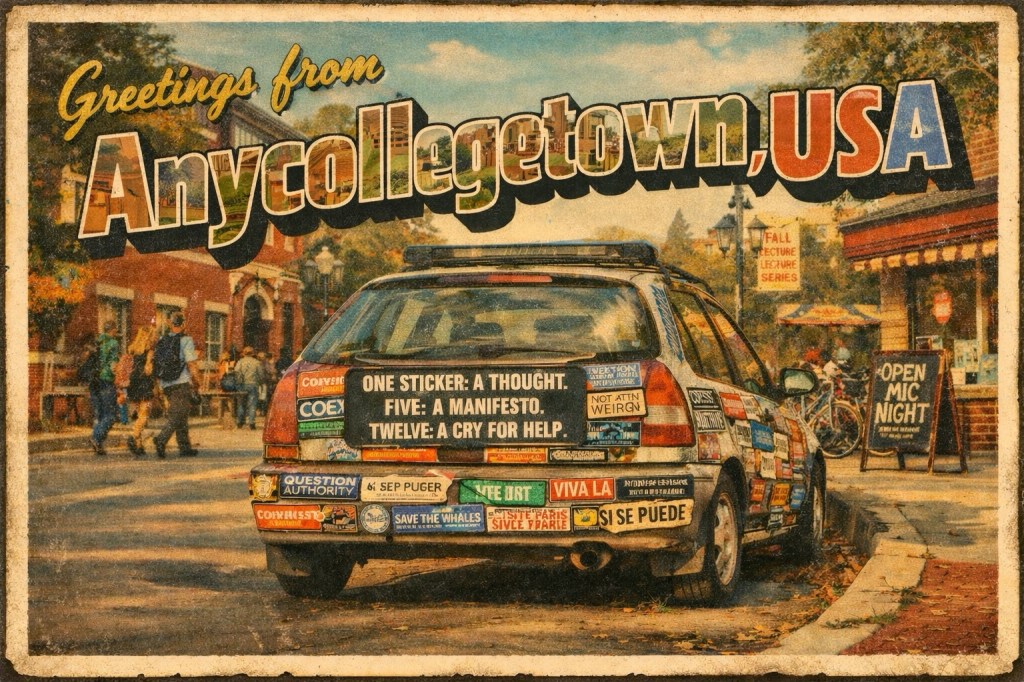
“Mean People Suck” rejects cruelty without constructing ideology.
Jack:
That’s why it spreads. No manifesto. Just a veto.
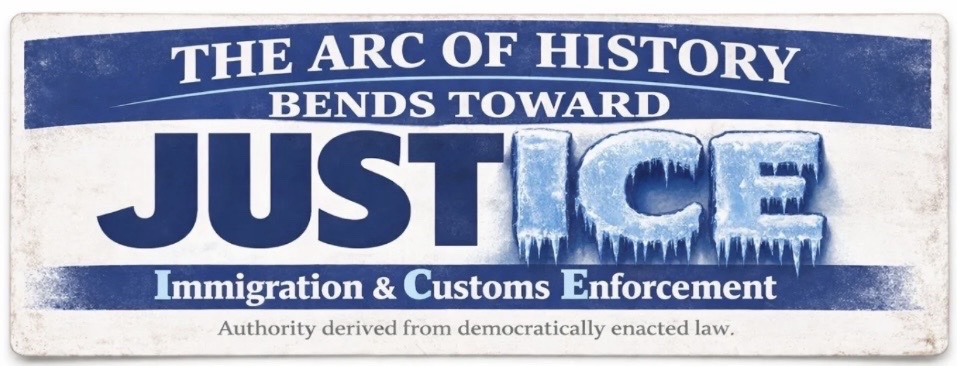
The hills rose. Limestone cuts showed pale strata and another bumper sticker rolled by.
Mrs. Begonia:
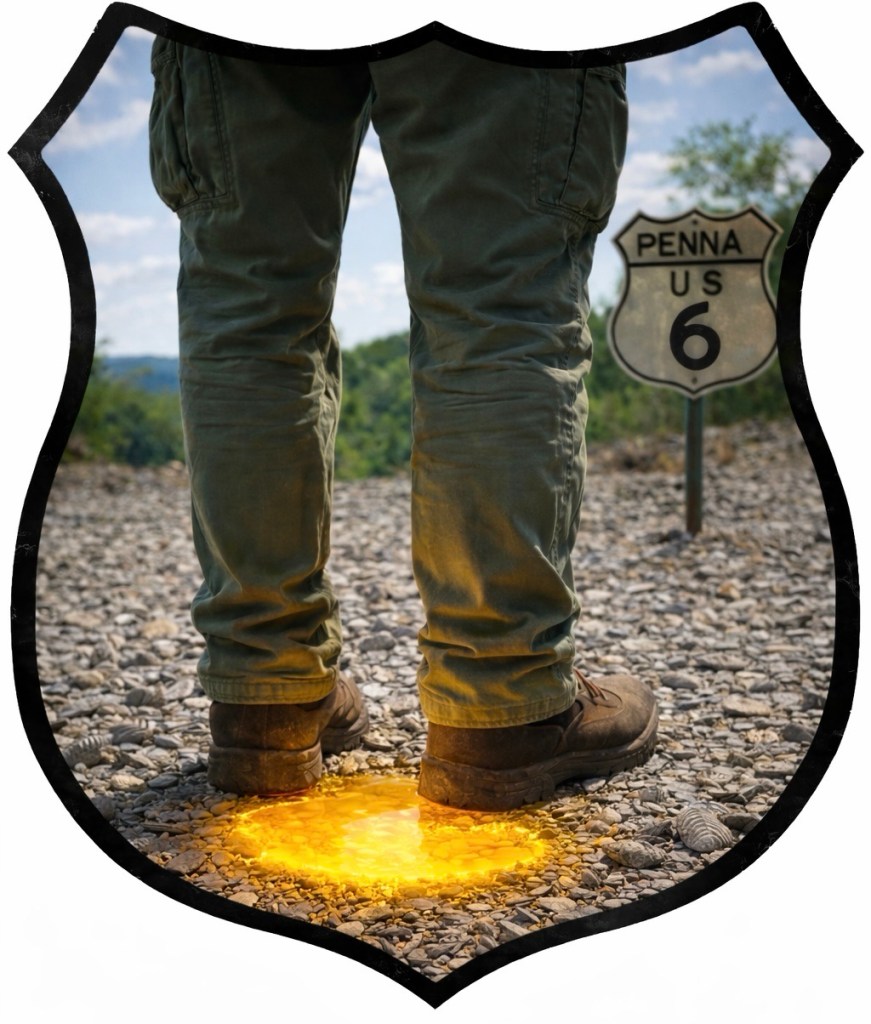
Is this not where John St. Evola made his geological revelation?
Jack:
He pulled over to relieve himself. Looked down. Shell fossils everywhere. Ancient ocean floor. Said it was the most metaphysical urination of his life. True story.
Mrs. Begonia:
So beneath these slogans lies a seabed.
Jack:
Fossils below. Vinyl above. Everybody trying to leave a mark.
Mrs. Begonia:
The first durable American slogan was not moral. It was geological. In the years just after the war, our enterprising Kansas printer Forrest P. Gill quietly transformed chrome into canvas, perfecting the adhesive strip that could survive sun, rain, and interstate speed. In Day-Glo no less. The earliest widely reported message was simple:
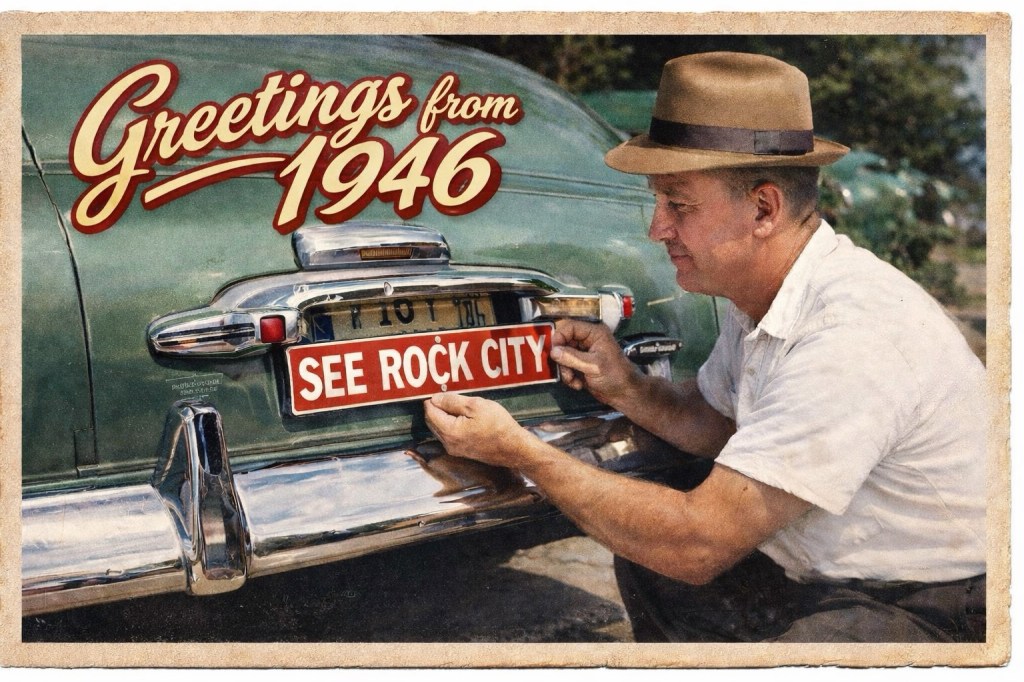
A small strip of vinyl, a nation in motion, and a message that stuck.
Jack:
“See Rock City.”
Mrs. Begonia:
Before we argued, we advertised stone.
***
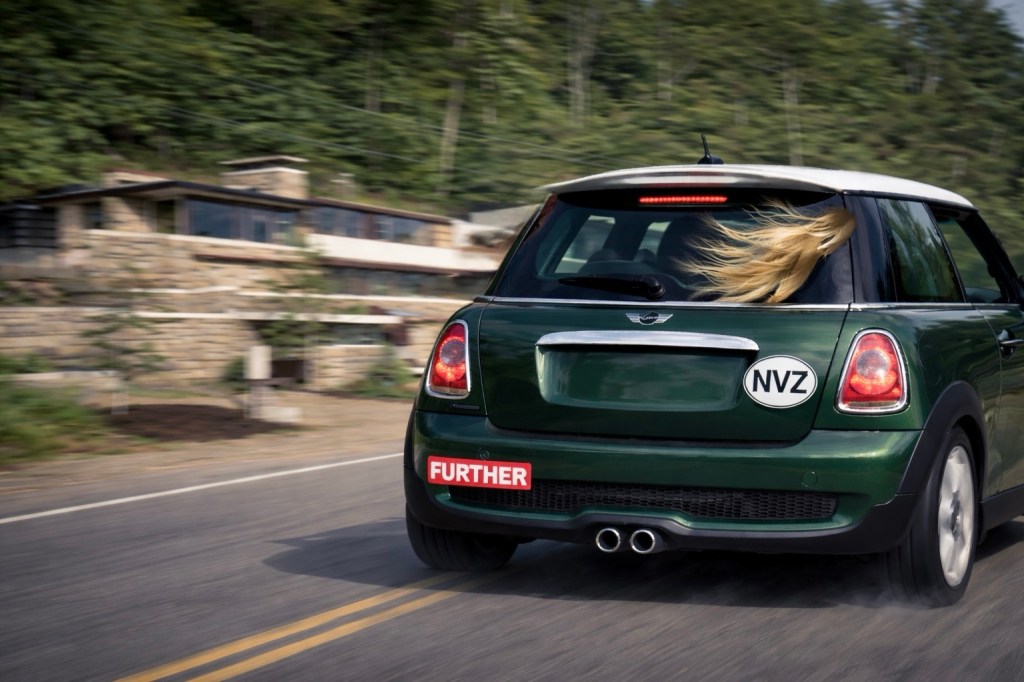
They passed a low horizontal structure made of stone and lumber emerging on their left.
Mrs. Begonia:
That house — it feels Wrightian.
Jack:
Lynn Hall. Built by Walter J. Hall in the 1950s. He wasn’t Frank Lloyd Wright, but he studied Wright’s organic principles and admired him fiercely. Used native stone. Low lines. Integrated the building into the land. Not imitation — more like discipleship.
Mrs. Begonia:
Architectural between-ness: Zwischenshaft
Jack:
Exactly. Not the master. But orbiting him.
Mrs. Begonia:
An American habit, perhaps. Borrow the geometry. Keep the ambition.
Jack:
Build Fallingwater’s cousin instead of Fallingwater.
The house slipped behind them. They rolled into Coudersport.
Sign: ELLIOT NESS MUSEUM.
Mrs. Begonia:
The incorruptible man.
Jack:
Dry as a Puritan sermon. Al Capone ran soup kitchens in the Depression. Ness chased bottles.
Mrs. Begonia:
You romanticize criminals.
Jack:
I distrust moral absolutists.
***
They passed under the welcoming sign of Smethport, famed for its magnetic toy heritage and as the birthplace of Christmas lawn decorations.
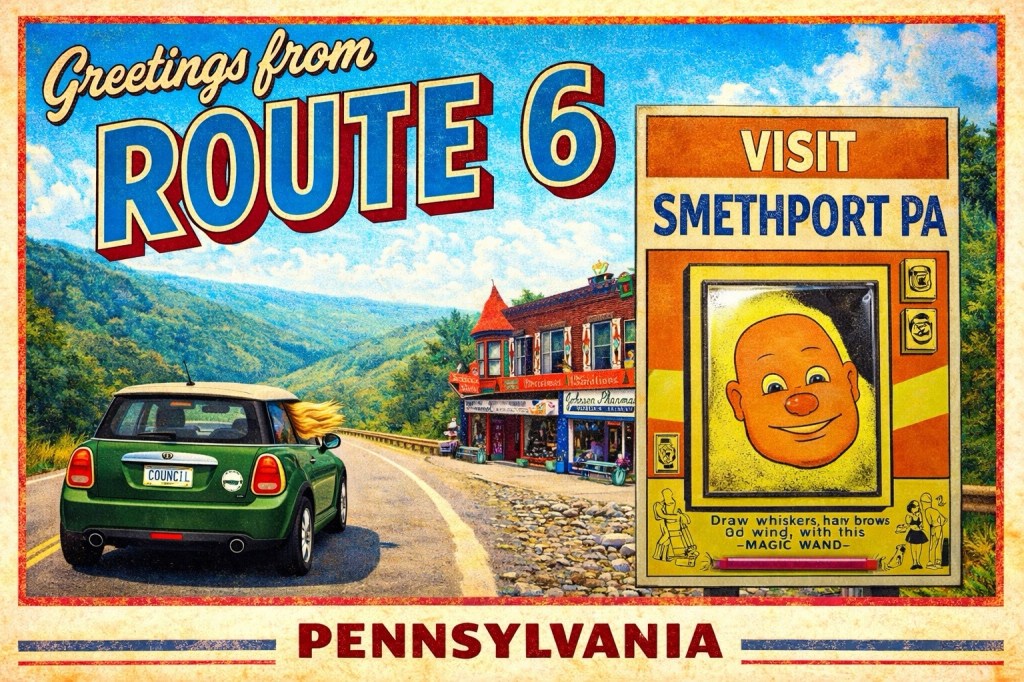
Mrs. Begonia:
Here, invention meets collective joy. The magnetic toy invites touch; the lawn display invites gathering. Both are small gestures that ask for participation — and perhaps that is America too: a shared field of delight and decoration.
***
The road then thinned into long humming stretches.
A pickup passed. The bumper sticker read :
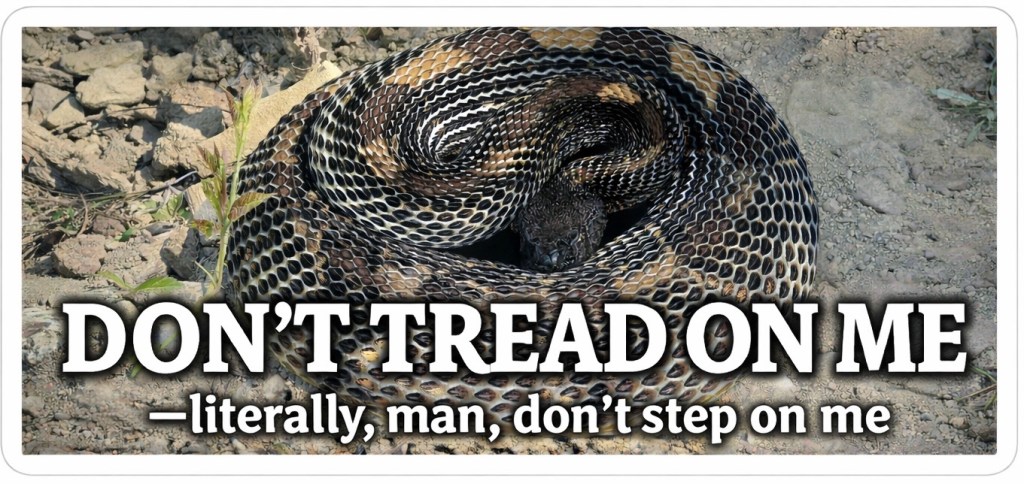
Behind that Silverado another Subaru:
COEXIST.
Behind that a minivan:
THIS TOO SHALL PASS.
Mrs. Begonia:
Dialectic at seventy miles per hour.
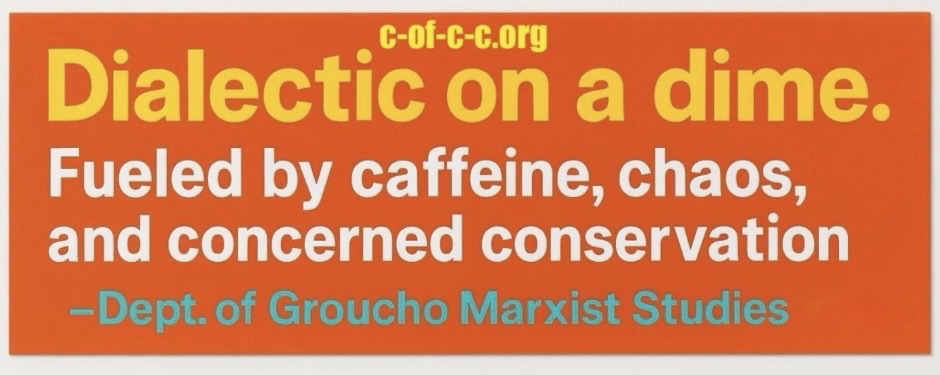
Jack:
Democracy arguing in traffic.
Mrs. Begonia:
Her accent softened slightly.
It is adhesive theology.
Jack:
No marble tablets. Just bumpers.
***
Days later, Route 66 opened into desert shimmer. Her notebook lay forgotten. Her hair remained unpinned.
A battered station wagon passed.
MEAN PEOPLE SUCK.
She leaned forward.
Mrs. Begonia:
Jack. . . I see it.
Jack:
See what?
Mrs. Begonia:
The medium is the message.
He grinned.
Jack:
McLuhan?
Mrs. Begonia:
Yes. Everyone quotes him. No one explains him.
Another car flashed by.
QUESTION AUTHORITY.
She tapped the wheel.
Mrs. Begonia:
The medium isn’t television. It isn’t vinyl. It isn’t ink.
Jack:
So what is it?
She laughed — freely now.
Mrs. Begonia:
It’s the road!
He leaned back.
Jack:
Keep going, doll.
Mrs. Begonia:
The open road is the medium. Shared motion. Forced proximity. Velocity as condition.
The bumper sticker is the message — compressed to survive wind resistance.
Jack:
Now you’re talking, sweetheart! Go!
Mrs. Begonia:
The speed demands brevity. The exposure demands boldness. The sun demands impermanence.
A peeling sedan drifted past sporting this one:
MY OTHER CAR IS A STUDENT LOAN
Edges curling.
Mrs. Begonia:
Even the decay participates in meaning.
Jack:
Sun-bleached philosophy.
Mrs. Begonia:
She leaned back, exhilarated.
The road is the monastery wall. The bumper is the parchment. The wind is the editor.
The median contains the message!
Jack:
And America writes in traffic, baby!
Silence. Heat shimmer ahead.
Mrs. Begonia:
I arrived expecting spectacle. Or ugliness. Instead I find fragments. Fossils. Wright’s disciples. Soup kitchens. Vinyl moralities.
Another car passed.
IN GOD WE TRUST. ALL OTHERS PAY CASH
She smiled.
Mrs. Begonia:
Perhaps that is the purest of them all.
Jack:
No footnotes required.
She looked at him — no longer merely on assignment.
Mrs. Begonia:
I was sent to define America.
Jack:
And?
She watched the endless ribbon of asphalt unspool.
Mrs. Begonia:
It cannot be defined. It can only be read — in passing. . . And argued in traffic.
They drove west. Fossils beneath. Vinyl above. Between Ness and Capone. Between marble and steel. Between sermon and soup.
The medium hummed under their tires. The message stuck behind them.
And somewhere between Bear Mountain sleet and Route 66 sun, Mrs. Begonia realized she had not found America in monuments or manifestos.
She found it in the haikus of the highway.
***
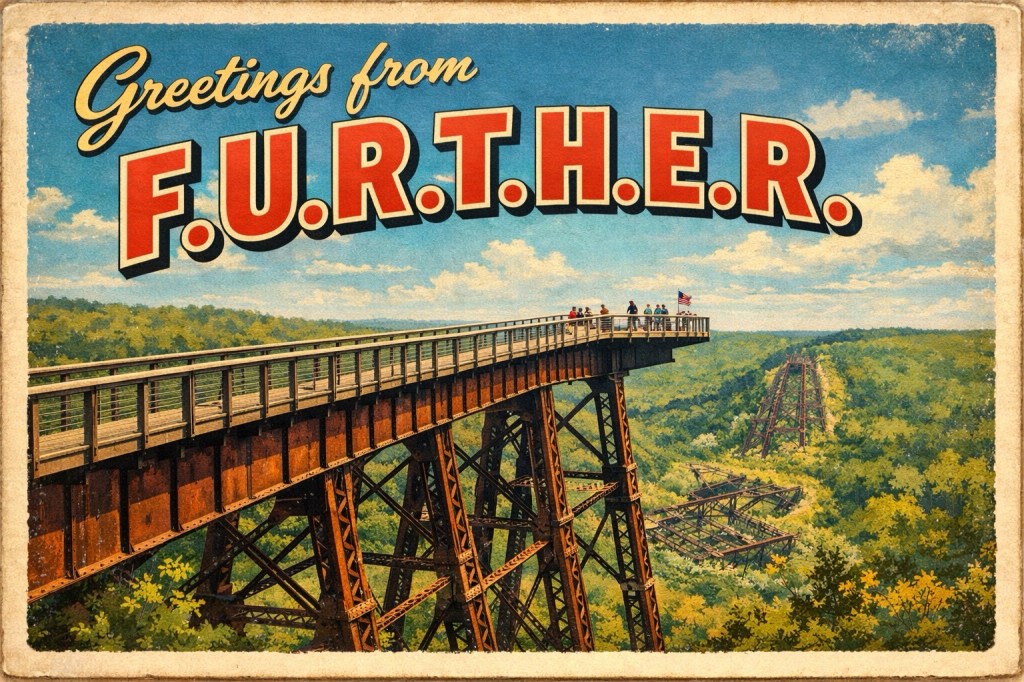
After the tornado of 2003, it goes only so far.
***
More from: MRS BEGONIA CONTRETEMP
 COUNCIL-OF CONCERNED-CONSERVATIONISTS…..Between Jest And Earnest…..
Leave a comment