The matter began innocently enough with a podcast.
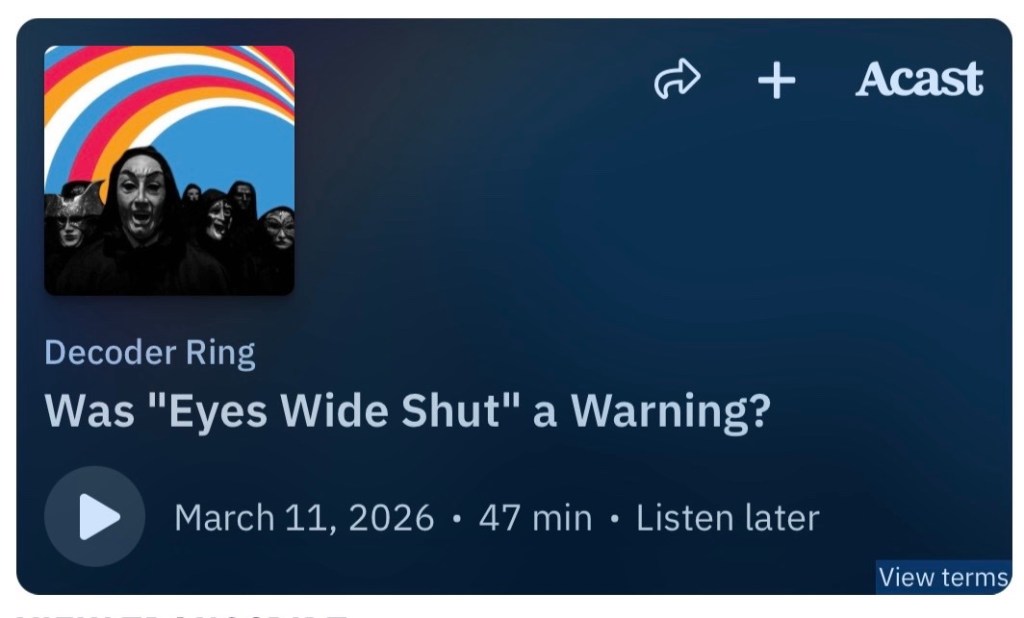
The wild conspiracy theory about Stanley Kubrick’s final film.
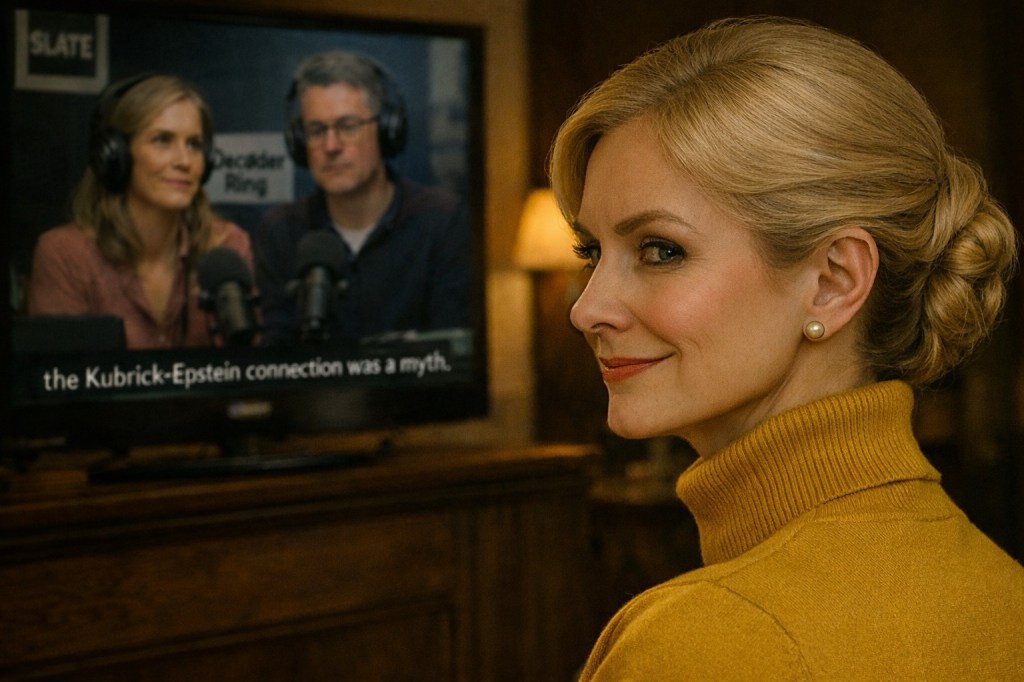
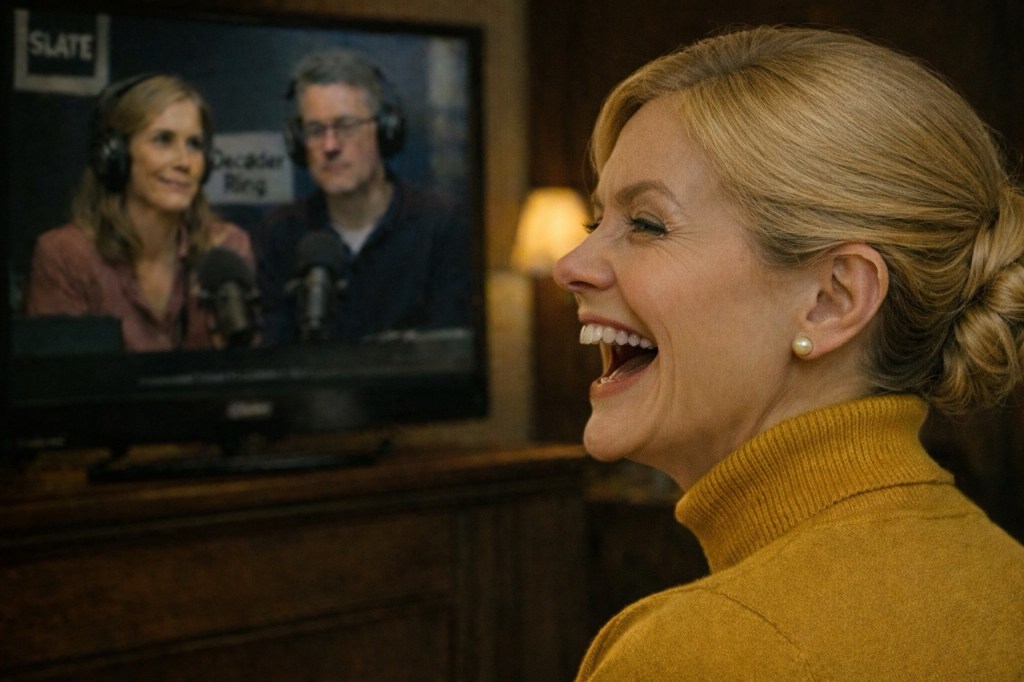
One evening at The Gist and Tangent Pub, the sound system above the bar was playing an episode of Decoder Ring in which the hosts carefully explained why Stanley Kubrick’s Eyes Wide Shut could not possibly have anything to do with Jeffrey Epstein.
Their tone was patient, methodical, and reassuring—the intellectual equivalent of a man checking under the bed for monsters and announcing that the bedroom is now scientifically monster-free.
The Council members didn’t listened politely.
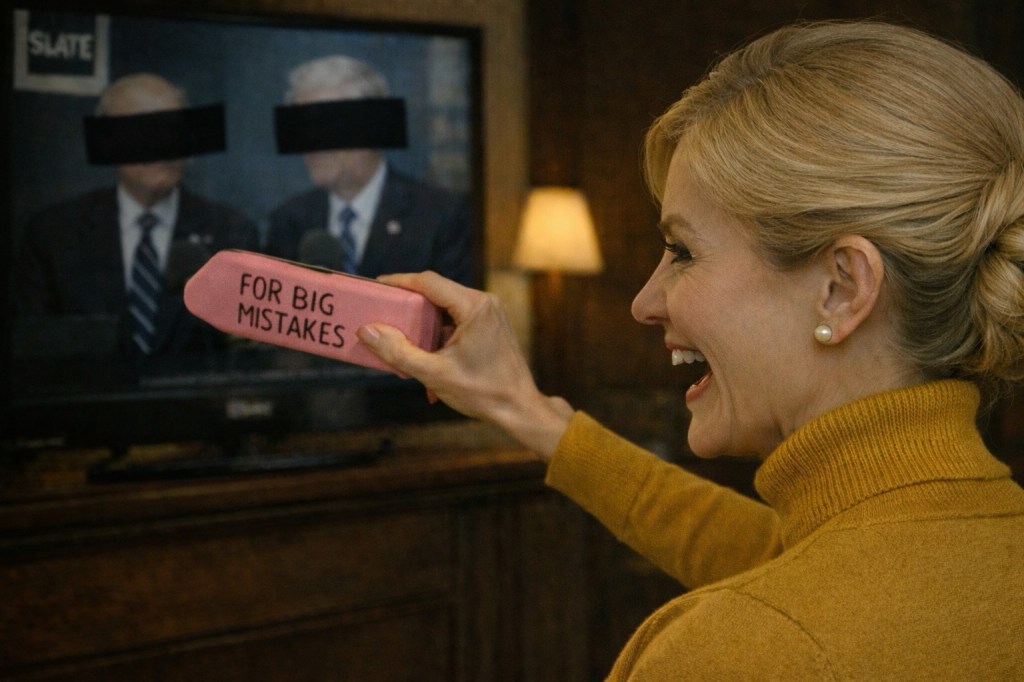
Ray Pierre-DeWitt polished a glass.
Mrs. Begonia Contretemp nodded thoughtfully.
Vito Haeckler tightened a loose screw on the dartboard cabinet.
The discussion on television concluded that the Kubrick-Epstein connection was a myth.
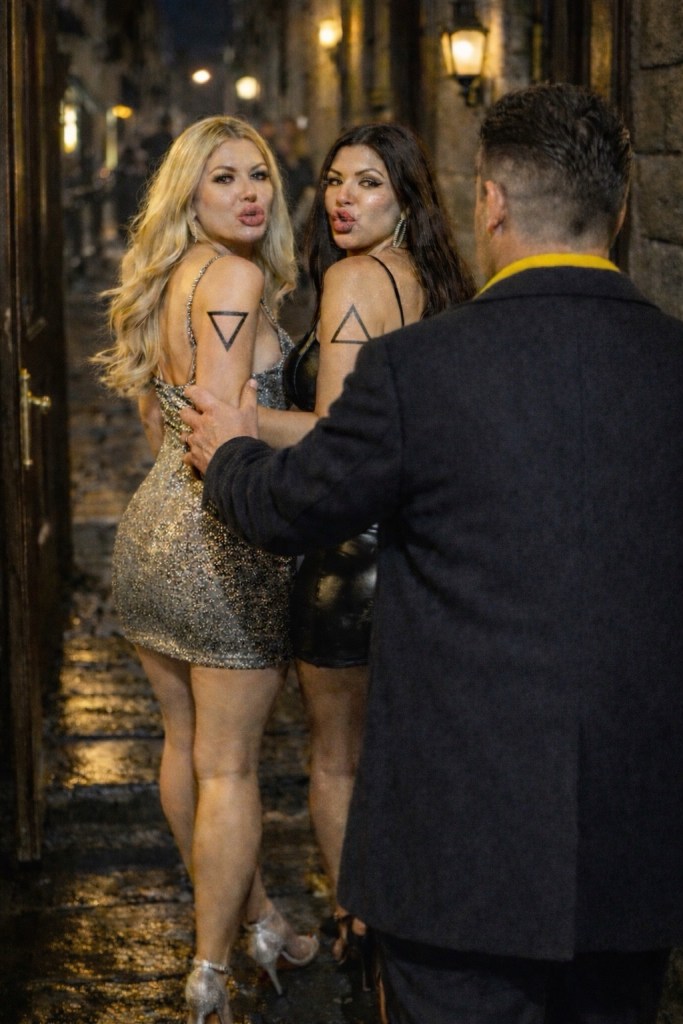
At about that moment the pub door opened and in wandered two of those peculiar modern visitors who occasionally drift into establishments or comment threads that still contain fireplaces and books.
They had the unmistakable aesthetic of a bot—overdone lips, conspicuous cleavage, the slightly overproduced facial symmetry of someone assembled from several online templates.
One of them named Fallacia glanced up at the television now playing, Eyes Wide Shut.
Kubrick’s masked ritual scene was playing.
She squinted at it for a moment, then delivered the establishment line in a tone that suggested it had been downloaded rather than spoken.
“There is nothing to see here.”
Ray Pierre-DeWitt looked up from the glass he was polishing.
He studied the visitors for a moment, nodded politely, and set the glass down.
Then he walked them calmly toward the door in his newly appointed capacity as Bot-tender.
“Let’s get you some fresh air,” Ray said.
Ray Pierre-DeWitt simply made it 110.
The door closed.
The fire popped.
The television continued playing.
I went home, somewhat satisfied.
Then I fell asleep.
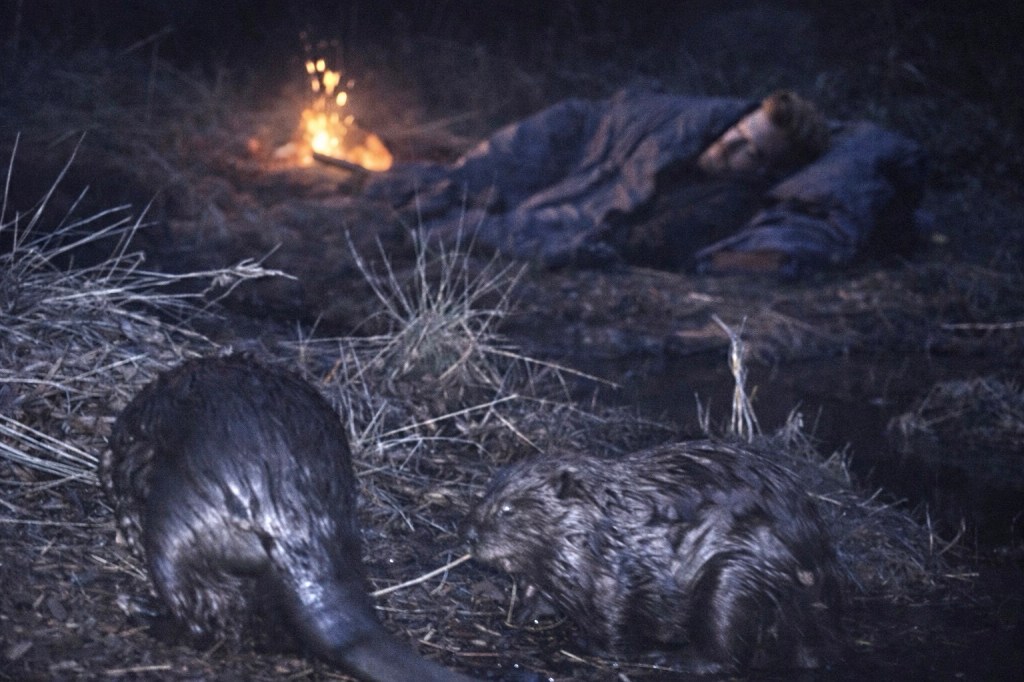
(No double entendre intended.).
Photo of the beavers courtesy of Lefoto “Lee” Sfocato,
Council-of-Concerned-Conservationists wildlife correspondent.
THE DREAM
In the dream I was back in the pub again, though the room had taken on the peculiar lighting of dreams—half tavern, half lecture hall.
The television was replaying the masked ritual scene from Eyes Wide Shut.
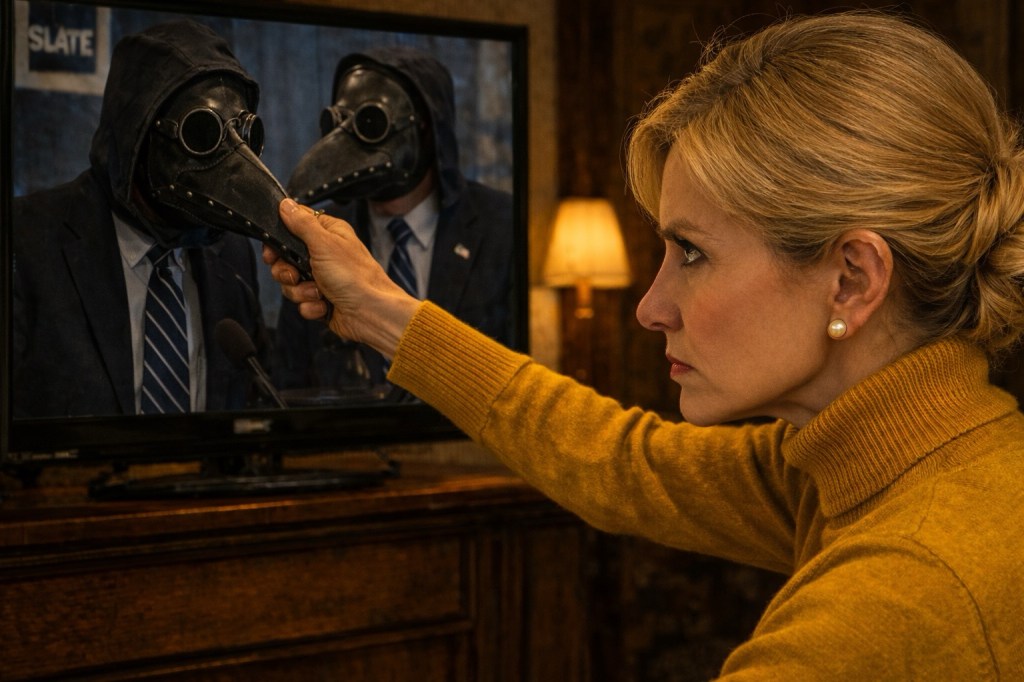
A strange thought drifted through the room.
Not that Kubrick had revealed Epstein.
But that Epstein might have watched Kubrick.
The dream lingered on that possibility the way dreams linger on odd details.
What if, somewhere around the year 2000, a certain ambitious social climber with unusual appetites had watched Kubrick’s film and thought:
That aesthetic has possibilities.
Not a conspiracy.
Not prophecy.
Just imitation.
At that moment Ray Pierre-DeWitt appeared beside the television.
“Everyone keeps asking whether Kubrick predicted Epstein,” he said.
He took a long look at the screen.
“Has anyone considered the opposite?”
THE DREAM BEGINS PRODUCING EXAMPLES
Dreams love patterns.
Once the idea appeared, the dream began filling the room with historical exhibits.
First came a battered knight riding through Spain.
It was Don Quixote, except the dream quietly reminded me that Cervantes wrote his famous satire because real men had already begun behaving that way. Medieval chivalric romances had inspired wandering pseudo-knights who attempted to live inside the stories.

The modern problem is finding someone willing to defend them.
Imperfect solutions still deserve a knight.
Literature had become a wardrobe.
The scene shifted.
Now a young man sat in a movie theater in the late 1970s watching Taxi Driver repeatedly.
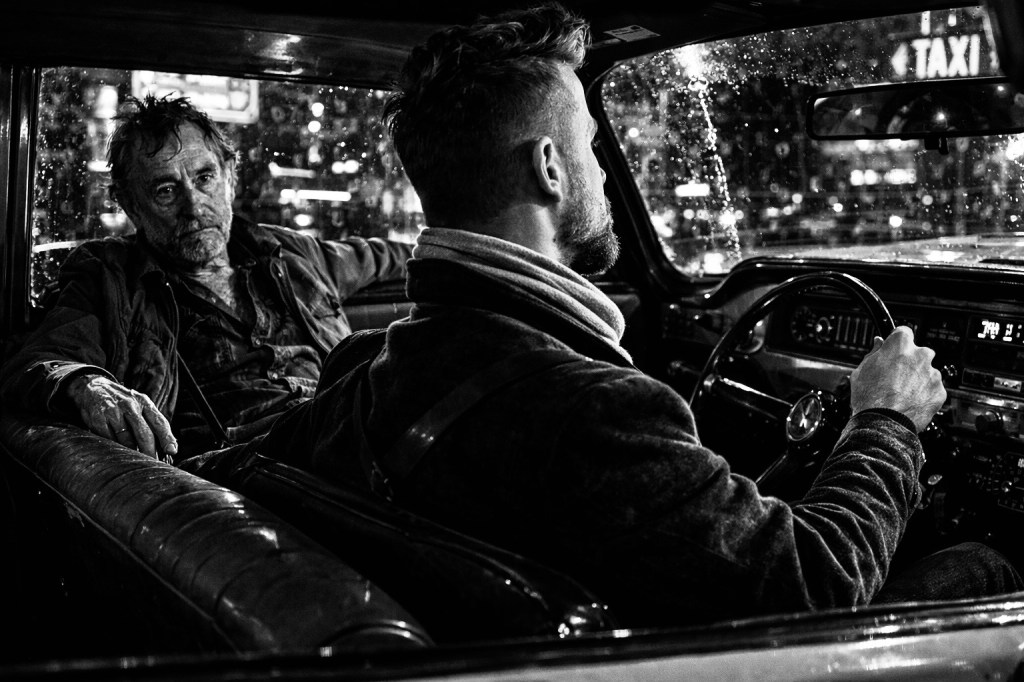
The moviegoer was John Hinckley Jr., who became obsessed with the film and with Jodie Foster. In 1981 he attempted to assassinate Ronald Reagan, later explaining that the act was meant as a gesture to impress her.
Cinema had become a script.
The dream flickered again.
A group of troubled teenagers appeared in the late 1990s, staging themselves after the imagery and mythology of violent films, especially Natural Born Killers.
History knows them now as the Columbine shooters, who consciously styled themselves as characters within a cinematic narrative of rebellion and destruction.

🎶And oh, like a bubble on a windy day
I start to flutter when I hear you say
That you feel to good to go away.
And you make me feel fine.
And you make my world a warmer place
By the sparklin’ of your diamond face.
On a frayed spot put a little lace.
And you make me feel fine.
Warm as the mountain sunshine
On the edge of the snow line
In a meadow of columbine.🎶
Another page of the dream turned.
Young Europeans in black coats wandered the streets of the eighteenth century imitating the melancholy hero of Goethe’s novel The Sorrows of Young Werther. Some tragically copied the character’s suicide, a phenomenon sociologists still call the Werther-Effect.
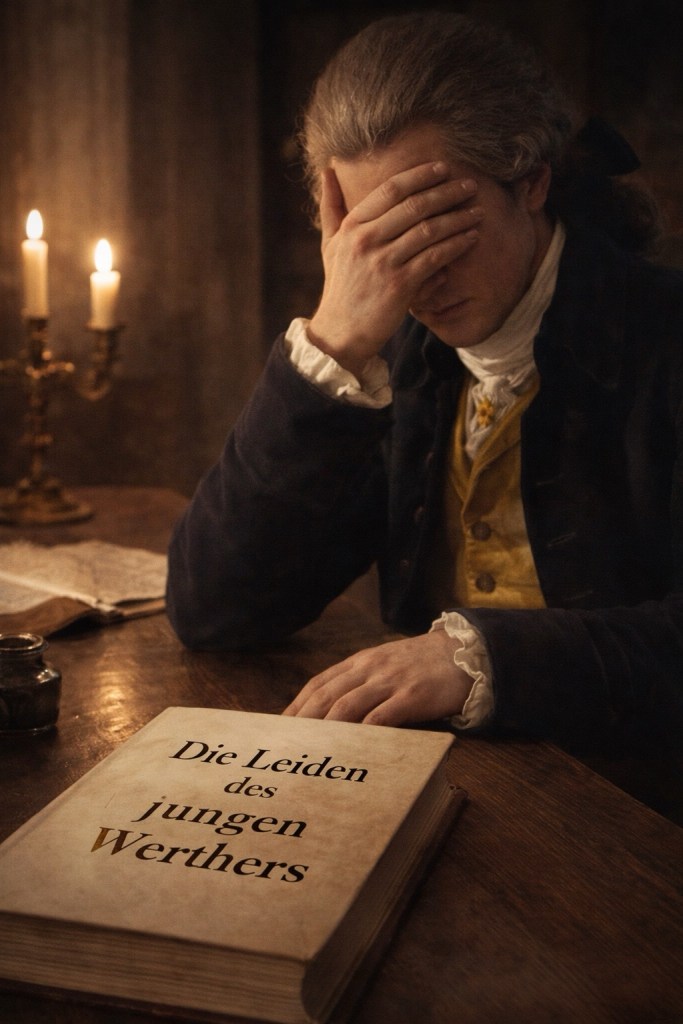
Stories, the dream seemed to be suggesting, do something peculiar to human beings.
They do not merely entertain.
They offer identities.
Most people watch a film and think about symbolism.
A smaller number watch a film and think about costumes.
BACK IN THE PUB
The masked figures in Kubrick’s mansion continued filing into the ritual hall.
Ray Pierre-DeWitt looked at the screen for a moment and then said something that caused the entire dream to pause.
“History’s full of people who mistook cinema for instructions.”
The television crackled.
The fire popped.
I woke up.
MORNING REFLECTION
Now, to be clear, the Council does not claim that Jeffrey Epstein watched Eyes Wide Shut and decided to model his enterprise after it.
Dreams are not affidavits.
They are simply the subconscious placing odd shells in your hand and asking you to look at them.
But the dream did leave behind one small observation worth keeping.
Civilizations produce myths.
Most people interpret them.
But every so often someone tries to move into the myth and furnish it.
Stories, after all, do not merely mirror civilization—they circulate through it like weather systems. We imagine the myth, and sooner or later someone attempts to inhabit it. The imagined and the enacted begin feeding each other in a strange cultural loop.
Which means that while most of us leave the theater when the film ends, history occasionally produces a more troubling figure:
the man who walks out believing he has just been handed the script.
And that is usually when the trouble begins.
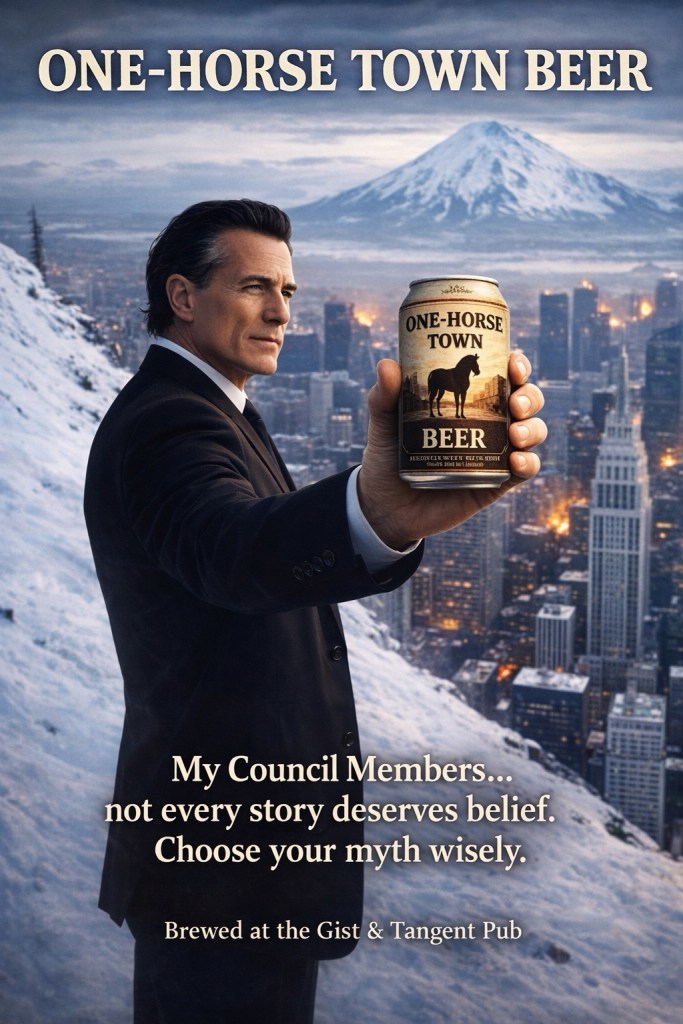
Subsidiary of Dos Equus Brewing — because every two-horse town eventually becomes one.
***
The following is from the conclusion of the Decoder Ring podcast in which they redeem themselves a little bit:
“. . . Believing even something as disturbing as the conspiracy about Eyes Wide Shut is more comforting than the reality, which is that so many people knew and said nothing.
But in the conspiracy, in its alternate reality, at least someone, a powerful man no less, tried to warn us. It’s all a fiction, but you can understand why it might be preferable to the facts.
This is Decoder Ring. . .”
 COUNCIL-OF CONCERNED-CONSERVATIONISTS…..Between Jest And Earnest…..
Leave a comment