—Road Trips with the Dead in Modern Cinema—
Cliff Languor and Arturo Haus were conducting one of their regular cinematic reconnaissance missions when Vito Haeckler—Newsletter Man-on-the-Street—wandered into the theater with a bucket of popcorn and a running commentary.
The film had barely begun.
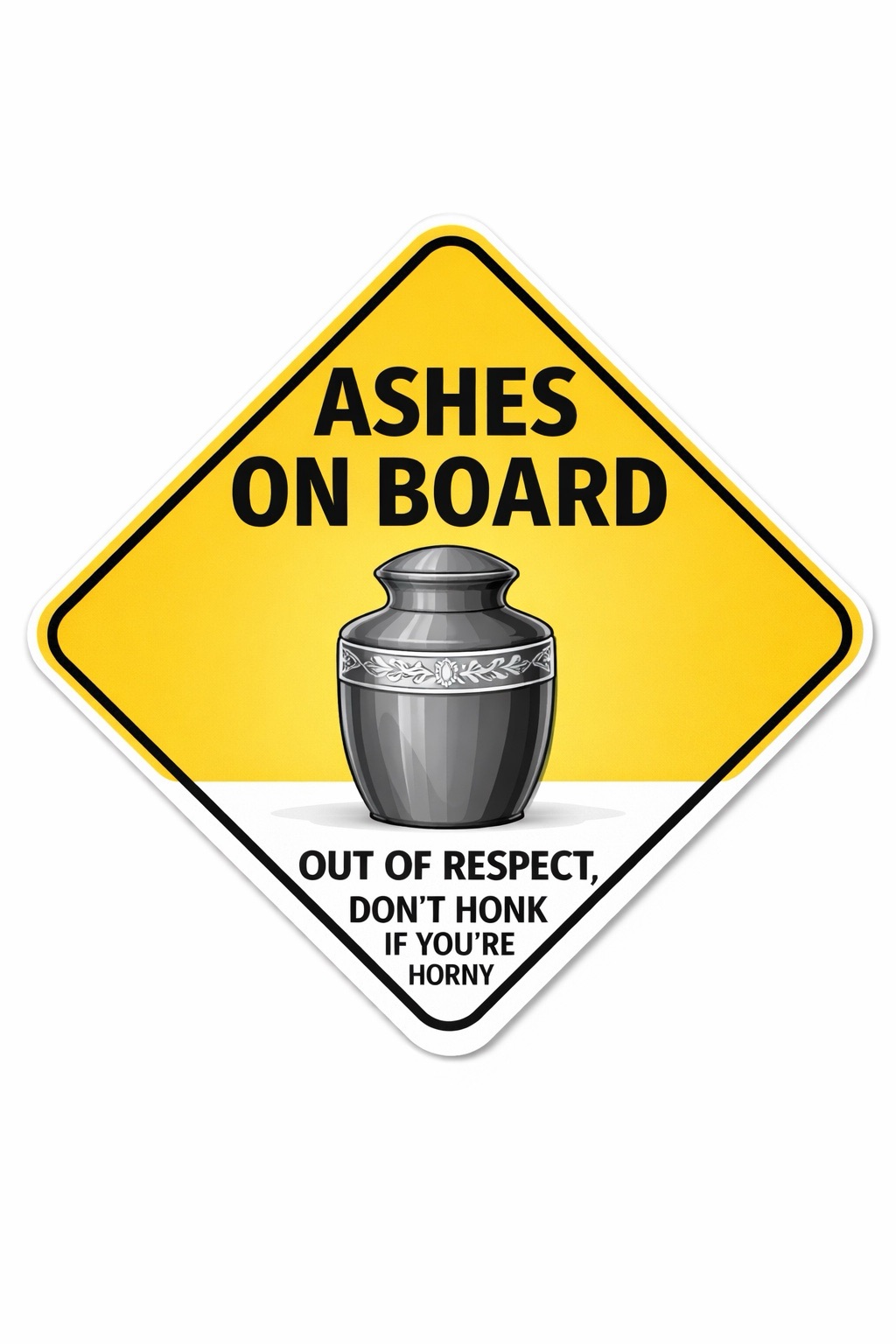
A solemn character placed an urn on the passenger seat of a car.
Vito leaned forward.
“Here we go again,” he said.
Cliff did not look away from the screen.
“Again what?”
“The ashes,” Vito said. “Every movie now somebody’s driving around with a dead relative in a coffee can.”
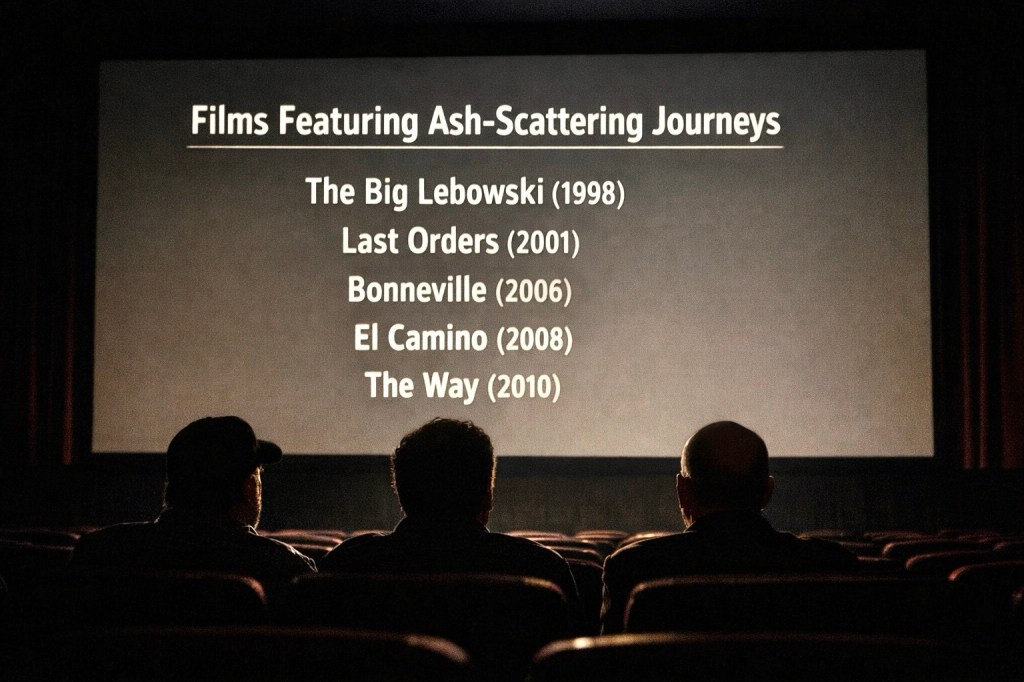
Due Date (2010)
Last Stop for Paul (2006)
Frank (2014)
The Leisure Seeker (2017)
Road to the Lemon Grove (2018)
Ash-Dispersion Narratives: Around the World
Departures (2008)
Anata e (2012)
Desolation (2017)
The Last Bus (2021) ***
Arturo Haus adjusted his glasses and nodded slowly.
On the screen the characters began their road trip toward a windswept coastline.
Cliff spoke in the calm tone of a man diagnosing a cinematic pattern.
“What you are observing,” he said, “is a narrative device that has quietly become one of the dominant structures of the modern road film.”
Vito stared at him.
“You mean the dead guy in the jar?”
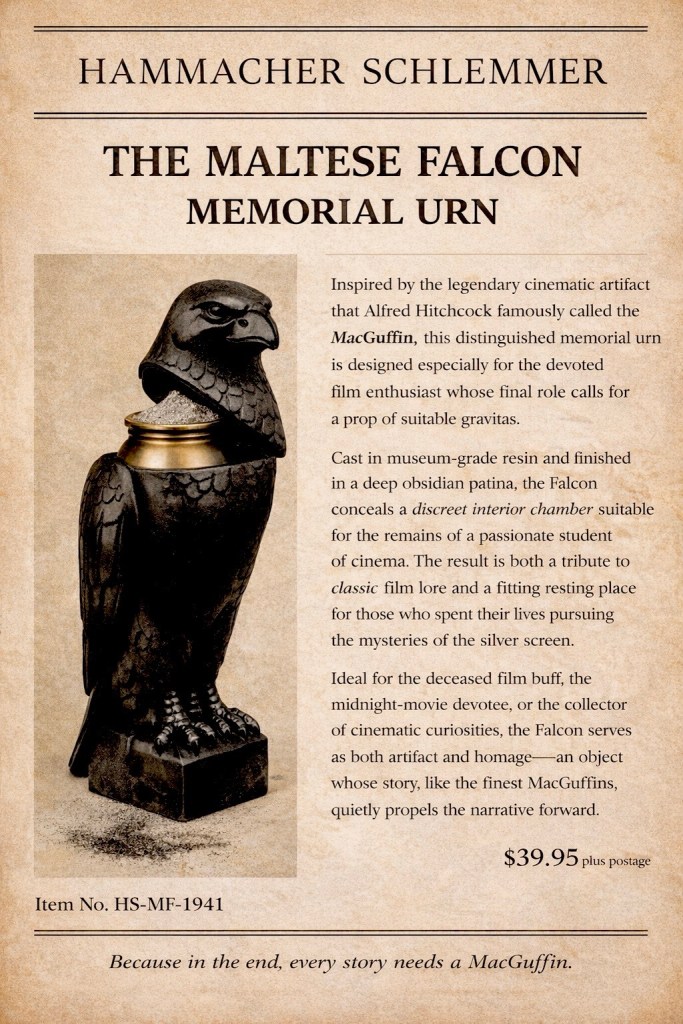
“In a manner of speaking,” Cliff replied. “The urn functions as what Alfred Hitchcock called a MacGuffin. An object that motivates travel while concentrating emotional tension.”
Vito shook his head.
“All I’m saying is this: if I die, don’t drive me to Arizona.”
On the screen the characters stopped at a scenic overlook. The wind blew dramatically through tall grass.
Vito pointed.
“Look at that. They’re already at the cliff. Watch what happens.”
The ceremony began.
A heartfelt speech.
A trembling hand opening the urn.
The wind shifted.
A pale cloud of ashes blew directly back onto the mourners.
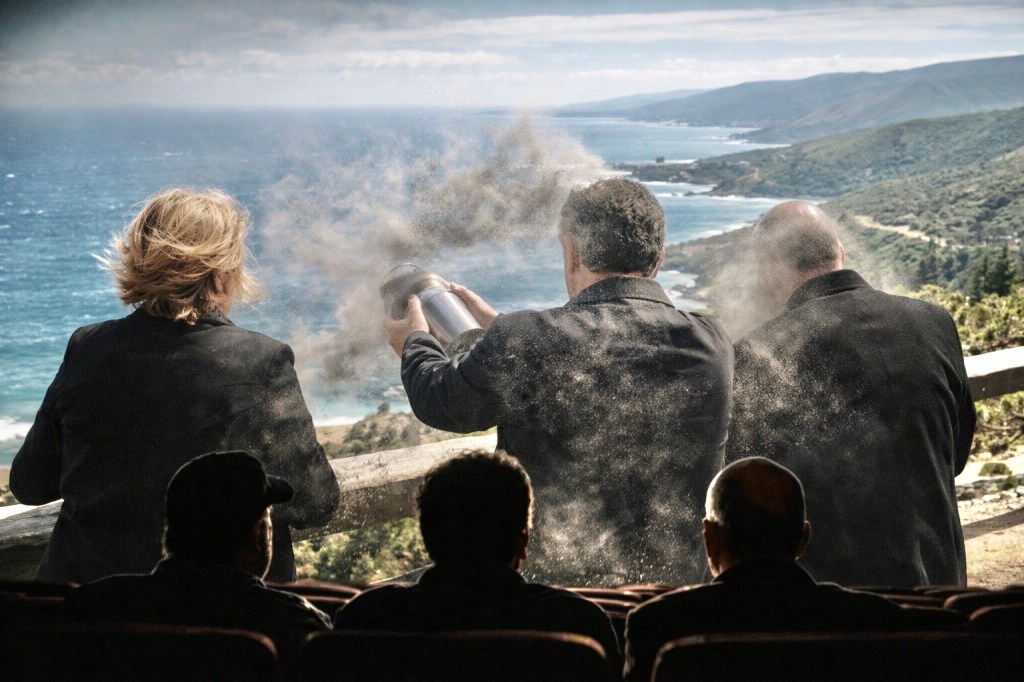
Vito slapped his knee.
“Every time!”
Cliff nodded thoughtfully.
“Yes,” he said. “The wind is now an established convention of the sub-genre.”
“Sub-genre?” Vito said.
“The ash-dispersion narrative,” Cliff replied.
Arturo Haus folded his arms and stared at the screen with grave anthropological interest.
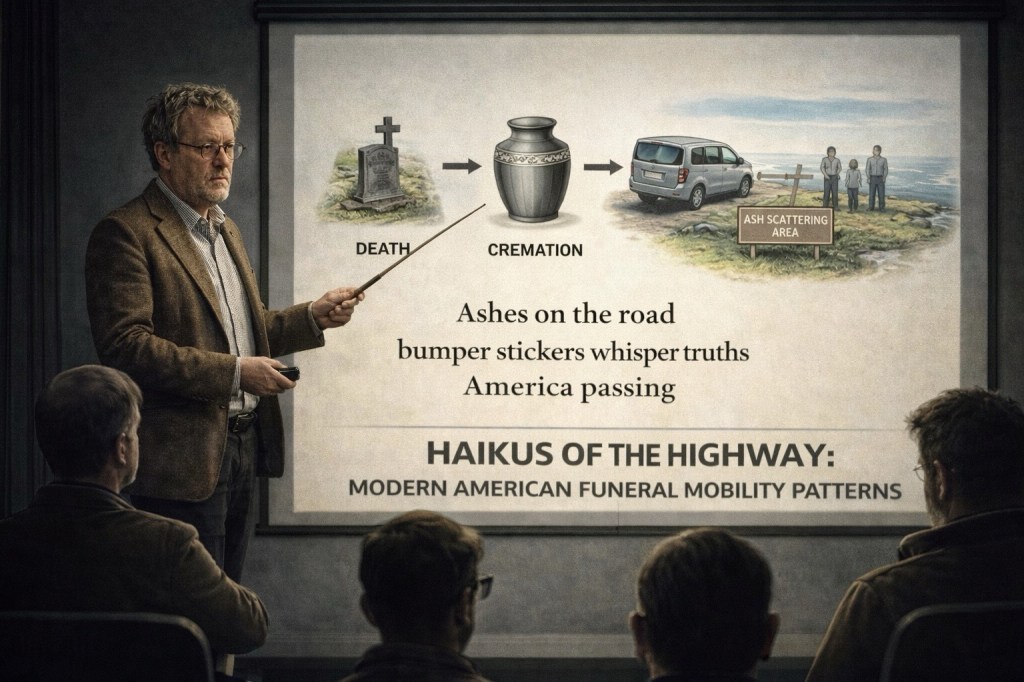
Vito leaned back in his seat.
“You know what they oughta do,” he said. “Bring back ashtrays in cars.”
Cliff turned.
“Come on, Haeckeler—cinema is basically the opera house of the modern imagination. Be serious.”
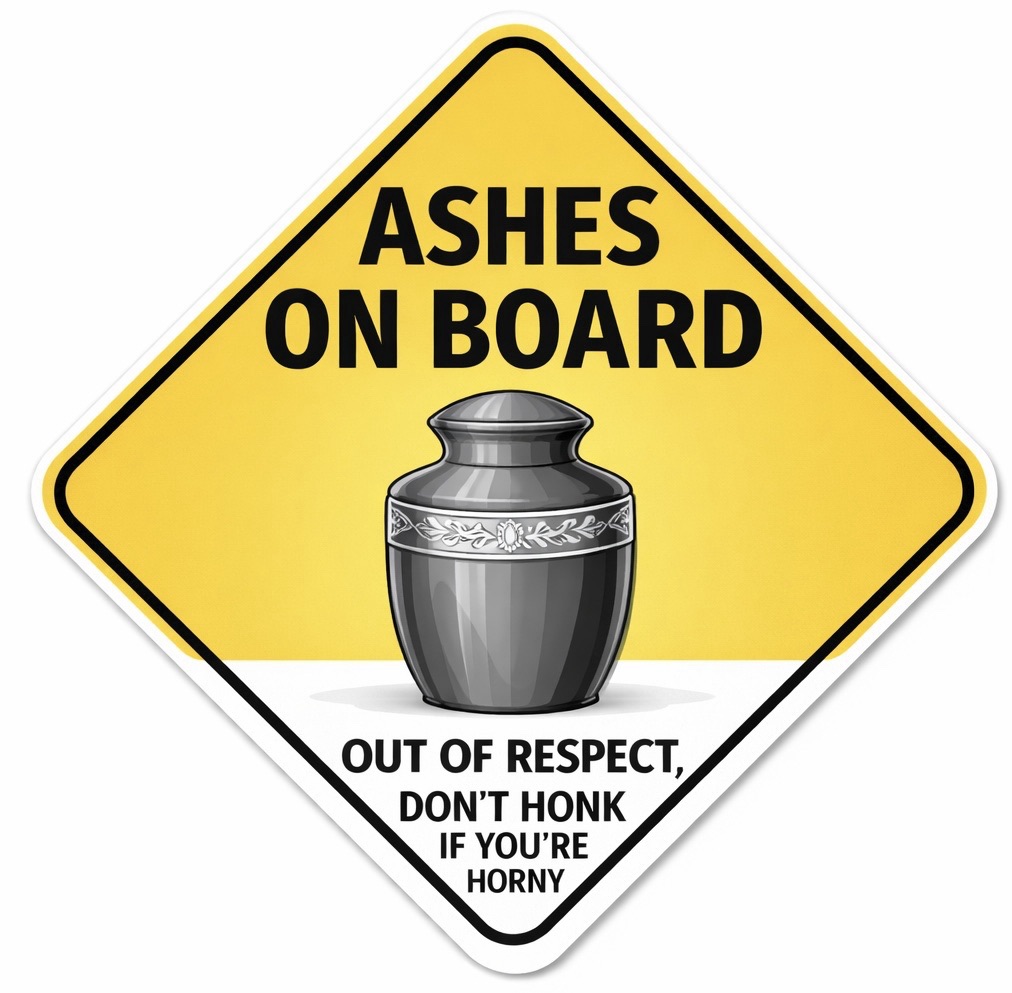
“Ashtrays,” Vito said. “You put the urn right in there while you’re driving around looking for a mountain. Keep Grandpa from rolling under the brake pedal.”
Cliff considered this seriously.
“That,” he said, “would represent a fascinating convergence of industrial design and funerary practice.”
Arturo Haus nodded once, slowly.
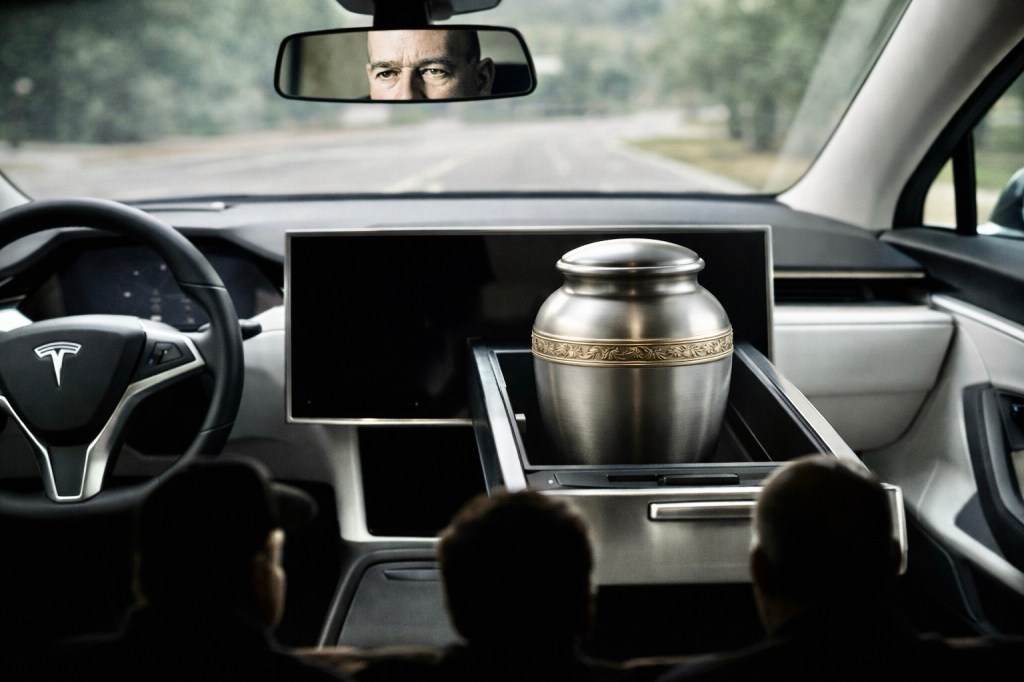
Integrated Urn Docking System™ — secure, elegant, and road-trip ready
On the screen the characters embraced as the last of the ashes disappeared into the sunset.
Vito watched for a moment and then said quietly:
“You know what’s coming next.”
Cliff glanced sideways.
“What?”
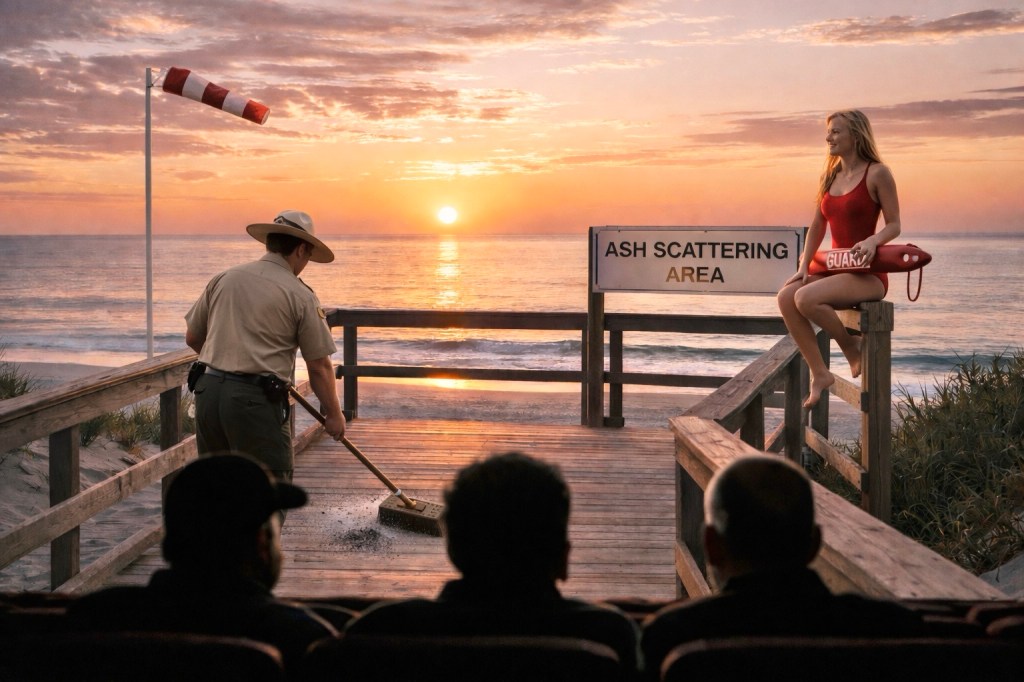
“Designated scattering areas,” Vito said. “Like those smoking sections they used to have outside buildings.”
Cliff raised an eyebrow.
“Go on.”
“You pull into the overlook or a beach,” Vito said. “There’s a little sign: Ash Dispersion Area — Please Stand Behind the Line. Maybe a wind sock.”
Arturo Haus allowed himself the faintest smile.
Cliff leaned back in his seat.
“Yes,” he said slowly. “A secular pilgrimage site.”
Vito crunched a handful of popcorn.
“Same idea as smoking,” he said. “They don’t want people doing it everywhere, so they give you a place for it.”
On the screen the wind rustled through the grass again.
Vito watched for a moment and then added:
“Only difference is with cigarettes the ashes go down.”
He pointed at the screen.
“These ones keep coming back.”
***
Please patronize another new C-of-C-C sponsor:

 COUNCIL-OF CONCERNED-CONSERVATIONISTS…..Between Jest And Earnest…..
Leave a comment