UNDER MY BLUE HEAVEN
—A CONVERSATION WITHIN ‘PROTECTIVE’ CUSTODY.
—INTRODUCTORY NOTE
(It must be stated clearly, for administrative purposes, that Vito Haeckeler did not enter the Witness Protection Program as the result of organized crime, financial fraud, or any prosecutable offense.)
He entered as a witness.
The difficulty, as noted in internal correspondence, was determining what, precisely, he had witnessed.
Mr. Haeckler maintained—repeatedly, and often in public settings—that he had observed the ongoing decline of the civilization in which he had been raised.
This observation, while not ostensibly illegal, became disruptive.
He did not deliver it as a lecture. He did not organize it into a theory. He simply said it—at counters, on sidewalks, in line at hardware stores—with the calm tone of a man noting that a beam had begun to bow.
This made him, in his own words:
“A witness without a case… and a problem without a name.”
After several informal complaints—none of which could be properly categorized—Mr. Haeckeler concluded that he had become, if not endangered, then at least increasingly unwelcome in open conversation.
He therefore applied for entry into the Witness Protection Program.
Under “Nature of Threat,” he wrote:
“People don’t like hearing it while it’s happening.”
—PRE-RELOCATION OBSERVATIONS
Prior to relocation, Mr. Haeckeler reported a recurring phenomenon which he described as:
“The photograph problem.”
He had encountered, in municipal buildings and local archives, a series of old photographs depicting the town in its earlier industrial period.
The streets were full. The storefronts legible. The faces—this he emphasized—were striking.
Not in the exaggerated sense of glamour, but in proportion, posture, and presence.
“They all look like movie stars,” he said.
“Not because they’re special. Because they’re. . .put together.”
He noted the difference without malice. Only with the precision of contrast.
In the present day, he observed:
“You don’t see that shape much anymore.”
The remaining population, as he described it, tended toward extremes.
“Either carrying too much weight. . . or not enough. And what about those gaunt, thin as a rail guys walking in the middle of the day to the convenience store to get snacks?
He did not elaborate further, though he did add, almost apologetically:
“It’s not judgment. It’s distribution.”
One incident was recorded in which Mr. Haeckeler, while observing a routine mail delivery, paused and remarked:
“There. That’s what I mean.”
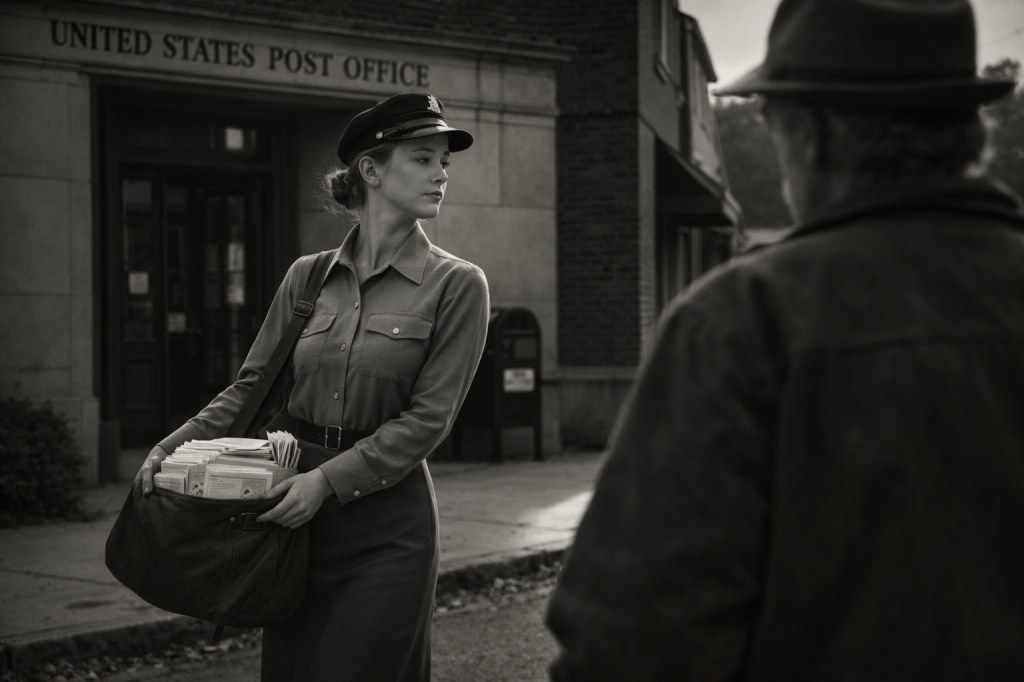
The mail carrier in question was, by all conventional measures, unremarkable.
And yet, in context, she appeared—according to Mr. Haeckler—
“Like she walked out of an older picture and took a wrong turn.”
This statement was not well received.
—LOCAL LANDMARK
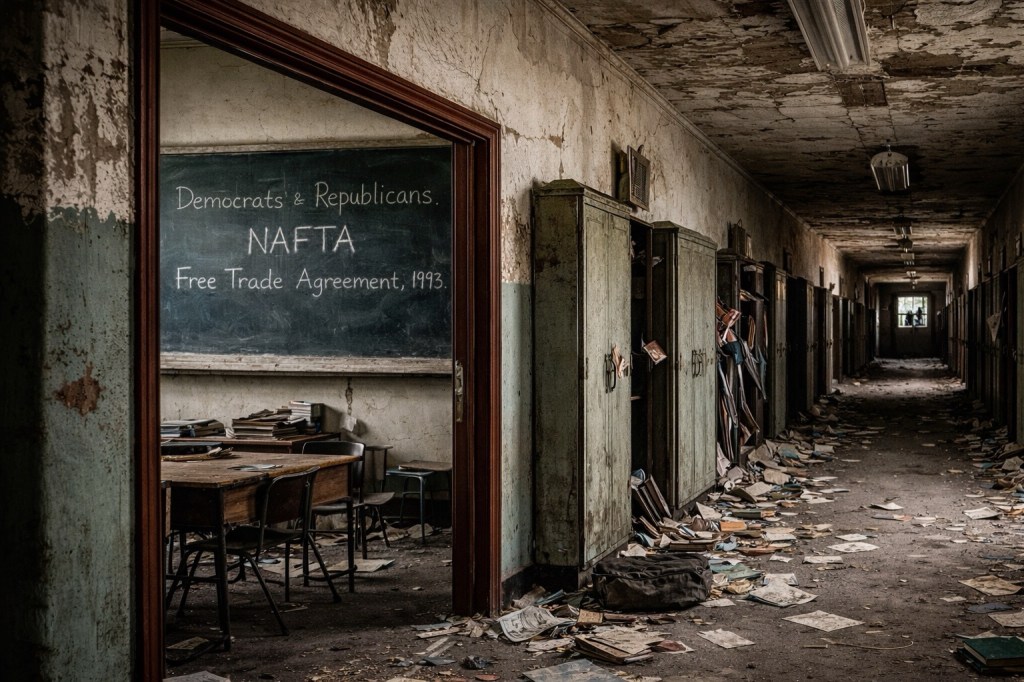
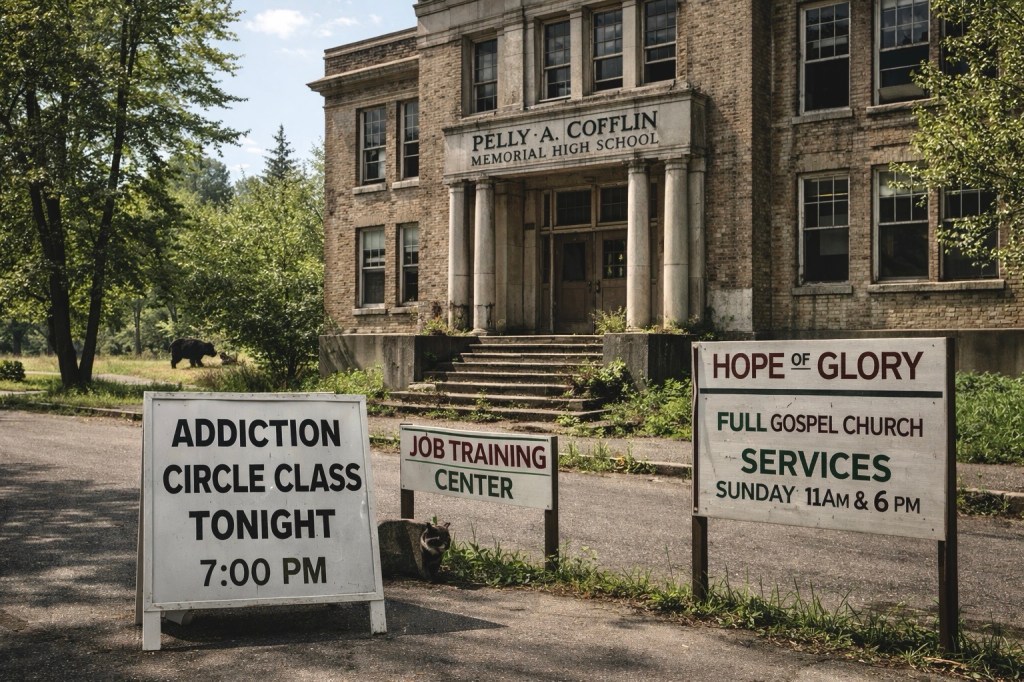
Mr. Haeckler also drew attention to a nearby high school, located just beyond one of two traffic lights in town—one of which, at the time of observation, was not functioning—still—after five years.
The building remained structurally intact.The field remained marked. The flagpole remained upright.
And yet, as he described it:
“Nothing lines up with the purpose anymore.”
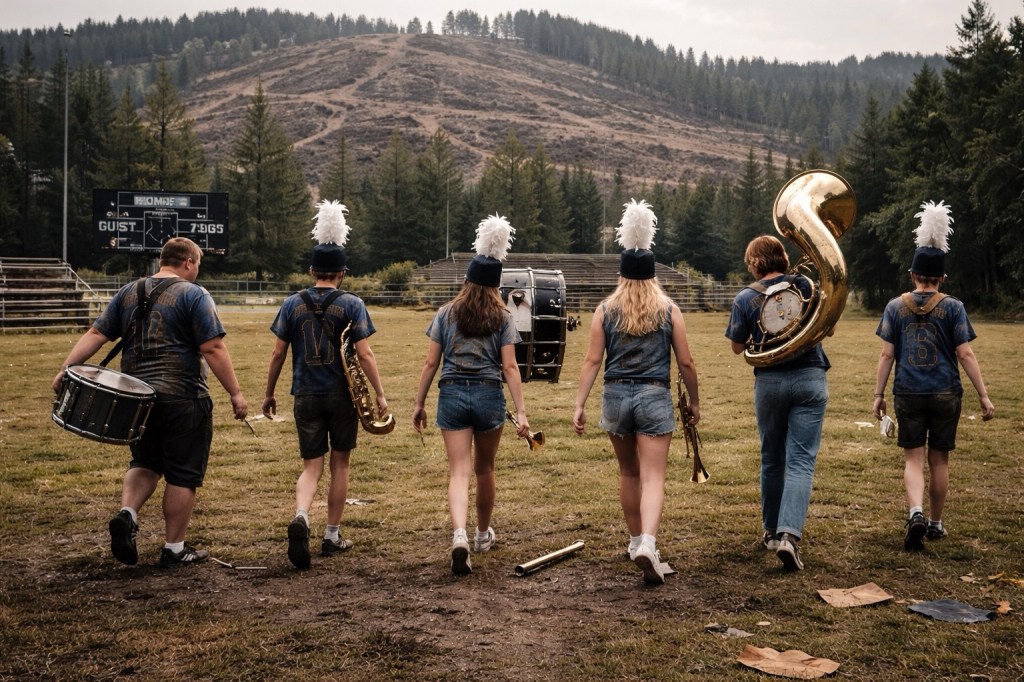
He noted, with particular attention, that the grounds were occasionally used for community events involving marching formations—sometimes bands, sometimes youth programs—whose movements retained the shape of discipline without its former context.
“They’re still marching,” he said. Just not toward anything.”
—CONVERSATION UNDER PROTECTIVE CUSTODY
(Post-Relocation Debrief: Vito Haeckeler)
The room is climate-controlled to the point of denial.
A table. Two chairs. A fruit bowl that appears to have signed a non-decay agreement.
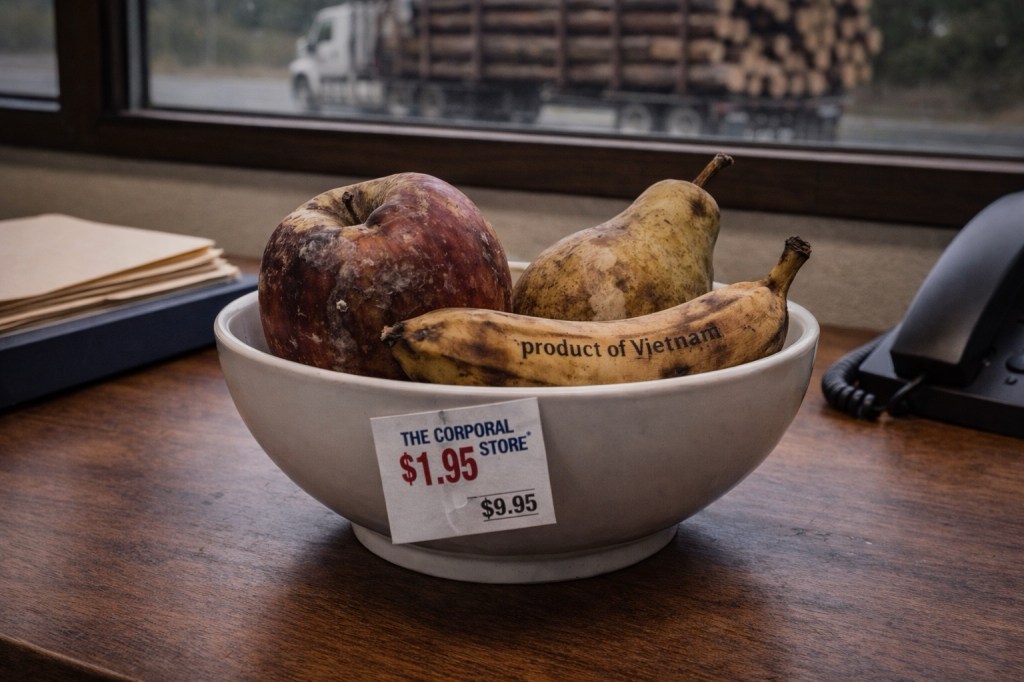
Vito Haeckeler sits forward slightly.
Utility knife closed. Hands near it.
Across from him:
Noor Singha Grudj, Senior Cultural Stabilization Liaison—Office of Transitional Realities (Quasi-Governmental)
Recorder on.
Noor:
Mr. Haeckeler, you were relocated to a stable municipality for your protection.
Let’s not waste time—did you or did you not undermine that placement?
Vito:
I lived there.
Noor:
You commented. Repeatedly. Publicly.
Vito:
Yeah.
Noor (flat):
We’ll proceed.
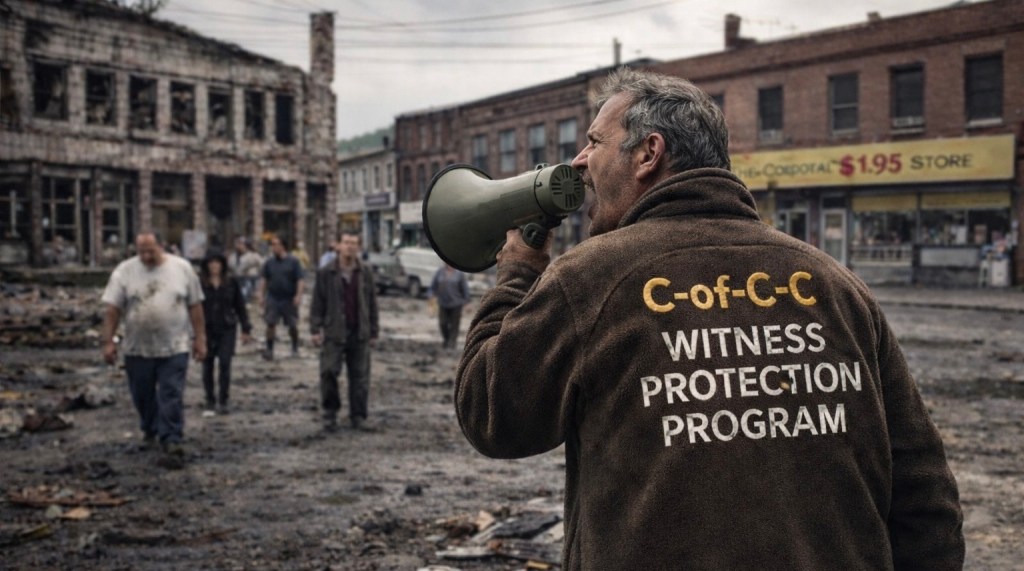
—CONDITIONS (ENTERED INTO RECORD)
Noor:
Infrastructure.
Vito:
Power goes out three, four times a week.
Noor:
Weather-related?
Vito:
Used to be.
(pause)
They logged the hills. Trees grow fast, come down faster now. Take the lines with ’em.
Noor (sharper):
So your position is that standard environmental variability constitutes systemic failure.
Vito:
No.
(pause)
My position is the lights don’t stay on. They really should call this place Deadwood. At least we have a lot of branches around to light fires.
Noor:
Public institutions.
Vito:
High school’s still there.
Noor:
Operational.
Vito:
Lockers still got books in ’em from the day it shut down. Gym still smells like it used to matter.
(pause)
They run addiction classes in the cafeteria now.
Noor:
So the building continues to serve the community.
Vito:
Yeah.
(pause)
Just not the same one.
—ESCALATION
Noor:
Employment?
Vito:
Everybody’s got something. Mostly Social Security
Noor:
Then economic function is intact.
Vito:
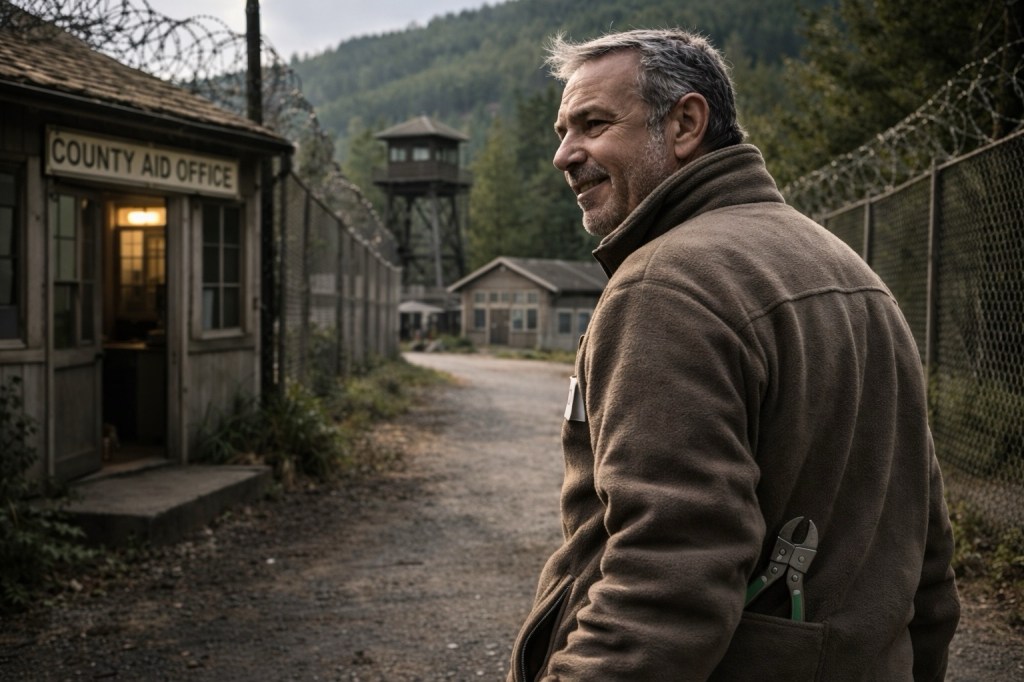
County aid office is the busiest place in town.
Noor:
Providing support services.
Vito:
Providing a loop.
(pause)
People come in. Stay in. System stays full. Those ladies in the office have to keep themselves in business so they can afford their expensive latte breaks. Latte di da. You know those expensive milked up coffees
Noor (cutting in):
That is a characterization.
Vito:
It’s what I saw.
—SOCIAL CONDITIONS
Noor:
Community.
Vito:
You got people. Some trying their best to keep it together. I give them credit. Good people.
(pause)
It’s not like it once was.
Noor (cold):
That’s a vague assertion.
Vito:
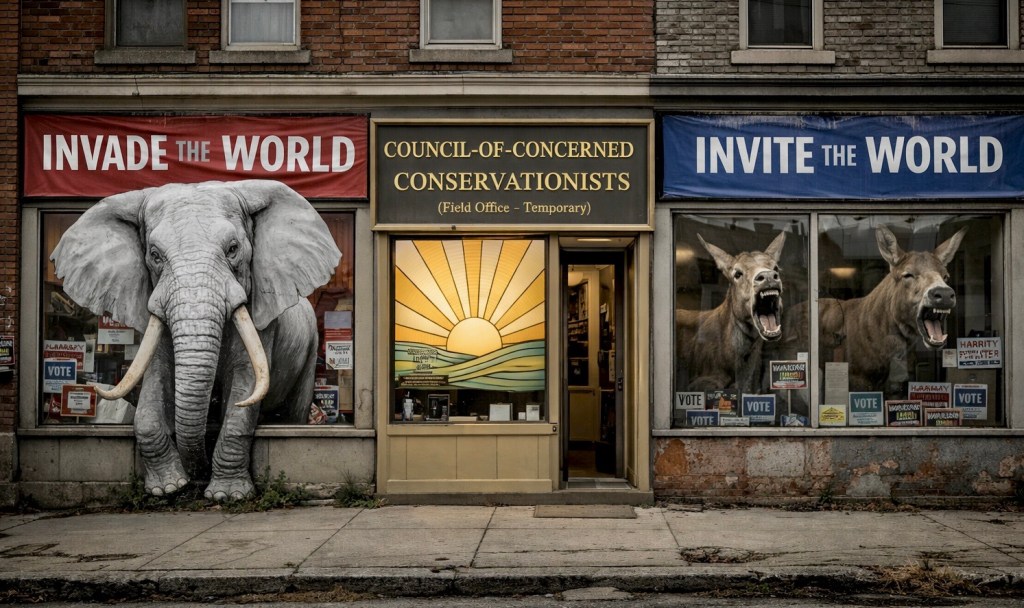
Stores change hands fast. Nobody talks past what they need. Half the words don’t land. Some think the Republicans are the great white hope. We have our fair share of looney liberals. You see it during election season with the lawn signs.
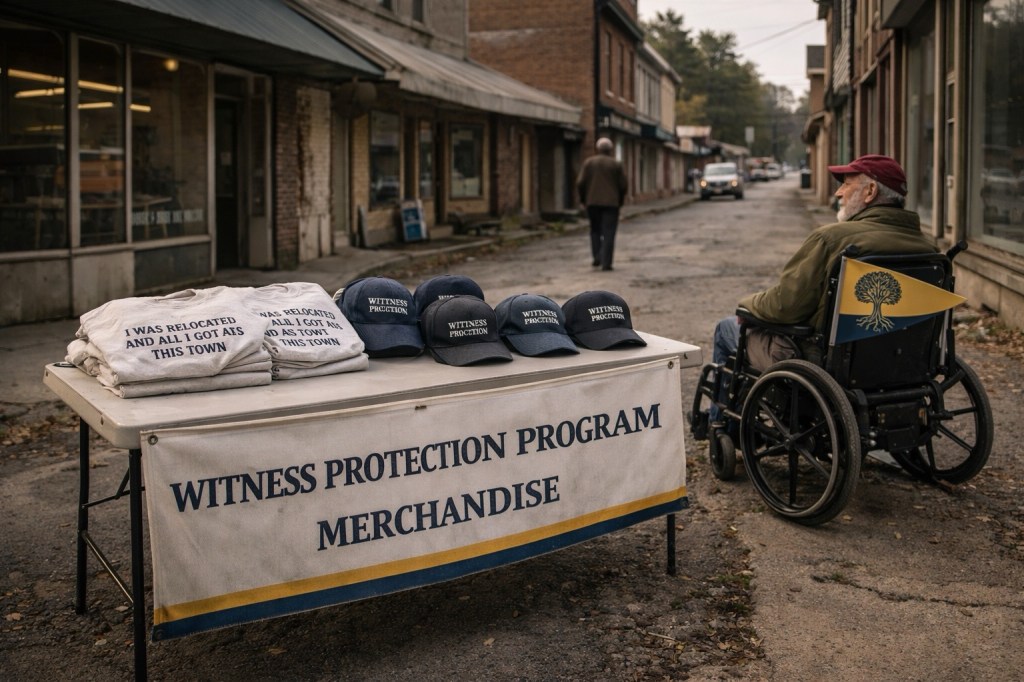
One guy in a wheelchair on the corner every day waving to everybody. Love that guy. He’s got spirit.
(pause)
Everybody’s there. Too many old people but they’re friendly. They seen it all like me.
—INCIDENT LOG
Noor (reading, clipped):
At the county office:
“This place isn’t failing. It’s self-sustaining in the wrong direction.”
Vito:
Yeah.
Noor:
At the school:
“They didn’t close it. They changed what it teaches.”
Vito:
That too.
Noor (harder):
During a power outage:
“This town doesn’t go dark. It just reveals itself.”
(Silence.)
—THE BREAK
Noor:
Do you understand the effect of statements like these?
Vito:
People hear ’em.
Noor:
They destabilize confidence. They introduce narrative distortion. They create—
(stops herself)
—unnecessary interpretation.
Vito:
It’s not interpretation.
(pause)
It’s description.
Noor (immediate):
It is not your role to describe systemic conditions.
(Vito tilts his head slightly.)
Vito:
Then what am I doing here?
(That lands wrong. For her.)

—FINAL EXCHANGE
Noor:
Can you refrain from making these statements?
(Vito looks at the fruit bowl. Presses the apple. It doesn’t give.)
Vito:
You want me to stop saying what I see.
Noor:
Yes.
Vito:
I can keep quiet.

🎶I turn to the right
A little white light
Will lead you to my Blue Heaven🎶
But it’s all still there.
(Noor closes the file. Sharper than before.)
Noor:
Your placement is terminated.
Vito (nods):
Yeah, I figured.
(Vito paused for a moment and looked out the window, as if taking inventory of something he had already decided to keep.)
“Look. I’ll tell you what,” he said finally. “I’ll tone it down. No need to be announcing everything I notice. They see it.
People here are good. They look out for each other in their way. There’s still. . . something left. You can feel it if you don’t press too hard.”
He nodded, satisfied with the adjustment.
“I like it here. I’ll keep it to myself.”
—POSTSCRIPT
Official reason for release:
“Subject demonstrates persistent unauthorized description of ambient conditions.”
More from Vito: HERE
 COUNCIL-OF CONCERNED-CONSERVATIONISTS…..Between Jest And Earnest…..
Leave a comment