—Specimen: “force majeure” — recently sighted migrating from legal documents into the open news cycle.

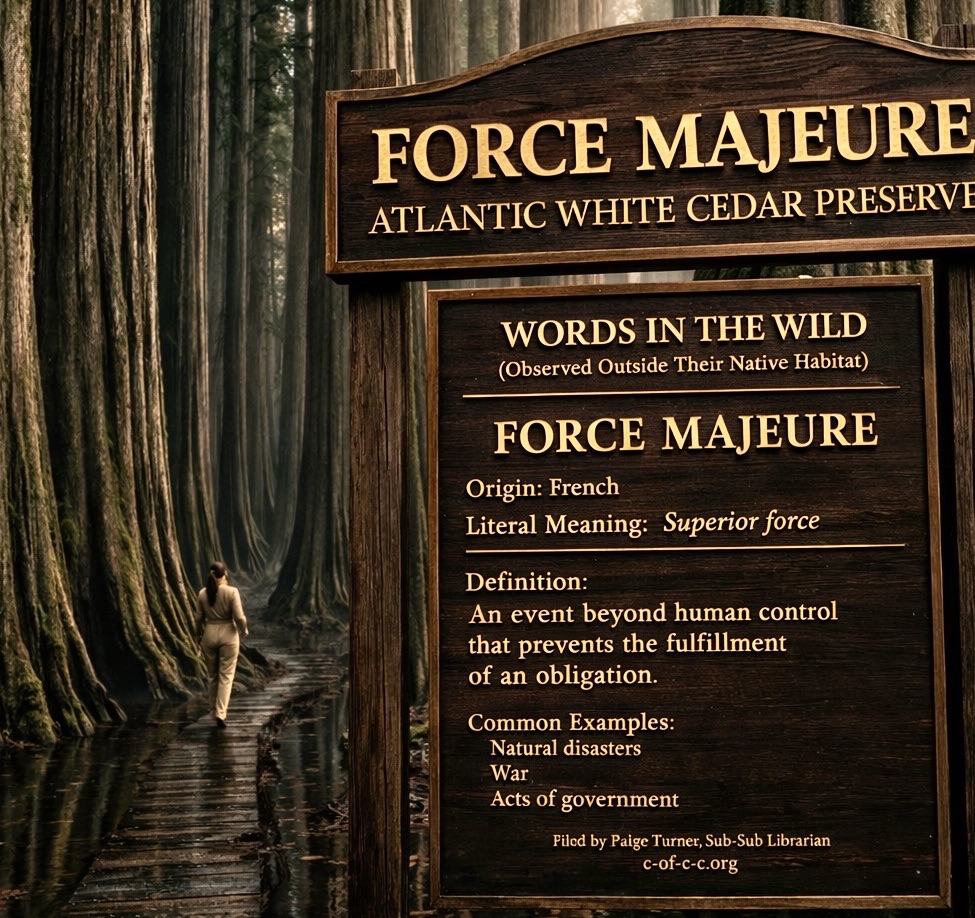
In recent weeks, I have observed an increased appearance of the term force majeure beyond its customary habitat in contracts and legal documents. It now turns up with growing frequency in news reports, public statements, and institutional explanations—often in reference to supply disruptions, service failures, and other inconvenient developments.
Traditionally, the phrase denotes events beyond human control—natural disasters, acts of war, or other extraordinary interruptions. Its migration into everyday language, however, appears to broaden its application. Delays become inevitabilities. Oversights become occurrences. Responsibility, in some cases, becomes atmospheric.
Recent sightings include references to shipping delays attributed to “force majeure conditions,” event cancellations framed under the same heading, and even policy reversals described as emerging from circumstances too diffuse to name but sufficiently grand to excuse.
It is, perhaps, a word to watch.
Not because it is misused—at least not always—but because, once released into the open, it travels well.
And like many such terms, it may come to rest wherever responsibility would otherwise have been expected to land. —Paige Turner
Migration patterns suggest a preference for low-responsibility climates.
 COUNCIL-OF CONCERNED-CONSERVATIONISTS…..Between Jest And Earnest…..
Leave a comment