—How the Southern Italians Accidentally Infiltrated Modernity with Fig Trees and Faith.
ALIVE AT THE GIST & TANGENT PUB.
The Following are the Minutes from a Night of Benevolent Conspiracy
(Recorded by Paige Turner, Sub-Sub Librarian)
It was raining the kind of rain that makes a man philosophical.
The Accidental Initiate stumbled into the Gist & Tangent Pub—coat dripping, eyes half-dreaming—muttering something about “protocols” and “fig trees.” John St. Evola waved him over.

JOHN ST. EVOLA:
“Looks like you’ve been baptized, Initiate. Sit down before you rust.”
He did, ordered a glass of red, and began, as if mid-sentence.
THE ACCIDENTAL INITIATE:
“I don’t know if it was a dream or a revelation. But I saw it clear as day: The Protocols of the Elders of the Southern Italian Emigrants of the World.
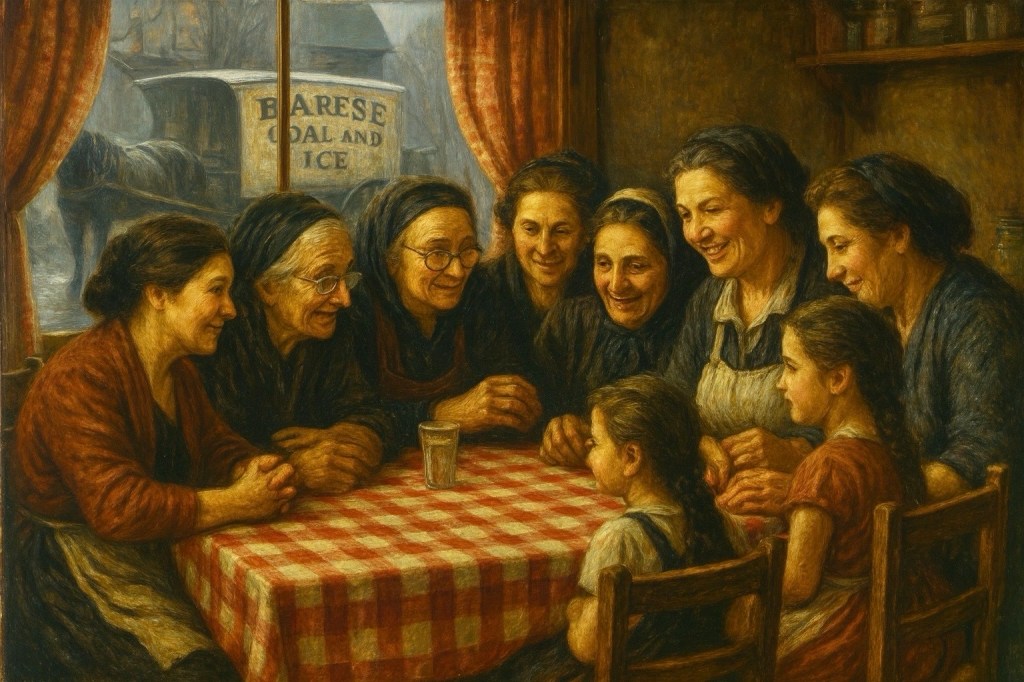
A benevolent conspiracy—nothing sinister. It was written in dialect, in simmering sauce, and a shot of limoncello.”
The table leaned in.
THE ACCIDENTAL INITIATE (continuing):
“The first thing they believed—feed before you argue.
A hungry man can’t reason; a full one has nothing left to fight about.”
MRS. BEGONIA CONTRETEMP:
“Oh, amen to that. My grandmother settled more disputes with baked ziti than the League of Nations managed in twenty years—and she wasn’t even Italian. She picked it up from the immigrants down the road when she lived in Scotland. Their recipes kept half of Glasgow from declaring war on itself.”
THE ACCIDENTAL INITIATE:
“Then there was what I called the Nonna Principle. It was never about overthrowing the father. He remained the head of the family—the sign of law and lineage—but she was its heart, the keeper of rhythm and reason. Their authority was mutual, not rival. He carried the name; she carried the continuity. Between them, the household held its balance, and civilization began again each night when they took their places at the same table.”
DR. FAYE C. SCHÜß:
“That’s not governance, that’s preventative medicine. I’d still prescribe it nationwide—but not in capsules. A good family meal releases more serotonin than any pill I’ve ever studied, and the side effects include laughter, leftovers, and a reason to live.”
JOHN ST. EVOLA:
“And work—don’t forget work. Our people always called it jobba. It’s there in the protocols, plain as day. Work wasn’t drudgery; it was devotion. That’s the theology of the wrench: fix the boiler, fix the soul—and by doing so, keep the whole household from freezing, body and spirit both.”
THE ACCIDENTAL INITIATE:
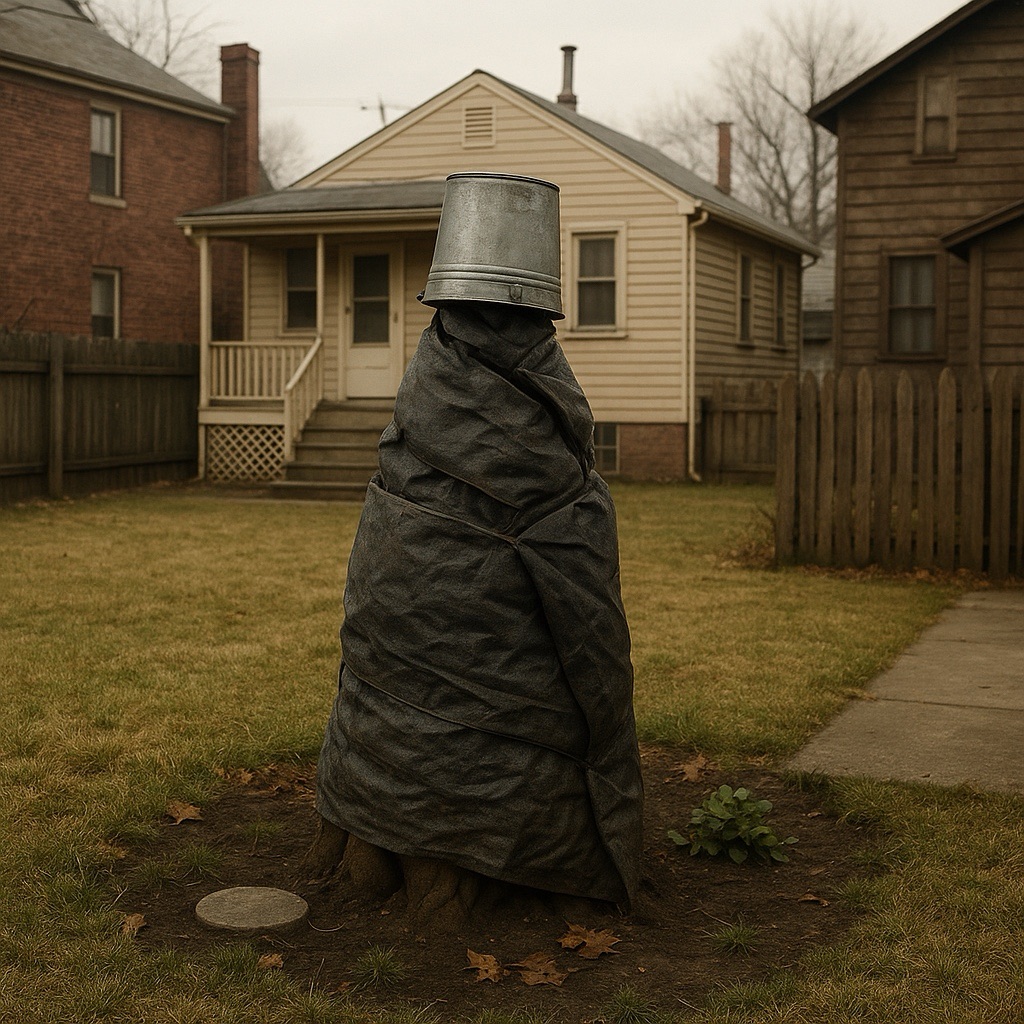
“Exactly. Work wasn’t labor; it was liturgy. A man fed his family, set up and poured concrete for his patio, planted a fig tree he might never live to harvest.
Those trees were little acts of defiance—planted in climates that said, ‘You can’t.’ Every one a protest against despair.”
BLACK CLOUD:
“That’s the kind of rebellion I like. Rooted, not theoretical.”
PETER R. MOSSBACK:
“You’re describing a sort of positive anarchism—subsidiarity with garlic. They didn’t wait for governments; they had cousins.”
THE ACCIDENTAL INITIATE:
“Right. A socialism of many families. No welfare state, no utopia; just responsibility passed from hand to hand. The southern Italian immigrants to America were the least likely as a group to use government relief as it was called at that time.”
He sipped his wine.
THE ACCIDENTAL INITIATE (continuing):
“And the last part—the strangest part—was about the media. They infiltrated it, you know. Not with propaganda, but with melody.
Sinatra sang sincerity back into the microphone. Perry Como made calm fashionable. Dean Martin turned irony into tenderness. When rock was melodic there were more than a few Italian American lead singers in the band.
Then the comedians—Anne Bancroft, Corolla, DeVito, Don DeLuise—they smuggled warmth into satire. Even Stallone, God bless him, taught that suffering could still be noble.
It was the only media manipulation that ever worked for good.”
DR. FAYE C. SCHÜß:
“Ah yes, the serotonin strategy—though we should be clear, in the protocols of the Southern Italian elders, there was no subversion. Their infiltration of the media was medicinal, not manipulative. They didn’t corrupt the airwaves—they corrected them, broadcasting warmth until despair forgot its lines. I’ve yet to see a clinical trial match what a single Sinatra song did for national morale.”
MRS. BEGONIA:
“And don’t forget the kitchens! They weren’t chaotic—they were cathedrals of order and aroma. The Italians I knew in Scotland could polish a counter to a mirror while a sauce simmered beside it. Their neatness was a kind of prayer: proof that beauty and cleanliness could coexist with garlic and olive oil. Civilization, my dears, doesn’t reek—it fragrances.”
PETER R. MOSSBACK:
“I’ll drink to that—though you’re romanticizing the fig tree. It’s overrepresented in literature.”
BLACK CLOUD:
“Maybe. But politics doesn’t plant fig trees. Neither Republicans nor Democrats—nor the democratic system itself—can imagine fruit that ripens beyond the next election. Our elders thought in generations; our parties think in quarters. No wonder the orchards are empty.”
The jukebox clicked alive—Sinatra, naturally. Fly Me to the Moon.
John St. Evola raised his glass.
JOHN ST. EVOLA:
“To the Elders of the Southern Italian Immigrants—
anarchists of affection, broadcasters of benevolence, planters of improbable fruit.”
He paused, then added with that mechanical solemnity he reserves for sacred jokes:
“And let the record show—we’ll take full responsibility for our Protocols!
We won’t call it a dream or a vision or some nasty conspiracy theory.
The Protocols of the Elders of the Southern Italian Immigrants are ours.
We take the credit for every fig tree, every melody, every meal that saved a man from abstraction.”
Paige Turner scribbled into her ledger:
Motion carried unanimously; Mossback abstained on horticultural grounds.
EPILOGUE
– THE ACCIDENTAL INITIATE:
“No, it wasn’t a dream. Maybe it was what initiation always is—
the sudden awareness that the sacred hides in plain sight:
in labor done with love, in laughter broadcast at dinner volume,
in a fig tree planted where it shouldn’t grow.
And let it be known—our protocols won’t be blamed on a fraud, nor explained away by some artificial intelligence charting historical trends. God isn’t an algorithm, and grace isn’t data.
The Southern Italians take full credit for their protocols—their work, their families, their songs—and they’ll take the blame too, should the world ever grow tired of beauty.”


Leave a Reply