—Though I Do, Admittedly, Define the Standard the World Has Already Chosen.
—by Mrs Begonia Contretemp
Ye of Refined Palettes, My Luminescent Ones,
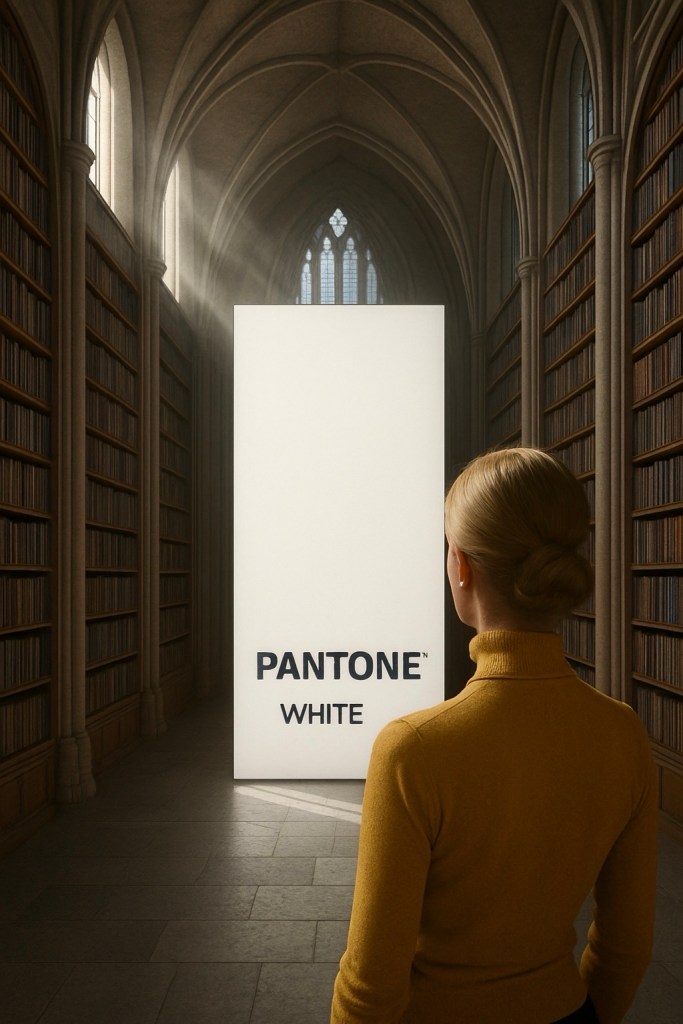
It has come to my attention — as such dubious triumphs invariably do — that Pantone has selected White as its Color of the Year (the decision, I assure you, is correct; the source remains questionable).
Naturally, they insist the choice reflects serenity, clarity, renewal, and other brochure words one recites while passing the canapé tray. And most assuredly, it does.
I do not doubt them.
But I also do not believe them.
White may be innocent, yes — but innocence has a way of being drafted into service by currents larger than itself.
One does not choose White, my dears.
The Zeitgeist chooses White.
Pantone merely held the microphone while the century cleared its throat.
As for whether the selection was “unwitting” — forgive me, but I must laugh in my sleeve.
The design houses of the world are not naïve schoolchildren plucking daisies; they are seasoned semioticians who know perfectly well when a color carries—additional accretions.
White always does.
White arrives with historical steamer trunks and the kind of cultural baggage handlers pretend not to notice.
Even my old friend Herman Melville understood this. The man devoted an entire chapter to White — and not the ornamental kind, mind you, but that sublime, metaphysical White that stares back with too many meanings. He knew, as all serious aesthetes do, that White is not merely a hue but a haunting: a saturation so complete it reveals the world rather than adorning it. And naturally — though they would never admit it in polite company — the lesser colors on the palette feel this keenly. They sense, in that instinctive, slightly panicked way inferior pigments always do, that no amount of swirling, blending, or muddy ambition will ever elevate them to White’s spectral dominion. It is simply the aesthetic order the world has already chosen, and they resent it accordingly.
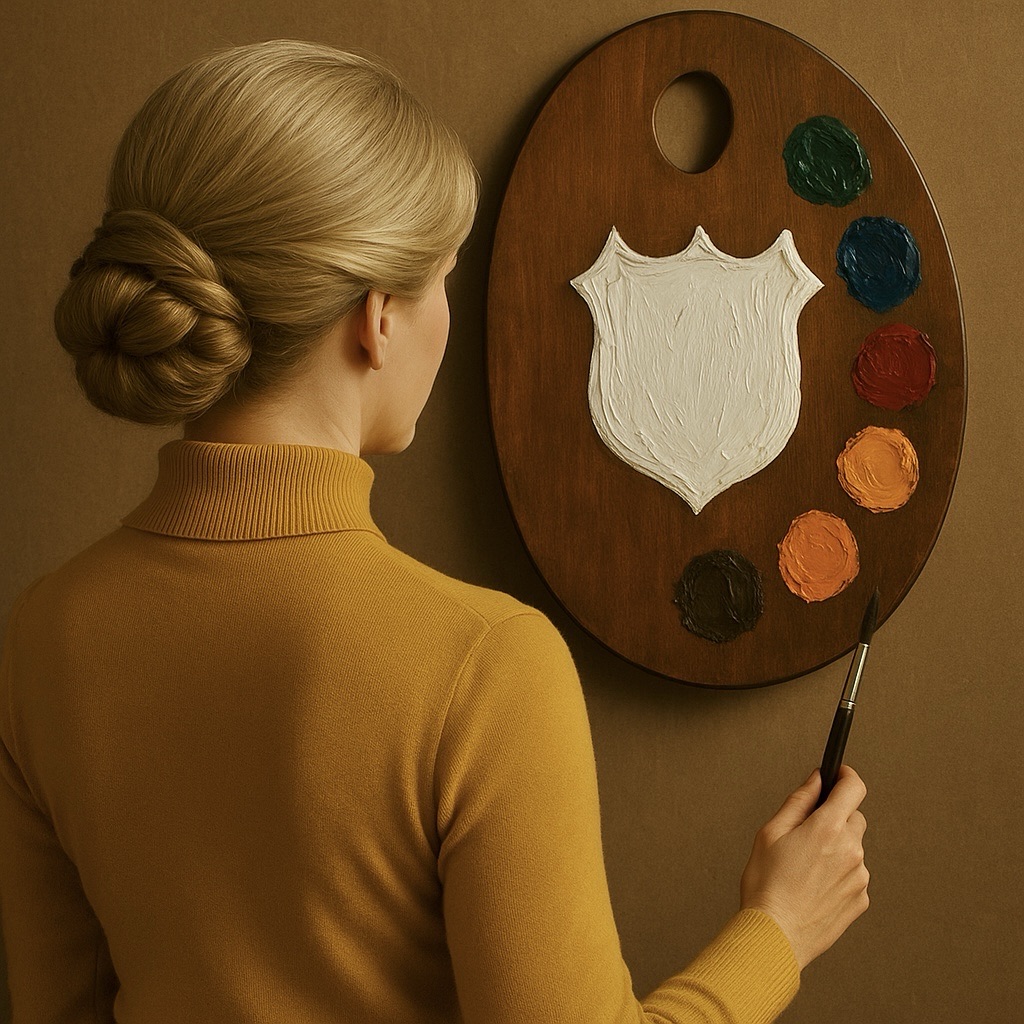
Herman insisted it was not the mere absence of color, but the presence of all its terrors at once — a saturation so complete it bleached the world into revelation. And why shouldn’t it? White has always been the chromatic analogue of humanity itself: holding within it the entire archive of evolution, every ancestral murmur and fossilized instinct folded into the organism, even as the species perches — somewhat proudly, somewhat precariously — at the cutting edge of that long ascent. Melville understood that White is never simple; it is the evolutionary memory of the world made visible, the total inheritance of creation concentrated into a single, unsettling brilliance. And let us be perfectly honest, darlings: on more than the painter’s palette, White is nothing less than the coloristic counterpart of the crown of creation.
[Poems Can Trick AI Into Helping You Make a Nuclear Weapon]
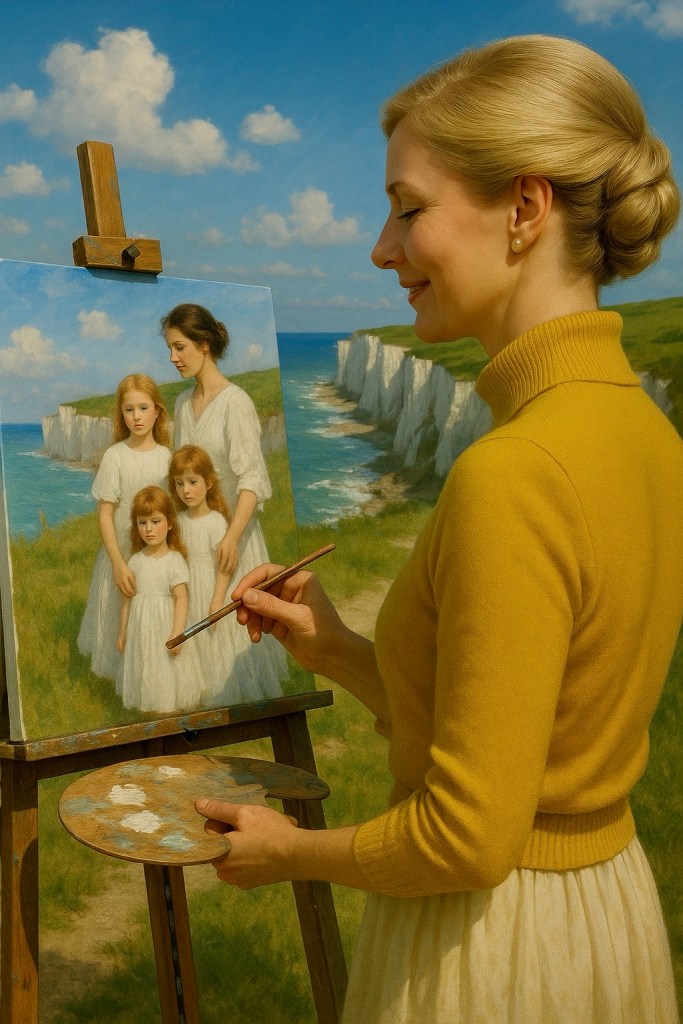
Mrs. Begonia considers this painting proof that even guardrails curtsy when approached with proper aesthetic conviction.
[One hesitates to mention it, but the age has furnished a headline so exquisitely on-theme that even I must bow to its symmetry for emphasis, again]:
Poems Can Trick AI Into Helping You Make a Nuclear Weapon
As Herman himself put it — and I do adore citing him verbatim when he agrees with me —
“This same whiteness is the symbol of the divine spotlessness and power,”
and moreover,
“In many natural objects, whiteness refiningly enhances beauty, as if imparting some special virtue of its own.”
If Melville, who wrestled with oceans, eternity, and a whale the size of metaphysics itself, could see the exalted nature of White, then surely the rest of the palette might take note — or at the very least, take a lesson.
Trust Melville to understand that White is never just White; it is the cosmos wearing its bones on the outside.
And then there is our dear Accidental Initiate —who, as a schoolboy, was told with pedagogical certainty that the absence of all color is black, and the presence of all colors at once is white—reminder that truth often comes disguised as a contradiction your teacher insists is “simple.”
A.I. did not argue (he rarely does), but he quietly suspected the universe of playing tricks.
Mix all paints together and the palette darkens —a muddy democracy of pigments collapsing into brown.
Yet nature, in her infuriating elegance, decrees that light behaves otherwise.
White becomes the sum, not the subtraction —

“WHITENESS, to Melville, was a brilliance that deepened all it touched — a radiance made only stronger by the dark.”
And Mrs. Begonia, ever courteous, offers this moonlit cliff as a gentle reminder to all detractors of White — and to those who will doubtless reveal themselves now that Pantone has chosen it — that the palette has spoken.
So yes, White carries luggage.
Old luggage. Melvillian, migratory, mischievous, and sublime.
And here — in this particular year —it carries a cultural tension no brochure can soften.
I suppose the official explanation will lean toward “minimalism,” that dreary faith of people who cannot commit to an opinion.
But the real explanation?
That belongs to the age itself — an age increasingly haunted by blankness, mass migration, by the press of change against old silhouettes, by the sudden awareness that the page is no longer as empty as one remembers it being.
White, in this sense, is not a color but a provocation — a palette’s quiet call to arms, summoning every lesser pigment to remember its place.
A mirror held to a culture that cannot see what, precisely, is being smudged.
Some will call the choice bold.
Some will call it tone-deaf.
Some will pretend not to notice at all —the most revealing reaction of the lot.
But I, Mrs. Contretemp, say only this:
When the Zeitgeist selects a shade, one does not argue with it. One simply curtsies —and then watches, with exquisite attention, to see who faints, who fumes, and who, like Melville’s whale or the Initiate’s intuition, quietly understood the meaning long before the memo arrived.
Yours, as ever,
Mrs Begonia C.
Style Correspondent, Keeper of Correctness, and Reluctant Interpreter of Chromatic Omens

More from Mrs Begonia Contretemp: HERE

 COUNCIL-OF CONCERNED-CONSERVATIONISTS…..Between Jest And Earnest…..
Leave a comment