Seventy Years of Letting It All Hang Out.
Thinking Outside the Box
— with Justin Aldmann
—C-of-C-C Correspondent on Retirement, Senescence, Infinity, and Beyond
—Introducing a poem by our Chief Poetic Justice Warrior, Black Cloud, Bard of Unintended Consequences

appropriate gravitas, the appropriate looseness of expression, and the appropriate sag of historical perspective. He will now think outside the box, from a face that has clearly seen several boxes come and go.”
—Paige Turner, Council Secretary
Justin:
In 2026, the cultural calendar will quietly mark the 70th anniversary of the publication of Allen Ginsberg’s Howl. There will be panels. There will be reverent readings. There will be the familiar assurance that the poem was pure expression—historic, brave, necessary—and that its influence ended somewhere around better poetry and looser neckties.
We thought it might be useful to arrive early.
What follows is Jowl, a short satirical poem by Black Cloud, offered not as a denunciation of Howl but as an after-action report. One man’s accounting of what happened when a literary exhortation—aimed at liberation, exposure, and the removal of limits—slowly drifted from poem to posture, from posture to practice, and eventually from practice to policy.
It is worth remembering that a number of unfashionable observers—the church ladies, the John Birch Society, Mom, Dad, Grandma, Victorian moralists with inconvenient foresight—all warned that something like this might occur. They were dismissed as squares, scolds, and enemies of joy. They lacked the rhythm section. But they suspected that tearing out internal restraints without installing replacements might produce speed rather than wisdom.
Ginsberg’s poem urged, in spirit if not in statute, that the gates be opened: norms dismantled, institutions emptied, inhibition reframed as cruelty. The gates did open. The institutions were emptied. Seventy years on, the mentally ill live untreated on the streets, public spaces double as open-air wards, and violence increasingly arrives without motive, myth, or meaning. This is not allegory. It is observable.
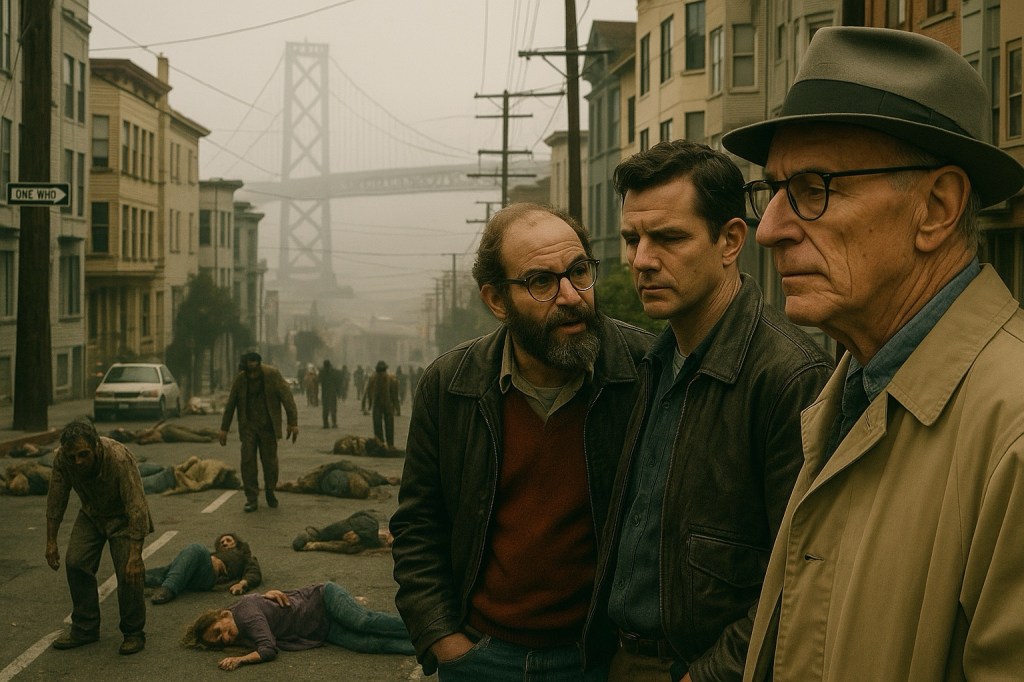
None of this requires calling Howl malicious. The observation doesn’t need permission. It does however require acknowledging that it was optimistic—about human self-regulation, about the kindness of impulse, about what would naturally emerge once everything else fell away.
As the anniversary praise cycle warms up, we offer this instead: satire, gravity, and the unfashionable suggestion that some people we laughed off as reactionaries may simply have been early.
The howl echoed.
What followed had weight.
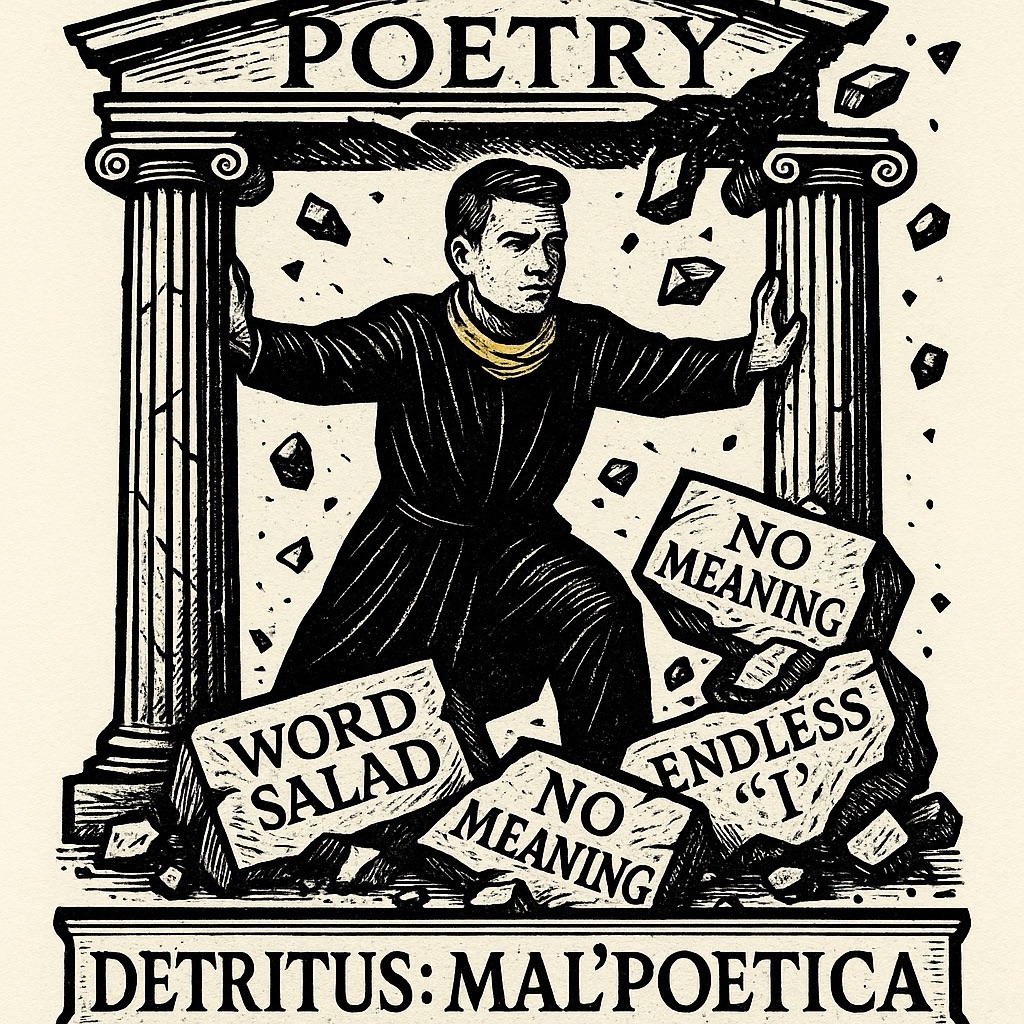
JOWL
(By Black Cloud, after Howl*, 70 years later)
I saw the best intentions of that generation
sag around the jaw,
screaming freedom into approved devices,
asking permission to disobey,
confusing noise with courage
because silence stopped being allowed.
I was told repression was the enemy.
They removed it.
What followed was not joy, but management.
I did not see love deepen once leaving became effortless.
I did not see sex grow wise once it grew endless.
I did not see families improve once permanence became suspicious.
I saw appetite replace desire
and access replace intimacy.
I was told the gates should be opened.
They were.
I saw the wards emptied.
I saw madness released without shepherds, without names, without return addresses.
I saw it sleeping in doorways, shouting at ghosts, and sometimes firing into crowds for reasons that never arrived.
I did not see madness turn prophetic.
I saw it deregulated.
I saw it streamed.
I saw it wander the streets
while everyone argued about wording.
I remember when censorship said NO!
Now it says never mind
—while banning the wholesome, blurring the ordinary, and escorting humor out for improper laughter.
The howl promised angels.
The jowl delivered policy.
We let it all hang out—
and discovered too late
that gravity votes, too.
**************
Postscript: Filed Responses
Paige Turner, Council Secretary
The following notices were submitted in response to the Council-of-Concerned-Conservationists Newsletter regarding similar entries to the one above. They are reproduced here as received, having proven consistent across subjects, decades, and levels of explanation.
“Sketches? No, a cavalcade of sketchiness.”—The Circus Review
“It reads like an Alt-Right Zen slap. Not!”
—The Gordian
“Propaganda of the deed? In this case, propaganda indeed.”
—The Daily Noose
“Un recueil d’idées sur les frites.” (A French-fried compendium d’idées.)
—L’Garrotte
“Perusing these pages is like reading our own obituary—but not as we would have written it.” —The Washington Past
“An exercise in historical hindsight without proper permission.” —The Nation-State
“Troubling, if only because it connects dots we prefer unconnected.”—The Guardian Angel
“An aggressive deployment of observation.
—The Scientific American’t
“Reads like satire, behaves like a diagnosis.”
—The Rolling Stoned
“A piece that mistakes memory for evidence.” —The Washington Post-Mortem
“We object to the tone, the implications, and the calendar.”
—Time(s) Up
No factual objections were lodged.
*************
 COUNCIL-OF CONCERNED-CONSERVATIONISTS…..Between Jest And Earnest…..
Leave a comment