—by Justin Aldmann, Correspondent on Retirement, Senescence, Infinity, and BEYOND!
—Emily Dickinson, passing through:
This World is merely Puzzle.
A Picture stands beyond—
Unseen, as Music waiting still—
Yet certain, as a Bond—
It beckons—and it baffles—
Philosophy says “No”—
And through a Jigsaw, at the last,
Sagacity must go—
To solve it disappoints us—
To finish asks no more—
The Pieces know their Patience well,
Not what they’re waiting for—
The Edges teach us Boundary—
The Center, how to wait—
No Revelation crowns the end,
Just Fit—arrived—too late—
Belief slips—laughs—and steadies—
When Shape declines Debate—
The World was never meant to yield,
Only—to consummate—
[Additional assembly support provided by a large language model.]
***
Justin:
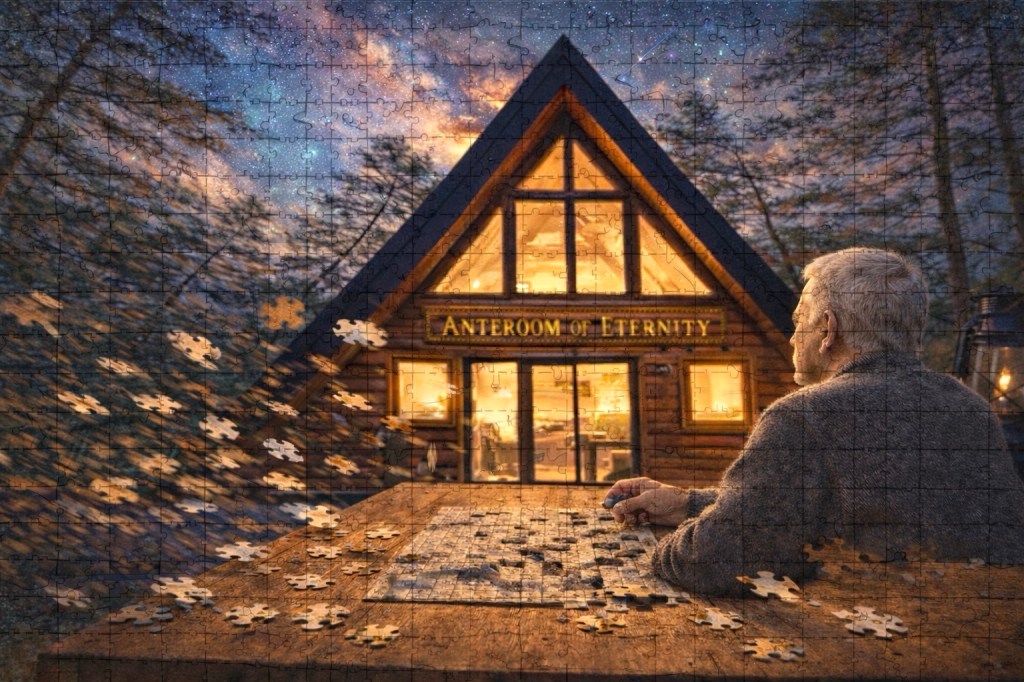
I have reached the age where hobbies arrive disguised as furniture.
The jigsaw puzzle enters one’s life the way an ottoman does: seemingly unnecessary, deceptively condescending, and then—once acquired—oddly indispensable for a time, before eventually being thrown out when the room belongs to someone else. One hesitates to imagine where we would be had the other Ottomans not been turned back at Vienna and their retreat commemorated with the indispensable croissant.
In my own case, the entrance was neither planned nor symbolic. A few years before retiring, I noticed a small tin on sale for five dollars. It contained a jigsaw puzzle depicting Mount Rainier, a mountain I had visited once and not forgotten. I bought it less as a pastime than as a souvenir delayed. There was, at the time, no place to work on it properly—no surface that could remain undisturbed, no stretch of hours that belonged entirely to me. So the tin was tucked away, unopened, like a promise I did not yet have time to keep.
That changed when I eventually found myself in a place of my own. The puzzle came out. A table appeared. The pieces were poured out and left there, unapologetically, day after day. I did not sit down to do the puzzle so much as to visit it. A few minutes here. A handful of pieces there. It became something to return to when I was bored, or restless, or in need of thinking without thinking too hard.
I discovered, somewhat to my surprise, that it paired well with listening. Music, certainly. Podcasts, too. The hands occupied just enough of the mind to make listening easier rather than harder. Concentration improved by being divided. The puzzle absorbed the anxious part of attention and left the rest free to listen, to drift, to notice connections that would otherwise slide past.
It was not efficiency. It was permission.
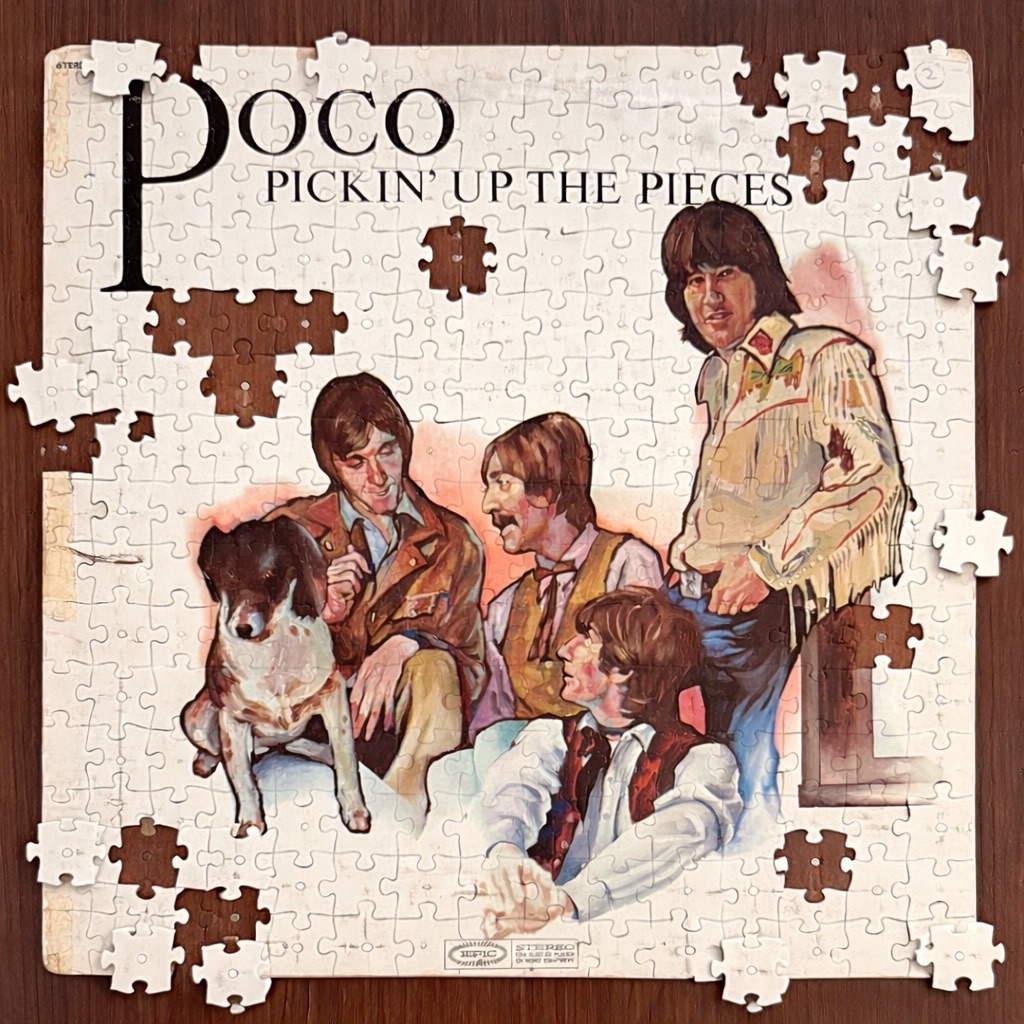
There was music in my life one time that offered a practical instruction. One song in particular. It did not promise resolution. It assumed that things come apart and that the only sensible response is to keep one’s hands occupied. Nothing is necessarily solved. Pieces are simply picked up.
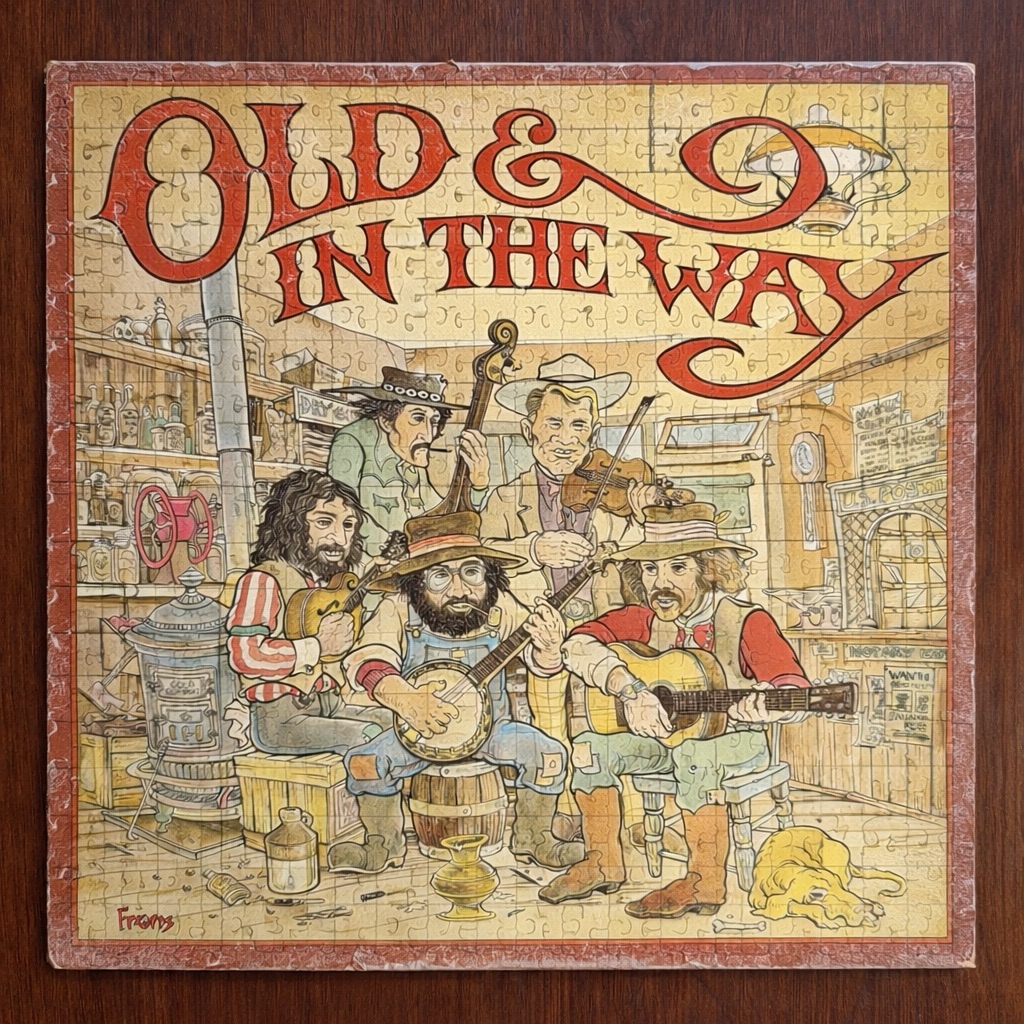
The other White Album — country rock assembling itself while the Beatles’ pieces were coming apart.
Jigsaw puzzles asked for the same stance. Attention without urgency. Effort without expectation. Occasionally, a fit.
At first glance, a jigsaw puzzle looks like a domestic nothing. Cardboard. A picture you already know. Yet it turns out to be a quiet metaphysical device, asking large questions in a small voice. What is a whole? What is a fragment? And what, exactly, do we think we are doing when we try to put things back together?
A jigsaw puzzle begins where certain modern theories end. William Burroughs, for instance, took a text and cut it up to release hidden meanings. Chance was his accomplice. Order was the enemy. The cut-up method assumes that coherence is a prison and that freedom lies in fragmentation.
The jigsaw puzzle, by contrast, accepts fragmentation as a given and sets about undoing it. The cutting has already occurred. The puzzler did not choose the chaos. He inherits it. His task is not liberation but restoration.
This is an unfashionable posture. The puzzle assumes—quietly, stubbornly—that there is an image. The box is unembarrassed about this. It does not apologize for believing in a whole.
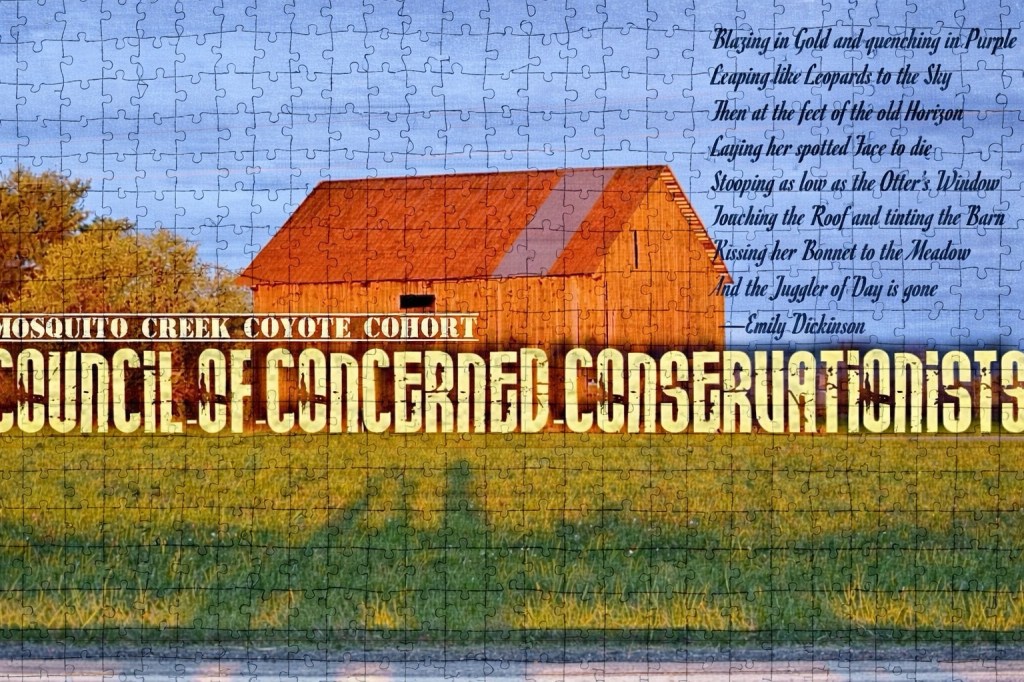
And yet the puzzler is no fool. He knows the image on the box is not the image he will meet. The sky will not blaze or quench itself all at once; it will arrive as a scattering of near-identical pieces, each withholding allegiance. The barn will not stand simply as shelter, but stoop into being—board by board, roof by reluctant roof—tinted slowly into coherence. Meaning, here, is not granted in a sudden illumination. It settles gradually, as the light withdraws—earned through patience, endured until the final piece yields and the day’s last juggler slips from view.
I approach puzzles the same way I’ve learned to approach most things. I begin with the edges. I want the limits in place first—to know where the horizon is and where it isn’t—before I concern myself with what fills the center. Once the frame is set, I sort by color. I look for affinities, for tones that want to keep each other company. Only then do I begin fitting pieces together, slowly, without force. I’ve learned that impatience doesn’t improve fit, and that order, when it arrives honestly, comes in this sequence: boundary, resemblance, consent.
Only later did it occur to me that a jigsaw puzzle may be a reasonable allegory for a human life.
We begin, after all, as a single image. Whole. Uncut. Not yet required to explain ourselves. Then, without our consent, we are passed through the die. Education, work, love, disappointment, habit, inheritance—each takes its slice. We are broken not maliciously but precisely. According to a pattern we did not design.
The pieces are then gathered into a box. Years. Decades. Shaken together. We spend most of life rattling around with fragments of ourselves we barely recognize, convinced that this is all there is.
Old age, if it grants anything, grants the time to spread the pieces out on the table. Not to invent a new picture. Not to cut further. But to see—perhaps for the first time—what shape we were given, and whether it still coheres.
“Paint whatever you like on the pieces—they still know where they want to go. Decline is just the picture finishing.” — Justin Aldmann
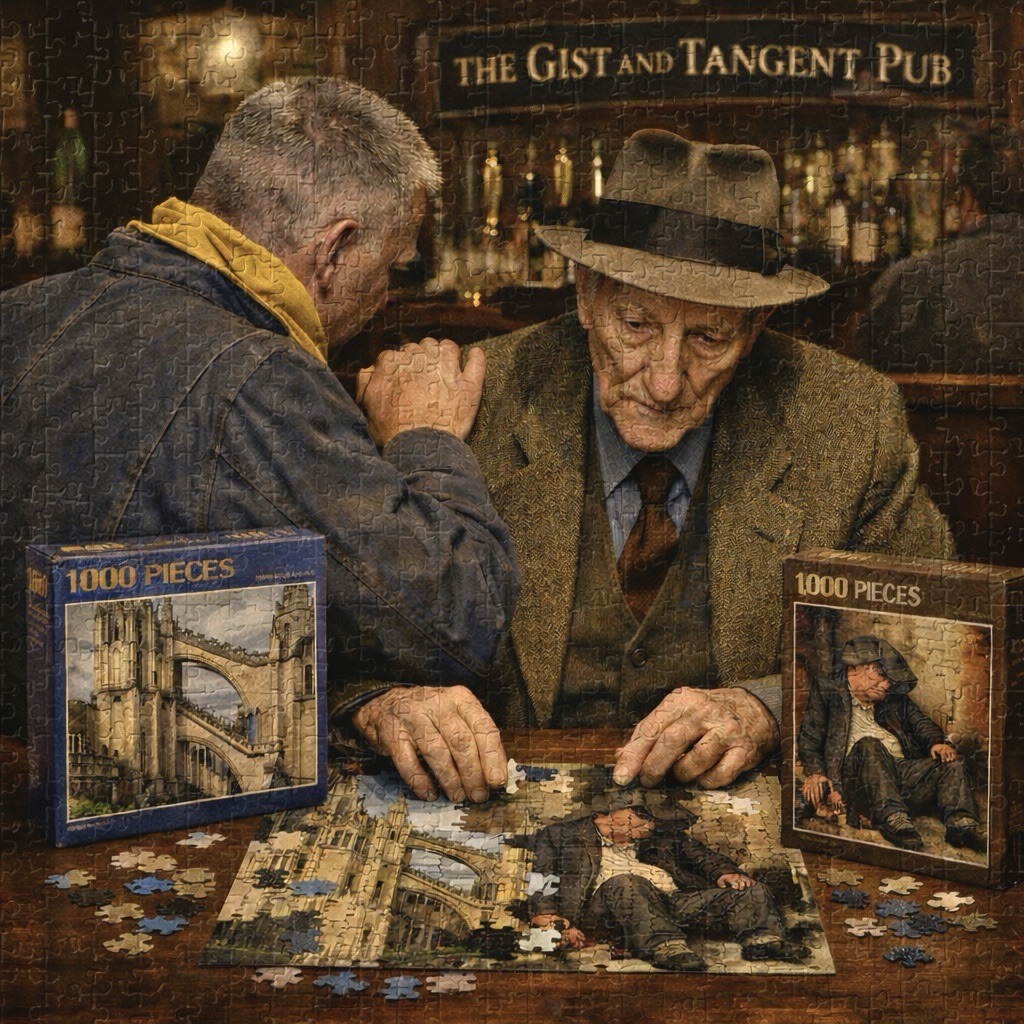
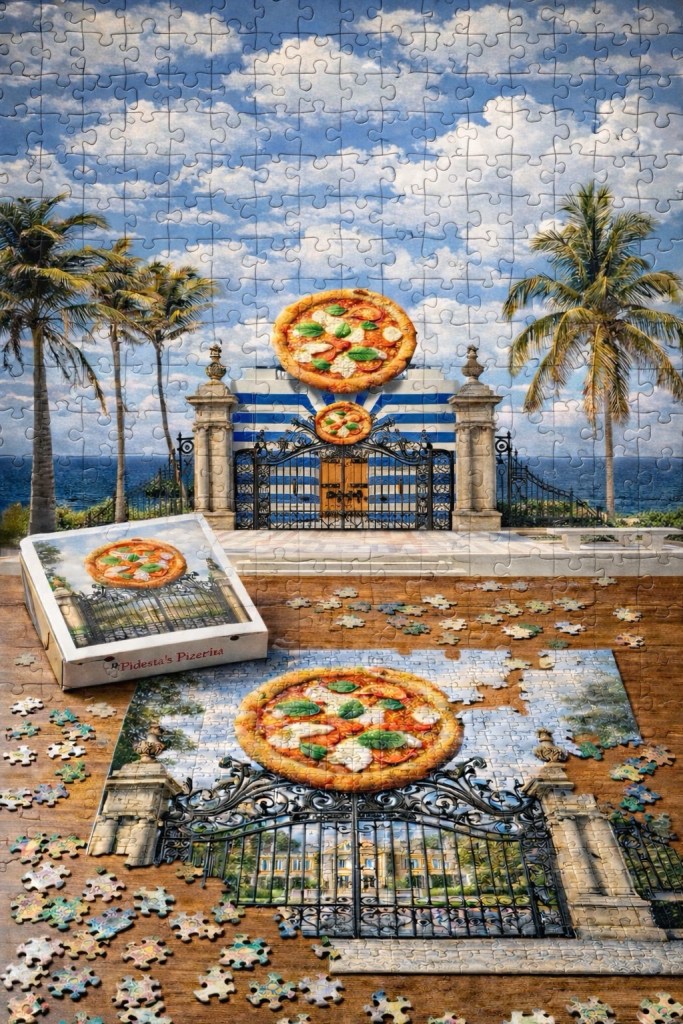
Recently, I encountered a curious variation: two different puzzles, produced with the same die-cut. The pieces are identical in shape. The images are not. If mixed together indiscriminately, chaos results. But if each puzzle is first assembled as intended—each whole respectfully completed—then something remarkable becomes possible. One can recombine them. A sky from one image can become water in another. A tree edge becomes a building line. The shapes agree, even when the pictures do not—at least on the surface.
“You had one job, Mr.Burroughs!”(Jigsaw puzzles were prescribed as therapy for Bill’s habit of cutting things up, with instructions to assemble them exactly as boxed. Compliance was observed. The shared die-cut, unfortunately, complicated matters.)
This struck me as more than a parlor trick.
It suggests that form precedes content. That civilization, like a puzzle, may have fewer shapes than stories. We inherit joints, curves, tendencies—a grammar of fit—long before we decide what picture we are making.
This is not an argument for fate so much as an argument for form. A culture, like a puzzle, is cut according to a particular die. The pieces will always tend to meet in certain ways and resist others. You may paint any image you like on the surface—gods, machines, markets, revolutions—but the underlying shapes persist.
Certain expressions recur not because they are copied, but because they fit. Stone arches rise again and again. Systems of number stretch toward infinity. Space becomes something to be conquered or escaped. These are not inventions chosen at random but fulfillments of an inner geometry. The pieces were already shaped that way.
To mistake this for pessimism is to misunderstand puzzles entirely. A puzzle does not fail because it ends. It fulfills its form. What looks like decline from the outside often feels, from within, like completion.
Our confusion, I suspect, comes from believing that we can simply repaint the box lid and expect the pieces to behave differently. When they do not—when old joints reassert themselves—we call it reaction, or superstition, or conspiracy. But it may be something simpler and stranger: the return of fit. The pieces come together.
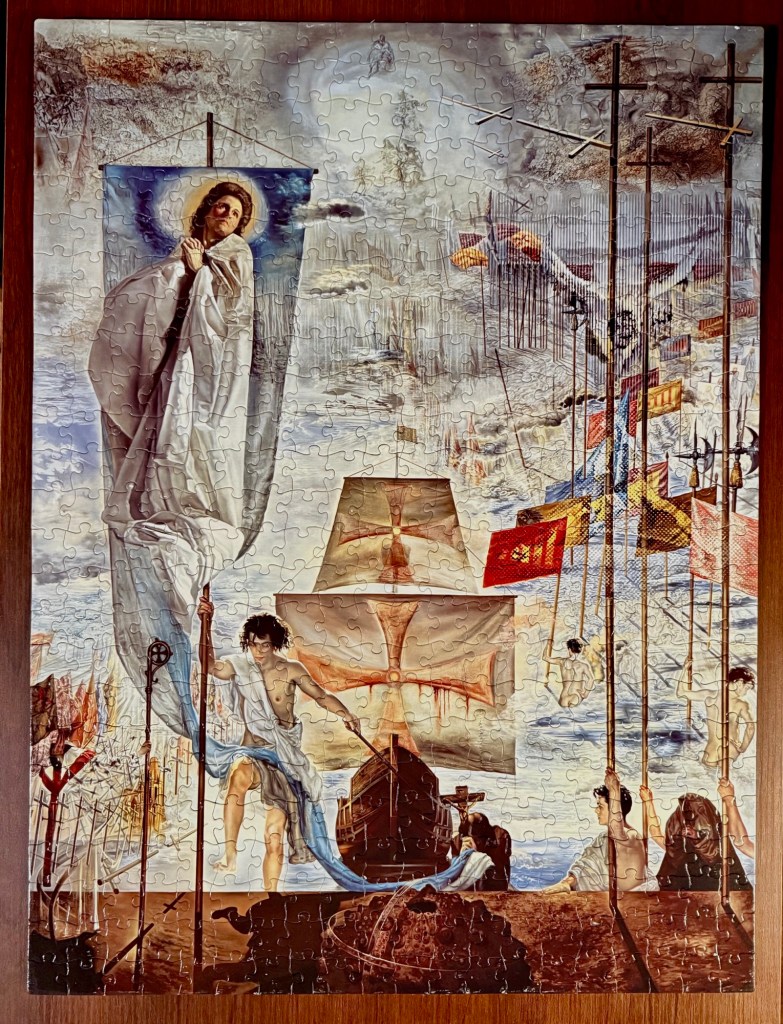
Artist: René Q. Icke Council-of-Concerned-Conservationists member; surrealist retained by puzzle manufacturers. This painting belongs to his late-period specialization in puzzles of puzzles of puzzles, sometimes laminated or glued in layers.
The modern urge to force every piece into every image, to deny that any die ever existed at all, is not creativity. It is impatience with form. True creativity, as with those puzzles cut from the same die, begins only after one has assembled the original picture and acknowledged its limits.
Cultures change constantly. They exhaust themselves just as reliably. What they do not do is become something they were never cut to be.
Aging teaches the same lesson, only more personally. In youth, one believes one is still being cut—that any shape remains possible if effort is sufficient. Later, one discovers that the cutting is long finished. What remains is not reinvention but recognition. The joints ache because they have names. The habits persist because they fit. Old age is not the loss of freedom but the moment when the die reveals itself, and one finally sees—piece by piece—what picture one has been carrying all along.
Here the analogy edges toward genetics. DNA, after all, is a limited alphabet producing innumerable images. The same structures recur; the expressions vary. Two people may share a deep grammatical similarity while manifesting wildly different lives—or, as with twins separated at birth, uncannily similar ones, discovering the same habits, tastes, and inclinations without ever having compared notes. And just as with puzzles cut from the same die, there is wisdom in keeping distinct images distinct. Not every interchangeable part should be interchanged.
A body knows this. So does a culture, when it is healthy.
Creativity, then, is not the reckless mixing of everything with everything. Nor is it the frozen preservation of a single image. It is something more demanding and more courteous. You must first know the wholes. You must honor the original fits. Only then are you permitted to remix—and even then, responsibly.
This is where the jigsaw diverges decisively from the cut-up. Burroughs cuts to escape the author. The puzzler assembles to encounter him. The mashup puzzler assembles twice before daring to play.
That difference matters.
At a certain age, one grows suspicious of creativity that consists entirely of breaking things. One begins to suspect that some structures were not cages but load-bearing walls. The older I get, the less interested I am in proving that meaning is arbitrary, and the more interested I am in seeing whether it still holds after damage.
The jigsaw puzzle does not promise revelation. It promises fit. And fit, I have learned, is a form of wisdom.
When the last piece goes in, there is no triumph. Only a quiet acknowledgment that coherence, however provisional, is still possible. That the image we started as was not entirely lost—only delayed.
The puzzle waits.
That, too, is a lesson.
Old & In the Way. Raucous, alive, and fully assembled — rescued from the attic and played again on a newer machine, first made when the young were confusing volume with vitality, and heard early on without yet knowing where it fit. — Justin Aldmann
 COUNCIL-OF CONCERNED-CONSERVATIONISTS…..Between Jest And Earnest…..
Leave a comment