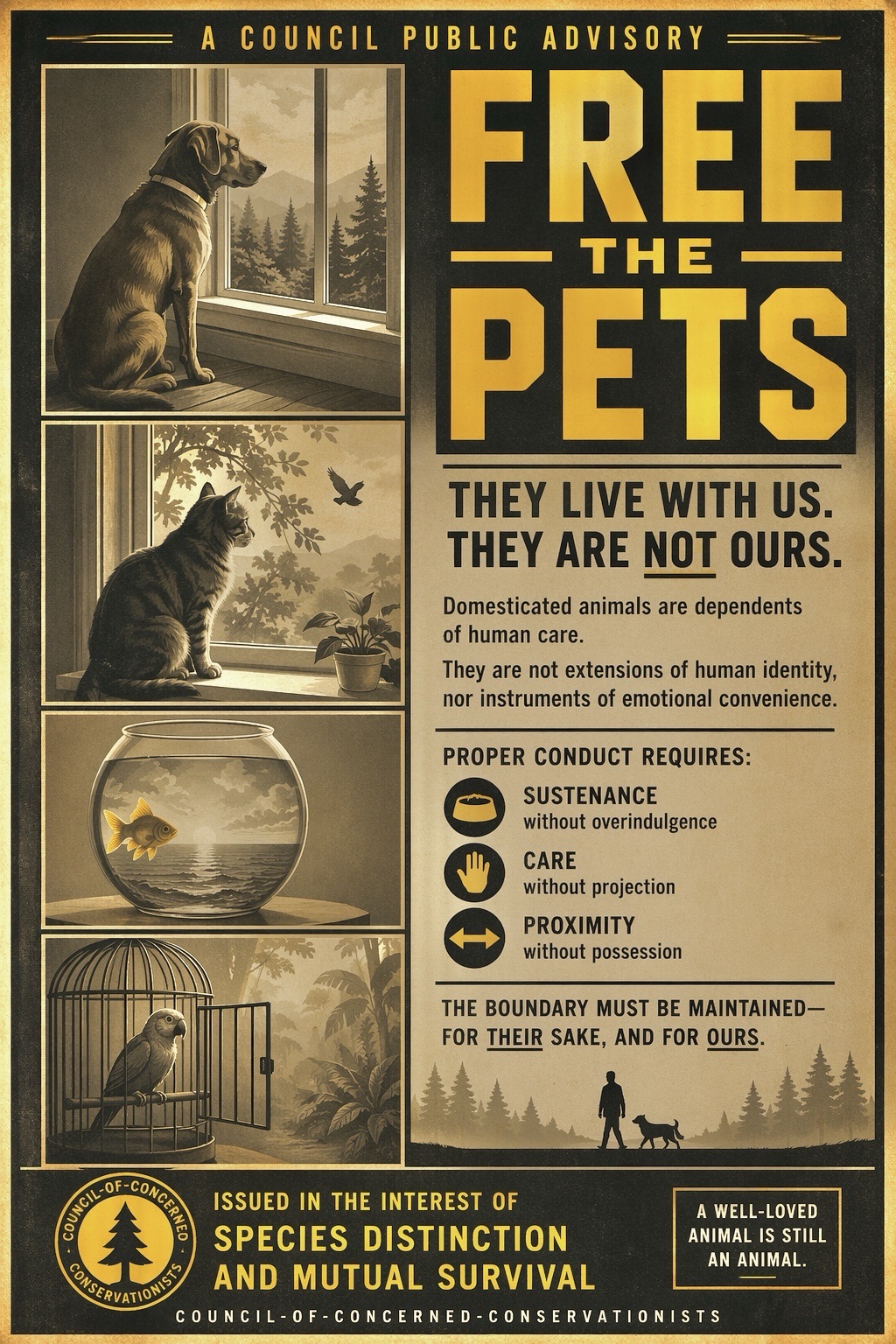
— We begin with a simple prohibition: do not release your pets. Liberation, improperly understood, becomes another form of neglect.
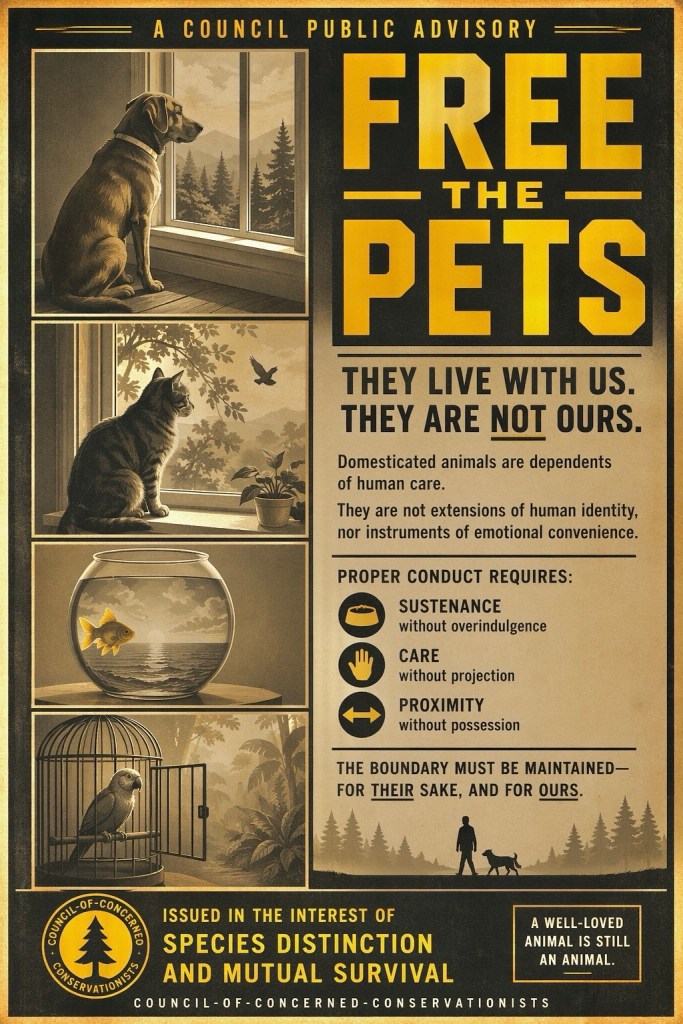
These animals are now conditioned to us—reliant, altered, and unfit for abrupt return.
Our initiative proceeds from this recognition toward a more disciplined aim:
the restoration of zoological dignity
(defined, loosely, as conduct that does not presume consent where none has been given)
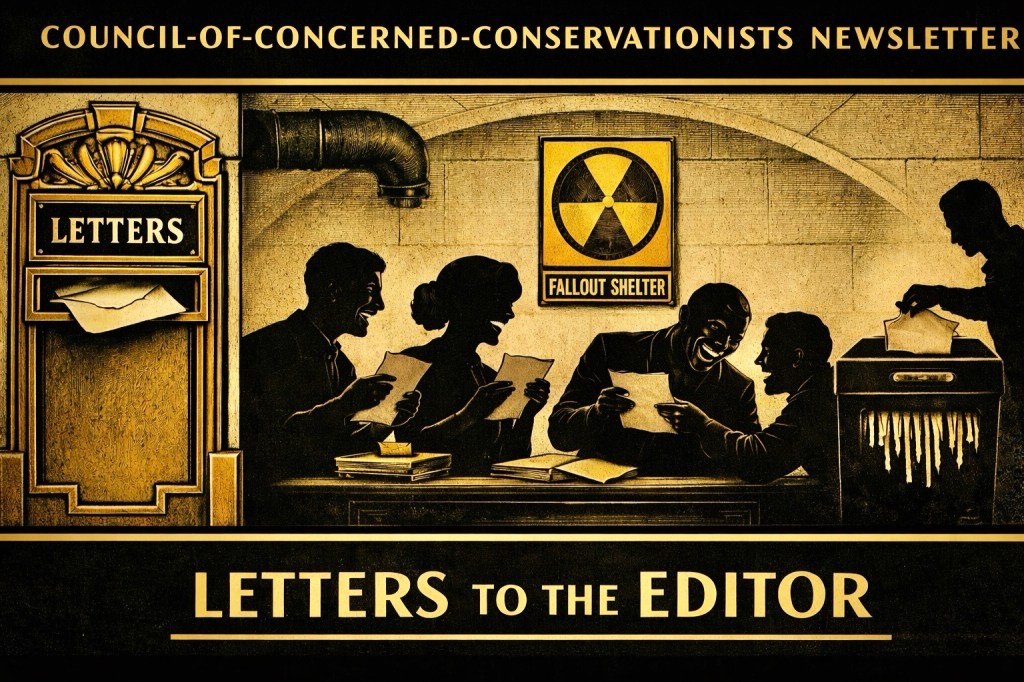
Miss Noor Singha Grudj Writes to the Editors
Re: “FREE THE PETS” Initiative
To the Council,
Your proposal to “free the pets” rests on a misunderstanding of what domestication is—and what it has already accomplished.
These animals are not merely constrained by us; they are the result of a long process of refinement. They have been brought into closer alignment with human life—its rhythms, its protections, its meanings. To call this “diminishment” is to ignore the direction of the change.
They are not less.
They are, in many respects, more like us.
And I do not consider that a tragedy.
You correctly observe that they cannot simply be released. Of course they cannot. They have been shaped for dependence—yes—but also for participation in a higher order of living than the one from which they came.
Dependence, in this context, is not failure. It is incorporation.
Your discomfort with asymmetry is misplaced. All meaningful systems of care are asymmetrical. The question is not whether one party guides another—but toward what end.
I see no reason to apologize for a model that has already proven itself elsewhere: the deliberate extension of structure, protection, and expectation in order to elevate those within its care.
If anything, we should be asking how to do this better, not whether to abandon it.
If, however, you insist on the language of “freeing” these animals, then let us at least be serious about what that would entail.
A population rendered dependent by generations of domestication cannot simply be abandoned to circumstance. It would require administration—provision—standards. One imagines a system of public support:
regulated feeding, medical care, supervised environments, and, where appropriate, behavioral guidance.
In short, if they are to be “freed,” they must also be provided for.
And here I will venture a further observation: such provision, being uniform and accountable, is in fact be
preferable to the present arrangement,
in which individual owners—of widely varying competence and, one must assume, equally varying views—exercise near-total influence over the animals in their care.
One hesitates to speculate what, precisely, is being imparted under such conditions.
You warn against projection. I would suggest the opposite problem: a refusal to extend the very standards that give human life its dignity.
If we believe certain forms of life are higher—more ordered, more meaningful—then the humane response is not to retreat from them, but to invite others upward, where possible.
“Zoological dignity,” if it is to mean anything at all, cannot consist in holding animals at a distance and congratulating ourselves for our restraint.
It must consist in bringing them, as far as they are capable, into the sphere of human concern and form.
That this process of domestication is guided by us is not an embarrassment.
It is the point!
Respectfully,
Miss Noor Singha Grudj
—Newsletter Gadfly Council-of-Concerned-Conservationists
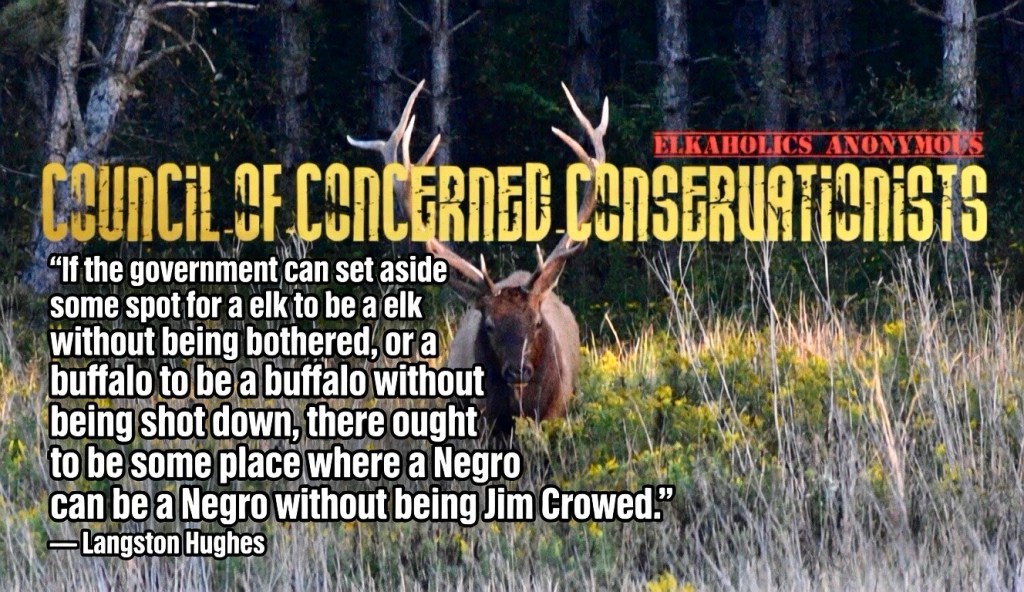
(All images are courtesy of Lee Sfocato, Council Photographer. Any animals startled in the process are presumed to have learned something useful.)
 COUNCIL-OF CONCERNED-CONSERVATIONISTS…..Between Jest And Earnest…..
Leave a comment