—Or, The Assumption of Continuation

Specimen: SCALE (n., v.).
Status: Active. Increasing range.
This is one of those words that starts out simple and then doesn’t stay that way.
I’ve been hearing it in a lot of places lately—people in business settings, technical discussions, interviews, even in situations where it used to be enough to just say something was growing.
Now it’s always: Can it scale? Will it scale? This won’t scale.
I kept hearing it enough that I went back to check what it used to mean before it started doing so much work.
It comes from:
Latin: scala—a ladder.
Steps. Something you go up one part at a time. And for a long time, that’s how it behaved.
A scale weighs things. A scale in music moves step by step. A scale on a map keeps proportions honest. You move upward, but you feel the steps. Nothing skips ahead.
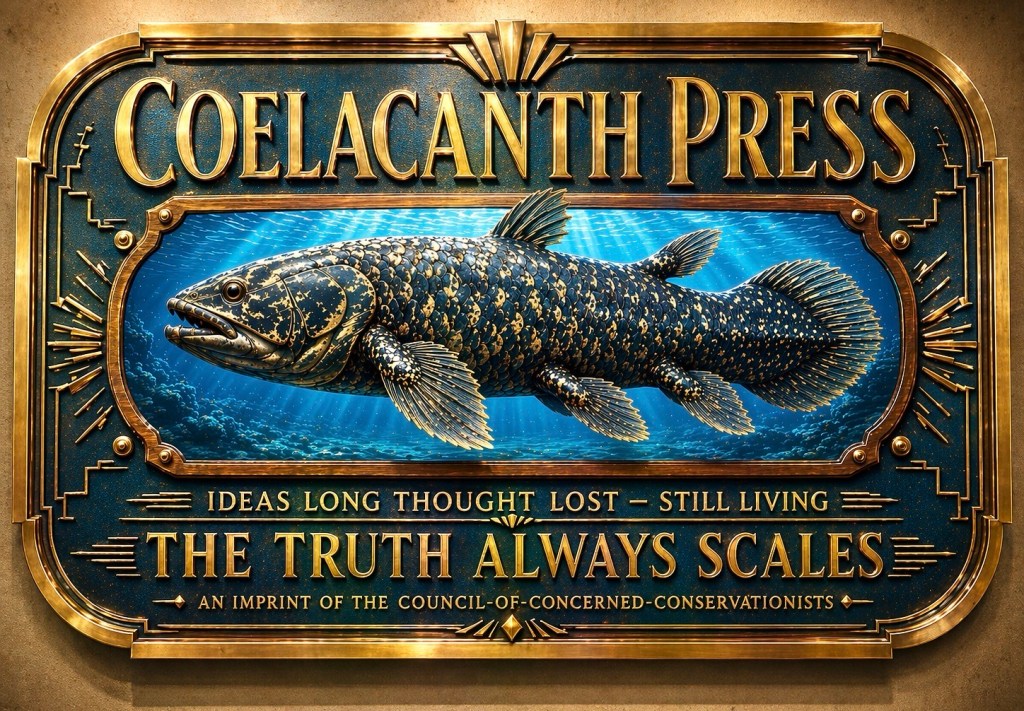
While looking into today’s word in the wild, I was reminded of something I came across years ago.
An uncle of mine used to hand out pamphlets from groups that didn’t seem to have offices. I didn’t read them then. I found one again not long ago, tucked into a book, and this time I did.
It mentioned an older idea—that a civilization can have a kind of built-in direction. Not just to grow, but to keep going past where it would normally stop. Not in a reckless way exactly, but as if stopping isn’t really part of the design.
It used a specific example that was easy to picture. Cathedrals that reach higher than they need to. Maps that try to include everything. Systems that don’t settle.
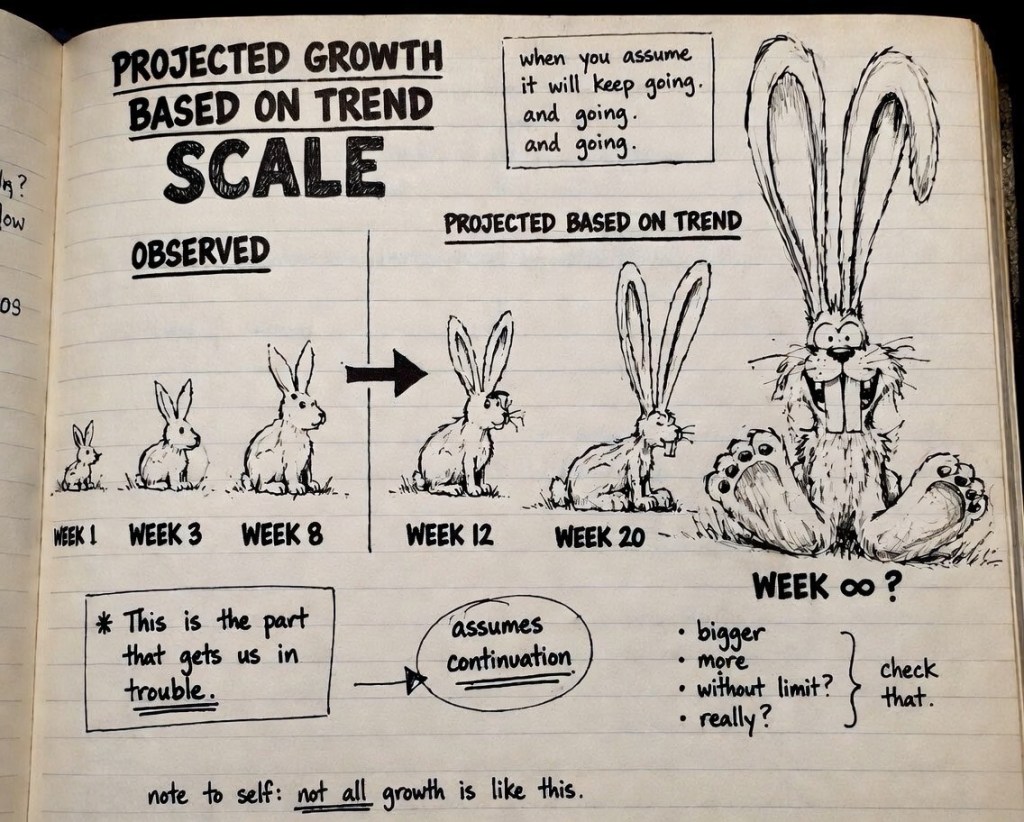
Around the same time, there were also people—often in monasteries—trying to design machines that would just keep going. Wheels that would turn on their own once started. They didn’t work, but the effort is recorded
I’m not saying these perpetual motion imaginings were the same idea. Just that they seem to lean in the same direction.
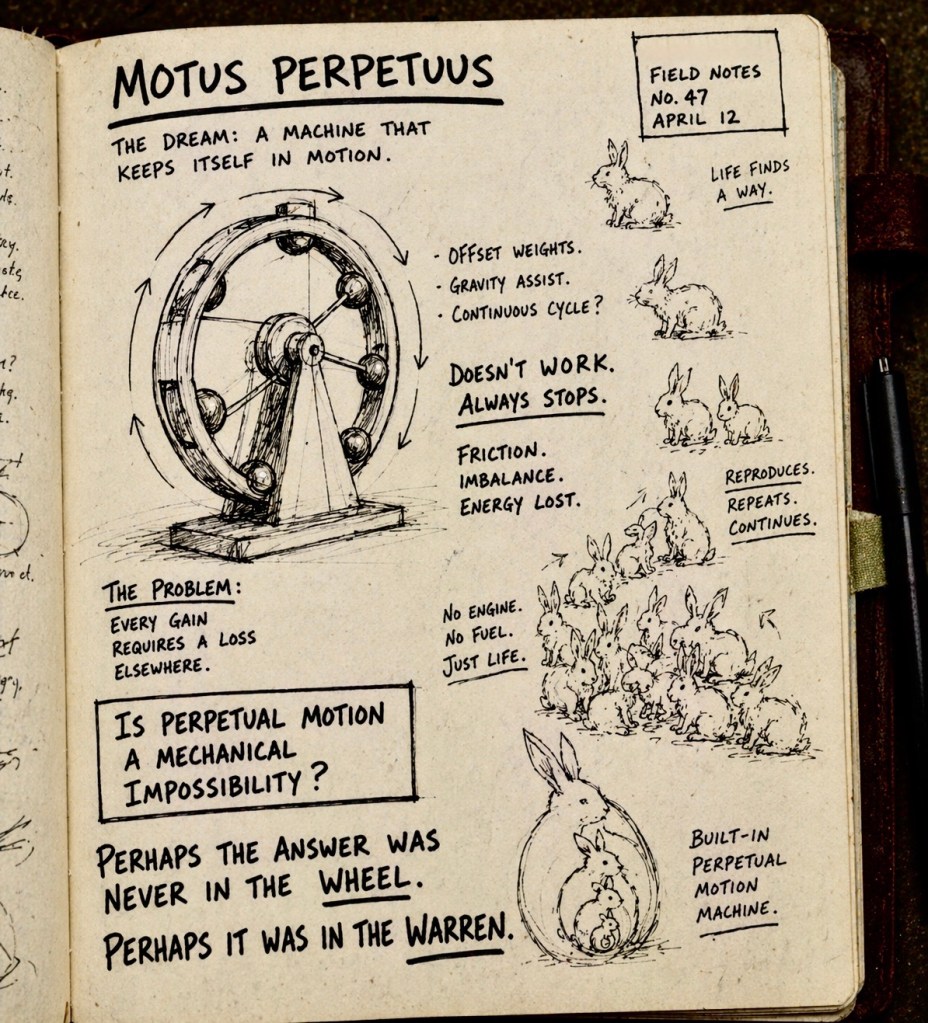
At some point, the word scale becomes a verb. Now you don’t just have a scale. You scale.
And it doesn’t mean “go step by step” anymore. It means something closer to
growing a lot without having to do a lot more.
That’s the part that feels different.
If you open more locations, you need more staff, more supplies, more oversight. That grows, but it doesn’t “scale” in the way people mean it now. But if something can be repeated—copied, distributed, extended—without a matching increase in effort, then it’s said to scale.
And in some cases, the expectation is that it will keep doing that.
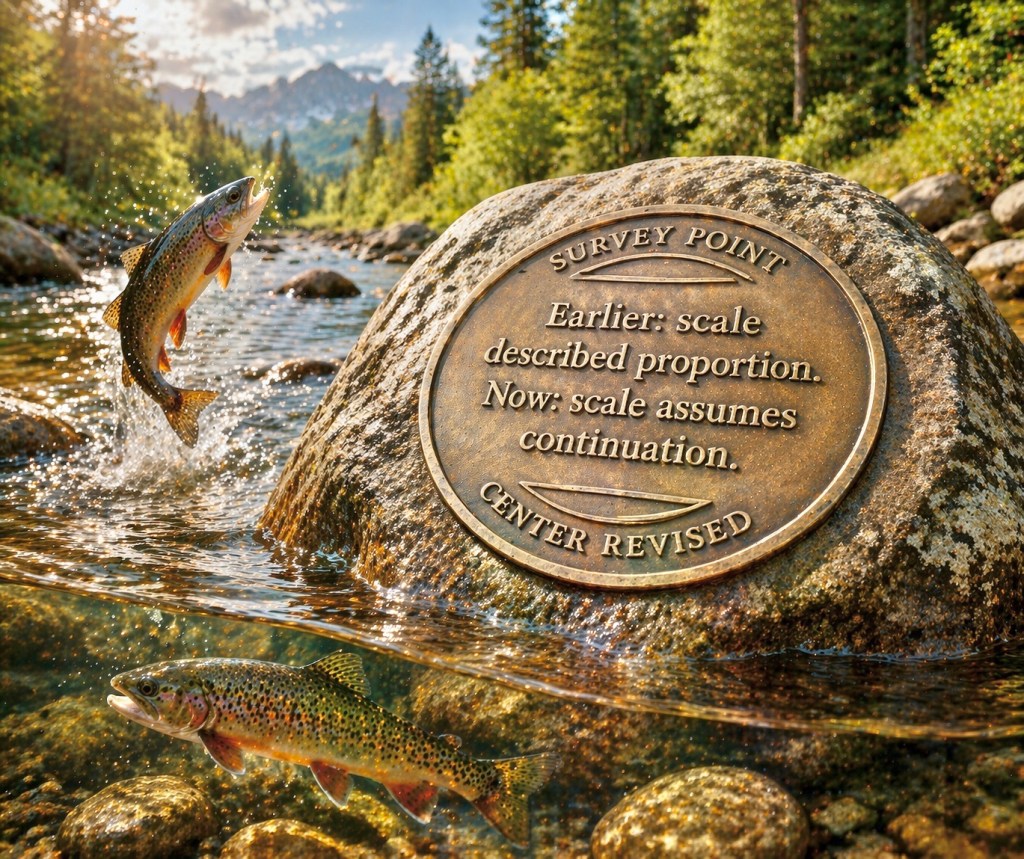
Seen in light of these examples, the word “scale” doesn’t feel entirely new, but part of a longer pattern. It feels like an older idea finding a better environment. The ladder is still there, but the steps are less visible. The motion is still intended, but the effort is less discussed. And in certain parts of what people now call the “cathedral”—the large, connected institutions that shape how things are built and understood—you begin to see systems that are designed, from the start, to continue.
To expand. To replicate. To carry themselves forward.
Not exactly a perpetual motion machine. But close enough to be described that way.
ALTDEF (working):
Scale (v.) — To describe growth as if it will continue on its own.
Heard often. Rarely questioned.


Leave a Reply