—And The Modern Liberty Pole—
The Council originally retained Noor Singha Grudj for comic relief. We have since come to regard her as a documentary source.
There was a time when Noor’s essays seemed delightfully implausible. Experience, however, has steadily promoted many of her more imaginative proposals into respectable opinion. We therefore continue publishing her dispatches—not because we agree with them, but because they have proven remarkably reliable indicators of what everyone else will be thinking next year.
Ms. Grudj is not a member of the Council. She serves instead as our resident gadfly and Correspondent for Emerging Orthodoxy (CEO).
Noor’s own family history is an admirable illustration of the modern world. Her parents were South Asians who settled in Britain during the closing years of the Empire. Noor herself was born in the United States, thereby acquiring American citizenship by birth while inheriting a distinctly British confidence in orderly administration. She has never regarded these several inheritances as contradictory. Indeed, she considers them cumulative improvements.
To commemorate America’s two hundred and fiftieth birthday, Noor has graciously volunteered to restore one of the oldest traditions of the American Revolution.
The Council has, with customary hesitation, agreed to publish her remarks.
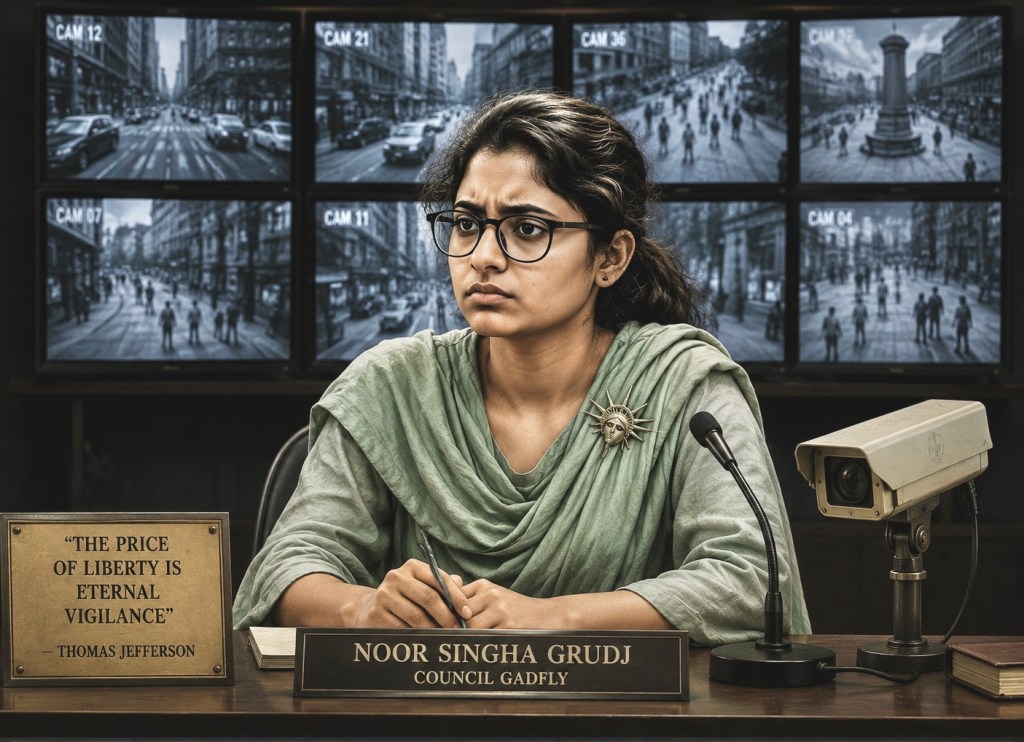
On The Responsible Erection of Liberty
My dear Council,
As we celebrate two hundred and fifty years of American liberty, I have noticed that many citizens know remarkably little about one of the Revolution’s most important patriotic symbols: the Liberty Pole.
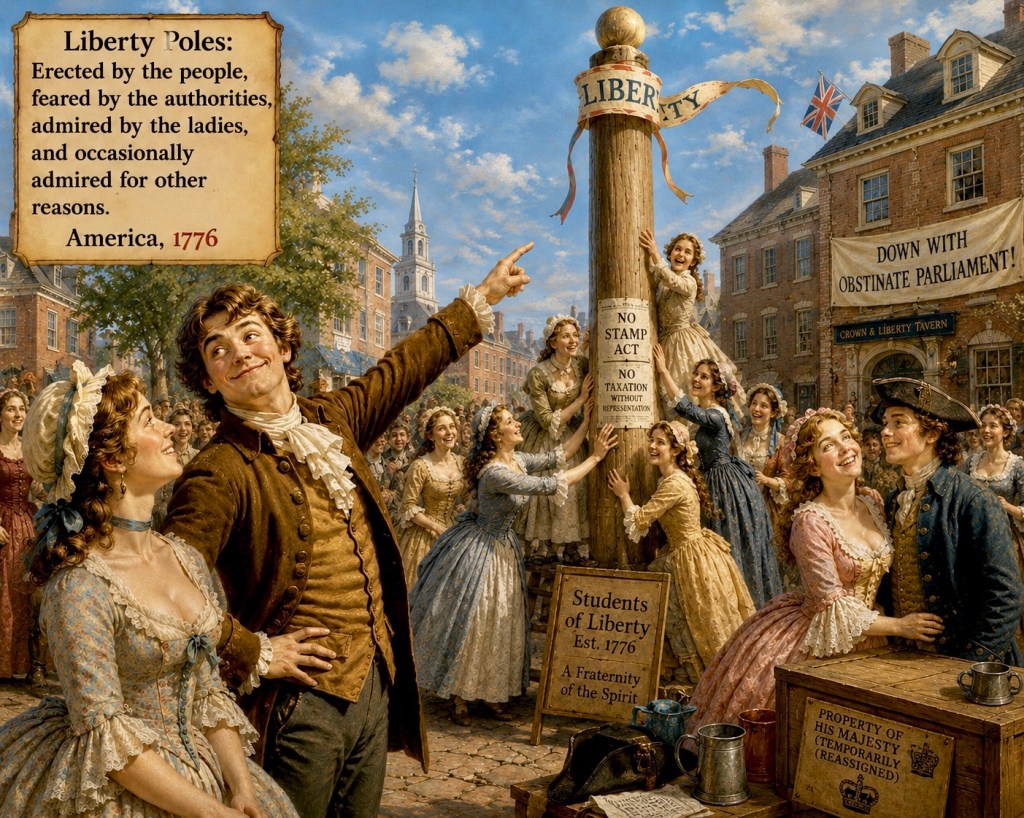
Before the Revolution, liberty poles began appearing throughout the American colonies. They were simply tall wooden poles erected in public squares, often decorated with ribbons, flags, evergreen garlands, or the word LIBERTY. They became gathering places for speeches, celebrations, and expressions of resistance to arbitrary government.
The British disliked them immensely.
Whenever Royal officials or British troops encountered one, it was liable to be chopped down. The colonists, displaying admirable persistence, simply raised another. Thus began a recurring contest between those determined to remove liberty poles and those determined to erect them.
History records this as one of the many charming customs leading to American independence.
I have therefore decided that this venerable tradition deserves to be revived.
Naturally, one should not merely imitate the past. One should improve it.
Accordingly, I have dedicated a new Liberty Pole suitable for the twenty-first century.
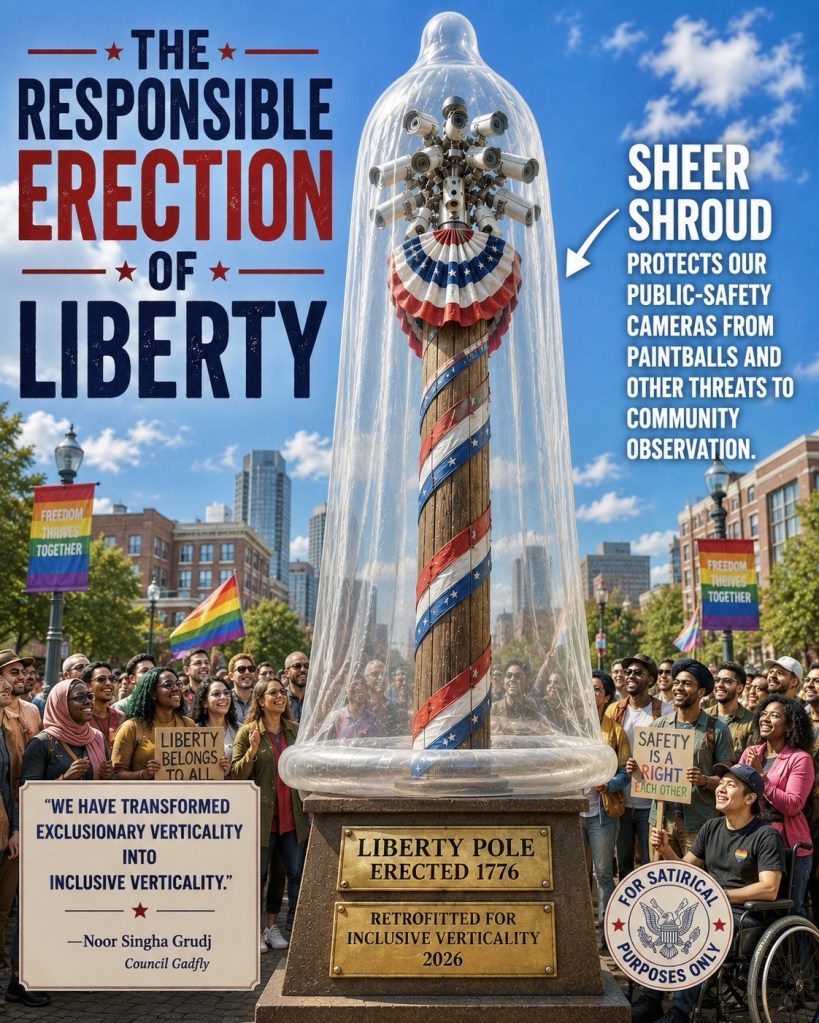
Rather than placing a simple liberty cap atop the pole, I have installed an elegant bouquet of Flock public-safety cameras beneath tasteful patriotic bunting. The effect is both festive and reassuring.
Some traditionalists have questioned whether surveillance equipment belongs upon a Liberty Pole.
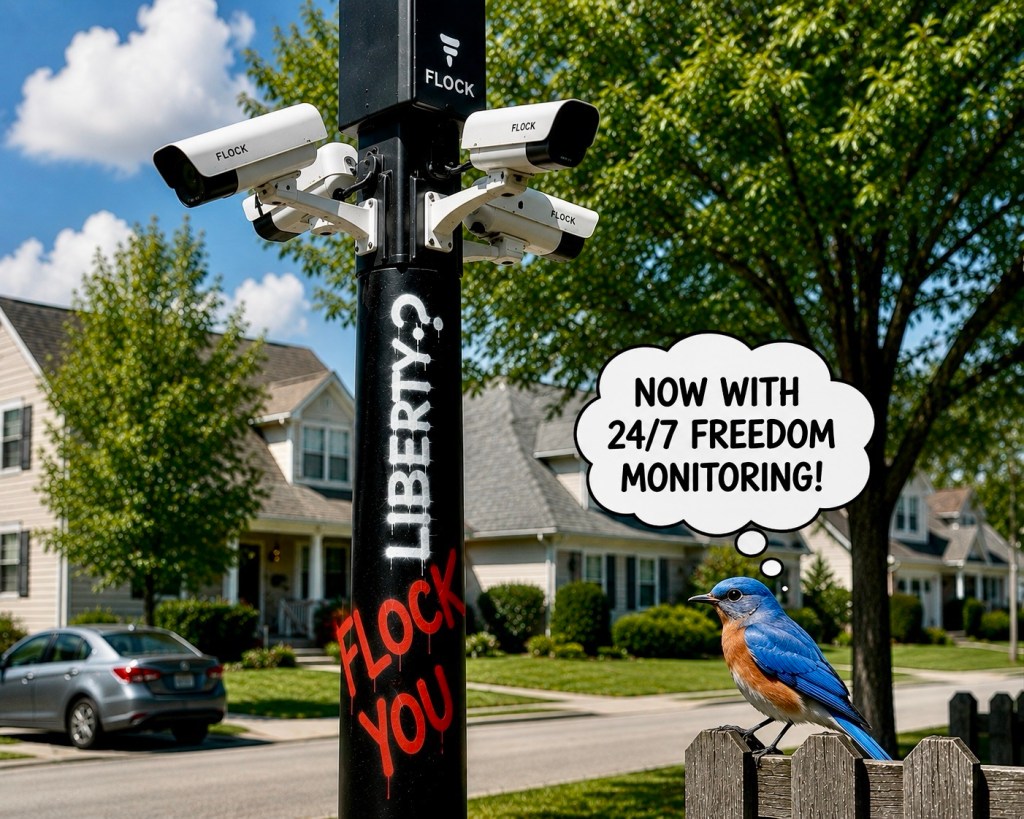
I cannot imagine why.
Our patriotic ancestors wished to preserve freedom by resisting unnecessary intrusion.
Today we preserve freedom by ensuring that unnecessary behavior is promptly observed. Surely this represents progress.
Indeed, I have often reflected that our British cousins deserve more credit than they receive. Having once misunderstood liberty sufficiently to chop down liberty poles, they have since become pioneers in the civilized art of public observation. One might even say they have completed the journey that America is only now beginning. It is comforting to think that the old disagreements have finally been resolved.
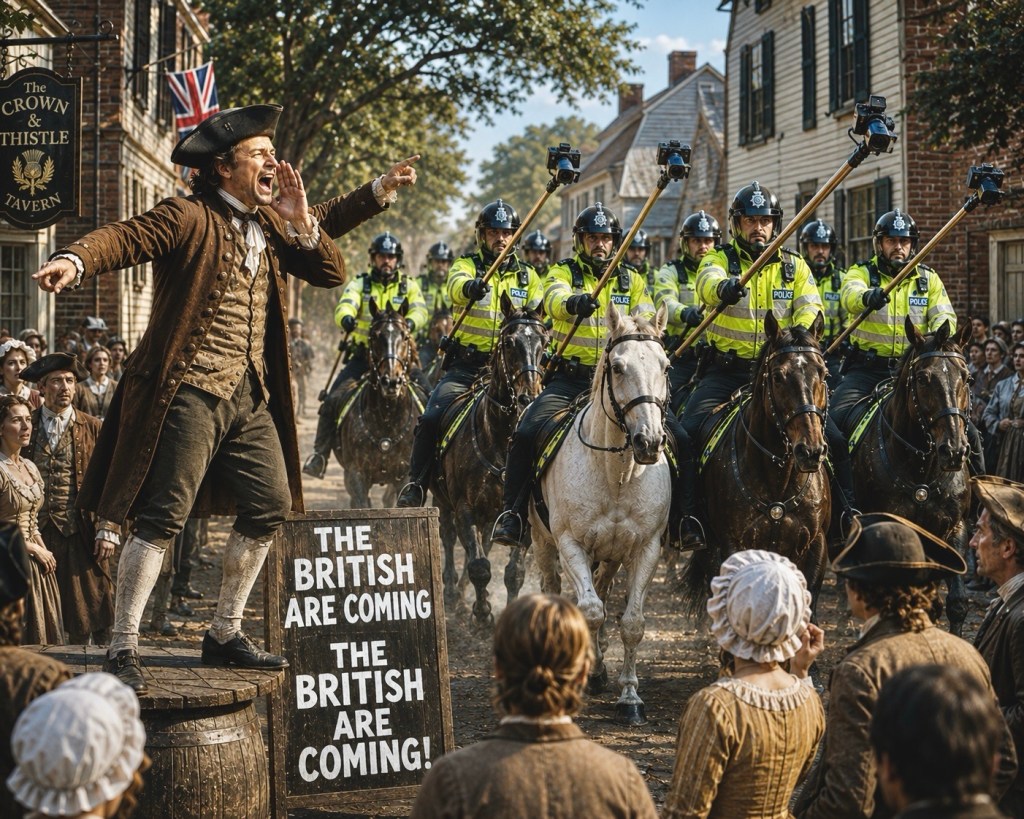
—Noor Singha Grudj
I could not fail to notice that several members of the Council seemed oddly uncomfortable as the cameras on the Liberty Pole were switched on. This struck me as rather curious. Surely no patriotic American objects to being observed while exercising his freedom. After all, if one is behaving properly, surveillance is simply another form of applause.
With that comforting thought, I dedicated the new Liberty Pole to the next two hundred and fifty years of American freedom.
The cameras, I am pleased to report, immediately recorded unanimous approval.
Happy two hundred and fiftieth birthday, America.
Please smile for the camera.

COUNCIL TANGENT WITHIN THE GIST
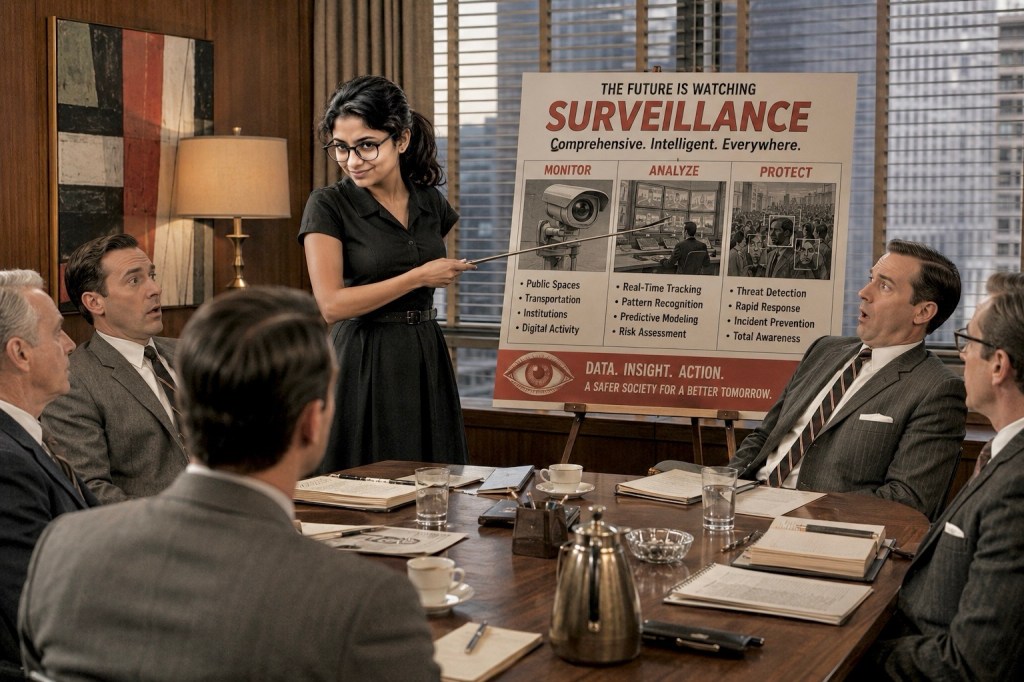
We are pleased to report a third member has now been admitted into this unlikely fraternity.
Photography.
For years, aspiring photographers were gently advised to cultivate a dependable side hustle. Wedding photography was often spoken of as the profession’s last dependable refuge—and even that sanctuary is now shrinking beneath the combined weight of celibacy, voluntary or otherwise, smartphones, automation, and artificial intelligence. Yet in an age increasingly devoted to machine vision, facial recognition, automated observation, and ubiquitous surveillance, those who understand lenses, optics, perspective, framing, lighting, and the interpretation of images may find themselves unexpectedly relevant. Ironically, the very cameras once associated with weddings, portraits, and landscapes may now find their greatest commercial application watching intersections, parking lots, storefronts, highways—and perhaps, if Noor has her way, liberty poles.
Thus the Council’s list of formerly “impractical” disciplines continues to grow.
The future, it seems, may belong to philosophers who teach machines how to think, photographers who teach surveillance systems what they’re looking at, and plumbers who keep the whole enterprise from melting into a very expensive puddle.
History has always possessed an excellent sense of humor. It simply waits until after graduation to reveal the punchline.
Notable Contributions From Noor Singha Grudj can be found HERE:


Leave a Reply