—On Certain Difficulties Encountered While Searching for Originality
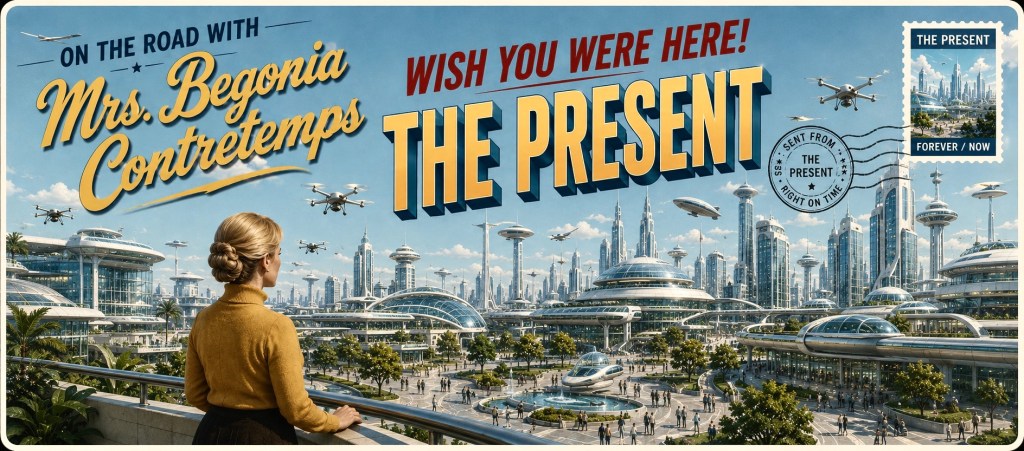
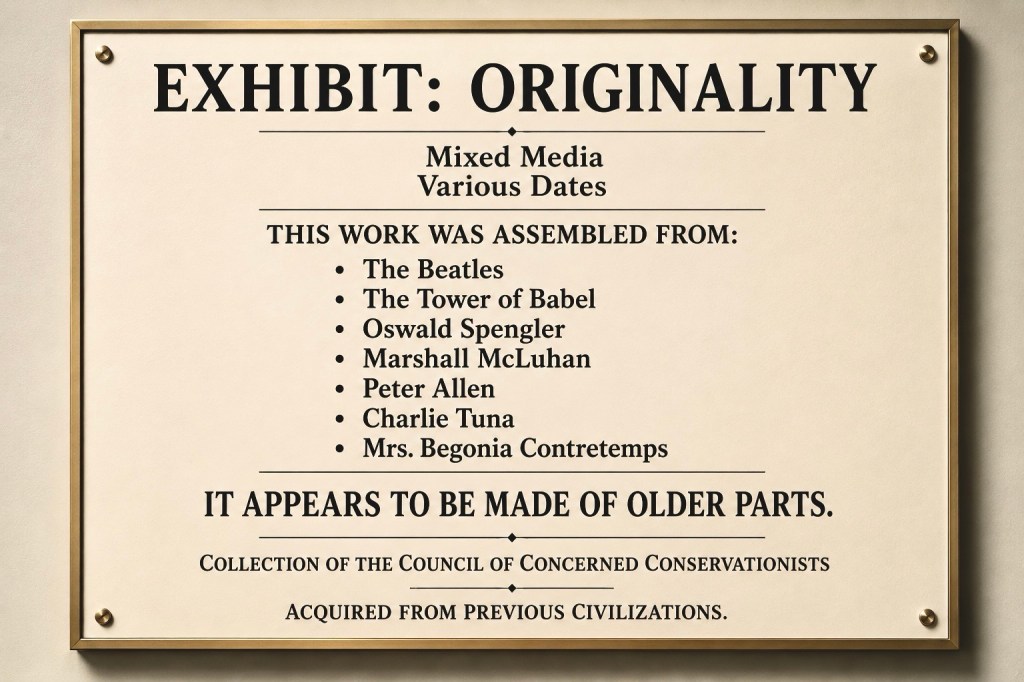
As part of an ongoing NVZ inquiry into the nature of American originality, Mrs. Begonia Contretemps set out to investigate an apparently harmless cover band and eventually found herself discussing fish, water, and civilization.
Weeki Wachee Springs, Florida
Home of the Mermaids
June MMXXVI
Dear René,
While traveling through the American Midwest in pursuit of an entirely different inquiry, I found myself once again detained by a cover band. This was not the first such encounter. Nor, regrettably, was it the second.
At this point I estimate that approximately one-third of the continental United States is occupied either by storage facilities, chain pharmacies, or individuals performing the music of other individuals.
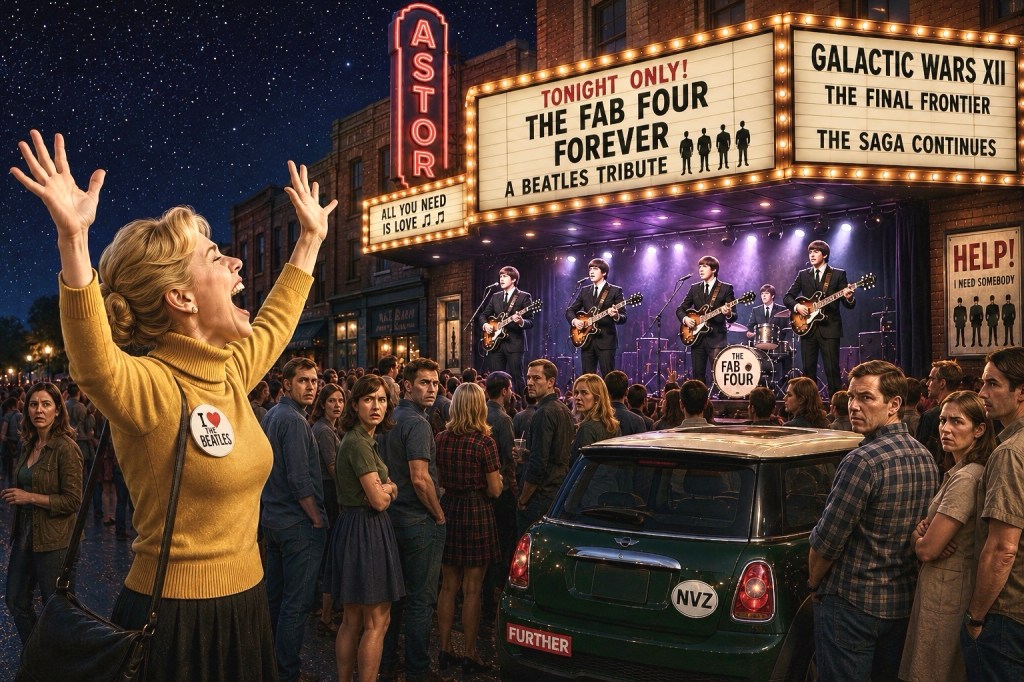
The particular group in question specialized in the songs of the Beatles. Their musicianship was impeccable. Their sound equipment was extraordinary. Their lead guitarist appeared not to have been alive during the period being commemorated.
The audience, meanwhile, sang every word.
What struck me most was what did not happen. During the original Beatles concerts, one is told, the screaming was so relentless that hearing the music itself became almost optional. At this performance nobody screamed. They listened attentively, applauded at the appropriate moments, and then returned to their beverages.
The absence of screaming seemed significant. The songs had survived, but the frenzy had not. The object remained while the original emotional weather surrounding it had dissipated. People were no longer reliving the past so much as curating it.
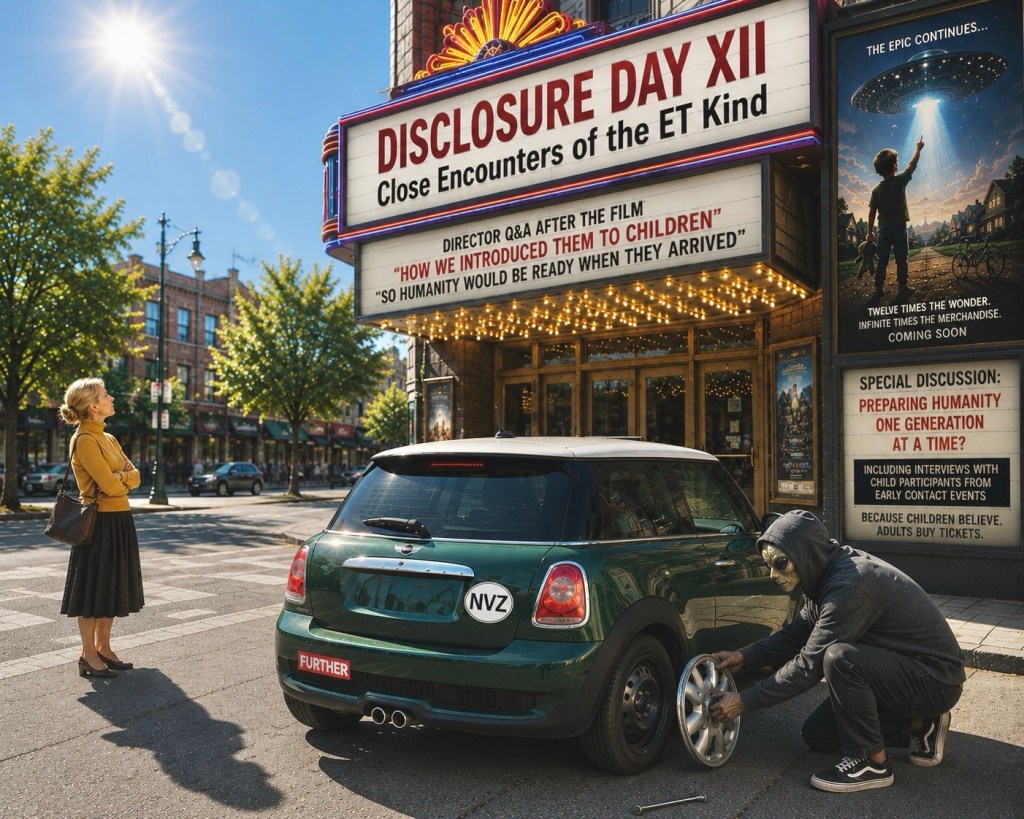
Several hours later I passed a cinema advertising the latest installment of a franchise that I had assumed concluded during the previous century.
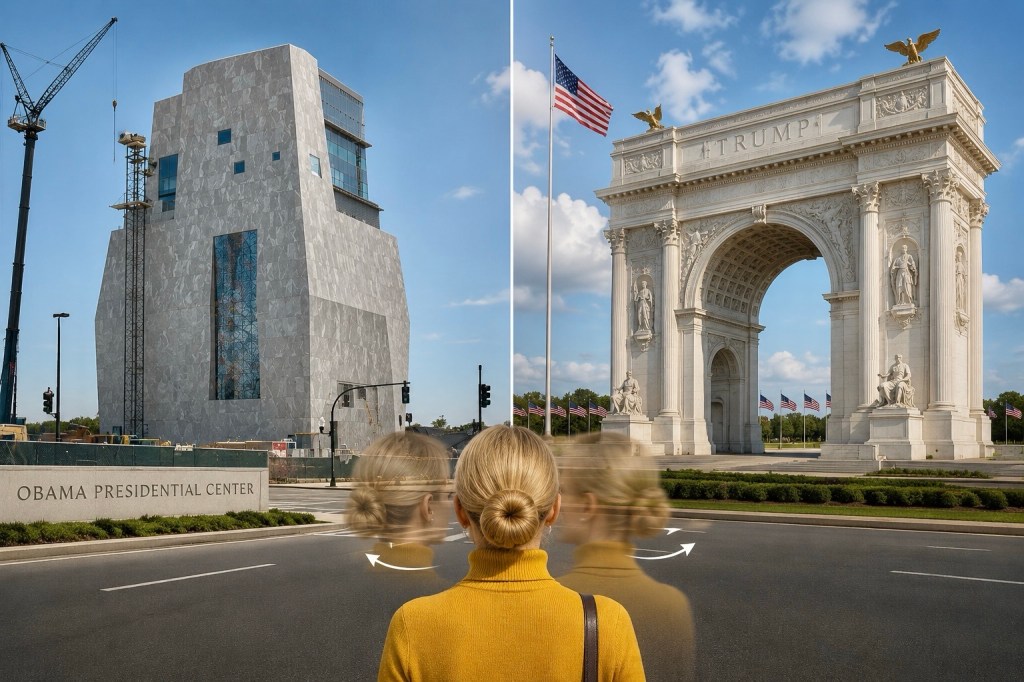
The following day I encountered the Obama Presidential Center, whose appearance reminded me of an architectural movement that, according to experts, no longer exists and according to my eyes very much does.
Not long afterward I encountered renderings of a proposed monumental arch associated with President Trump.
The two structures could hardly have been more different.
Yet both seemed to draw their symbolic power from older architectural languages.
One appeared to look backward toward Rome.
The other appeared to look forward through a monumental style often associated with the age of planners, administrators, institutions, and ambitious social management.
Many Brutalist buildings seem designed by people who believed that sufficiently intelligent administrators could improve the world if only given enough concrete.
Whether one finds this reassuring or alarming appears to depend largely upon one’s opinion of administrators.
A short time afterward I found myself listening to political activists advocating ideas whose ancestors had already enjoyed lengthy careers in previous centuries.
Some carried banners that would have been instantly recognizable to their ideological grandparents. Others spoke of global citizenship, international governance, open borders, universal humanity, and the eventual transcendence of national distinctions.
The language was modern. The aspirations felt strangely familiar. This observation troubled me.
I had begun to suspect that the cover band might not be an isolated phenomenon. It might instead be a clue.
My initial theory was simple. The West had run out of original ideas. This theory survived approximately six days.
I was reminded of certain observations from previous expeditions in Europe. These proved unexpectedly inconvenient.
Expecting novelty, I instead encountered a civilization performing what can only be described as a box set of itself.
Romans were being covered by Renaissance architects.
The Renaissance was being covered by nineteenth-century revivalists.
The Middle Ages were being covered by tourists.
The tourists were being covered by social media influencers.
Entire cities appeared devoted to the preservation, restoration, commemoration, reenactment, interpretation, and retail distribution of previous centuries.

I briefly considered reporting this as a public-health concern. Then an even larger difficulty emerged. The cover bands were extremely good. Not merely competent.
Good.
The musicians often possessed technical abilities superior to those of the artists they were imitating. The sound systems were better. The recordings were better. The lighting was better. The logistics were better. The machinery was better. The same pattern appeared elsewhere.
The movie sequels possessed visual capabilities unimaginable to the filmmakers they referenced. The monuments relied upon engineering capabilities unavailable to earlier ages. The communications systems linking the planet would have struck previous civilizations as supernatural.
The more examples I gathered, the less satisfied I became with my theory.
The civilization was not failing to innovate. It was innovating furiously.
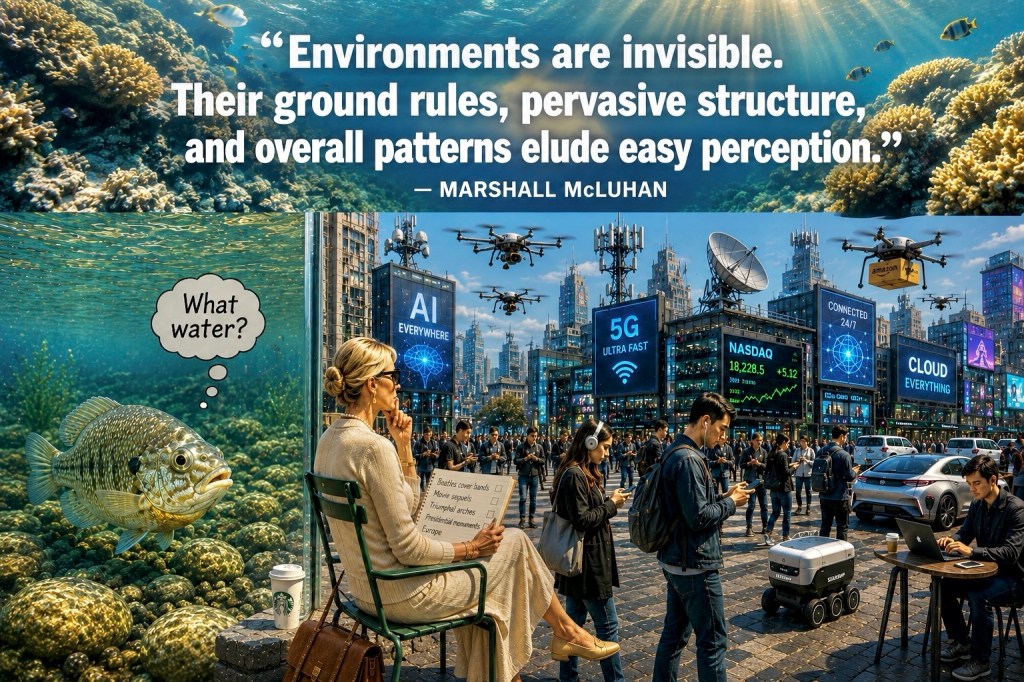
—Spokesfish for the Society of People Who Don’t Notice Their Environment.
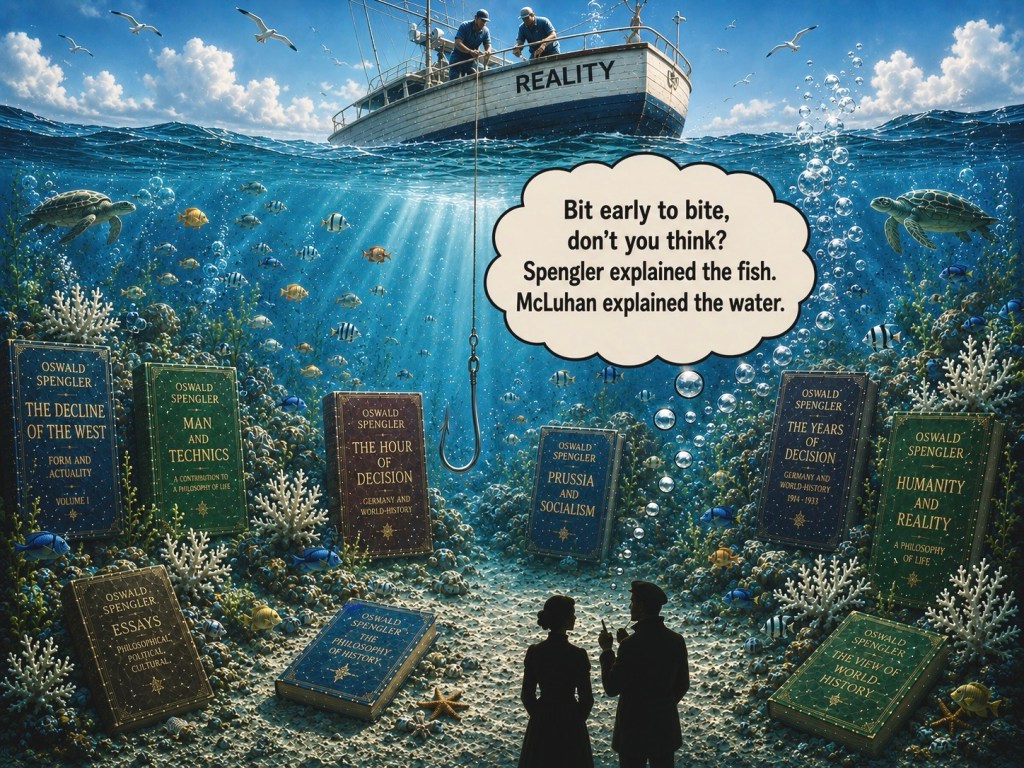
At this point I made the mistake of purchasing a secondhand copy of Spengler from a roadside bookseller.
The experience was not entirely helpful.
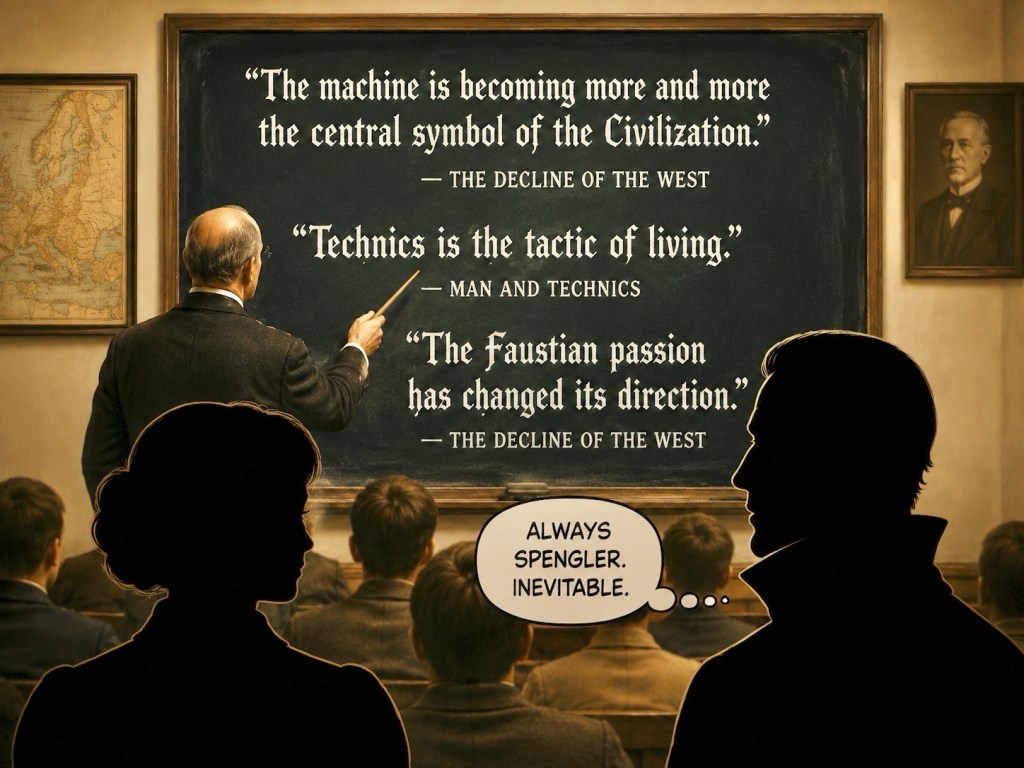
The German gentleman appeared to suggest that civilizations sometimes become increasingly occupied with preservation, administration, organization, and technical mastery.
The custodians arrive after the creators. The archivists arrive after the pioneers.
The tribute band arrives after the songwriter.
This explained a great deal. Yet not everything. For if the matter ended there, the mystery would be too simple. The West would merely be growing old.
Instead I found myself confronted by something stranger.
The supposedly exhausted civilization continued to produce unprecedented technical achievements at astonishing speed.
The machinery kept advancing. The melodies remained familiar.
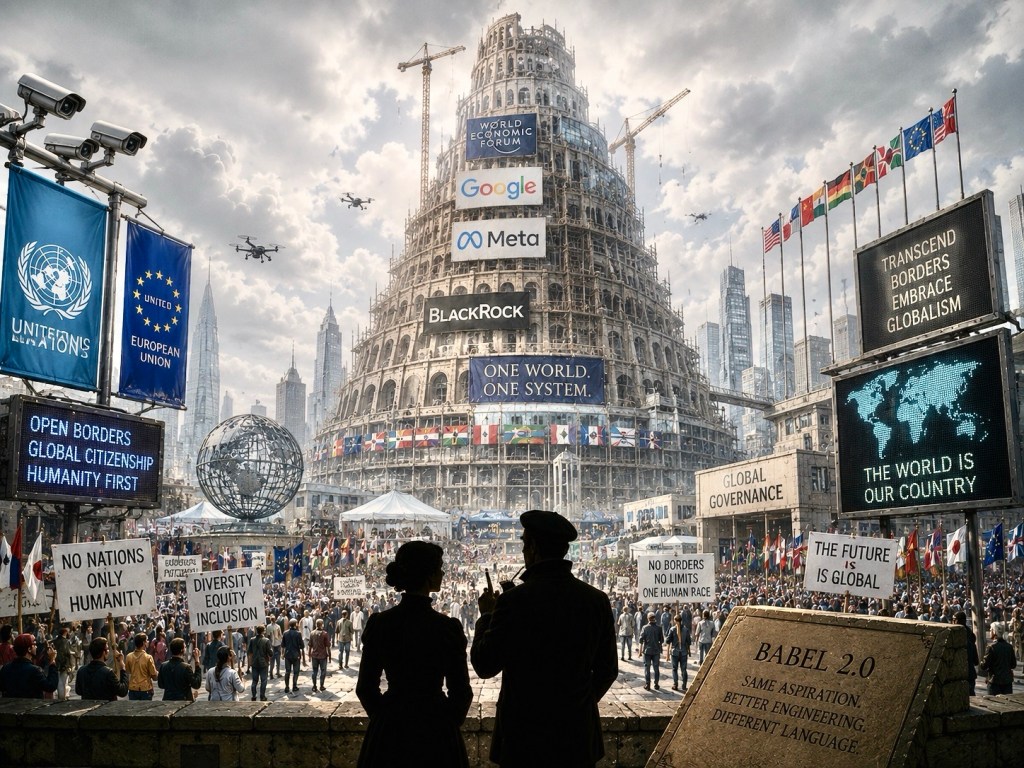
The final piece of the puzzle arrived at a conference devoted to globalism, internationalism, open borders, universal governance, and humanity’s increasingly integrated future.
Everyone spoke as though these ideas had recently descended from the heavens. Unfortunately I had spent the previous several weeks reading history.
And movie stars you thought were long dead
Now framed beside your bed
Don’t throw the past away
You might need it some rainy day
Dreams can come true again
When everything old is new again 🎶.
(P. Allen, C. B. Sager)
I could not help noticing echoes.
Universal empires.
Universal churches.
Cosmopolitan philosophies.
International movements.
And finally Babel.
The biblical story, as you know, concerns humanity united by a common language and a common project, attempting to build a tower reaching heaven before finding the enterprise unexpectedly complicated.
The modern version possesses better engineering, superior communications, satellite networks, translation software, fiber optics, and air conditioning.
In every measurable respect it is technically superior.
This realization finally resolved the mystery.
Like a fish conducting a lengthy search for water, I had spent months searching for originality while completely immersed in it.
I had been looking for originality in songs, films, monuments, ideologies, and political movements.
The originality was elsewhere.
The songs were old.
The amplifiers were new.
Yours in continuing confusion,
Mrs. Begonia Contretemps
NVZ Field Correspondent
 COUNCIL-OF CONCERNED-CONSERVATIONISTS…..Between Jest And Earnest…..
Leave a comment