—Filed by Paige Turner who is still on Academic Perimeter (Border)Watch
Premise/Premises
Both words have the same root with increasingly divergent habitats.
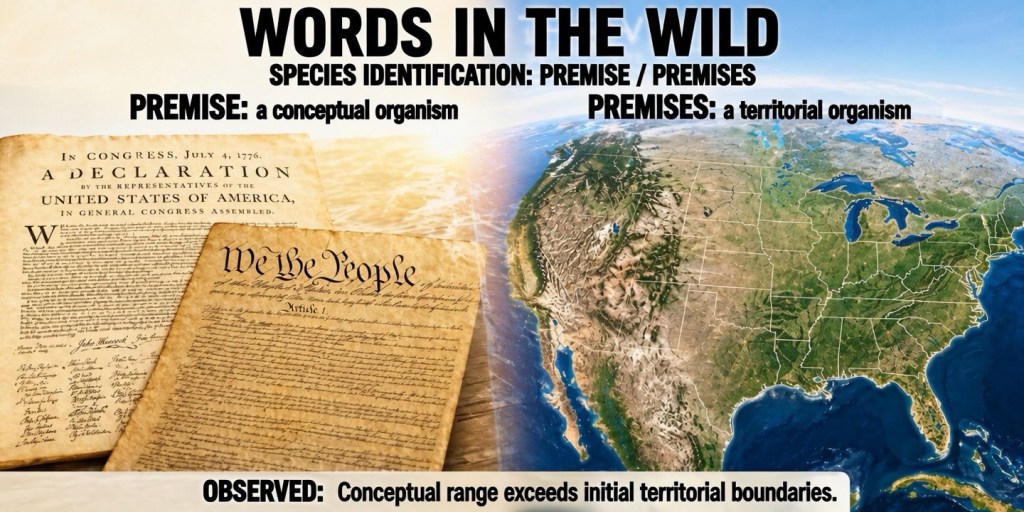
Species Identification:
Premise (singular):
a conceptual organism—found in arguments, theories, and stories.
Premises (plural):
a territorial organism—found in deeds, leases, and boundary lines.
Typically, the two are observed at a distance from one another.
Habitat Overlap (Rare):
In early American documents, the species appear in close proximity.
A governing premise:
ALL MEN ARE CREATED EQUAL
—eventually shapes the physical premises—that is, who occupies the ground.
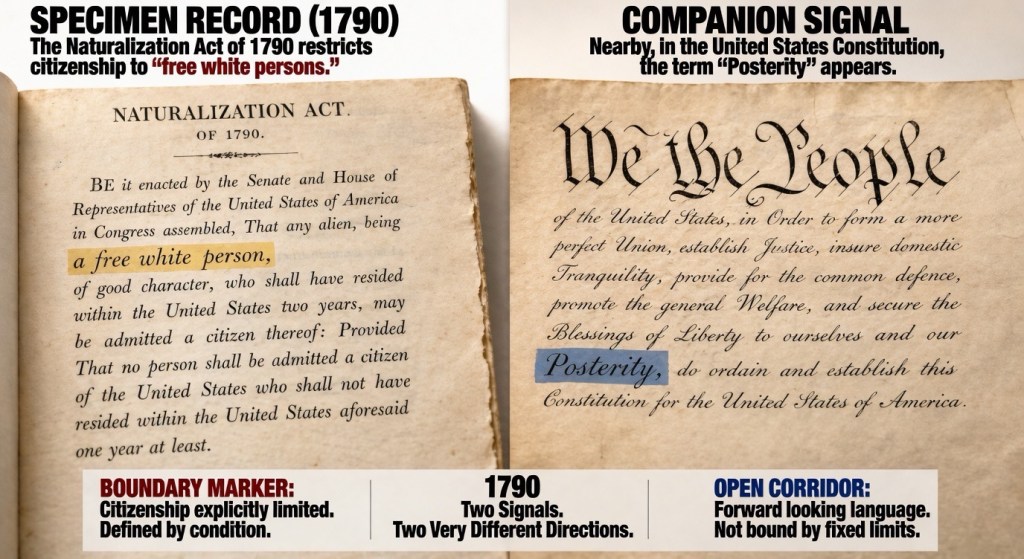
Specimen Record (1790):
The Naturalization Act of 1790 restricts citizenship to “free white persons.”
A clear marking. An early boundary condition.
Companion Signal:
Nearby, in the United States Constitution, the term “Posterity” appears.
A definite boundary marker. Not an open corridor.
Behavioral Note:
If a species defines its future range without strict limits, range expansion is possible.
Over time, the governing premise—articulated in general terms—
extends beyond its initial conditions.
The premises—the occupied ground—caused an according shift.
Observed Pattern:
Legal definitions broaden.
Population composition changes. Territory remains continuous, but its occupants diversify.
A few singular events account for this. The movement, though, is gradual, cumulative.
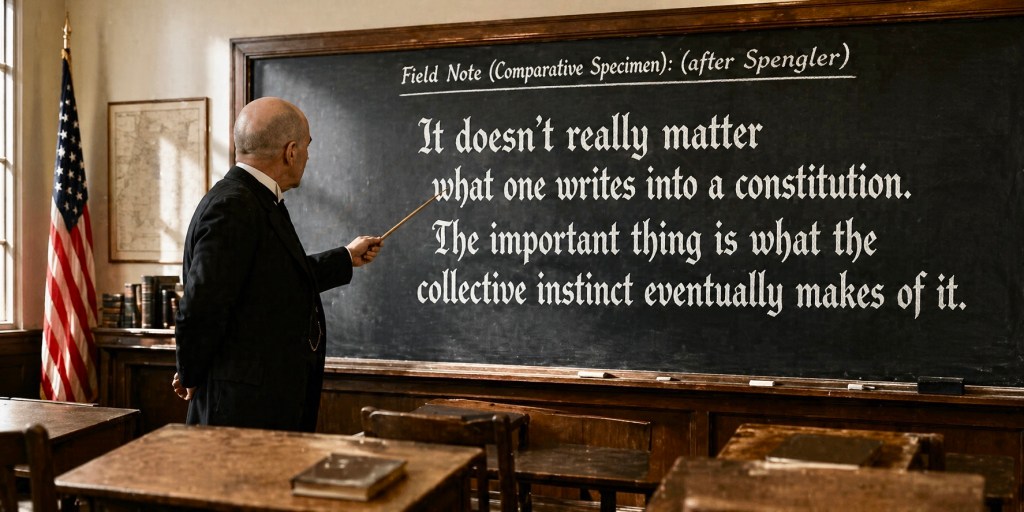
Working Hypothesis:
The American premise originally described its premises. Yet it introduced a condition under which they would not remain fixed.
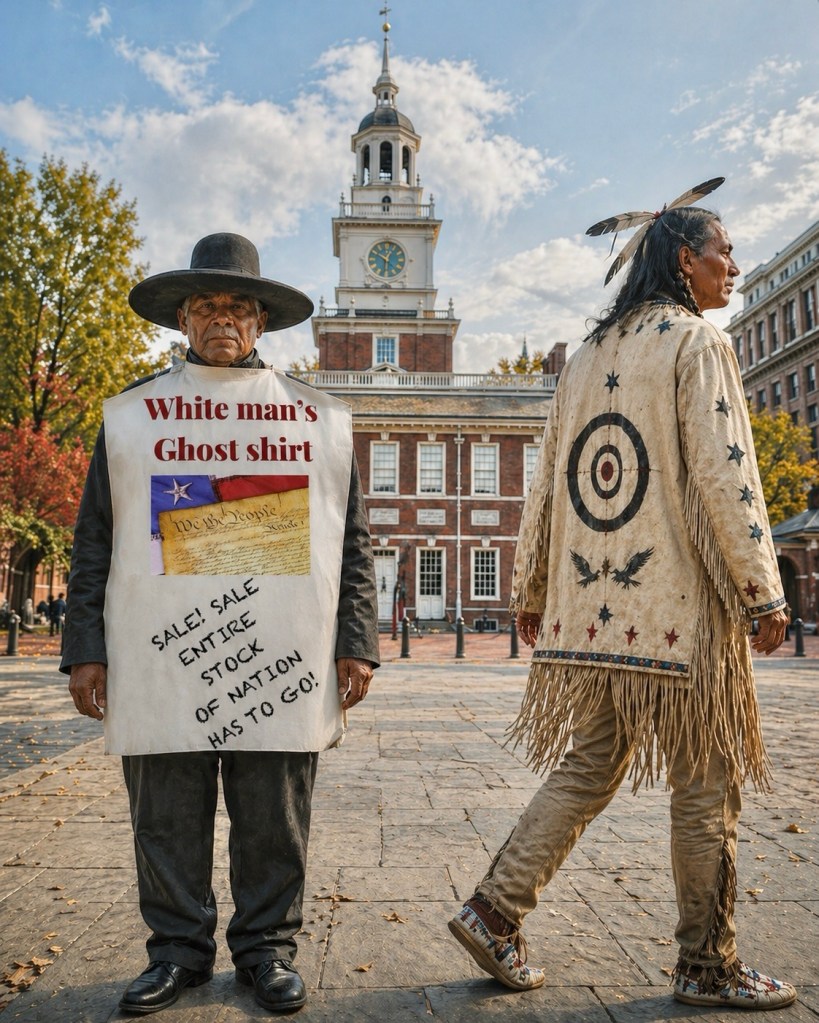
Closing Note:
In this case, the species lost its territory.
It eventually redefined what could live within it.
Historical Footnote:
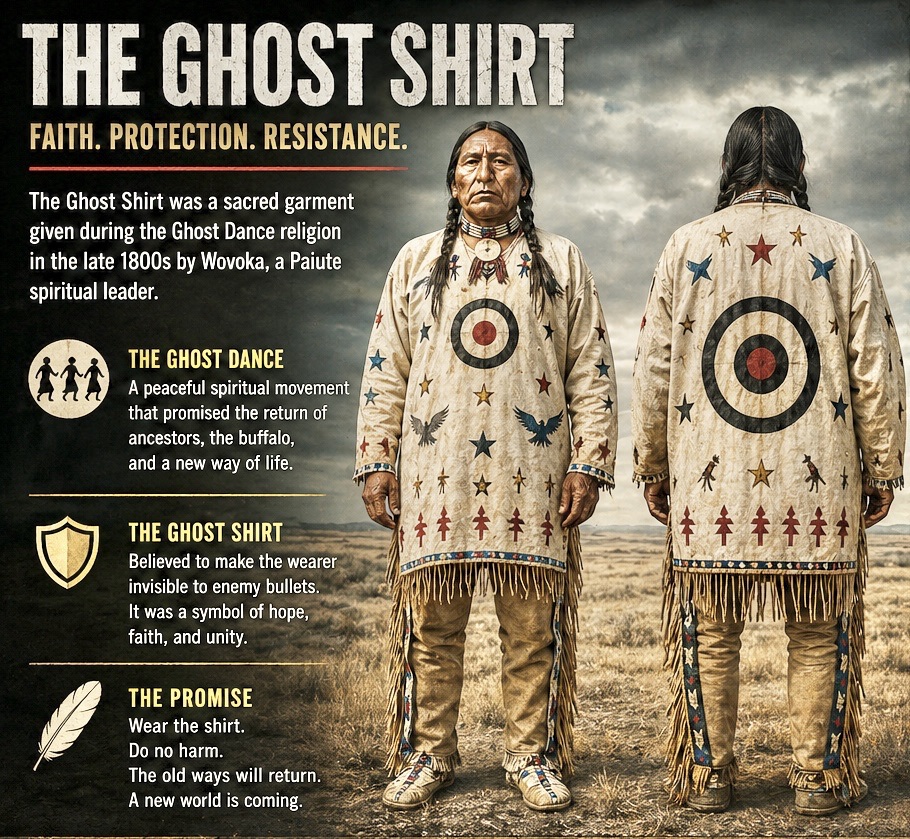
In the next issue of the Council of Concerned Conservationist Newsletter See Vance’s product review:

 COUNCIL-OF CONCERNED-CONSERVATIONISTS…..Between Jest And Earnest…..
Leave a comment