—On the Establishment of the Trump Prize.
—A Proposal Submitted by Ray Pierre-DeWitt, Chaos Coordinator.
There is a recurring phenomenon in public life: a man’s name does not finally attach to what he did most loudly, but to what endures most quietly.
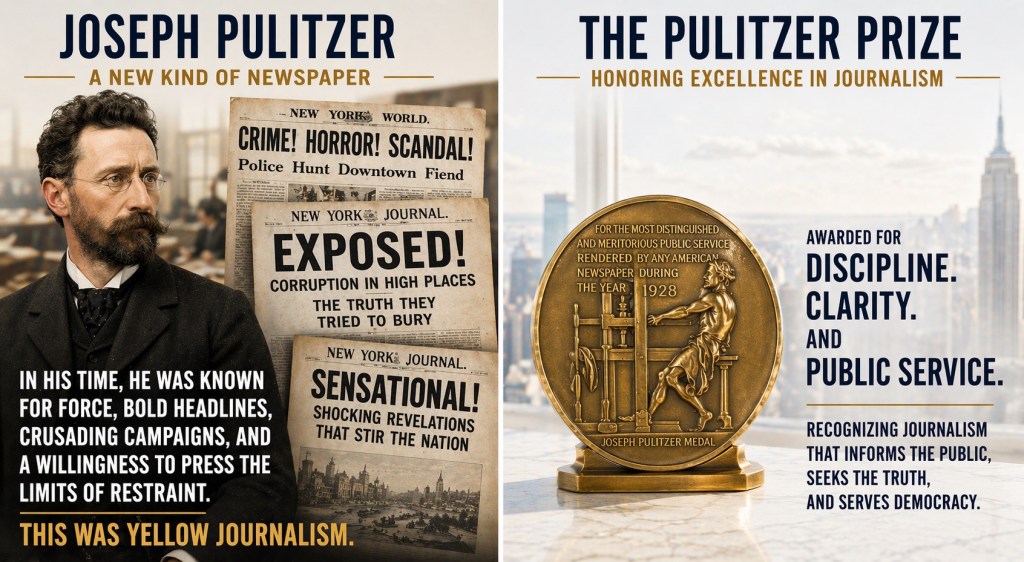
Consider Joseph Pulitzer.
In his time, his newspapers were known for force—bold headlines, crusading campaigns, and a willingness to press the limits of restraint. Yet it is his name that now marks the highest honors in journalism, awarded for discipline, clarity, and public service. The excess did not survive him. The correction did.
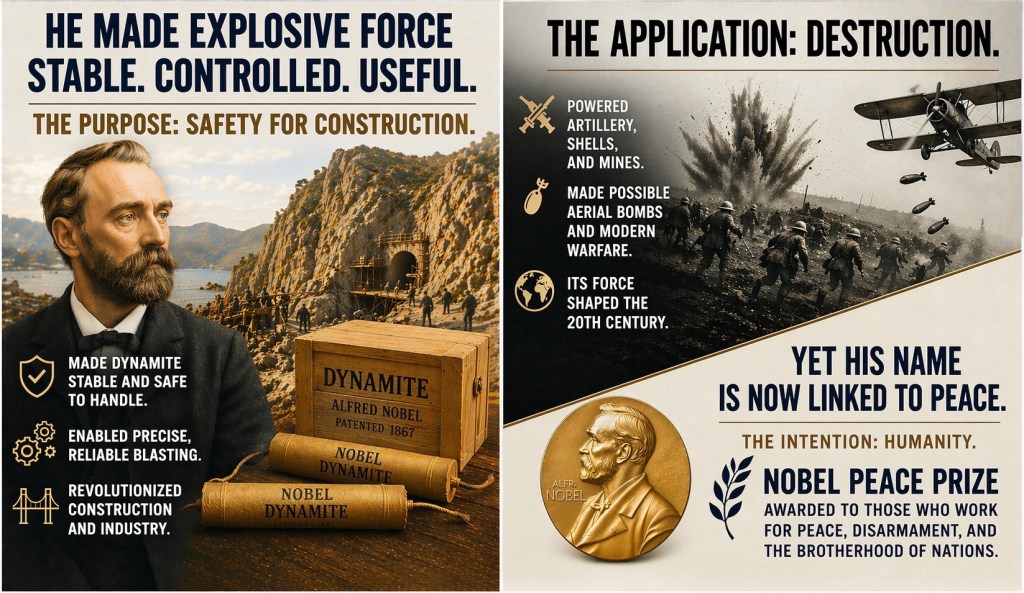
Consider Alfred Nobel.
He made the use of explosive force more stable, more controlled, more widely applicable. Industry benefited. So did war. And yet his name is now most frequently spoken in connection with peace. Not because the earlier fact disappeared, but because a later intention was allowed to define it.
In both cases, the name remained. The emphasis shifted.
It is in this context that one may consider Donald Trump.
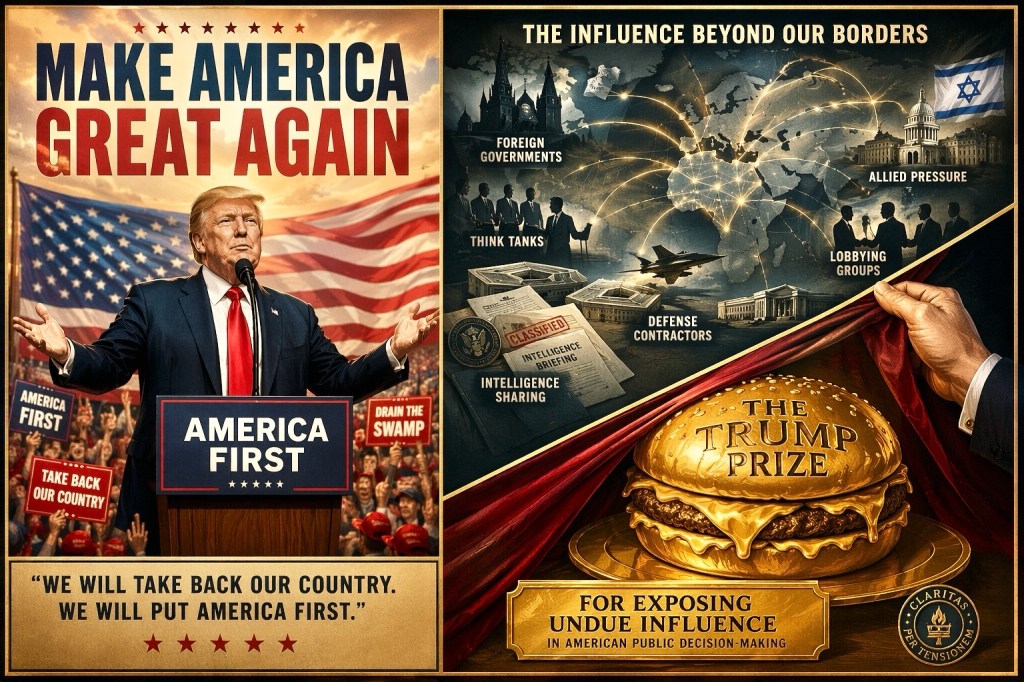
His central claim was simple: that the nation ought to act in its own interest, clearly and without apology. “America First” was not a nuance. It was a line.
And yet, during the period in which that line was most strongly drawn, a corresponding awareness took hold—that American policy, particularly in foreign affairs, operates within a dense web of alliances, incentives, and foreign influences that do not always align with that claim.
When that line was tested, the United States went to war against Iran in a sequence closely tied to Israeli action—something even administration officials, such as Secretary of State Marco Rubio acknowledged in their own explanations.
To many observers, it did not look like a decision formed in isolation. It looked like one taken within a framework already set in motion by Israeli priorities, and carried forward despite evident disagreement from US intelligence services and some of the top military leadership.
The line had been drawn clearly. The decision that followed did not remain entirely within it
The assertion of independence had the unintended consequence of focusing attention on its limits.
Where the line was drawn most boldly, observers began to ask what shapes it—and what moves through it.
It is therefore not unreasonable to consider what form such a name might take in its afterlife.
Accordingly, the following is proposed:
THE TRUMP PRIZE
Awarded annually to the individual, institution, or actor who most clearly exposes, resists, or refuses to indulge undue external influence in American public decision-making.
For it may be that the most enduring contribution of a public figure is not the condition he declared, but the condition he made visible.
Pulitzer did not eliminate journalistic excess; he gave rise to its correction.
Nobel did not abolish force; he redirected its memory.
And in the same manner, it may be said:
Trump spoke of taking the country back.
Whatever his intentions in this campaign, he left us asking who, exactly, controls our foreign policy.
🎶Greatest-ally pressure groups, think tanks, lobby groups,
deceptive briefings, contracts
on a sovereign-seeming bun🎶


Leave a Reply