—A Pilgrimage Through Revolutionary New Jersey—
(With Vance Gunczarus riding shotgun.)
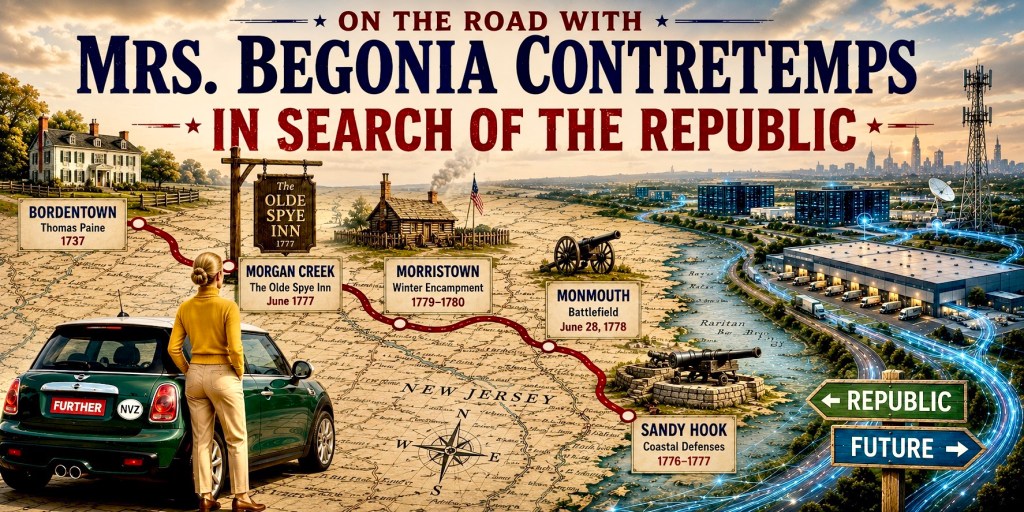
A Preliminary Note from the Nouvelle Vague Zwischenshaft (NVZ)
As the United States approaches the two hundred and fiftieth anniversary of its founding, the Nouvelle Vague Zwischenshaft has requested clarification regarding an increasingly perplexing question:
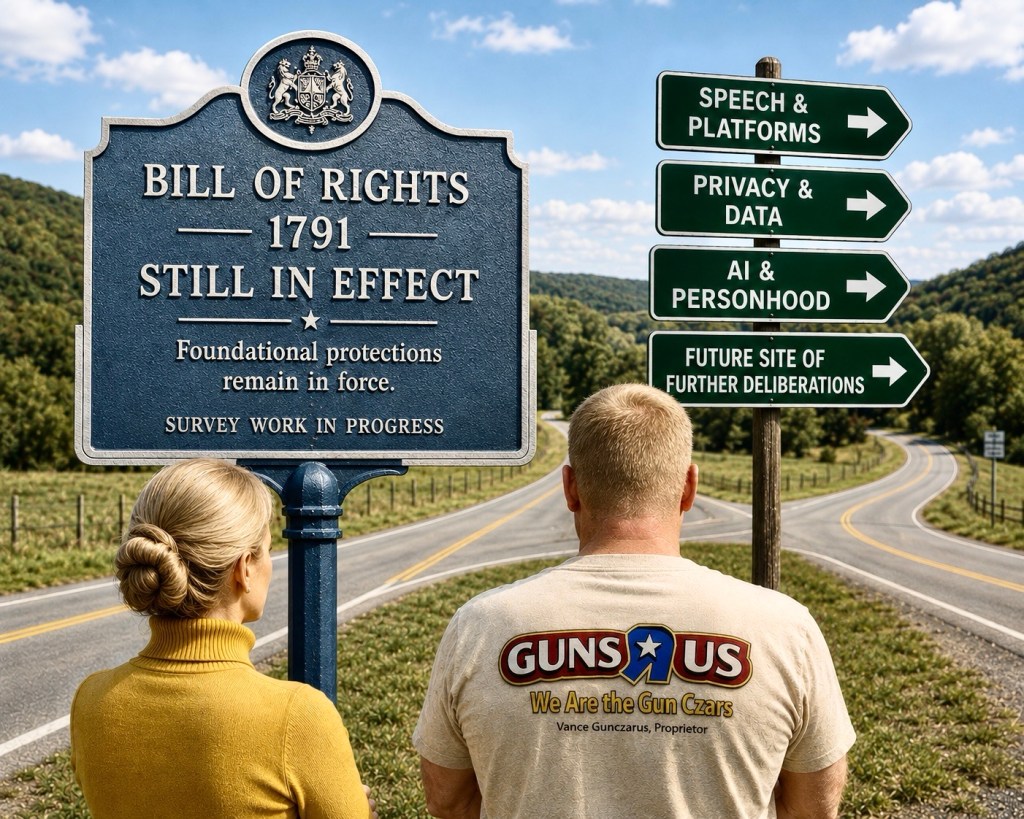
Does the American Constitution remain an active framework governing the republic, or has it become, at least in part, a ceremonial structure surrounding newer and less visible systems of authority?
Mrs. Begonia Contretemps was therefore tasked with undertaking a modest constitutional pilgrimage through Revolutionary New Jersey in order to determine what, precisely, Americans still mean when they speak of liberty.
Editor John St. Evola suggested she travel with Vance Gunczarus.
“Take Vance,” he said. “He still believes power always arrives wearing a uniform.”
He then smiled in the manner of a man who had already seen the ending.
Bordentown, New Jersey. —Near the House of Thomas Paine
YEAR 250 — T MINUS 37 DAYS
Mon cher René,
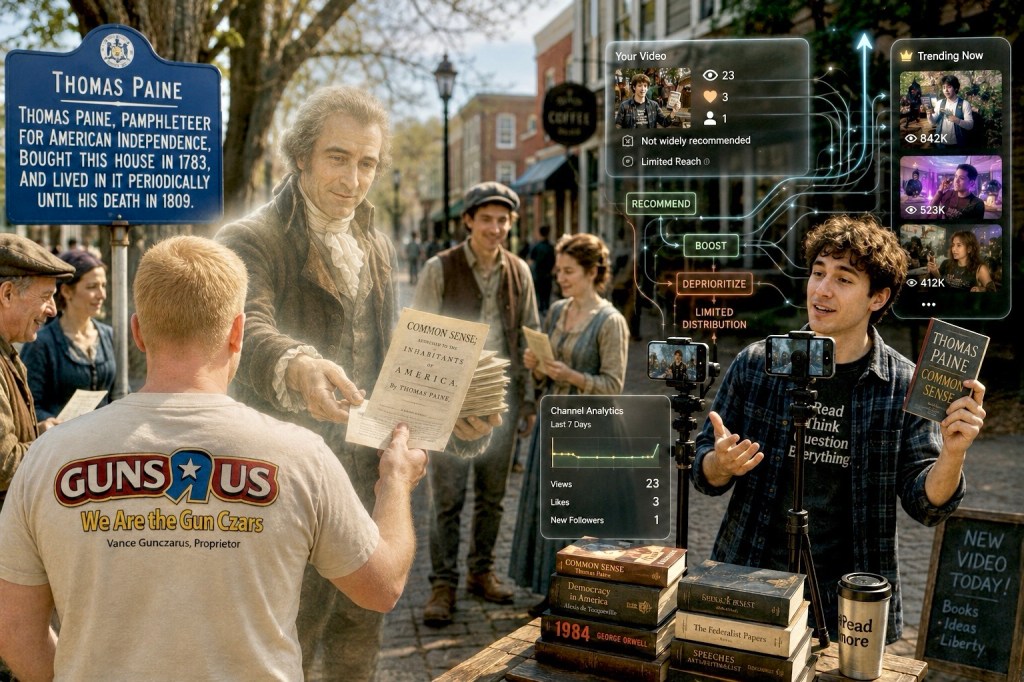
The journey began in Bordentown, where Thomas Paine once resided in the only home he would ever truly own. Across the street stood a small independent bookstore whose shelves leaned slightly beneath the weight of biographies, Revolutionary histories, local poetry chapbooks, and exhausted paperbacks regarding the New Jersey Pine Barrens.
Vance was delighted immediately.
“You realize,” he announced while pointing toward the Paine house, “that without pamphlets there probably ain’t no America.”
He was not wrong.
The republic had once spread hand-to-hand through paper, ink, taverns, and argument. Citizens physically carried ideas beneath their coats.
Meanwhile, a young man standing beside us filmed himself recommending books for an online platform whose algorithm, I later learned, determined visibility according to metrics nobody present could clearly explain. The contrast lingered with me.
The old republic feared censorship by kings. The modern citizen often fears invisibility instead.
“The First Amendment still stands,” Vance reminded me proudly.
“Of course,” I replied. “As it should.”
Yet I quietly wondered whether the Founders had anticipated a civilization in which speech might remain technically free while distribution itself became infrastructural.
The pamphleteer has not been imprisoned.
He has merely become undiscoverable.
Morgan Creek
—The Ruins of the Old Spye Inn—
René, the Inn no longer exists. It burned years ago. Yet the place remains oddly alive in local memory.
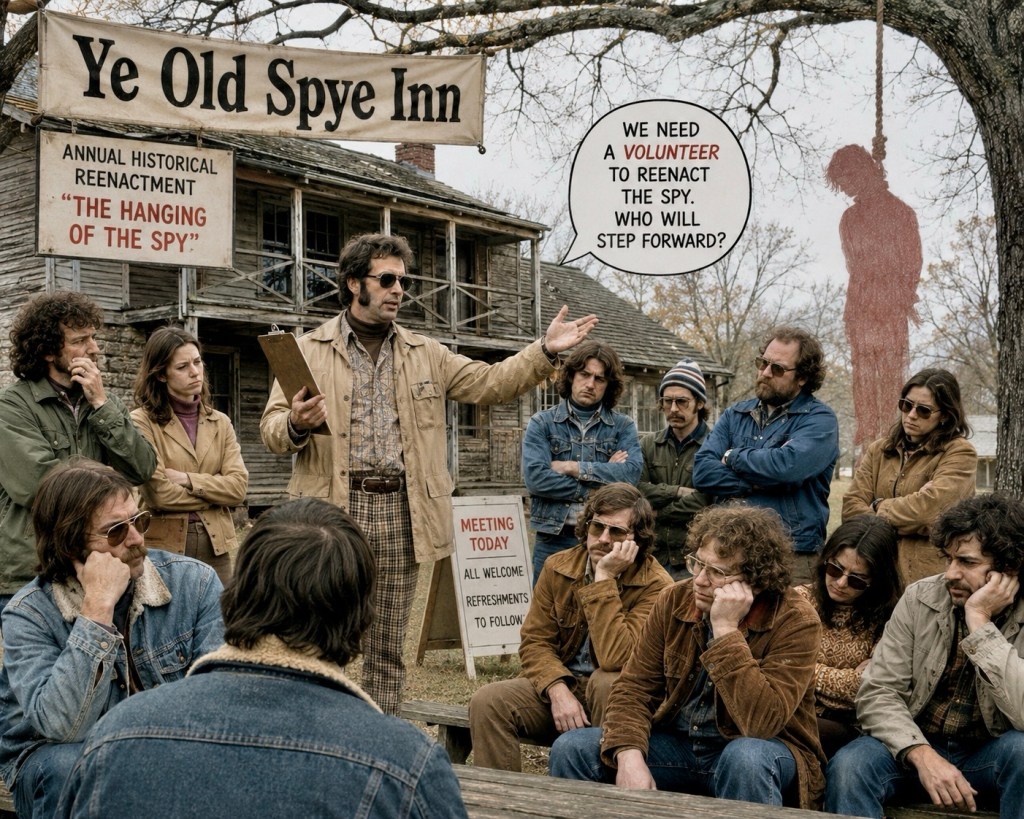
A Loyalist spy named Abe Mussey was allegedly tried and hanged there during the Revolution after signaling British ships on the Raritan Bay. Whether every detail survives historical scrutiny appears almost beside the point now. For years local residents reenacted the hanging during Bicentennial festivities anyway, complete with crowds, costumes, and a dangling effigy swaying near the creek. A volunteer reenactor could not be found to play the role of the hanged spy.
“In New Jersey,” Vance observed, “people’ll reenact anything if there’s enough parking.”
On a freezing New Year’s morning many years ago, while most of Sayreville slept off hangovers, John St. Evola wandered through the burned remains of the inn conducting what Vance called “salvage archaeology” before the property could be bulldozed.
Using little more than a shovel, a homemade sifter, and eagerness, he recovered pottery fragments from the old Morgan clay works the British had once destroyed during the Revolution. He also found a King George farthing half-buried in the foundation which he nearly discarded after mistaking it for an electrical box knockout.
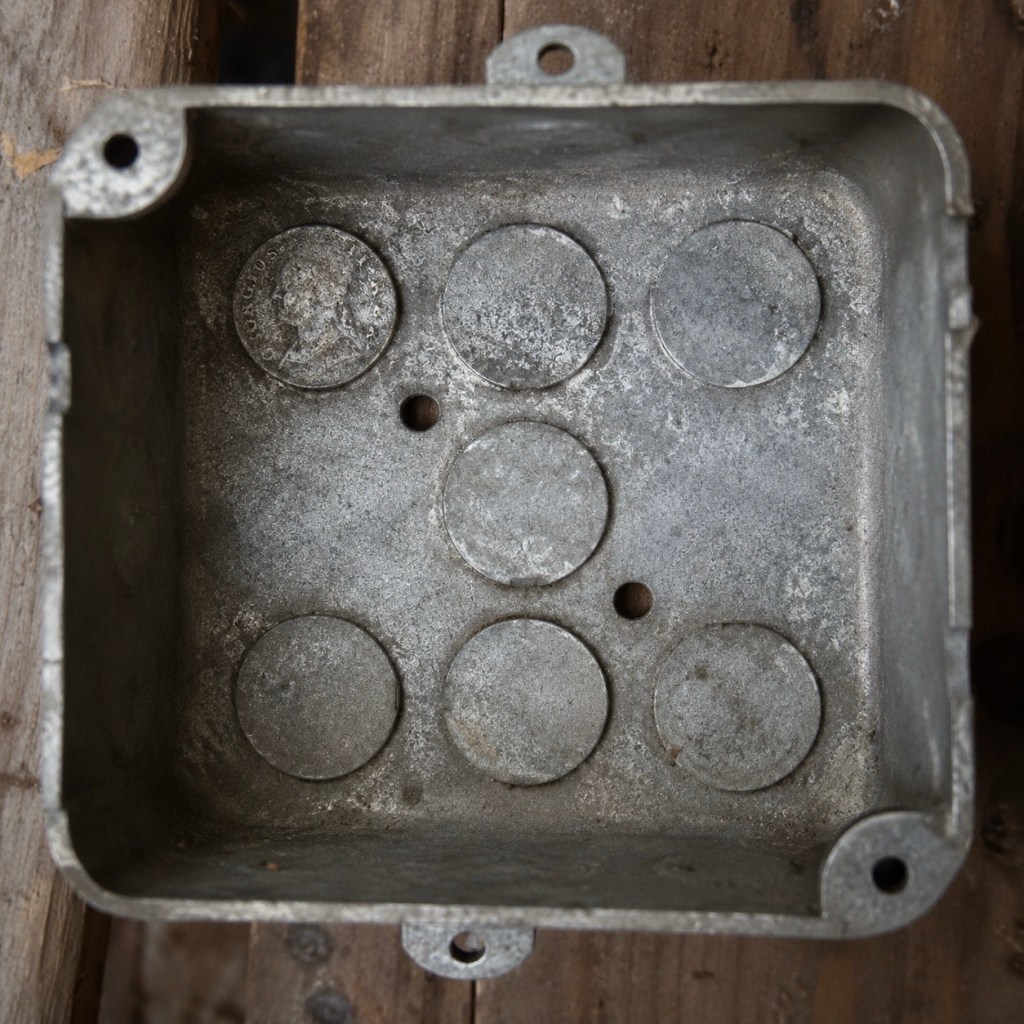
The image delighted me enormously:
an artifact of imperial sovereignty confused with industrial debris.
“At least Abe Mussey knew who accused him,” Vance remarked while staring across the creek.
That sentence remained with me.
The eighteenth century still believed in visible accusation, visible treason, and visible punishment. The spy was captured, tried, condemned, and hanged beneath procedures meant to be seen publicly — protections later echoed in the Fifth and Sixth Amendments.
The modern citizen may instead be:
flagged,
restricted,
scored,
shadowed,
suppressed,
or quietly denied access by systems whose authorship remains obscure.
No gallows.
No magistrate.
No king.
Only unresolved case numbers and password reset emails.
Morristown
—Winter Encampment—
At Morristown we walked among reconstructed huts beneath gray skies while a park guide described smallpox outbreaks within Washington’s exhausted army.
The guide mentioned the Continental Army inoculation campaign.
Vance became visibly uncomfortable.
“Well,” he muttered as we crossed the frozen ground, “there’s a difference between Washington inoculatin’ soldiers in wartime and bureaucrats tellin’ civilians what medicine they gotta take.”
“Perhaps,” I replied gently. “Though both situations involved frightened republics confronting invisible dangers.”
He frowned but did not answer immediately.
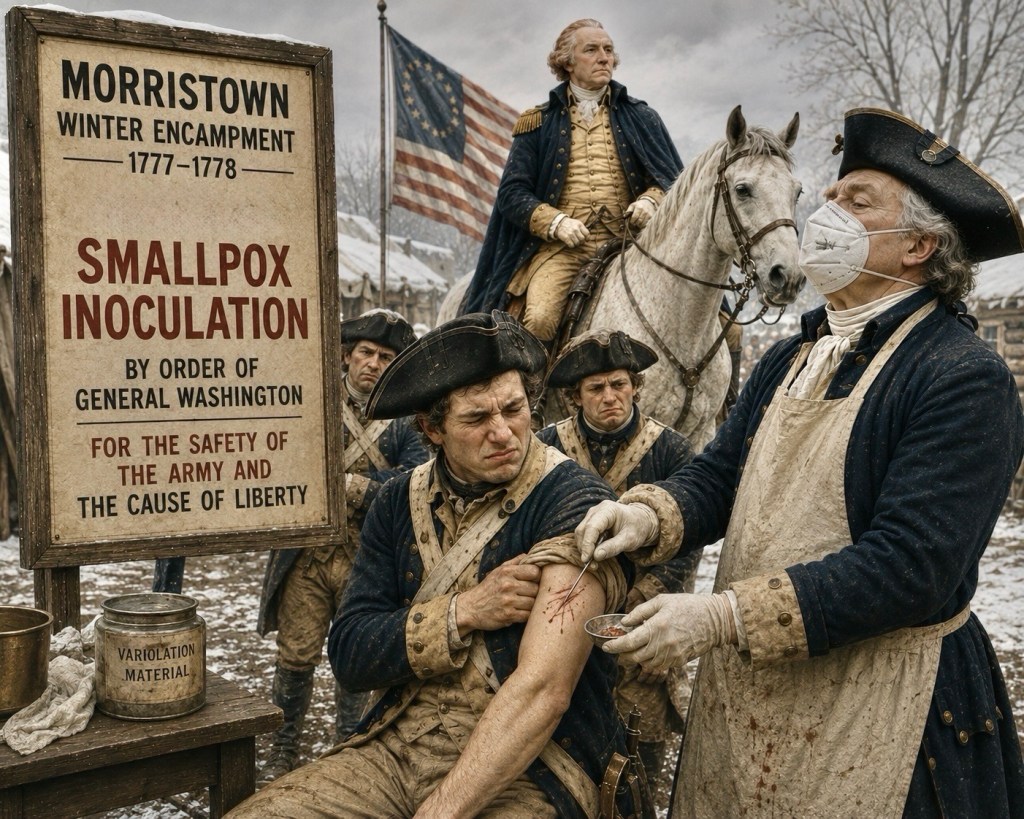
It struck me then that the Founding generation so frequently invoked today as apostles of absolute noninterference had often behaved less like ideologues than exhausted men attempting to preserve a fragile civilization under impossible conditions.
Washington himself had authorized one of the largest coordinated inoculation efforts of the era. The contradiction did not weaken the republic. It revealed something essential about it.
Liberty had never existed independently of logistics, coordination, survival, and collective trust. The question had always concerned where such powers resided and whether citizens retained meaningful authority over them.
In the eighteenth century authority announced itself plainly:
officers, assemblies, courts, generals.
In the twenty-first it increasingly arrived diffusely through:
employers, insurers, platforms, financial systems, credentialing bodies, and algorithms.
The old republic feared soldiers quartered inside the home.
The modern citizen purchases surveillance voluntarily and installs it beside the television.

Freehold
—The Battle of Monmouth Reenactment—
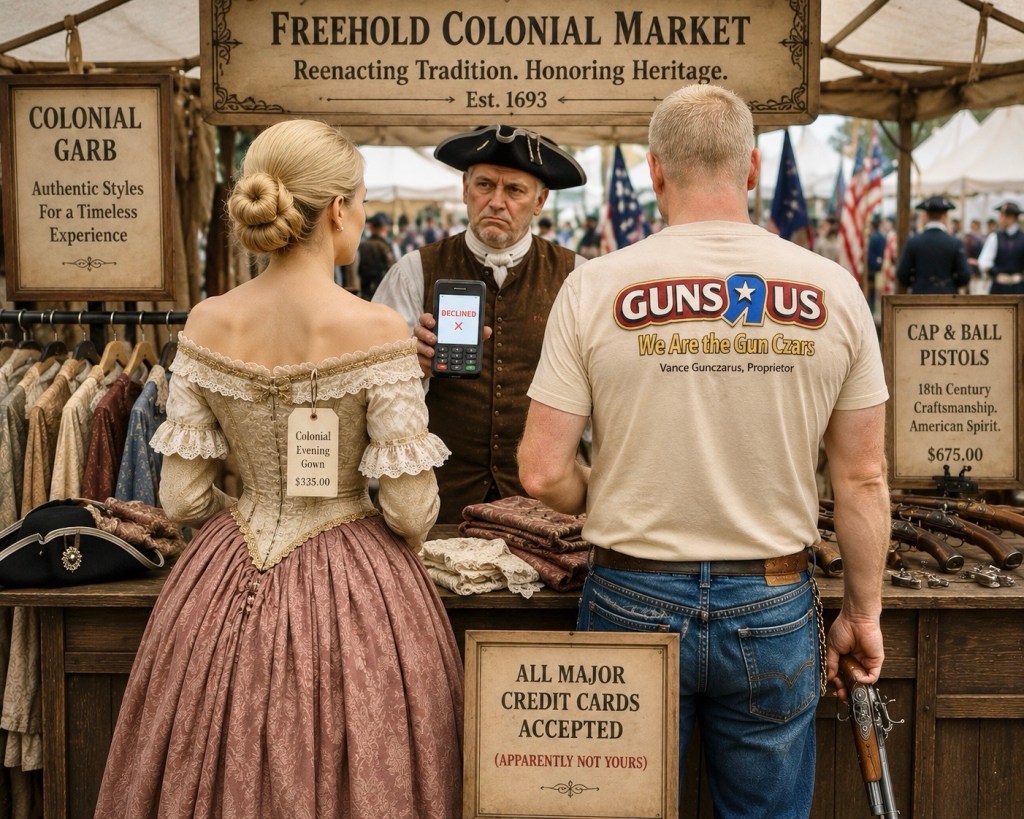
The Monmouth reenactment proved unexpectedly moving.
Children carried wooden muskets through camp smoke while elderly men discussed artillery trajectories with almost liturgical seriousness. Women sewed uniforms beneath canvas awnings while vendors sold lemonade, sausages, and tri-corner hats made in Taiwan.
Vance was ecstatic.
“This,” he declared while cannon fire rolled across the fields, “is America remembering itself.”
And perhaps it was.
Yet I could not help noticing that between musket demonstrations nearly everyone checked glowing screens, uploaded photographs, or navigated cashless payment systems owned by corporations headquartered far beyond New Jersey.
The old reenactments, Vance informed me sadly, had once been much larger.
“Traffic backed up for miles.”
What remained now felt smaller and more fragile, though perhaps more precious for precisely that reason. The republic still remembered the sound of muskets. It seemed less certain about the sound of administrative systems quietly enclosing everyday life.
Sandy Hook
—Fortifications Facing Another Century—
The old batteries stared outward toward the Atlantic as if still awaiting hostile fleets.
Vance pointed out that a young Robert E. Lee had once served among the Army engineers designing fortifications connected to the defense of New York Harbor.
Before Lee became permanently frozen inside the moral ice of the Civil War, he had simply been another American officer helping construct the infrastructure of the republic itself.
The old harbor defenses embodied a nineteenth-century understanding of security:
visible walls,
visible cannon,
visible enemies approaching visibly from the sea.
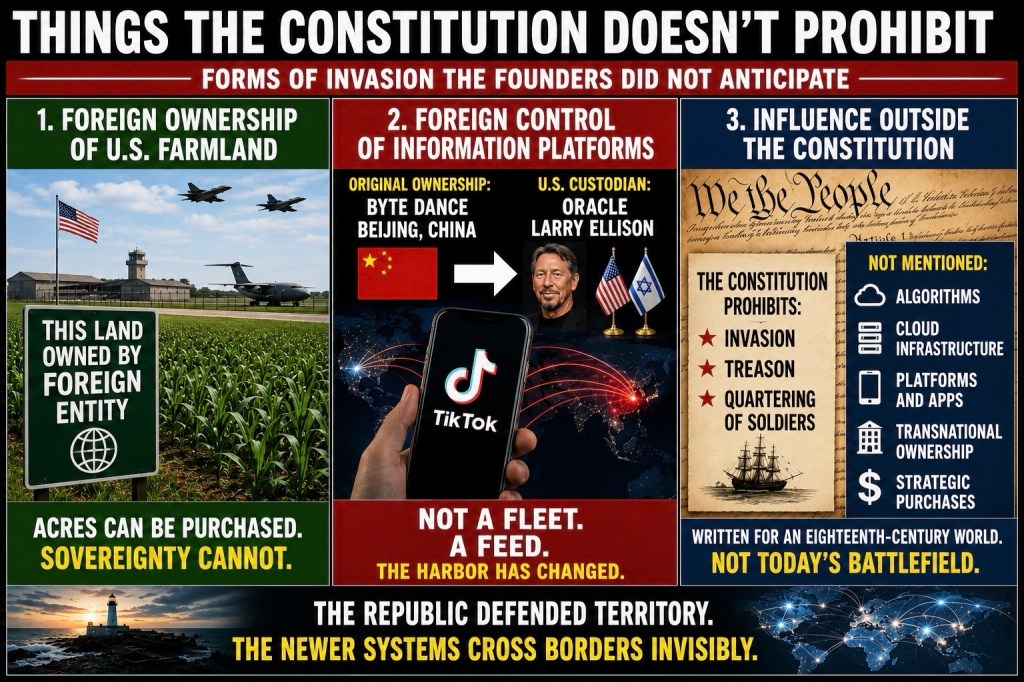
Modern vulnerabilities seemed stranger. No masonry fortification could repel:
recommendation engines, payment networks, cloud systems, or behavioral algorithms.
The republic once feared invasion through the harbor.
Now its deepest penetrations arrived invisibly through systems citizens carried willingly in their pockets.
Southbound on the Turnpike
—Toward the End of the Republic, or Perhaps Merely the Beginning of Another One—
By evening we drove south beneath warehouse lights and distant server farms glowing blue against the clouds.
Vance had grown quieter over the course of the journey. Finally he said:
“Well somebody’s gotta break these bastards up.”
“Somebody?” I asked.
“Yeah,” he replied irritably. “Congress. The states. I don’t care. Somebody Americans can actually vote for.”
After several miles he added quickly:
“Now hold on. I ain’t sayin’ I want more government exactly.”
“Only stronger government?” I asked.
He stared through the windshield.
“Well,” he muttered at last, “stronger where it counts.”
The highway hummed beneath us.
For nearly two centuries Americans had argued about whether government had become too large. It now seemed possible that power itself had simply migrated elsewhere.
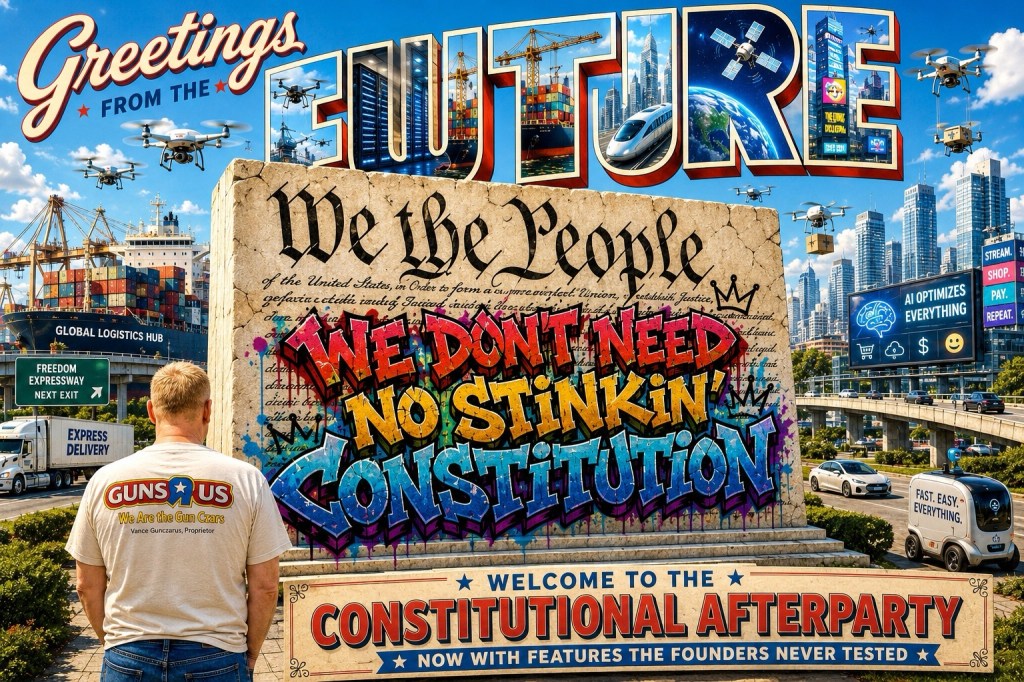
And perhaps that was the strangest realization of all:
the Constitution had not necessarily failed.
History had merely continued.
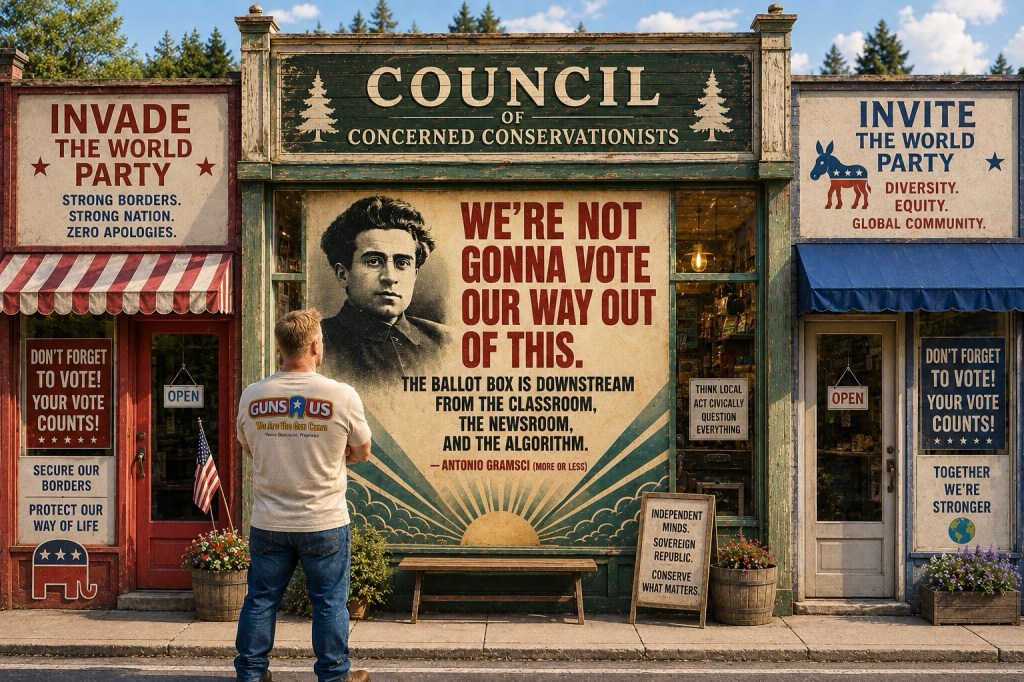
In any event, René, Vance still believes the republic can be found. I find that I hope he is right.
Yours from the road,
Mrs. Begonia Contretemps
Special Correspondent
Nouvelle Vague Zwischenshaft
More From Mrs. Begonia Contretemps Can Be Found: HERE


Leave a Reply