
Today’s soup is today’s soup. Relax. . . you can afford soup, can’t ya?
America has long presented itself as the world’s great champion of capitalism. Yet as housing prices climb, grocery bills swell, and the cost of simply existing continues its relentless ascent, Mrs. Begonia begins noticing something rather peculiar.
Everywhere she travels, ordinary Americans seem to be solving these problems in remarkably similar ways: by pooling resources, sharing expenses, and helping one another acquire things they could not comfortably afford alone.
Unable to resist the irony, she sets out to investigate what she comes to regard as capitalism’s best-kept secret. As always, she reports her findings to René at the Nouvelle Vague Zwischenschaft, the European think tank affiliated with the Council of Concerned Conservationists.
BJ’s Wholesale Club, Monmouth County New Jersey
DAY 2 OF AMERICA’S SECOND QUARTER MILLENNIUM
Formerly known as July 6, 2026.
Dear René,
When I emerged from the BJ’s Wholesale Club whose roof had only moments earlier attempted to join the shopping public, I found myself wondering whether I had just witnessed a metaphor for modern America.
The explanation, I was told, was deceptively simple. The roof drains had not been properly cleared. Rainwater, instead of flowing downward where it belonged, accumulated at the very top. More water arrived. More weight accumulated. Eventually, the entire structure surrendered.
As I brushed bits of insulation from my jacket, it occurred to me that wealth might occasionally behave rather like rainwater.
When too much of it remains at the top and too little finds its way downward, the burden upon the structure steadily increases until one begins to wonder whether the problem is not the rain itself, but the drains.
It was then, René, that I recalled Americans regard communism rather as one regards mildew—something to be avoided at all costs and preferably sprayed with chemicals.
Imagine my surprise, then, to discover that the very thing keeping many of them afloat appears to be. . .
. . . communism.
Not the dreary variety with concrete apartment blocks, military parades, and enormous portraits of revolutionary heroes.
No.
A cheerful, voluntary, thoroughly American sort.
I therefore resolved to investigate.
FIRST STOP — THE FOOD CO-OP
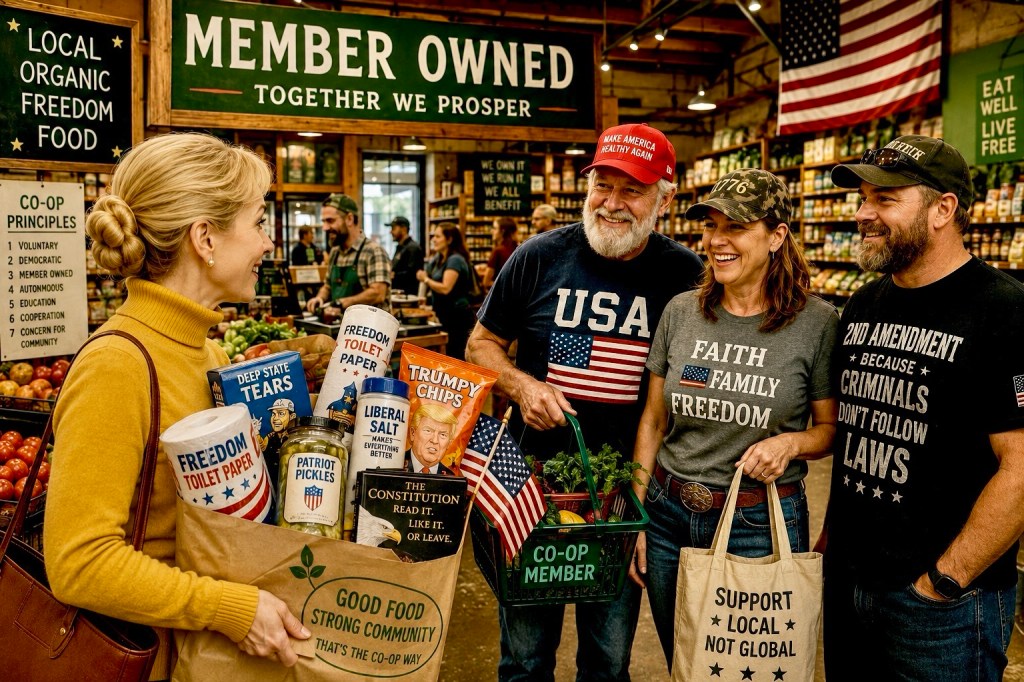
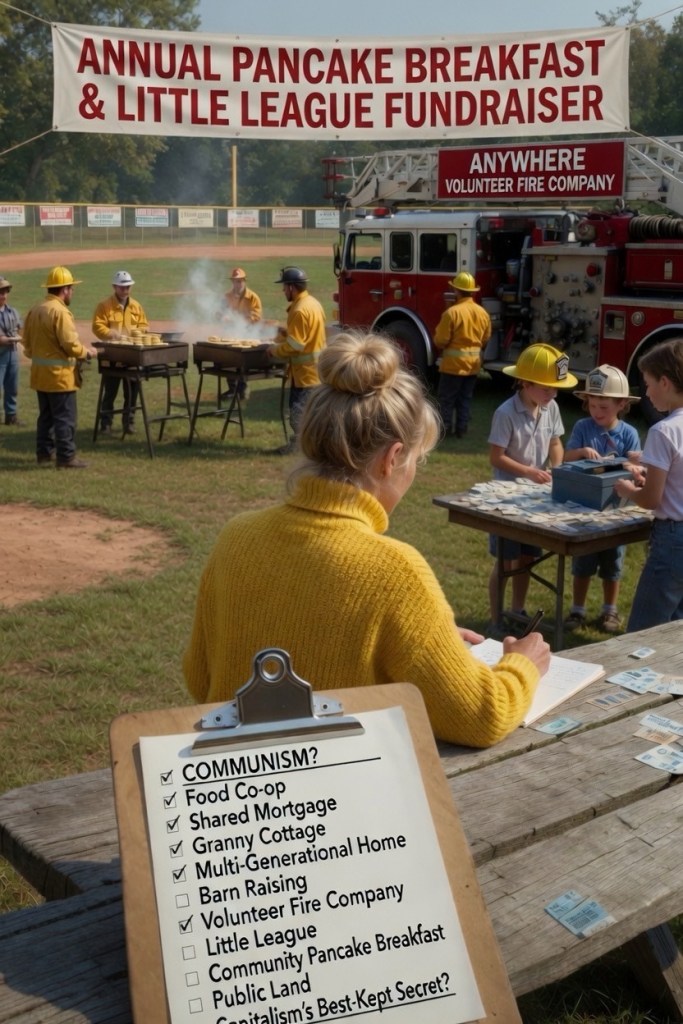
The establishment belonged to its members. The customers owned the business. They elected directors. They voted on important matters. They shared in the success of the enterprise.
No one appeared distressed by this arrangement.
I cautiously asked a pleasant lady arranging organic vegetables whether this constituted communism.
“Oh no,” she replied cheerfully.
“It’s just a co-op.”
Curious how often communism ceases being communism once one gives it a friendlier name.
SECOND STOP — THE SUBURBAN MORTGAGE
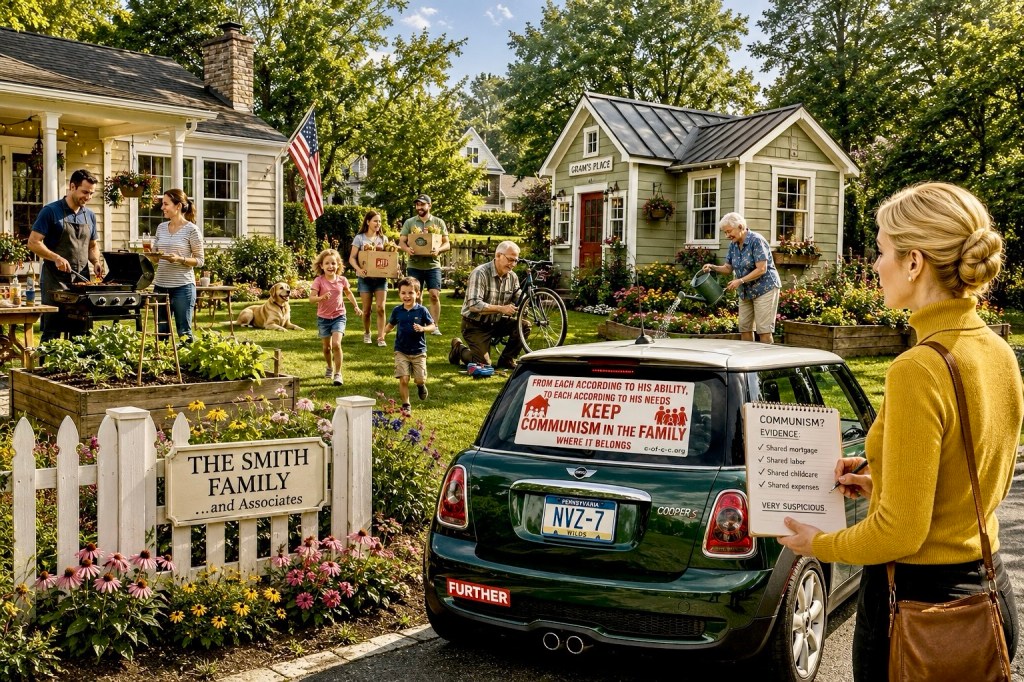
Here I found several adults combining their incomes in order to purchase what none of them could comfortably afford alone.
The mortgage was shared. The maintenance was shared. The expenses were shared. The equity was shared. They referred to this as “building wealth.”
Then, René, matters became even more suspicious. Behind the principal residence stood a delightful little cottage. I naturally assumed it to be a garden shed. I was mistaken.
It belonged to Grandmother. Or sometimes Grandfather.
Apparently these charming little dwellings have become increasingly fashionable. Elderly parents live in them, remain close to their families, assist with the grandchildren, contribute toward household expenses when able, and continue living independently without living entirely alone. Everyone seemed rather pleased with the arrangement.
The family insisted they were merely “making it work.”
I quietly added another tally to my notebook.
THIRD STOP — AN INDIAN-AMERICAN NEIGHBORHOOD
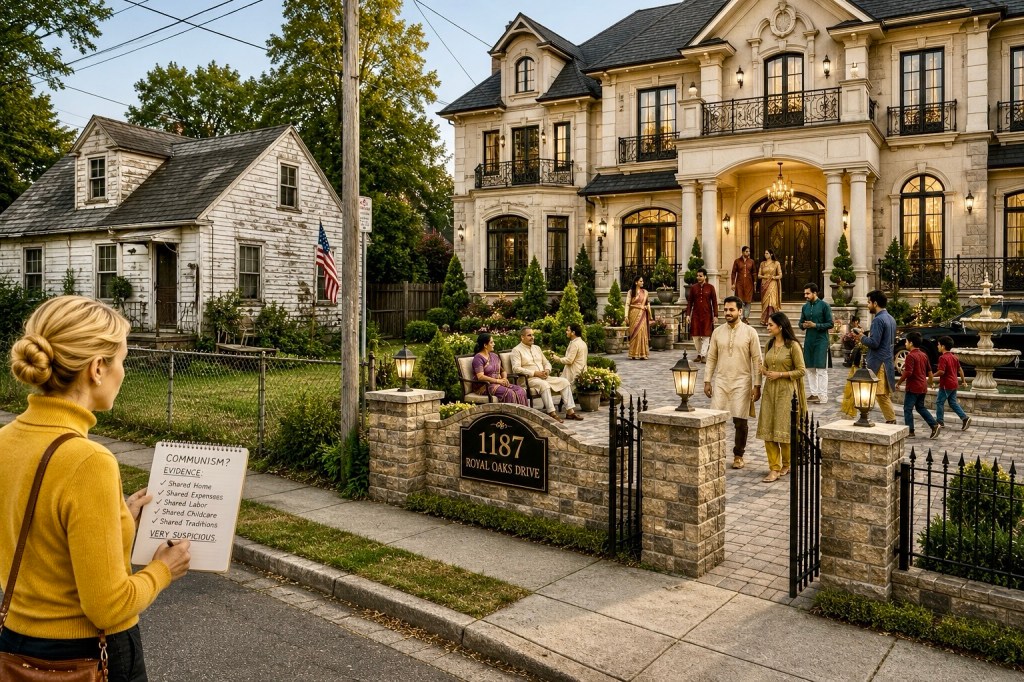
Several generations occupied the same home.
Grandparents. Parents. Young professionals. Children. Everyone worked. Everyone contributed. Everyone advanced together. No ideological speeches were delivered. Only a magnificent supper.
Again I encountered the remarkable practice of many people accomplishing together what would have been far more difficult individually.
FOURTH STOP — THE AMISH
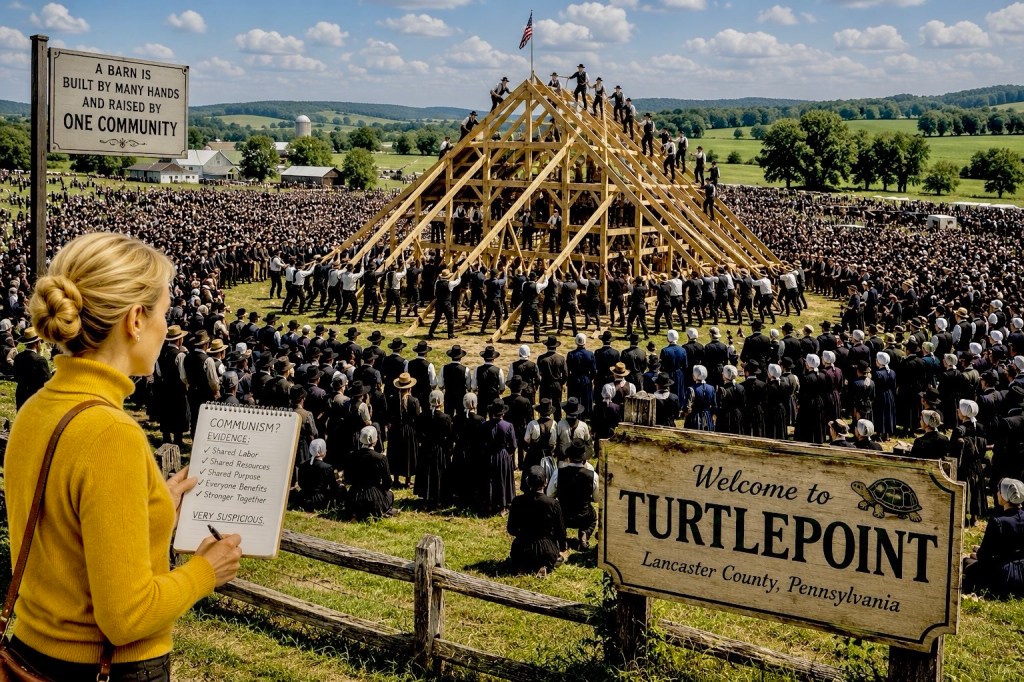
A barn appeared to rise almost as if by magic. No invoices. No consultants. No strategic planning retreats. Only neighbors. They arrived. Worked. Shared a meal. Returned home.
One begins to suspect that people have been pooling their efforts long before political philosophers gave the practice intimidating names.
FIFTH STOP — THE WAREHOUSE CLUB

Entire families purchased enough provisions to survive what appeared to be a moderate siege.
Friends split enormous packages. Neighbours divided purchases. Memberships were shared. Savings were shared. Even the hot dog appeared suspiciously communal.
CONCLUSION
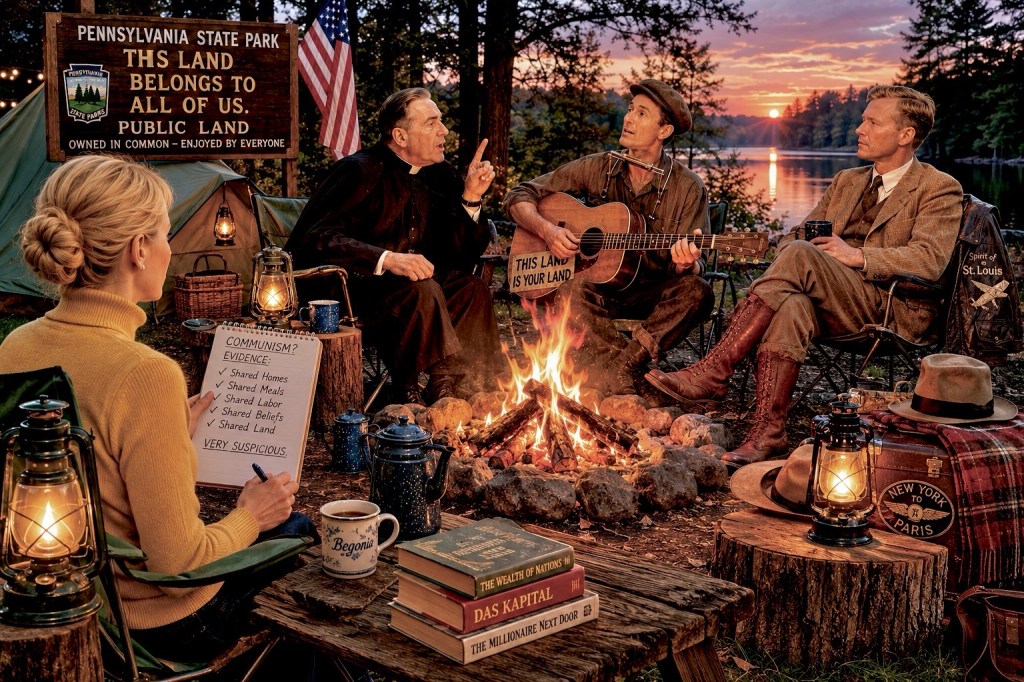
René, I have reached what I consider an unavoidable conclusion.
The more expensive capitalism becomes. . . the more communism it requires merely to continue functioning.
Not compulsory communism. The ordinary sort.
Families helping families. Neighbours helping neighbours. Friends combining resources. People sharing mortgages. People sharing grocery bills. People sharing property. People sharing risk. All so they may continue participating in capitalism. It is, I admit, a rather brilliant arrangement.
Americans spend an extraordinary amount of time denouncing communism. Then they quietly practice just enough of it to keep capitalism affordable.
Yours in continuing bewilderment,
Mrs. Begonia Contretemps
Correspondent-at-Large
—Filed from the Turtlepoint Grange Hall.
The Further writings of Mrs. Begonia Contretemps can be found: HERE


Leave a Reply