— Starring Mrs. Begonia Contretemps
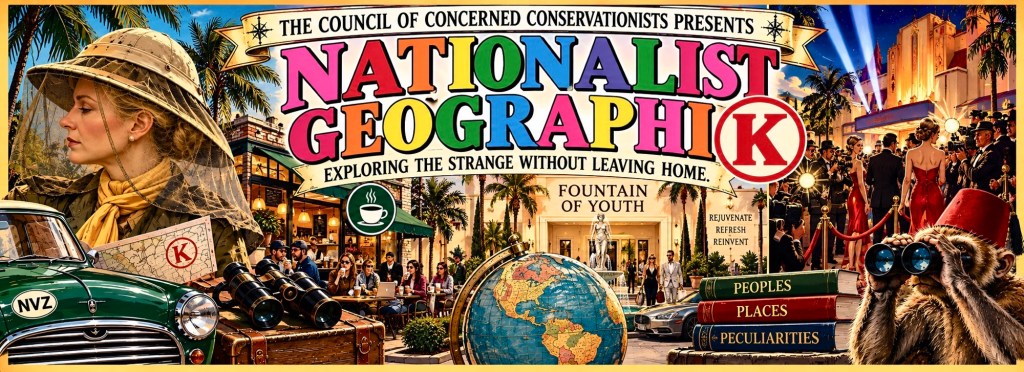
The Council has dispatched Begonia on an expedition into all too familiar but exotic territory. The inhabitants are reputed to be highly influential, their customs poorly understood, and prolonged exposure may require certain prophylactic precautions.
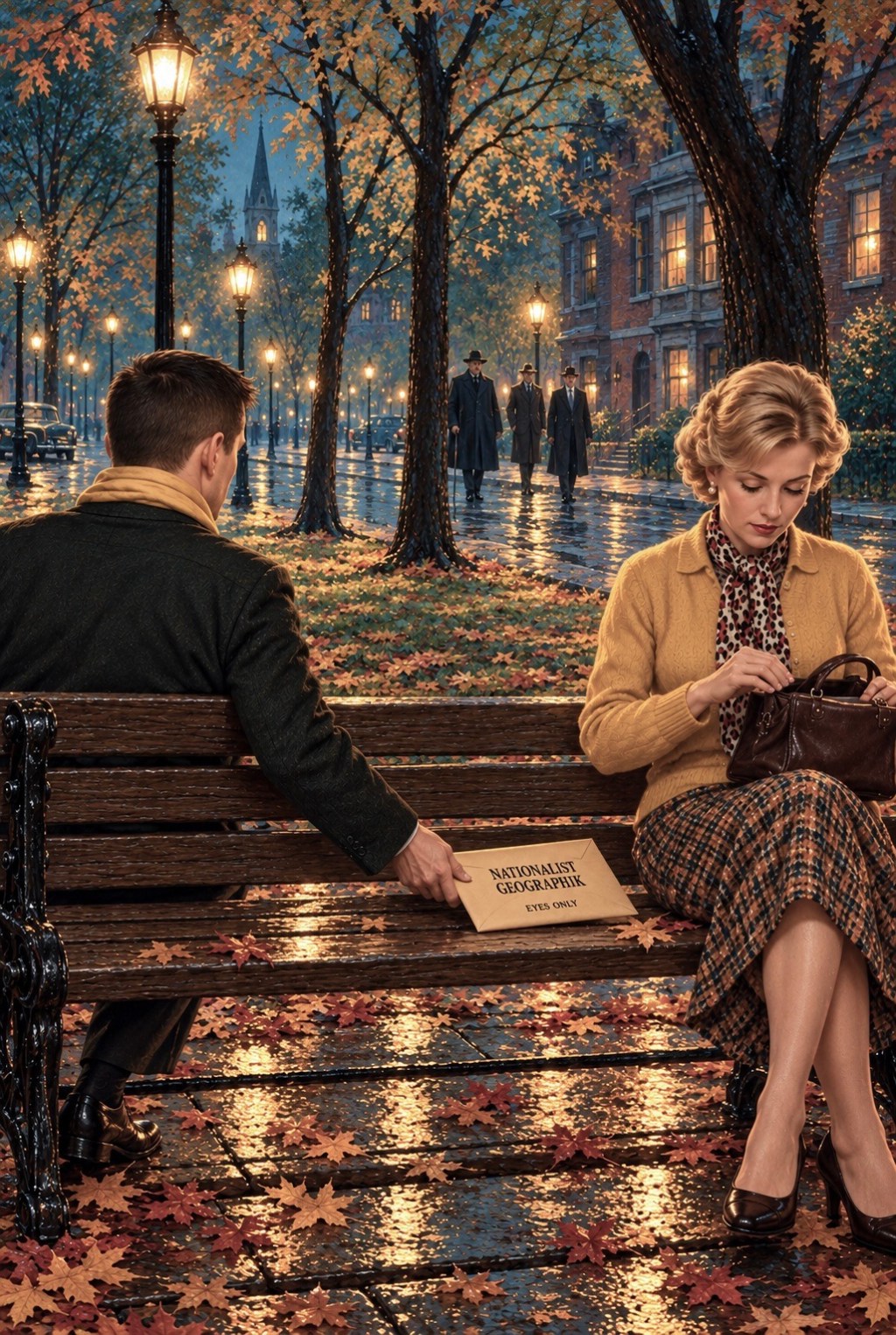
John St. Evola summoned me to discuss a new publication he was contemplating under the auspices of the Council of Concerned Conservationists.
NATIONALIST GEOGRAPHIK,
He proposed it would revive the grand tradition of ethnogeographical exploration, concentrating upon little-understood populations whose customs, beliefs, and physical peculiarities remained largely censored but not undocumented.
My inaugural assignment concerned a wealthy but obscure and influential tribe occupying certain regions of North America and indeed, the cosmos. Its members were reputed to possess considerable power over distant populations, despite having remarkably little direct contact with them.
John declined to specify the destination, assuring me that the expedition materials would make everything clear.
He has an exasperating habit of arranging our meetings as though he were a character in The Man Who Was Thursday, preferably against a backdrop painted by John Atkinson Grimshaw. I suppose the secrecy serves some purpose, although I have yet to discover why intelligence cannot be exchanged in daylight.
I accepted.
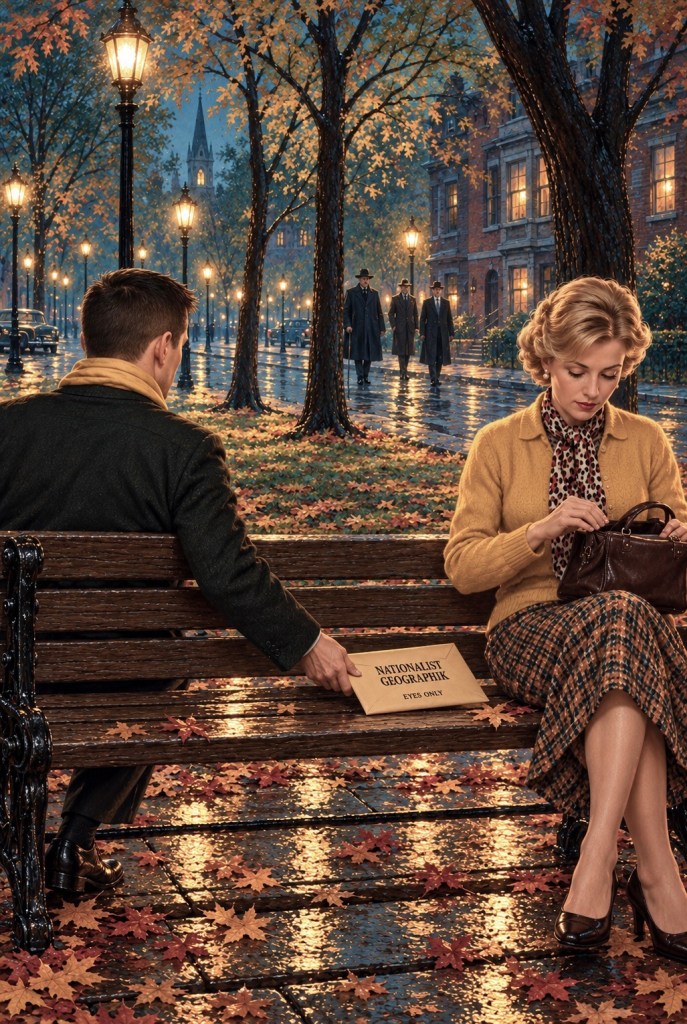
Preparations
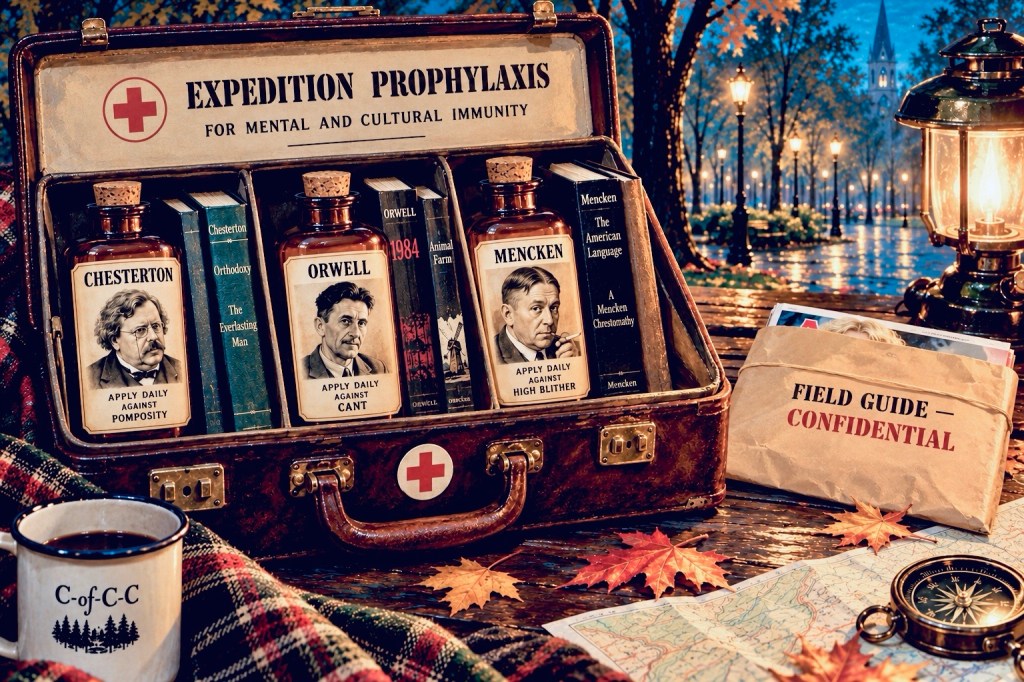
My first concern was prophylaxis. Accounts of the inhabitants suggested widespread exposure to unusual doctrines, unfamiliar social practices, herpes, sexually transmitted diarrhea, and possibly contagious enthusiasms.
John prescribed G. K. Chesterton’s Heretics, Orwell’s Politics and the English Language, and a booster course of H. L. Mencken.
I had expected injections, but the Council’s medical budget was evidently exhausted. As a precaution, I packed quinine, mosquito netting, and a generous supply of Empire Protector condoms, together with a reserve supply of The Queen’s Own Rubbers—By Appointment to Her Majesty—in the event that the Empire’s first line of defence—our modesty—should fail. Naturally, I had no intention of participating in the local customs.
John also supplied an illustrated ethnographic periodical, explaining that it contained useful photographs of the inhabitants. Its title was concealed beneath an expedition label. I placed it among my field references without further examination.
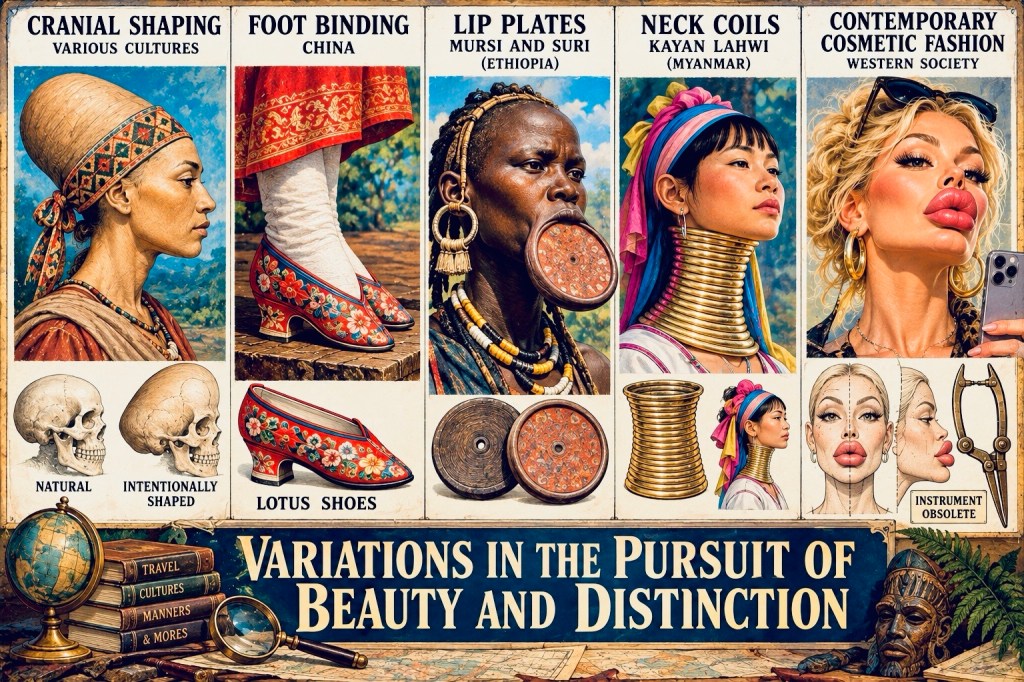
For comparative purposes, I packed historical accounts of artificial cranial deformation, Chinese foot binding, and ceremonial bodily ornamentation.
Among the Natives
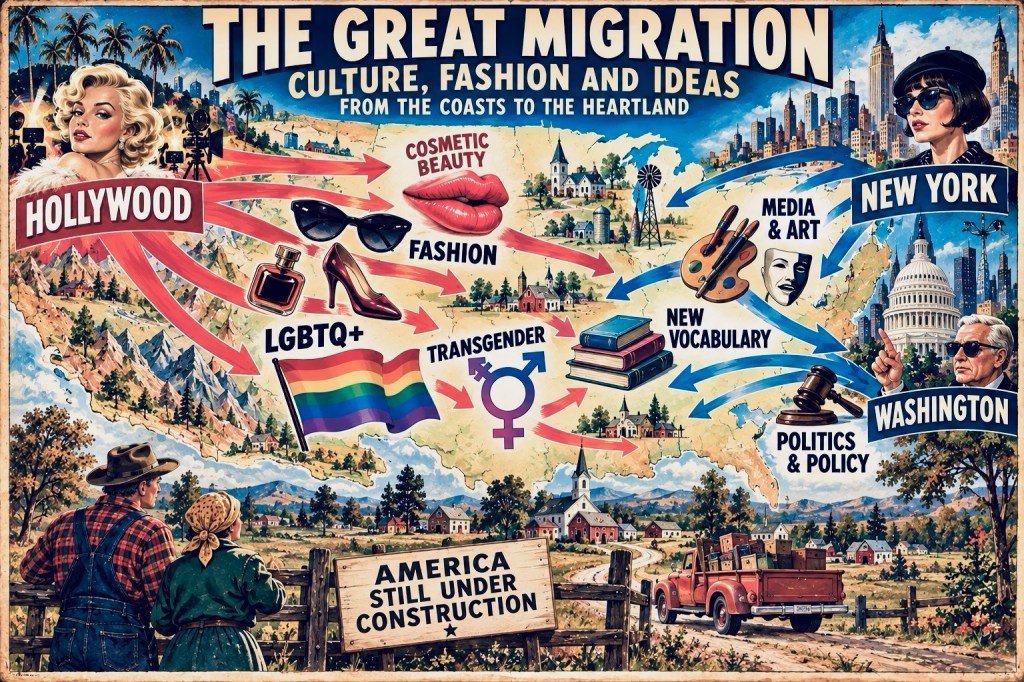
I soon discovered that the tribe’s territory was not geographically remote. Its settlements clustered around centers of entertainment, finance, political influence, and fashionable philanthropy.
Its members enjoyed remarkable material prosperity, yet subjected themselves to elaborate psycical alterations.
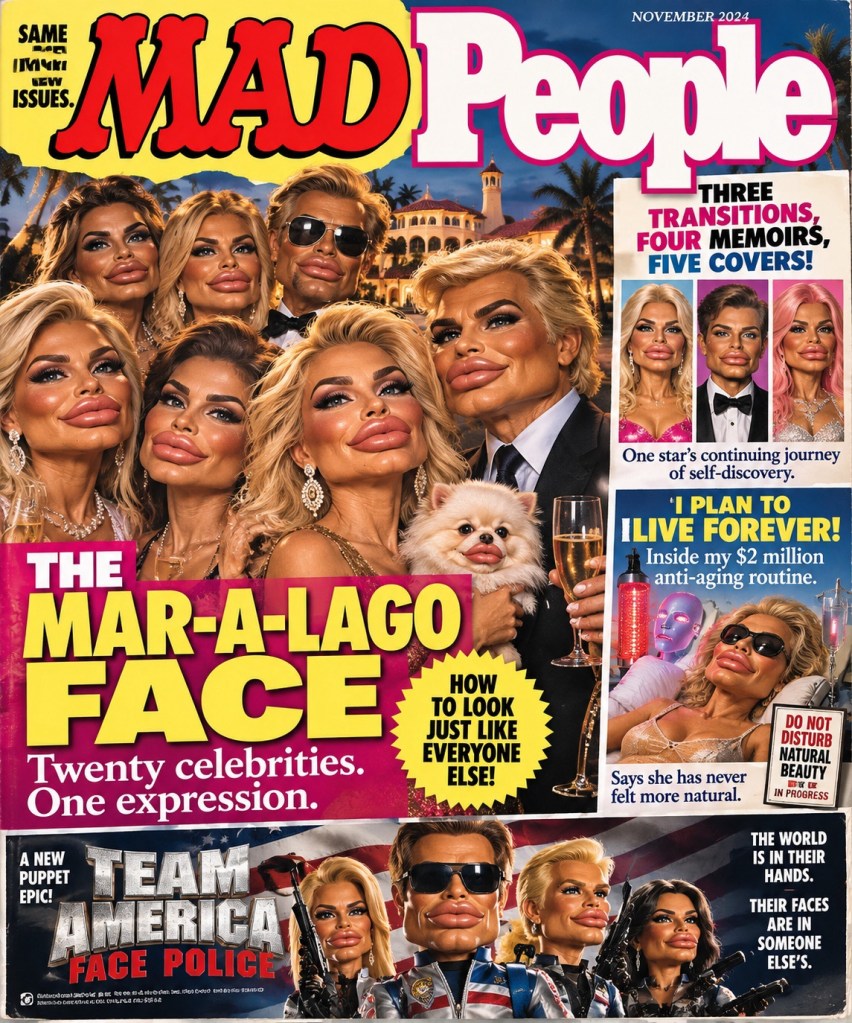
The face and head was apparently the principal location of ceremonial modification. Lips were enlarged, brows elevated, cheeks rounded, and the skin drawn into positions that suggested an enduring state of astonishment.
These practices recalled the cranial shaping and other bodily customs documented by earlier anthropologists, although the techniques and cultural circumstances differed considerably.
The inhabitants’ expressions were often difficult to interpret. Whether this reflected emotional restraint, ceremonial etiquette, or limitations imposed by the modifications themselves, I could not determine.
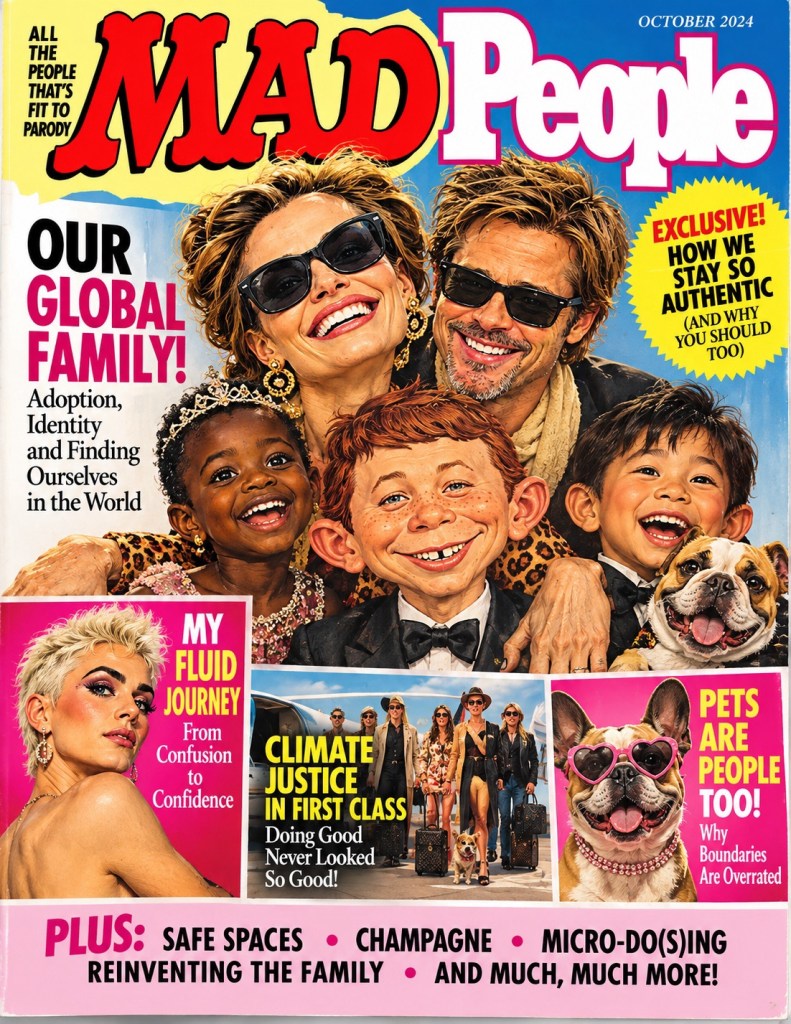
The tribe’s domestic customs proved equally fascinating. Certain prominent families publicly celebrated unconventional arrangements of identity and kinship, while their ceremonial publications devoted extraordinary attention to matters of personal authenticity.
The traditional nuclear family appeared to enjoy little prestige unless supplemented by children adopted from distant continents, Africa being particularly favored. Such arrangements were celebrated as evidence of enlightened cosmopolitanism, whereas the production of one’s own offspring, without an accompanying international narrative, attracted comparatively little notice.
The inhabitants also maintained an elaborate vocabulary of approved opinions. Terms such as lived experience, safe spaces, my truth, inclusivity, and problematic appeared constantly in their ceremonial pronouncements. Certain opinions were described as brave despite being shared by nearly everyone present, while others were declared harmful without evidence of physical injury. Some notions that would have astonished earlier generations were now treated as elementary social knowledge, and disagreement was frequently interpreted as a failure of moral development.
Curiously, although individual distinction was highly prized, certain inhabitants displayed striking similarities in appearance, language, and public convictions.
Through further research in the Council Early Life files, I began to suspect that membership was established as much by ancestry than by the successful adoption of recognizable fashions. . . although it did include a large number of hangers-on, and, as they are sometimes referred to—wannabes. Yes, the Wannabes belong to a separate ethnographic tribe.
Their influence extended far beyond their settlements. Distant populations imitated their clothing, expressions, and customs, frequently without receiving any invitation to do so.
Indeed, by the time a fashion reached the outer provinces, its originators sometimes appeared to have abandoned it for something more outré.
The Unexpected Discovery
Only upon completing my preliminary observations did I remove the protective wrapper from John’s illustrated field guide.
It was a copy of People magazine!
I examined the title for some time. An extraordinarily broad classification for an ethnographic journal, although the editorial selection was decidedly narrow.
The mystery of my assignment was now considerably clearer.
John had sent me to investigate the cultural and political upper reaches of American society, apparently confident that I would find them sufficiently exotic to justify his proposed publication.
He had been correct.
Preliminary Recommendation to the Editor
I recommend that NATIONALIST GEOGRAPHIK proceed to publication.
The exotic populations of America are considerably nearer than we supposed, and further expeditions will require neither passports nor additional shots, cheap as they may be—although I strongly recommend retaining the Chesterton.
Mrs. Begonia Contretemps
Future Special Correspondent to, NATIONALIST GEOGRAPHIK
Council of Concerned Conservationists
COUNCIL OUTTAKES
—From the Cutting-Room Floor
An unidentified member of the Council’s staff, having become rather carried away with preparations for NATIONALIST GEOGRAPHIK, submitted the following two unsolicited magazine cover.
The Editor initially considered it an unfortunate lapse in scholarly discipline. Mrs. Begonia, however, recognized its potential as an ethnographic document.
The two have agreed to retain it for future expeditions.
AFTERWORD:
The Council acknowledges a certain resemblance between this expedition and Horace Miner’s celebrated Body Ritual among the Nacirema (1956), a work of which we were regrettably unaware when planning our own. We plead independent discovery. In our defense, the Mar-a-Lago face struck us as sufficiently exotic to have merited a full-color spread in National Geographic circa 1955.


Leave a Reply