—The Theology of Nominative Determinism, Plumbing, Bathroom Humor, Coincidence, and the Grace of Getting the Joke.

John St. Evola had told me to go out and find something. Not anything in particular. Just something that might become a story. This is the sort of assignment editors give when they have no ideas themselves.
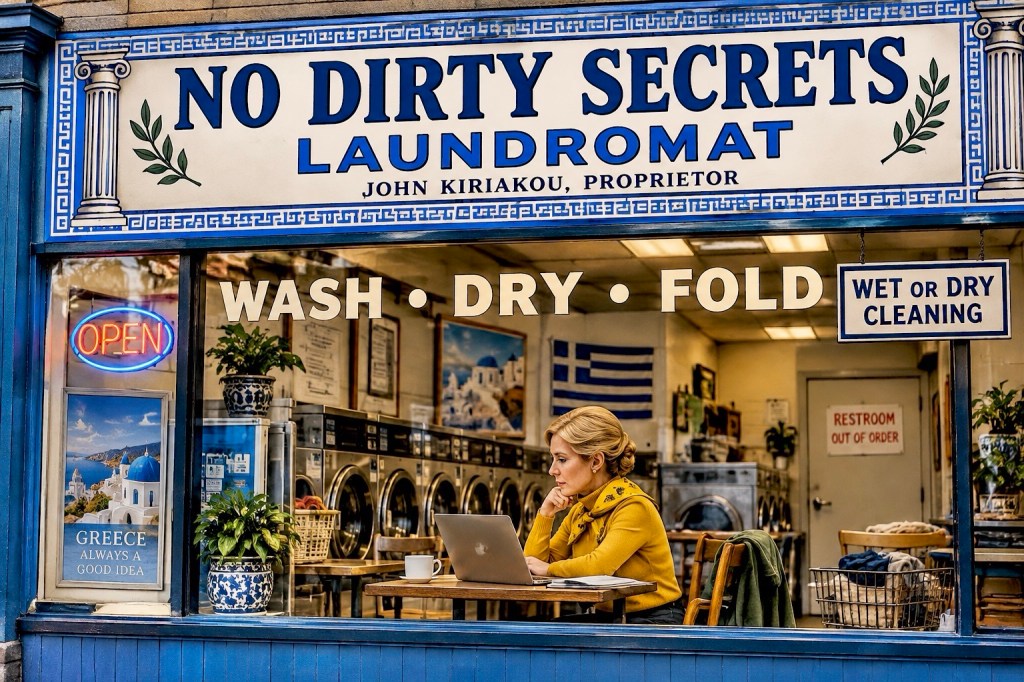
I had laundry to do, so I went to the laundromat.
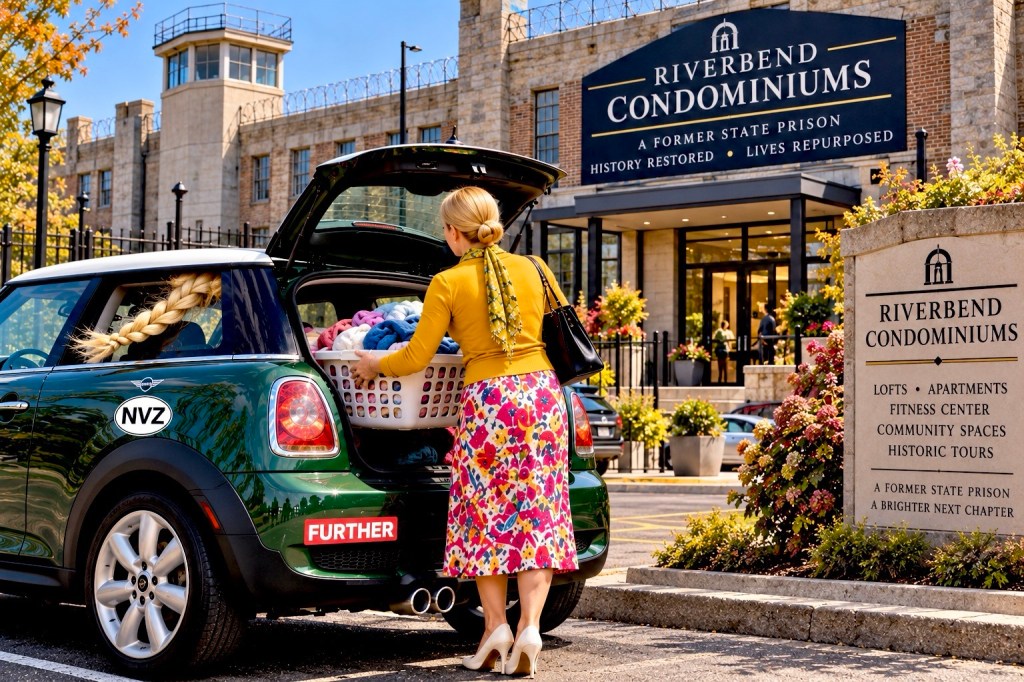
A laundromat is not a bad place to wait for an idea. There are people coming and going, discarded newspapers, notices on walls and enough revolving machinery to create the illusion that something is happening. I put my washing into a machine and sat down with my laptop.
At the rear of the room someone had taped a handwritten notice to a door: RESTROOM OUT OF ORDER. I barely noticed it.
I had recently come across an item about John Kiriakou, the former CIA officer, saying that he owned a laundromat. This struck me as an unusual second act for someone once embroiled in international intelligence. It became more interesting when I remembered something Kiriakou had said years earlier about his difficulties with the Agency: at the CIA, he said, you don’t talk about the dirty laundry.
I looked at the washing machine. Apparently some men take metaphors more seriously than others.
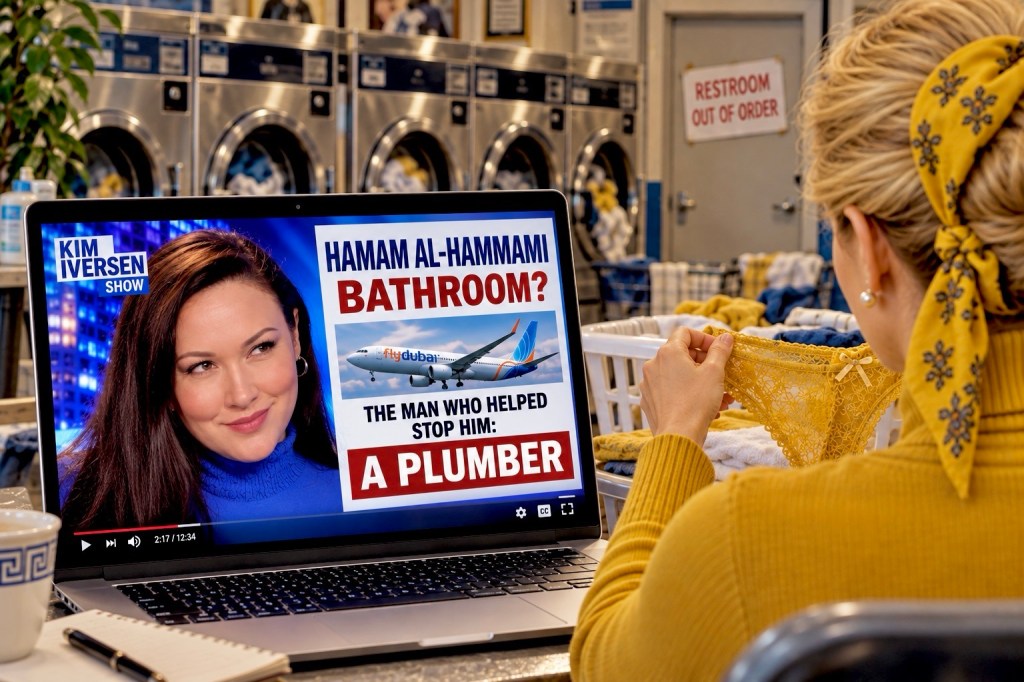
I then opened a recent Kim Iversen program. She was discussing the extraordinary incident aboard a Flydubai flight in which a co-pilot allegedly attacked the captain and attempted to take control of the aircraft.
Then she gave his reported name: Hamam al-Hammami.
I stopped the video and played it again. Hamam al-Hammami. Iversen was discussing something already making its way around the Internet: the remarkable resemblance between the man’s name and an Arabic word associated with the bath or bathroom.
That was interesting. Then came the other detail. One of the passengers who helped intervene was a plumber.
I stopped the video again. There are things one encounters while looking for a story. Then there are things that appear to have been looking for you.
I was rather pleased with myself. John had told me to go out and find something, and I had found something. Indeed, I had found something so good that I immediately suspected it wasn’t true.
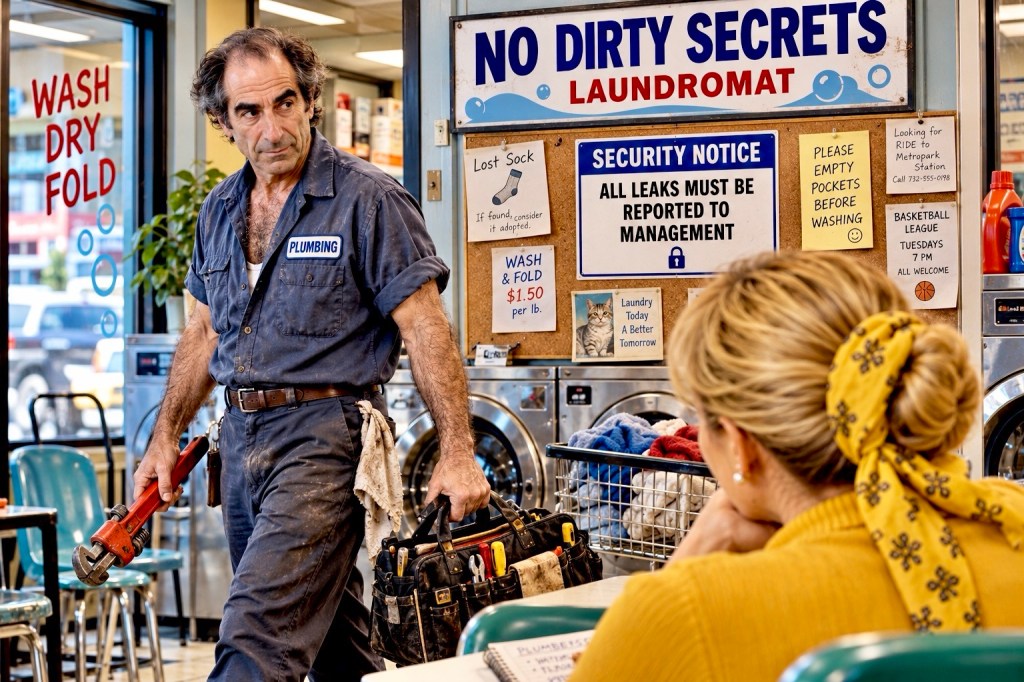
Then the laundromat door opened. A man came in carrying tools. He said something to the attendant, and she pointed toward the rear of the building, toward the sign: RESTROOM OUT OF ORDER. The man headed in that direction.
I looked at him, then at my laptop, then at the sign.
I began to wonder why plumbers turn up so often in espionage. Watergate had its Plumbers, after all. Now a plumber had turned up aboard an aircraft at precisely the right moment to help overpower an Omani co-pilot. Mossad, I thought. Obviously. The plumber had been planted.
Then another plumber had walked into my laundromat.
I watched him disappear toward the lavatory and wondered whether he was actually there to repair it or merely surveying me while maintaining plausible deniability.
This seemed unlikely. On the other hand, that is presumably what they want you to think.
I took out my notebook. At some point one has to stop resisting one’s assignment.
I researched further and began checking. The bathroom connection had not simply been invented on social media. The Arabic ḥammām genuinely refers to a bath or bathhouse and can extend into the territory English speakers associate with a bathroom. The Arabic Language Academy in Cairo even recognizes ḥammāmī for someone associated with a bathhouse.
This was encouraging. Then it became complicated. Arabic possesses distinctions that English transliteration cheerfully bulldozes. Words and names that look remarkably similar once rendered in our alphabet can begin with different Arabic letters and have quite different meanings. There is also Humām, a perfectly respectable masculine name associated with courage, nobility and resolution.
Thus one Arabic letter can stand between a brave man and a bathroom. This seemed an unreasonable responsibility to place upon a letter.
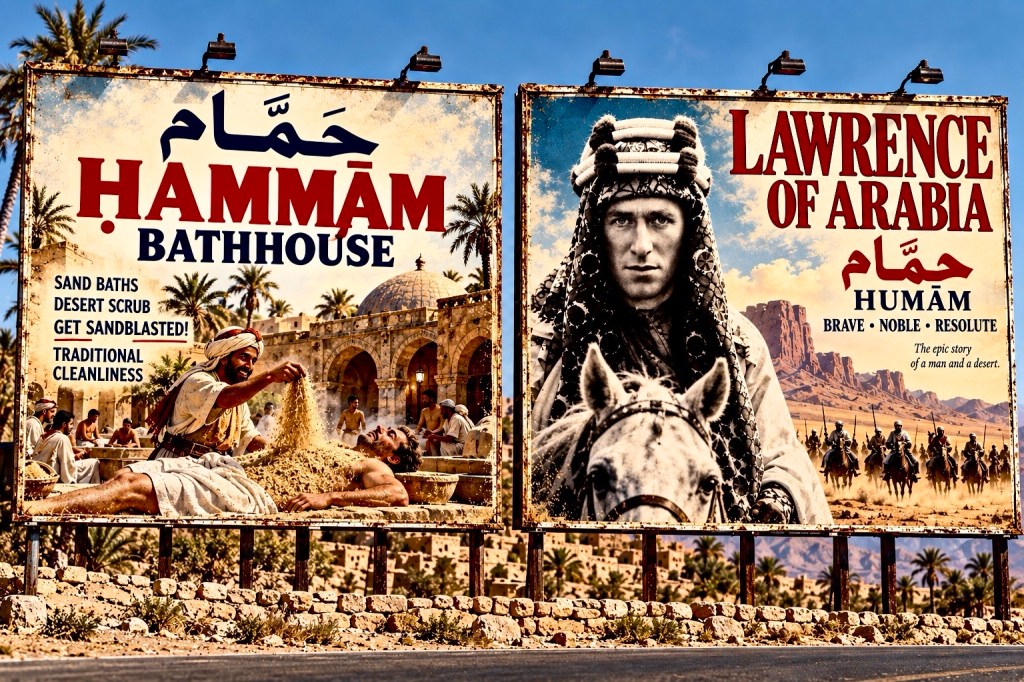
At this point I should make something clear. The Council has never regarded bathroom humor as particularly funny. We have heard, however, that it is a surprisingly big thing among the Amish. This places us at odds not only with them, but with a remarkably durable branch of human comedy.

Still, the essential coincidence survived. The man’s reported name really was Hamam al-Hammami. The Arabic bathroom word really existed. The plumber really existed. And while I was watching a story about those things in a laundromat with an out-of-order lavatory, another plumber really had walked through the door to repair it.
Whether this was WORDS IN THE WILD, NOMEN EST OMEN, NAMESAKE OR NOT, or evidence that I needed to spend less time with the Council remained unclear. But I had my story, and I was extremely pleased with it.
For approximately ten minutes.
Then I thought about the person to whom I would have to submit it.
John.
I stared at the name. Oh, dear.
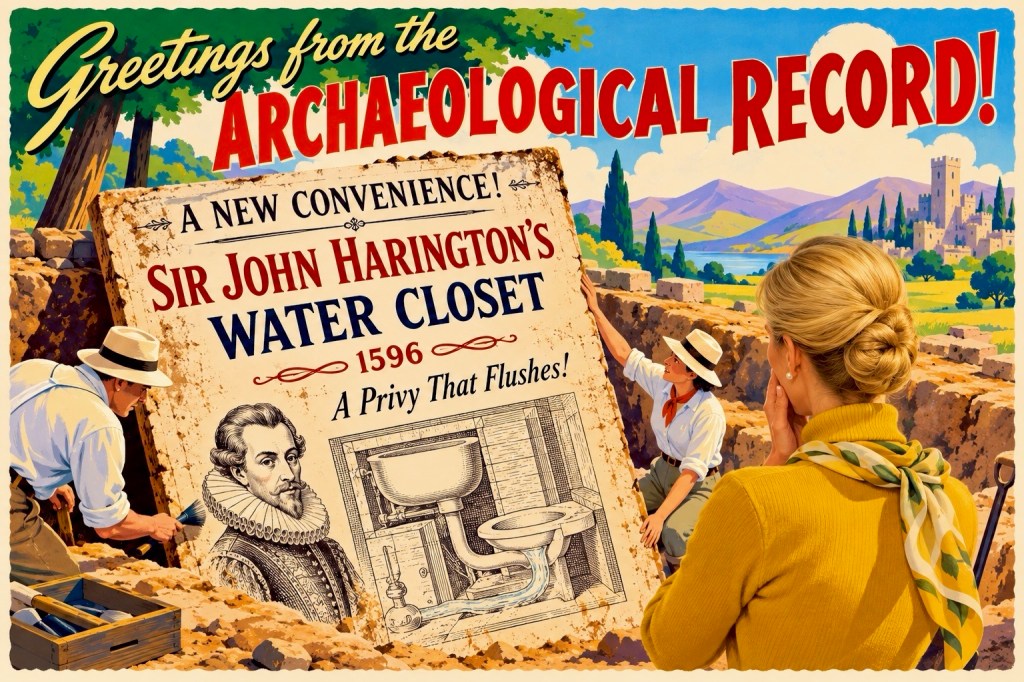
John¹.
The work even included diagrams of his device. Begonia had been hoping history might be more helpful.]
There are disadvantages to prolonged exposure to Americans. One begins to acquire their vocabulary. In Britain we have produced a generous assortment of words for a lavatory without requiring the assistance of a man named John. Americans have not shown similar restraint.
Ordinarily I would simply have emailed the idea to John. There are, however, certain sentences one ought not to transmit electronically to one’s editor. Your name also means toilet seemed to me to be among them.
I considered abandoning the story, removing every reference to bathrooms, or pretending that I had spent the afternoon at the laundromat and found nothing more interesting than a missing sock. But the story was too good.
I telephoned John instead and told him I had found something, but that I wanted to discuss it with him before deciding whether we should turn it into a story. He was traveling through western Pennsylvania and suggested that I meet him at the Ohiopyle Rest Area.
So I put my notes in the Mini and went to protect my editor from embarrassment.

I arrived first, which gave me several minutes to decide how one tells one’s editor that his Christian name has become entangled in a story involving an alleged hijacker, an Arabic bathhouse and two plumbers. I had made little progress when I noticed the sign: LADIES’ ROOM — OUT OF ORDER.
I closed my eyes. The story had followed me.
John arrived shortly afterward. We sat at one of the picnic tables, and I showed him my notes and explained the whole thing from the beginning: Hamam al-Hammami, the bathroom interpretation, the difficulty with the Arabic, the plumber aboard the aircraft, the broken lavatory at the laundromat and the second plumber.
John listened. When I finished, he looked through the notes again.
“This is good,” he said.
What!? I was relieved, but there remained the reason I had driven all the way to Ohiopyle rather than pressing SEND.
“There is something else,” I said.
“What’s that?
“Your name.”
“My name?”
“In America, John, your name also means a lavatory.”
He didn’t even blink. I had expected embarrassment, perhaps annoyance, or at the very least a suggestion that the Council could survive without this particular story. Instead he smiled.
“Begonia, why on earth would that offend me?”
I indicated the notes.
“I should have thought the reason was fairly well documented.”
“No,” he said. “You’re stopping too soon.”
“Where?”
“At the toilet.”
This was not reassuring.
“What does my name mean?”, he said.
I knew immediately that I had made a mistake.
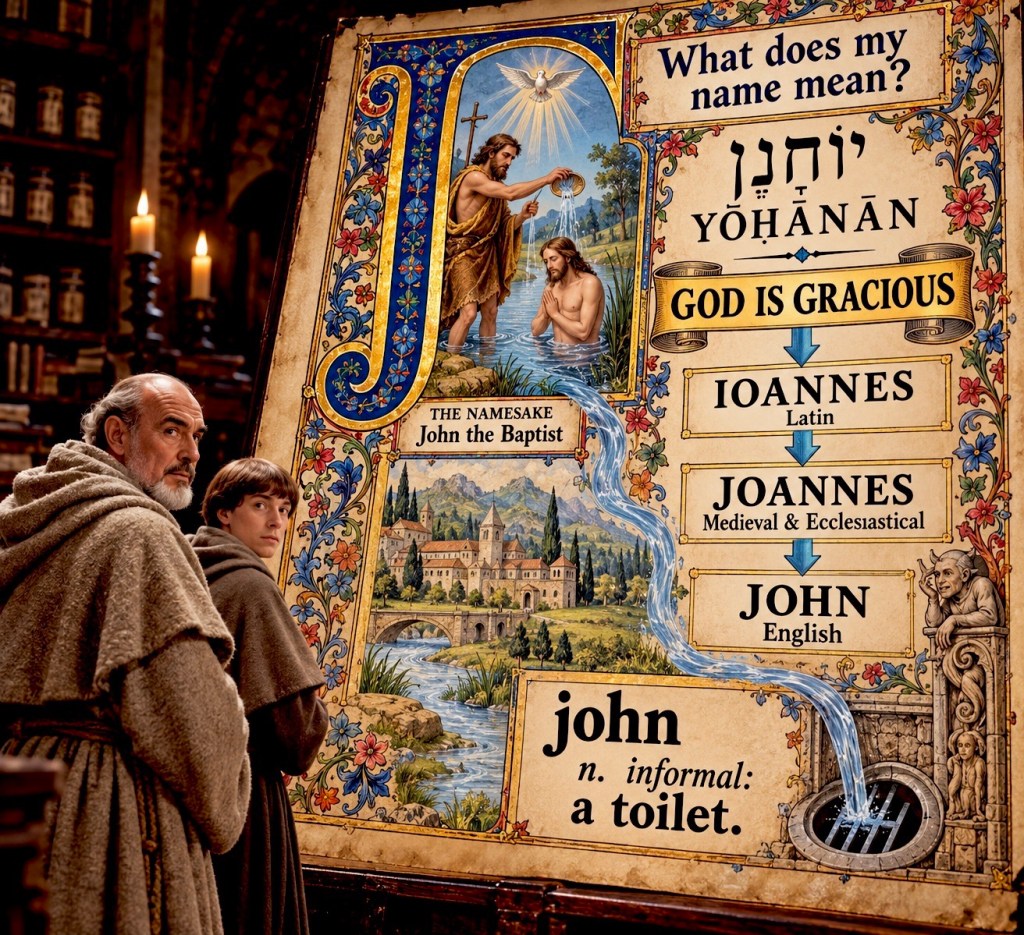
— Guglielmo Crollalanza
John explained that his name ultimately descends from the Hebrew Yōḥānān: God is gracious. He also entertained the old and disputed possibility that the Hebrews were connected with the Habiru, whom he conjectured might ultimately have been Indo-European in origin. Between grace and a possible ancestral detour through the Caucasus, he saw no reason to be offended by what American slang had eventually done to his name.
“That,” he said, “is why I’m not offended.”
I asked how divine grace had become involved with this matter. John said perhaps that was exactly the point.
There was no need to suppose that God had arranged for a plumber to be aboard that particular aircraft, or that another plumber had been dispatched to my laundromat precisely while I was watching the story. There was certainly no need to suppose that an ancient Hebrew name meaning God is gracious had traveled through thousands of years of language merely so that Americans could eventually use it as another word for a toilet. Those could all be accidents.
The grace, John said, might lie somewhere else. It might lie in our ability to see what had happened and find it funny.
We could take an Arabic word, an uncertain transliteration—and perceive a joke running through all of it. Or even manufacture the joke ourselves. That did not make the humor less real.
Human beings, John pointed out, were not spectators standing outside the universe. We were part of it. If we possessed the ability to discover humor in the universe—or to create humor from the things the universe handed us—then that ability was itself part of the universe. Humor is ingrained.
Perhaps that was one small meaning of grace. Not that God had arranged the joke,
But that He had made creatures capable of getting it.
I looked again at the manuscript. I had begun with a name that might or might not mean what people wanted it to mean and ended with another name that unquestionably meant something I had never expected.
GOD IS GRACIOUS
Perhaps John was right. Perhaps humor was one form the grace took—not because every coincidence had been arranged for our amusement, but because we had been given the peculiar faculty of making amusement from coincidence.
If we could make the joke, then the universe at least contained the capacity for humor. Whether it also contained the intention was a question I was not qualified to settle at a picnic table.

For a while neither of us said anything. The Youghiogheny country stretched away beyond the rest area, green and wooded and quite innocent of etymology or aspersion.
Then nature reasserted itself in another sense.
“There remains a practical difficulty,” I said.
John looked at me. “What’s that?”
“I have been drinking tea.”
I pointed toward the building.
LADIES’ ROOM — OUT OF ORDER.
“Ah.”
John looked around, then pointed beyond the car park toward the woods.
“God is gracious.”
I looked at the woods, then at John.
“You’re enjoying this.”
“That,” he said, “was rather my point.”
He nodded toward the woods.
“Go on. I’ll stay here and keep the truckers from wandering in that direction.”
“How gracious of you.”
“It’s in the name.”

Footnotes
[1] Etymology Online
[2] For Sir John Harington and his remarkably pertinent contribution to sanitary history, see: Who Invented the Flush Toilet?
The Compleat Writings Of Mrs. Begonia Contretemps Will Be Encountered : HERE


Leave a comment