—Mrs. Begonia Contretemps Investigates the Word FOUR—and Finds More Than She Bargained FOR.
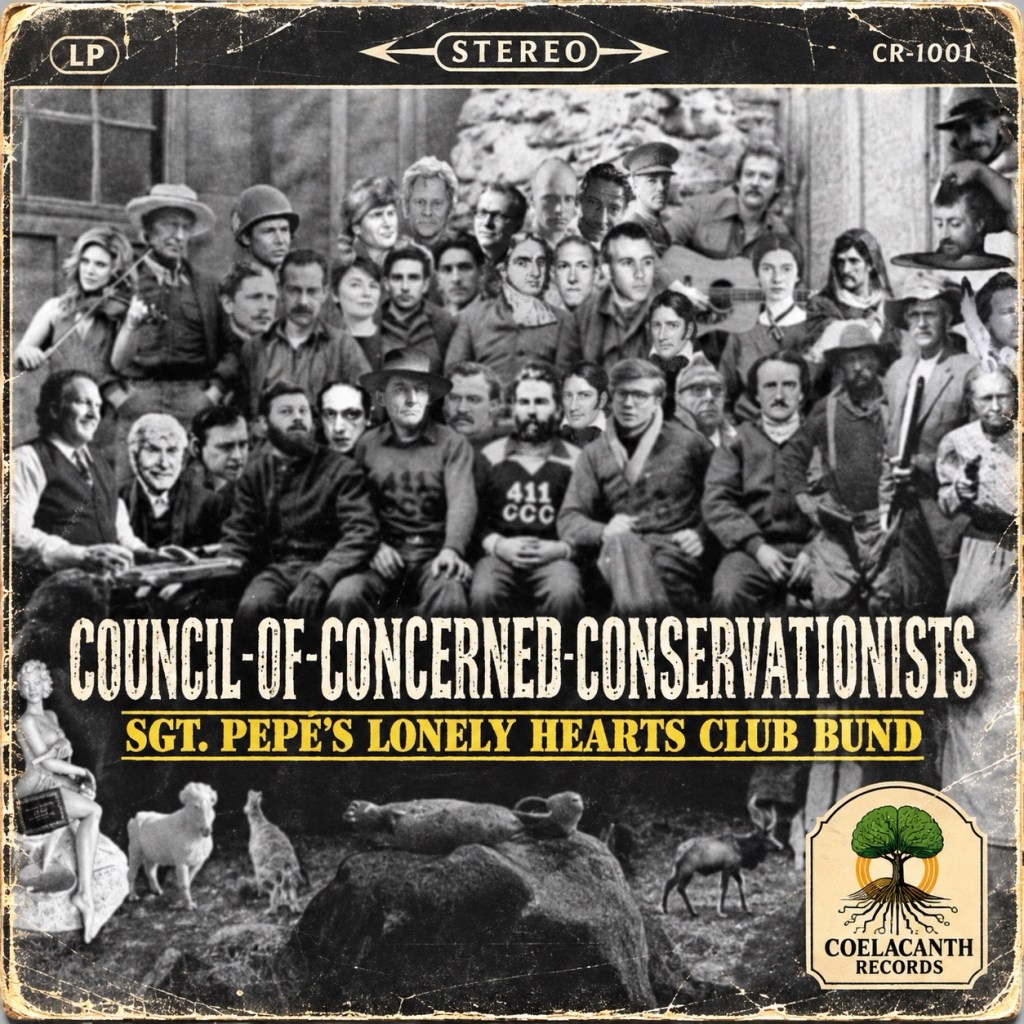
While preparing the Council’s Sergeant Pepe album cover, we noticed the number 411 in the original photograph. It looked like a team number on a sports jersey, but we liked it for another reason. In the old telephone system, 411 meant information. And information, after all, is what the Council purports to dispense.
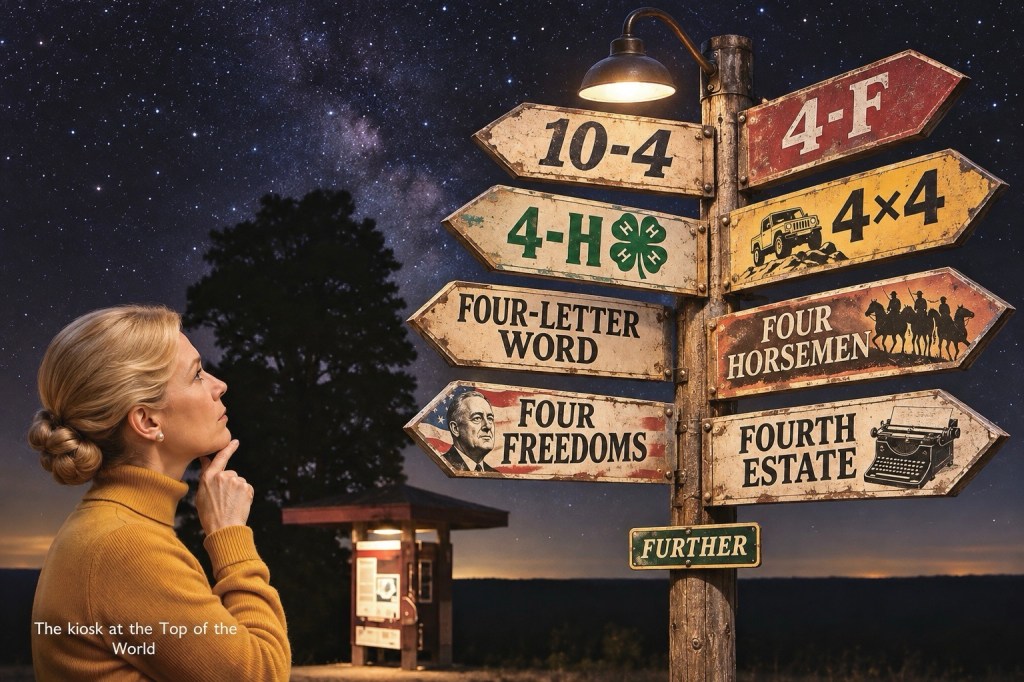
Then something peculiar occurred to us. There was 404, the internet’s missing page, and 420, which requires no explanation in certain circles. And what about 451, the number Ray Bradbury made famous?
Why were so many unrelated messages beginning with four? Was there something special about the number, or had we simply stumbled into a numerical coincidence?
An Assignment for Mrs. Begonia Contretemps
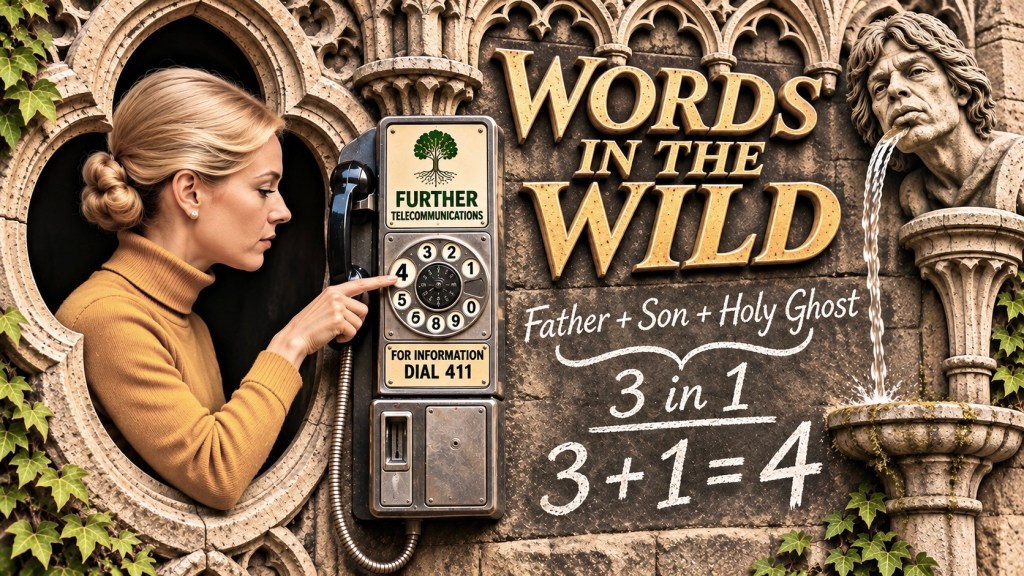
Begonia, I’ve got another assignment for Words in the Wild. This time the word is FOUR. F-O-U-R. I know it’s a number, too, but that’s your department.
I noticed 411 on our Sergeant Pepe album cover, which got me thinking about 404, 420, and Fahrenheit 451. They’re all saying something, but nobody’s counting anything.
I don’t know whether there’s a connection or just a coincidence. See what you can make of it.
—John, Editor
Mrs. Begonia Investigates
I had scarcely recovered from my previous assignment when the Editor presented me with the word FOUR.—A number masquerading as a word. Or perhaps a word masquerading as a number. Either way, I suspected that the Council was running short of vocabulary. Nevertheless, I began my investigation.
411 was once the familiar telephone number for directory assistance in America. It subsequently became an expression for information itself: What’s the 411?
404 is the internet’s announcement that a requested page cannot be found. 403 is more forthright: Forbidden. The information may exist, but you are not permitted to see it.
One promises information, another cannot find it, and a third refuses to provide it. Already I was beginning to wonder whether John had assigned me a numerical investigation or a tour of bureaucratic obstruction.
A Numerical Offense
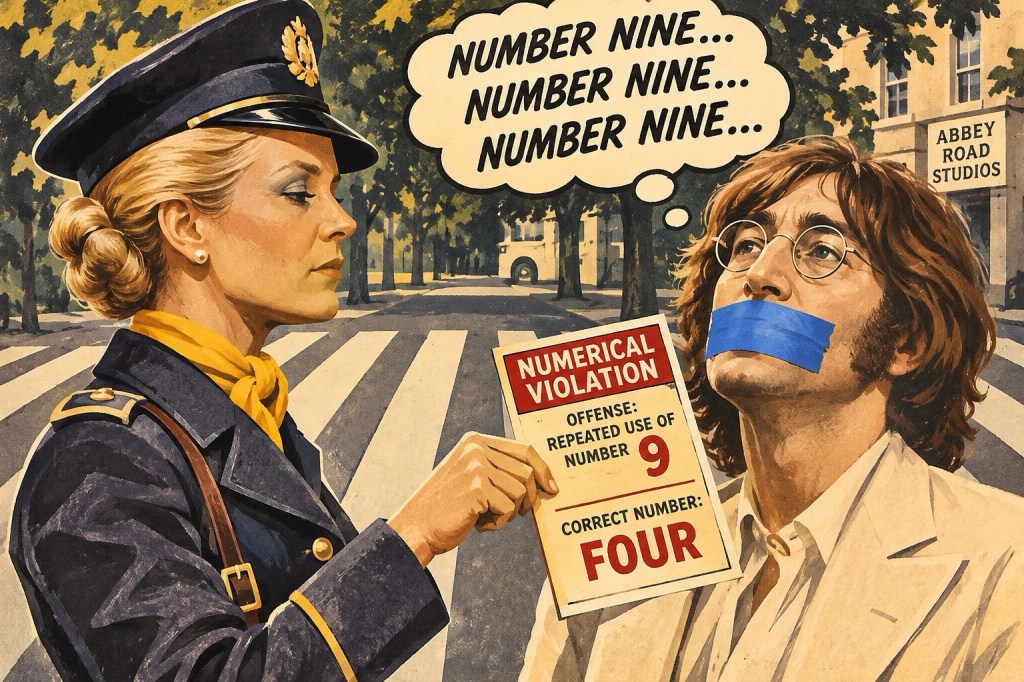
The Beatles made their own contribution to numerical discourse with John Lennon’s Revolution 9, in which a recorded voice repeats “Number Nine” with a persistence suggesting that the other eight numbers have been forgotten.
The recording has inspired numerous interpretations, including the discovery of supposed hidden messages when played backward.
I mention this because the Council has been finding significance in the number four with comparable enthusiasm, although we have thus far resisted playing our research backward.
420 — An Unexpected Historical Detour
The number 420 is familiar in marijuana culture. Its origins have been traced to a group of California teenagers in the early 1970s.
The association with April 20 produces a curious coincidence: Chancellor Hitler was born on that date in 1889.
One might dismiss the juxtaposition as a historical accident, which it is. But the cultural histories behind the two worlds are not entirely separate.
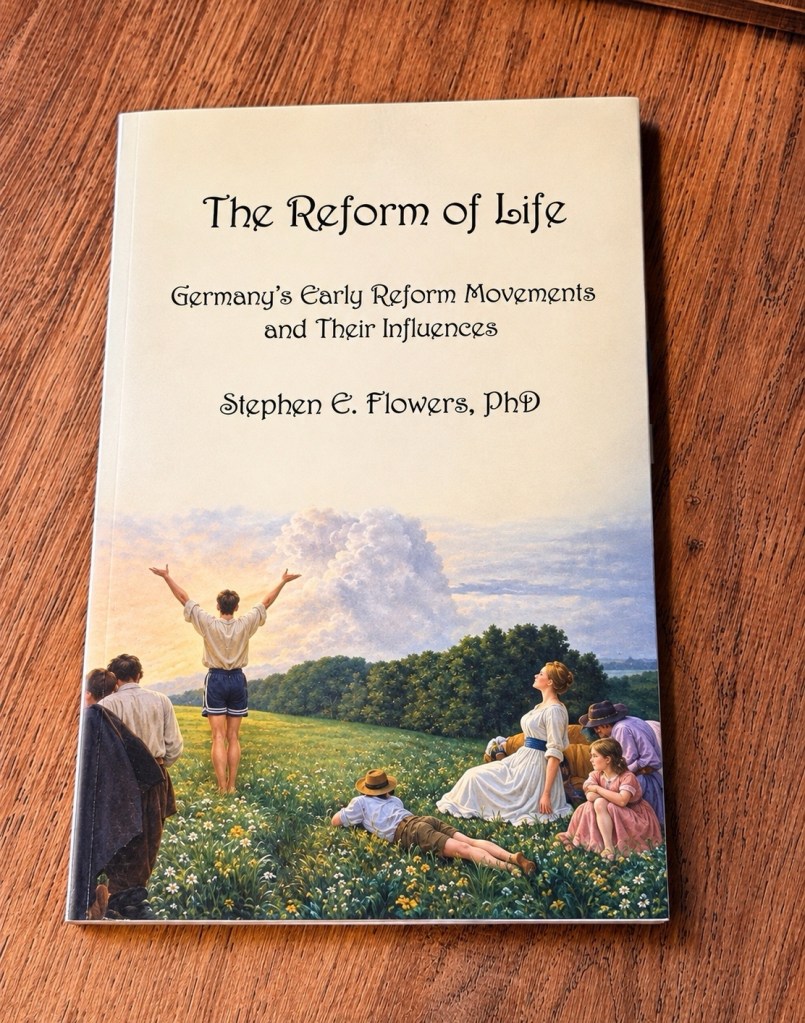
The German Lebensreform, or Life Reform, movement promoted vegetarianism, natural foods, nudism, communal living, alternative medicine, and a return to nature.
Some of its ideas and adherents intersected with National Socialism. Other currents traveled through European experimental communities and eventually helped shape aspects of American counterculture.
The political conclusions were often profoundly different, but the cultural ancestry is more complicated than our familiar categories suggest.
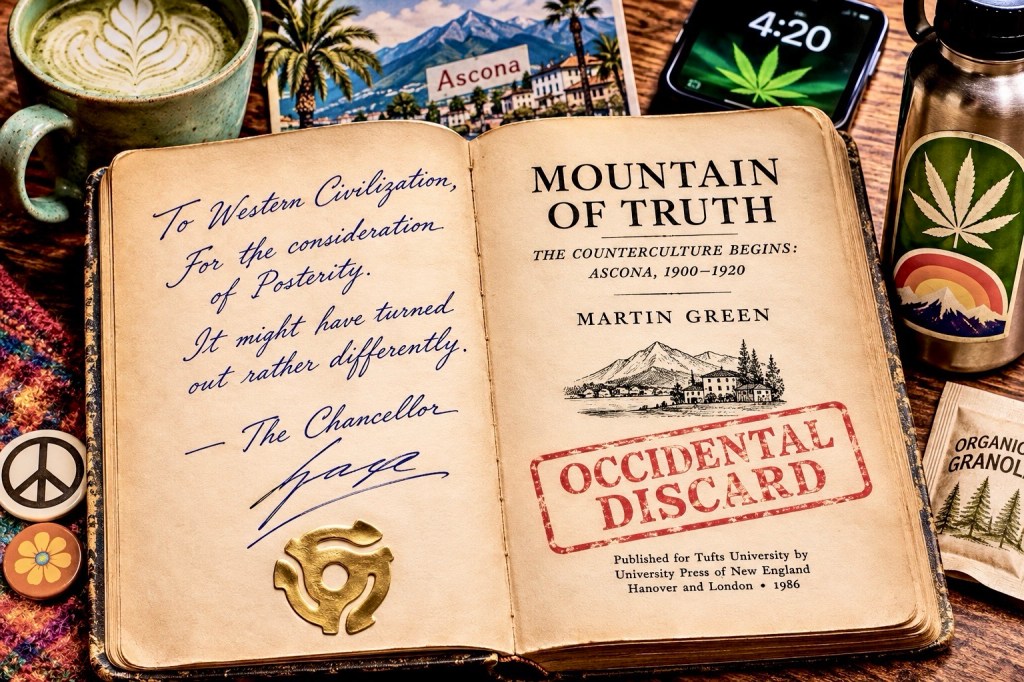
Gordon Kennedy’s Children of the Sun traces German natural-living traditions to California, while Martin Green’s Mountain of Truth examines the extraordinary community at Monte Verità in Ascona, Switzerland.
Here were people questioning industrial civilization and experimenting with alternative ways of living long before anyone had heard of a hippie.
Occidental Discard
Our Editor owns a used copy of Martin Green’s Mountain of Truth bearing a library stamp he remembers reading OCCIDENTAL DISCARD.
Possibly from Occidental College, although he has not yet recovered the volume from his collection to confirm its provenance.
The phrase struck him as an unintentionally magnificent pronouncement upon Western civilization. A book about the origins of the Western counterculture, stamped OCCIDENTAL DISCARD! One could hardly ask a librarian to improve upon it.
Readers may also recognize the Council’s sun-wheel emblem as a 45-rpm record adapter, that little device which helped bring so much of our musical education into the home.
And there we go again. FOUR—this time in 45.
Mrs. Begonia will be beside herself.]
451 — Where Have All the Books Gone?
Ray Bradbury’s Fahrenheit 451 gave us a number associated with the burning of books and the suppression of ideas.
The internet has since adopted 451 as a status code indicating that material is unavailable for legal reasons.
Our investigation was beginning to acquire an unexpected theme.
411 promises information. 404 cannot find it. 403 forbids access. And 451 suggests that someone has decided it must not be available.
Even our excursion into 420 had uncovered a cultural history that rarely fits comfortably into the categories by which we ordinarily understand the past.
I hesitate to suggest a conspiracy among the numbers. They have, after all, never been observed meeting together.
But I was beginning to suspect that John’s apparently frivolous assignment had led us into a serious question: Who decides what information survives, what is forgotten, and what we are permitted to know?

A British Conclusion
Being British, I could hardly conclude such an investigation without consulting one of my countrymen.
Eric Arthur Blair, better known as George Orwell, observed in his essay The Freedom of the Press that censorship need not depend entirely upon government prohibition. Intellectual conformity and the reluctance to challenge prevailing opinion could accomplish much the same purpose.
His most famous novel imagined a society in which history was continually rewritten, information controlled, and even language itself altered to restrict thought.
Which brings me to one final numerical coincidence.
The title of that novel?
Nineteen Eighty-FOUR.
I shall have to inform John that his assignment has produced another four.
I sincerely hope he does not ask me to investigate it.
*More Words In The Wild Can Be Found; HERE
*Go HERE Here For More From Mrs. Begonia Contretemps


Leave a Reply