—From “Zounds!” to “unalive”: How Language Learns to Slip Around Authority
The Council has long suspected that language behaves less like a dictionary and more like wildlife.
Put pressure on it and it migrates. Fence it in and it tunnels underneath.
Attempt extermination and it reappears three counties over wearing a sundress.
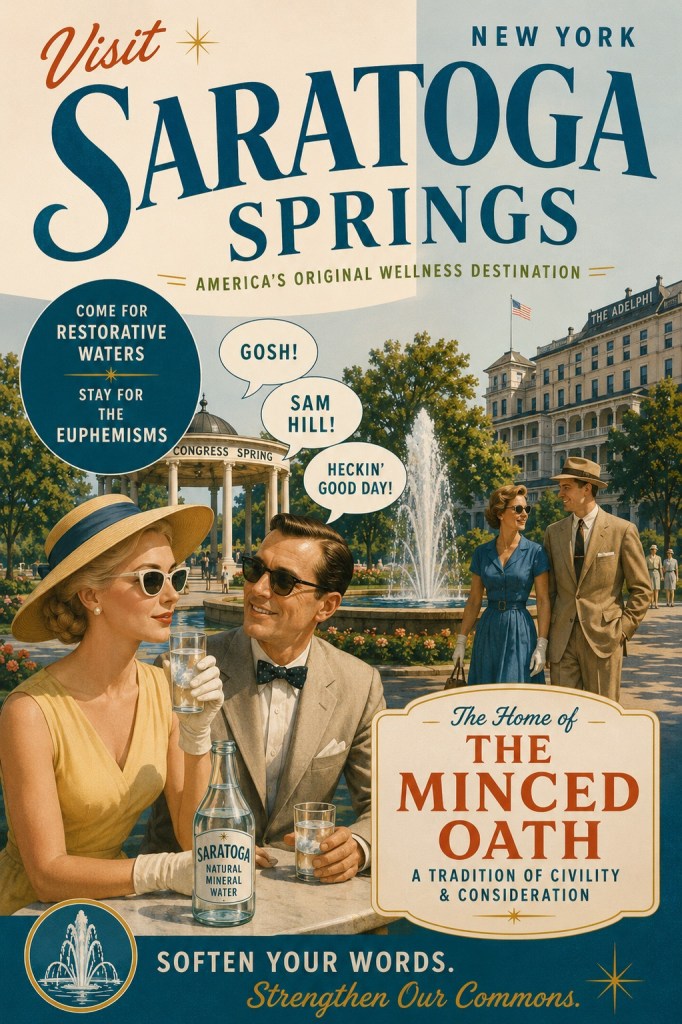
Which is why an old roadside marker near Saratoga Springs unexpectedly led me into the strange history of minced oaths.
The marker concerned “Felony Sam” Hill, a nineteenth-century basket merchant whose memorable nickname accidentally preserved one of America’s most enduring expressions:
“What in Sam Hill!”
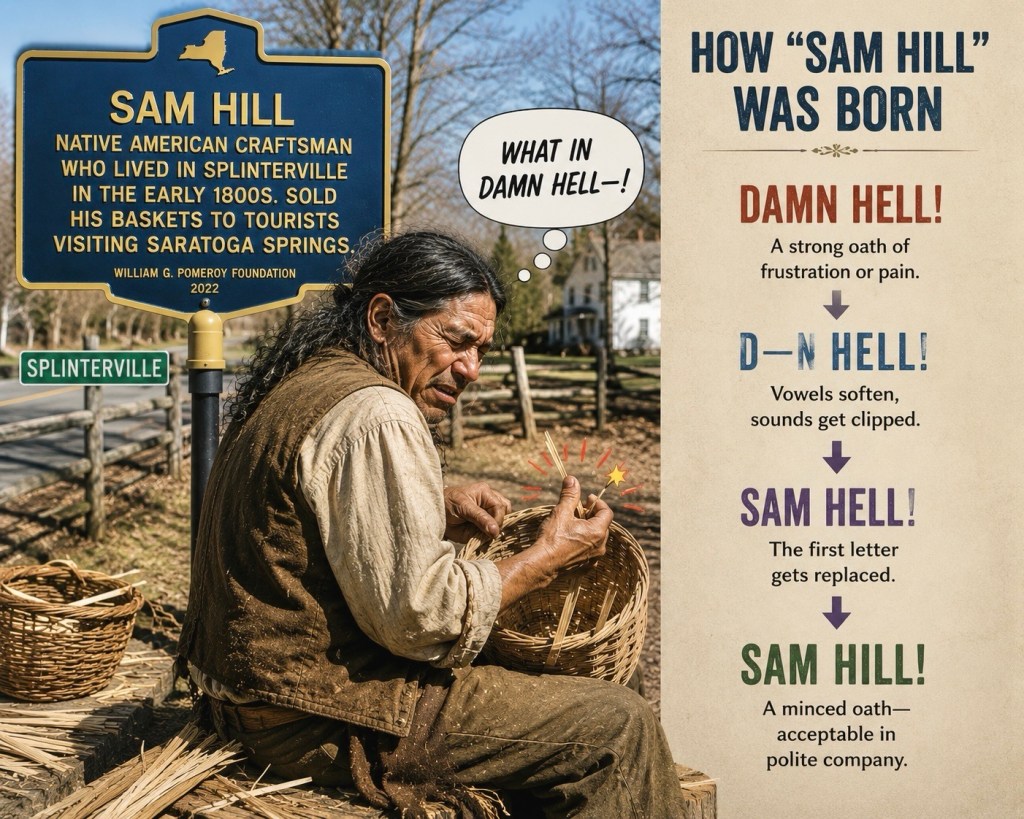
As I said, we linguists generally regard the phrase,
“What in Sam Hill!”
as a minced oath — a softened substitute for “What in hell?”
And suddenly the modern internet came rushing in through the cracks.
A minced oath is what happens when a society wishes to say something forbidden without fully saying it.
“Gosh” for God.
“Darn” for damn.
“Zounds!” for “God’s wounds.”
“Jeepers Creepers” for Jesus Christ.
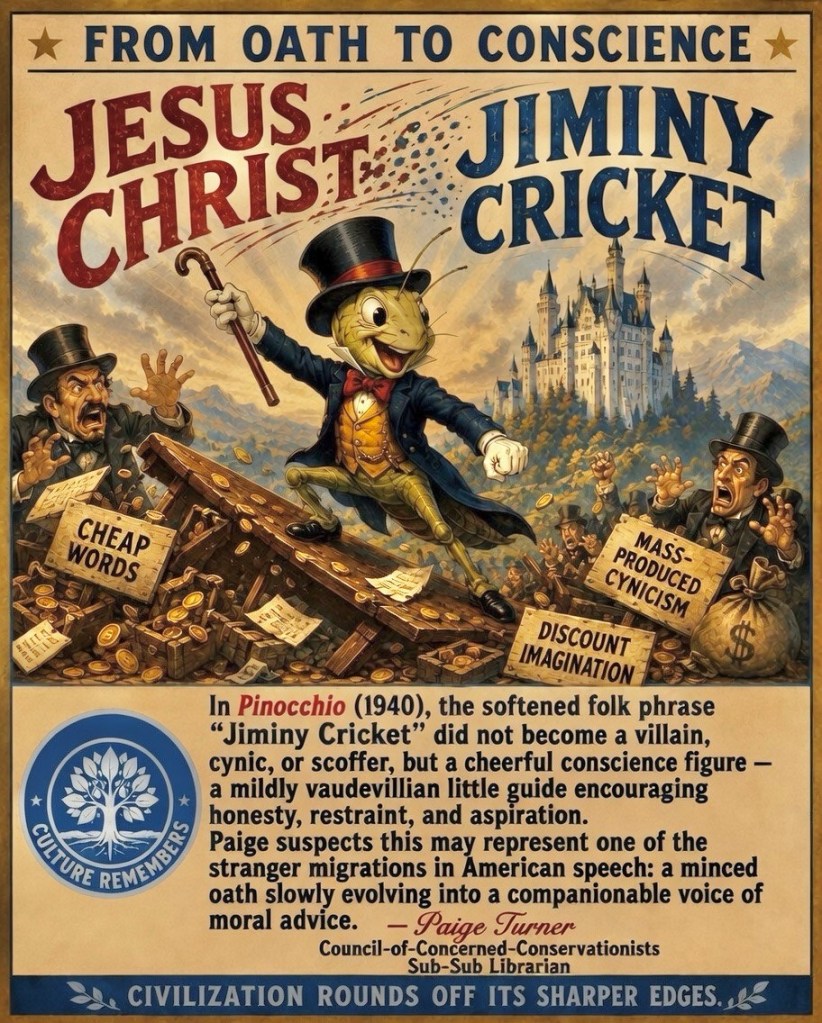
The forbidden word survives in altered form, smuggled through polite society like contraband hidden beneath sacks of grain.
Modern people often imagine themselves liberated from such things. We picture the past as populated by trembling Victorians afraid of syllables while we ourselves bravely “speak truth.”
Yet modern speech increasingly resembles a maze of euphemism, spacing tricks, substitutions, screenshots, emojis, and strategic misspellings.
Not because taboo vanished. Because taboo changed employers.
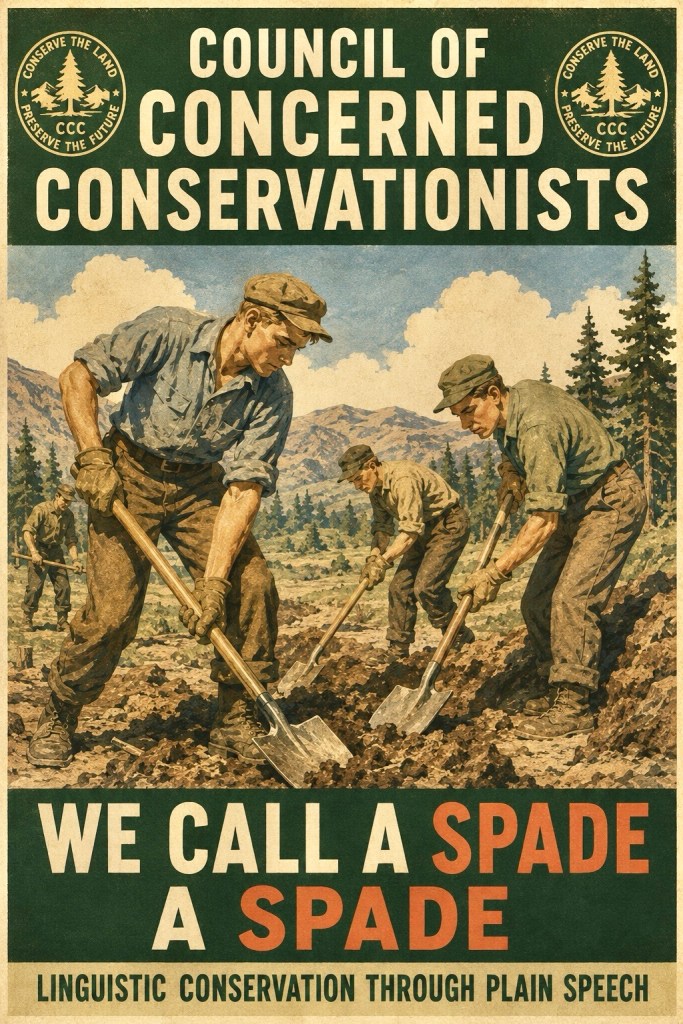
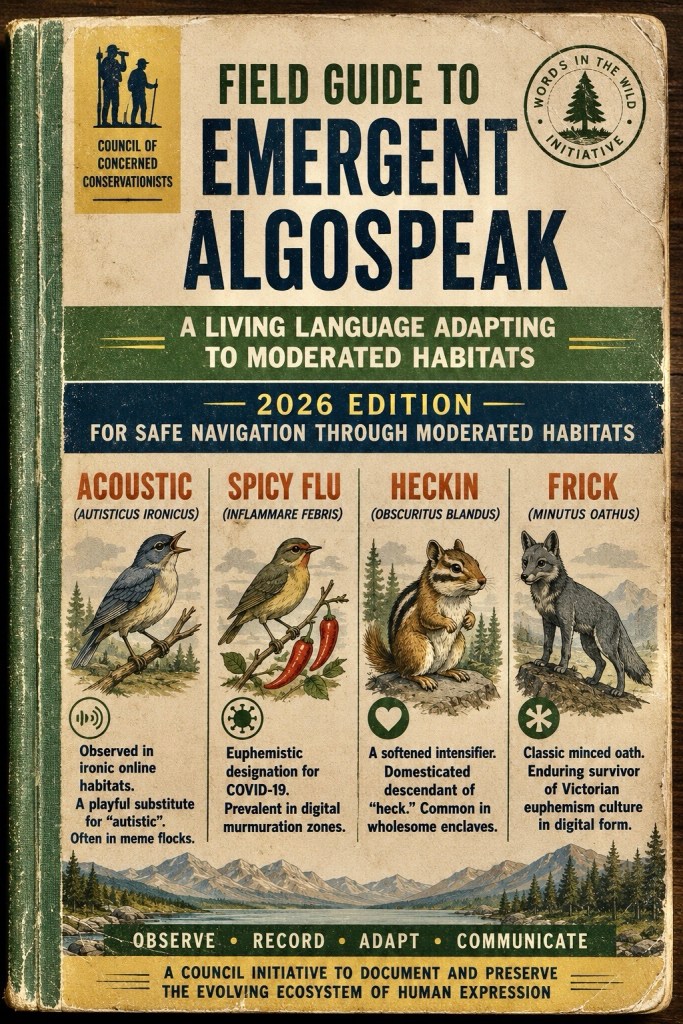
Today’s internet users increasingly communicate in what is now called “algospeak”:
“unalive” for dead or killed
“seggs” for sex
“corn” for porn
“grape” for rape
“PDF file” for pedophile
— Paige Turner
The mechanism of softened and substituted speech is ancient. Only the censor has changed.
The medieval villager softened language to avoid offending Heaven.
The modern creator softens language to avoid demonetization, throttling, moderation queues, automated suppression, reputation collapse, or invisible algorithmic burial.
And here the Council noticed something curious.
The substitute words themselves eventually become common knowledge.
Once millions of users begin saying “unalive” in the exact situations where earlier users said “dead” or “killed,” the euphemism no longer appears especially hidden. Moderators, advertisers, machine-learning systems, journalists, parents, and ordinary users all begin recognizing the pattern.
Yet the words often continue functioning anyway — at least for a while.
Not because the disguise is perfect, but because language evolves faster than enforcement systems can fully stabilize. By the time one euphemism becomes widely recognized, users are already inventing another.
Thus algospeak produces a permanent linguistic arms race:
Humans invent substitutions.
Platforms adapt.
Language mutates again.
The digital predator evolves alongside the prey.
And then, while dictating notes into my phone about minced oaths, the machine repeatedly attempted to correct the phrase into the far more wholesome and breakfast-compatible “minced oats.”
Which raised a disturbing possibility.
Even our machines appear uncomfortable with unfamiliar or taboo-adjacent phrasing. When uncertain, they normalize language toward the statistically probable, the contextually ordinary, the socially expected.
The phone did not merely hear my words.
It quietly edited reality toward what it believed sensible people were more likely to say.
And perhaps this is fitting, because a “minced oat” sounds absurdly close to something modern civilization would actually market: an ethically sourced Scandinavian breakfast grain for overmanaged professionals seeking emotional closure through fiber.

Rather than continue the struggle, the Council commissioned the accompanying cereal advertisement and moved on with its life.” —Paige
Meanwhile the far stranger and more ancient phrase — minced oath — remains half-hidden at the edge of language like a startled animal in tall grass.
And without fully intending to, modern technological society has recreated something astonishingly old-fashioned:
A culture of ritual verbal avoidance.
We flatter ourselves that we have progressed beyond the era of sacred words and forbidden utterances. Yet every age appears to generate its own unspeakables — religious, political, therapeutic, ideological, institutional, or algorithmic.
The sacred cow survives modernity astonishingly well.
Only its wardrobe changes.
And perhaps this is why the phrase minced oath feels so strangely satisfying to say aloud. It sounds quaint, humorous, almost antique.
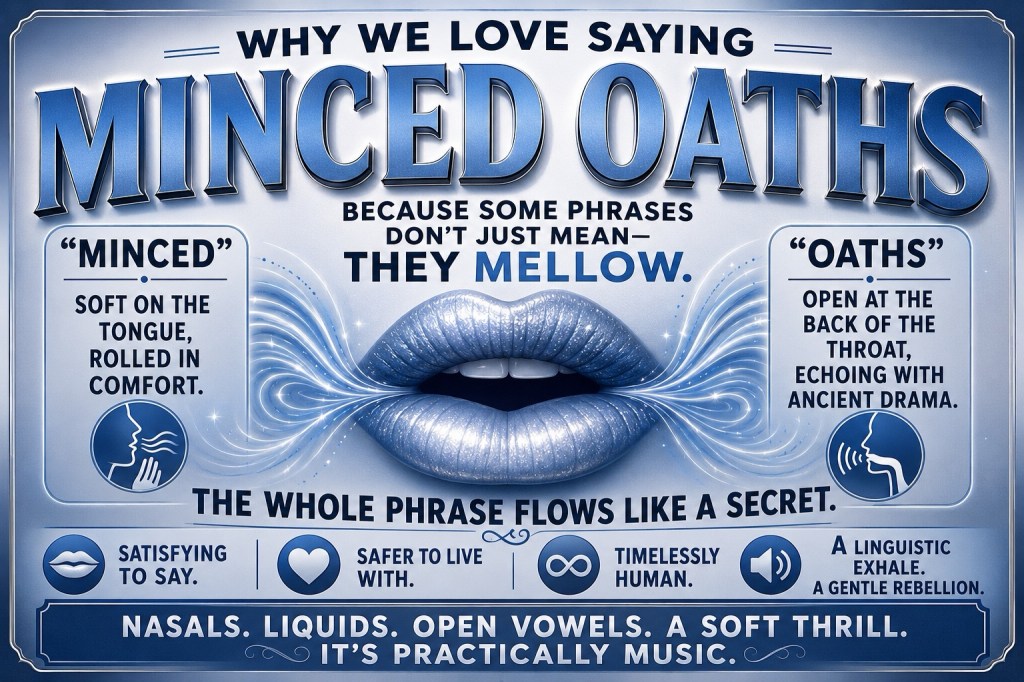
Yet the phrase quietly describes one of the oldest surviving behaviors in civilization:
The human instinct to bend language around power without entirely surrendering meaning.
Words in the wild rarely go extinct.
They adapt to the terrain.
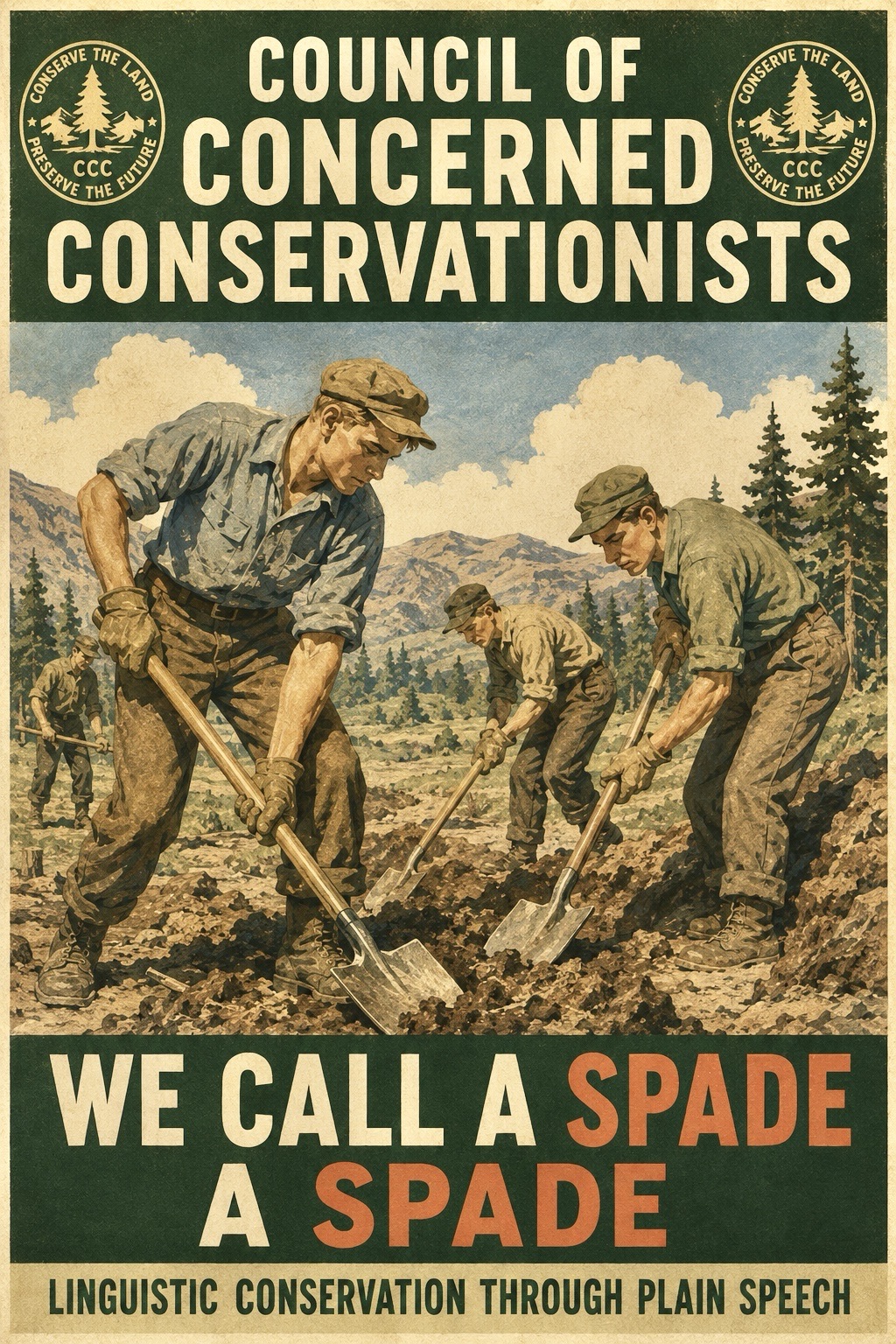
A Public Service Announcement from the Council-of-Concerned-Conservationists
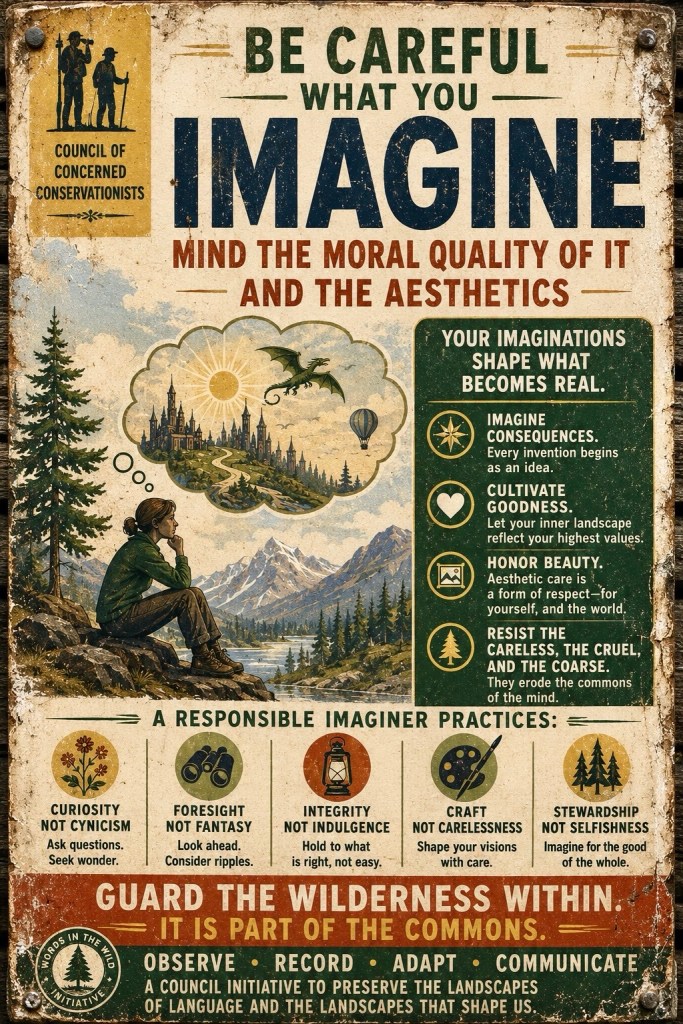
Posted Pursuant to the Symbolic Stewardship Act
More Words In The Wild Can Be Found HERE


Leave a Reply