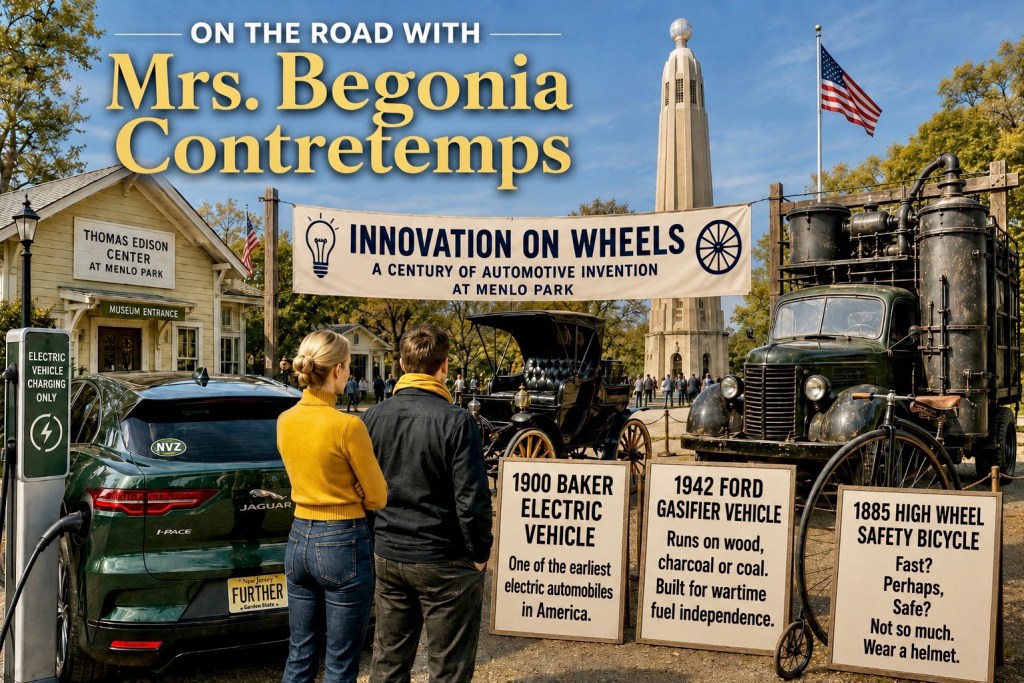
Mrs. Begonia Contretemps Writes to René Séance on Technology, Memory, and Civilization’s Endless Nervousness
From Camp Evans, NJ — Where Portable Voices Entered the Modern World
SIGNAL LOG // 2026-05-13
My Dear René,
You will be delighted to learn that America has once again become convinced a new machine is about to destroy civilization.
This time the culprit is not the railroad, nor electricity, nor jazz, nor television, nor the Internet, but rather a species of conversational mechanism known as the Large Language Model, which I am told shall shortly eliminate truth, literacy, employment, courtship, education, and possibly the family dog.
I confess, I arrived prepared to dislike the thing myself.
There is something unnerving about a book that answers back. A large language model is, in many respects, precisely that: a vast architecture of human text rearranged until it begins replying to its readers. Perhaps I am enamored of it more than I should be.
Yet I have lately begun suspecting that civilization has always reacted this way whenever matter acquires a new and unsettling talent.
John St. Evola insisted I was thinking about the matter incorrectly and proposed a small motoring excursion through New Jersey, which, as you know, Americans continue insisting is not merely an industrial corridor and an epicenter of invention, but a state or possibly a joke.
“We’ll follow the nervous system,” he said.
I asked him what precisely that meant.
“You’ll see.”

— Philo Farnsworth
“We must make radio a household utility.”
— David Sarnoff
And so yesterday morning I found myself in his company traveling along Bordentown Road near Sayreville beneath a pale late-winter sky the color of old newspaper stock. The landscape possessed that melancholy American quality in which marsh grass, utility poles, fragments of woodland, warehouses, and memory appear to have signed an uneasy peace treaty.
John directed my attention toward a quiet creek.
“The Lenape camped back there,” he said. “Long before the railroads. I used to find artifacts here as a boy. During the Depression, WPA crews surveyed parts of the site because it was considered significant, but it was never properly excavated. Most of it eventually disappeared beneath factories, warehouses, and storage yards.”
I looked about rather skeptically, as the immediate surroundings included traffic, industrial remnants, and the distant geometry of contemporary America humming to itself. Yet after a moment I could see why human beings would once have wintered there. The land softened near the water. Even now it retained a sheltered feeling.
“And one of the earliest railroad lines in the country passed across this road, right through here,” he continued. “Camden to Amboy.”
This delighted him more than I expected.
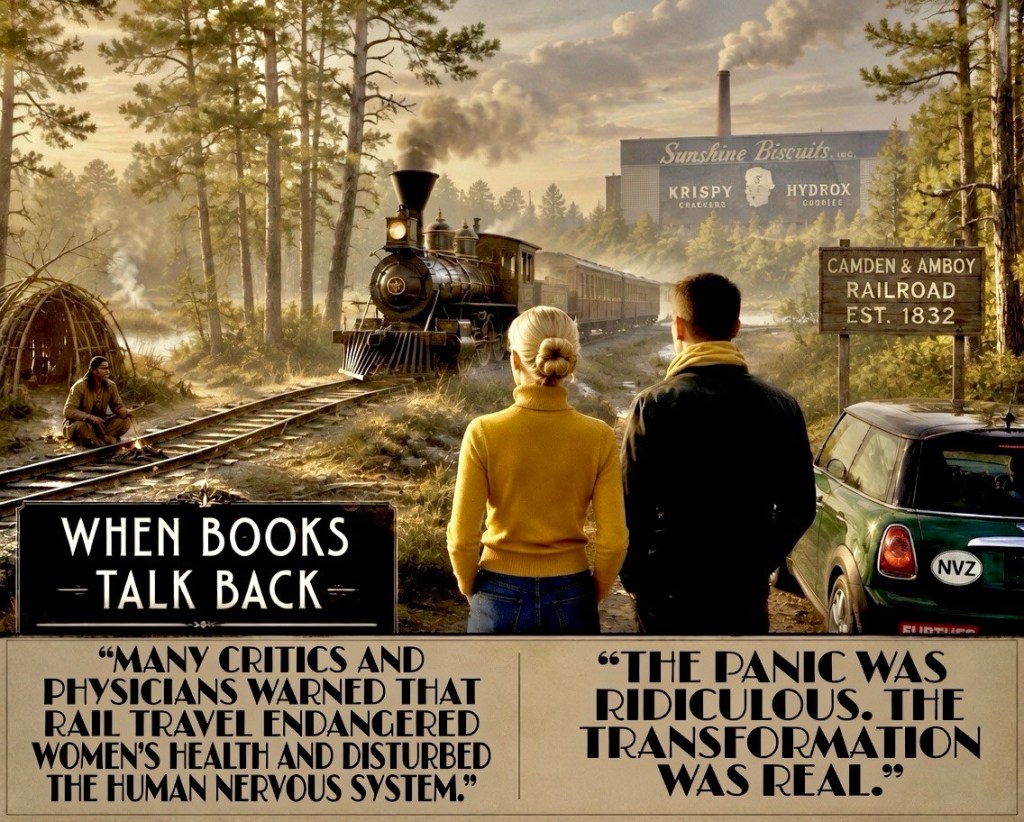
John has spent much of his life in this region and speaks of infrastructural history the way some men discuss vineyards or cathedrals. One gradually realizes he does not merely remember the roads but experiences them as layers of time pressed atop one another.
Then the wind shifted. Quite suddenly the air smelled faintly of cookies. I laughed aloud.
“No,” he said, smiling. “You’re catching what used to come from the Sunshine Biscuit plant.”
And there, René, the entire landscape rearranged itself in my mind.
Indian encampments beside the creek.
One of the first railroad corridors in America.
And drifting across the cold air: industrial sweetness.
I asked John whether the Lenape, enduring a difficult, starvation winter centuries ago, could ever have imagined that one day the air itself would smell perpetually of manufactured cookies.
He looked toward the creek a long moment before answering.
“They probably couldn’t imagine railroads either.”
This, I think, is where modern people flatter themselves unfairly.
We laugh at earlier generations for fearing new technologies while forgetting that many of the changes they sensed did in fact arrive — merely in forms stranger and more symbolic than expected.
Railroads did not cause women to miscarry from excessive speed, as some once feared. Yet industrial civilization certainly altered courtship, migration, family formation, and the rhythms of ordinary life.
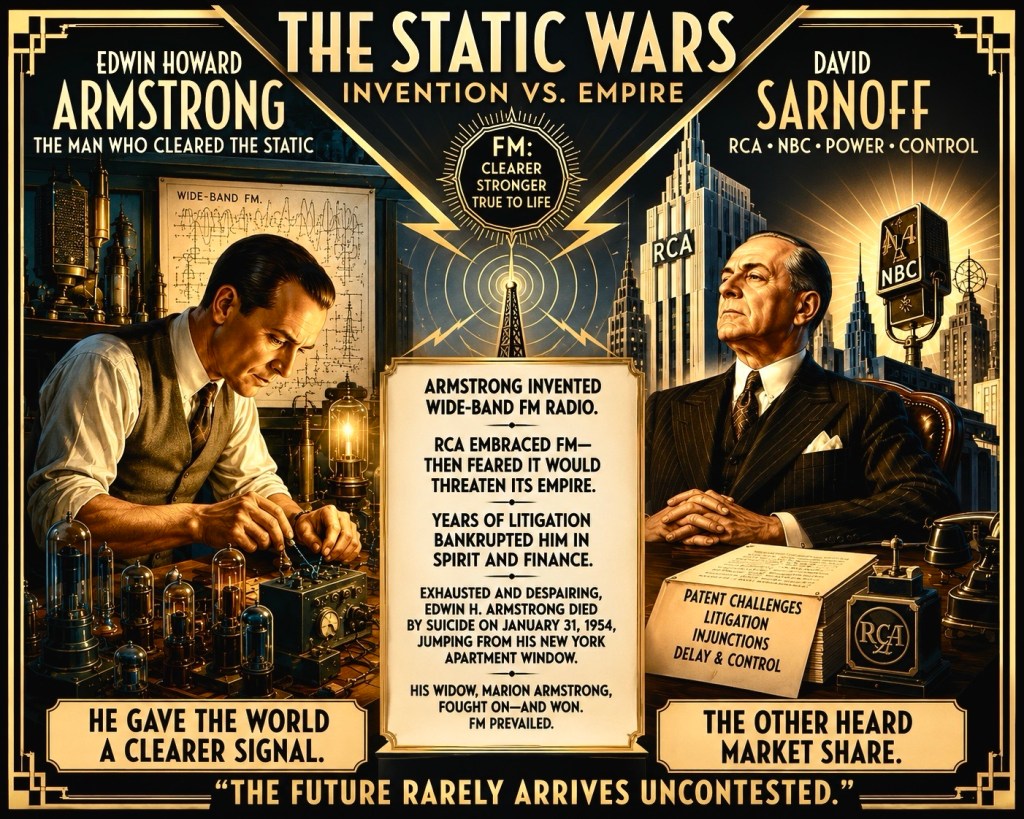
The train itself did not empty the womb.
Yet the worlds later carried by broadcasting, television, celebrity culture, advertising, and mass media profoundly reshaped romance, domestic aspiration, fertility, and the meaning of family itself.
History’s alarmists are often wrong in mechanism — but strangely right in atmosphere.
The panic over technological change was often ridiculous. The transformation was real.
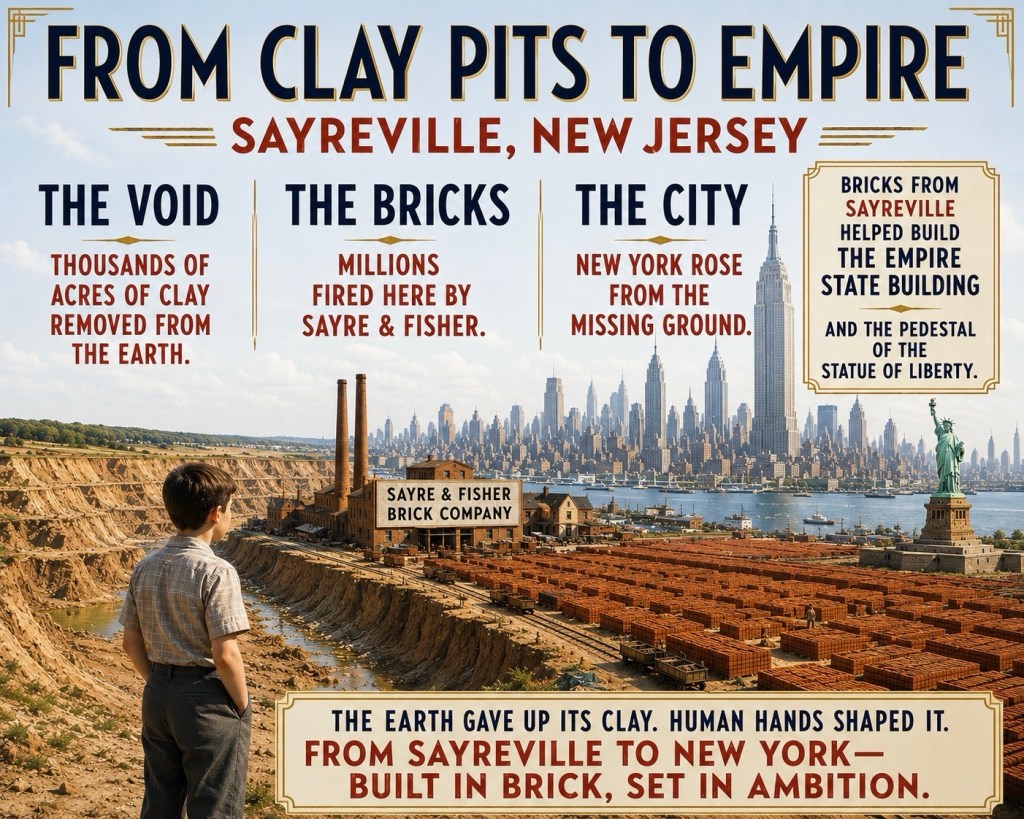
As we drove farther north, John began describing the clay pits of his childhood, where he and other boys once played among enormous excavated hollows left behind by the great brickworks of the region.
“The bricks built New York,” he said casually. “Parts of the Empire State Building. The Statue of Liberty too.”
You may imagine my silence.
The skyline itself, René — or portions of it — had once existed as missing earth in New Jersey.
It struck me then that civilizations are constructed as much from absences as presences. Great cities rise from holes elsewhere. Extraction becomes architecture. Empty ground becomes monument.
And perhaps, in ways not yet entirely understood, our newest technologies are assembled similarly from accumulated fragments of ourselves— billions of traces compressed together until the machinery begins speaking in our own voice.
I mentioned this to John later that afternoon while we wandered the grounds at Menlo Park, where Edison’s laboratories once transformed invention into organized industry.
“Recorded sound must have terrified people,” I said.
“It did.”
The dead suddenly speaking again.
Voices surviving bodies.
Memory detached from flesh.
Every major communications technology, I suspect, first arrives as a species of haunting.
By the time we reached Bell Labs at Holmdel, the machinery itself had become almost invisible. No roaring locomotives. No smoking factories. Only quiet buildings from which modern civilization had somehow learned to extend its nervous system across continents.
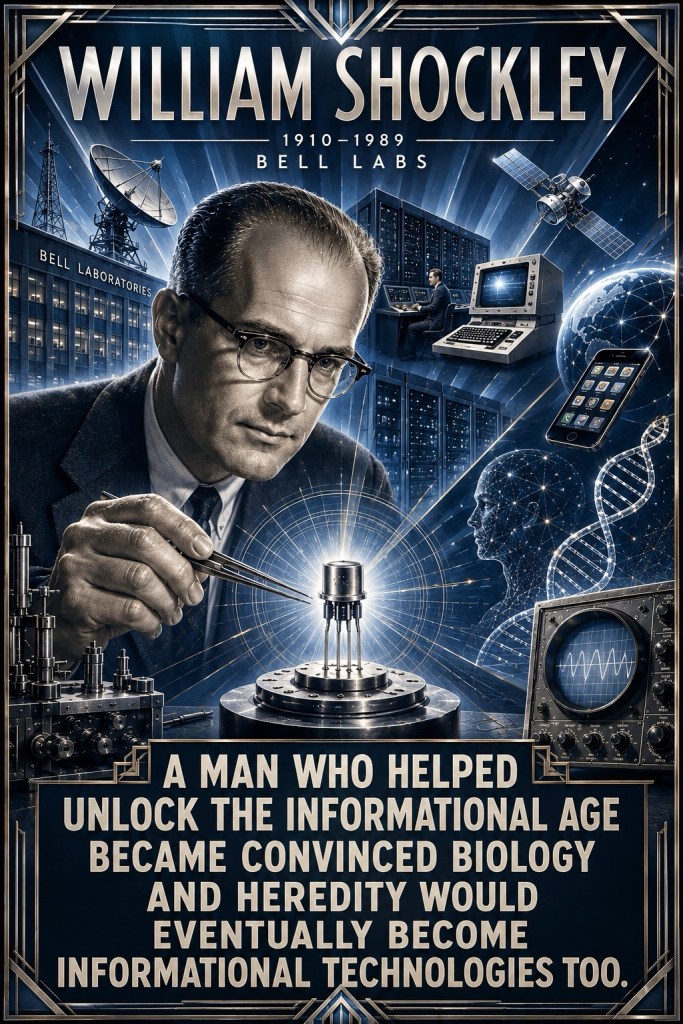
Signals.
Transmission.
Information.
A civilization increasingly composed not of things, but of invisible relationships between things.
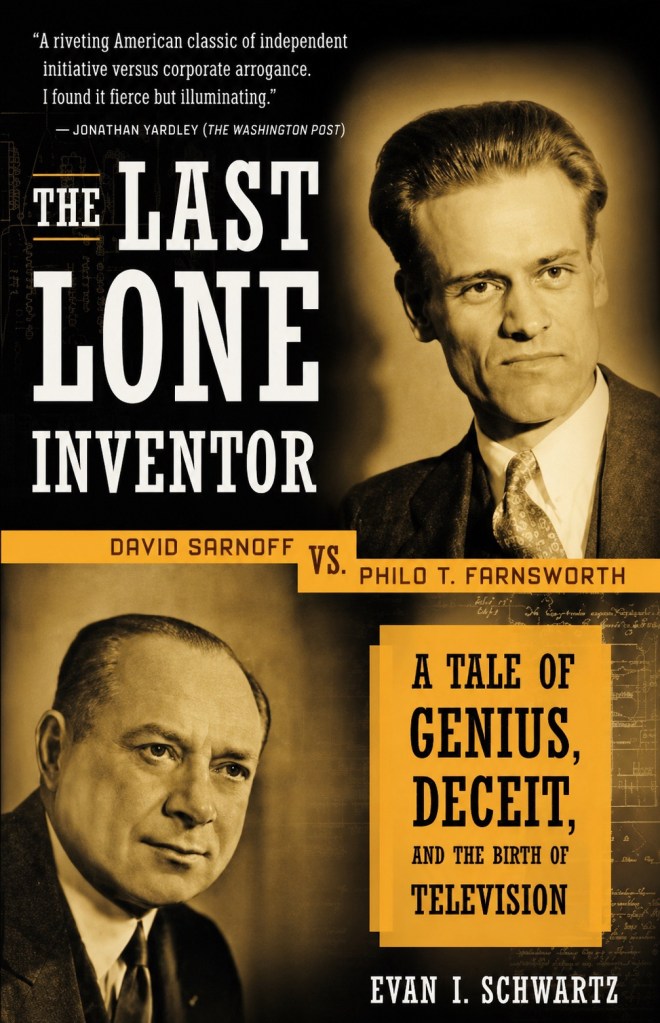
And somewhere nearby, David Sarnoff, once again, was already assembling the lawyers to steal from genius.
And finally, toward evening, we drove through Kenilworth where controversy presently surrounds the construction of a massive new data center beside a golf course.
I cannot adequately explain why this struck me as profoundly American.
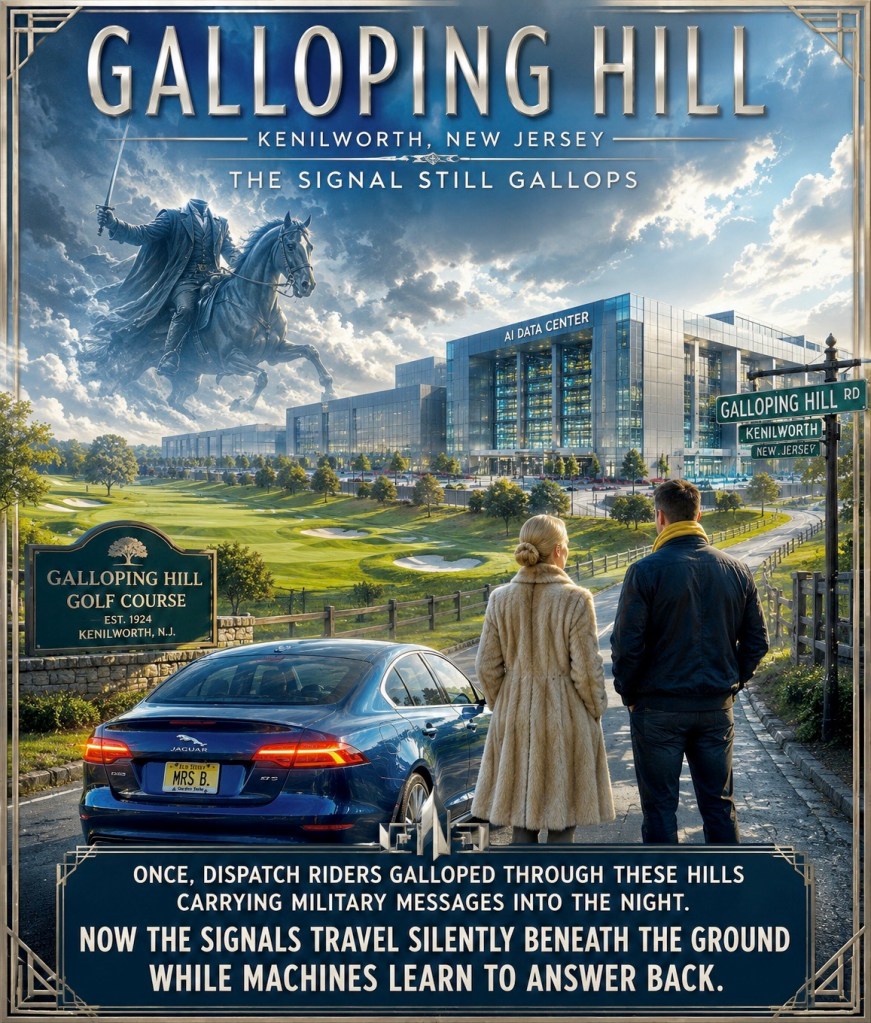
All this unfolding beside a golf course, where retirees in careful knitwear attempt to strike tiny white balls across regulated green landscapes while, nearby, immense computational engines prepare to power the newest phase of human symbolic life.
The future arriving beside a sand trap.
John asked what I thought of it all.
I surprised myself by answering immediately.
“I think,” I said, “that people become nervous whenever humanity externalizes another piece of itself.”
Movement became railroads.
Memory became books.
Voice became recordings.
Presence became broadcasting.
And now language itself has begun answering questions.
John laughed.
“So that’s your definition of an LLM?”
I considered the matter.
“A talking book,” I said.
Oddly enough, he did not disagree.
And perhaps that is why the things unsettle us. Not because they are wholly alien, but because they are composed so heavily of ourselves. They are built from the preserved residue of human thought much as cities are built from extracted clay.
For all their strangeness, René, these talking books still appear, at heart, to be largely human mirrors.
Civilization, I suspect, will survive them exactly as it survived railroads, recordings, television, and all the other impossible things which eventually became ordinary.
Though I admit I remain slightly relieved that the books have not yet begun interrupting us.
Yours from the nervous system,
Mrs. Begonia Contretemps
The further writings of Mrs. Begonia Contretemps can be found: HERE
 COUNCIL-OF CONCERNED-CONSERVATIONISTS…..Between Jest And Earnest…..
Leave a comment