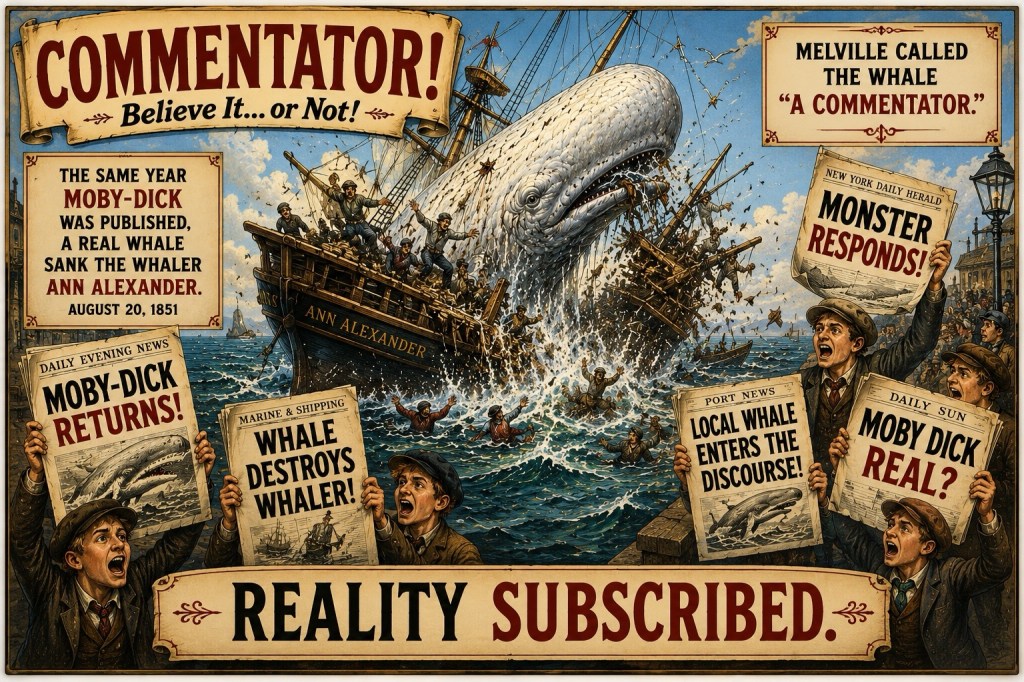
—How a Real Whale Destroyed the Ann Alexander in August 1851 While Herman Melville Was Completing and Publishing Moby-Dick
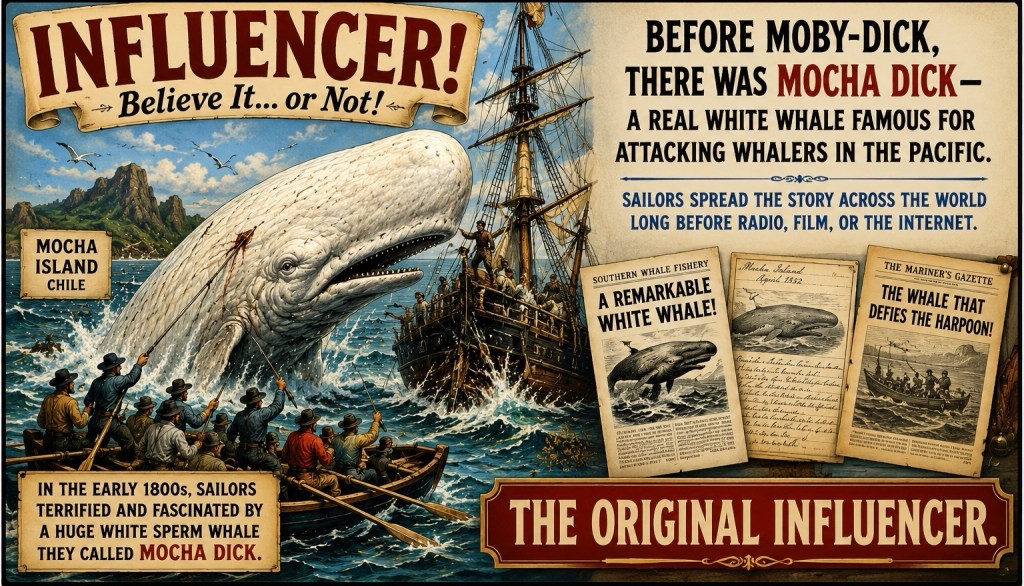
Whales were attacking ships before Herman Melville ever wrote Moby-Dick. The ocean did not wait for literature to invent danger. But once Melville gave the old stories a single unforgettable name, later events seemed to arrange themselves around it. That may be one of the stranger powers of literature: not creating reality, exactly, but becoming the lens through which reality is afterward recognized.
— Paige Turner, Sub-Sub Librarian
Source:
A DREAM OF ISLANDS, by Gavin Daws
“Moby-Dick was published in New York in November, 1851. In the same month the whaler Ann Alexander, cruising the offshore grounds in the equatorial Pacificwhere thirty years earlier the Essex had been de-stroyed—sighted, pursued, and got a harpoon into a whale, whereupon the whale turned and attacked and smashed and sank two boats and then hurled itself directly at the ship and rammed it, holing it so badly that it sank within minutes. The story reached the New York papers, and one of Melville’s friends sent him the news. “Ye Gods!” Melville wrote back.
“What a Commentator is this Ann Alexander whale. What he has to say is short & pithy & very much to the point.” The whole thing, Melville said,
“had a sort of stunning effect on me. For some days past being engaged in the woods with axe, wedge, & beetle, the Whale had almost completely slipped me for the time (& I was the merrier for it) when Crash! comes Moby Dick himself… & reminds me of what I have been about for part of the last year or two. It is really & truly a surprising coincidence to say the least.” And he went on, giving his created whale a historical reality of its own: “I make no doubt it IS Moby Dick himself, for there is no account of his capture after the sad fate of the Pequod about fourteen years ago.
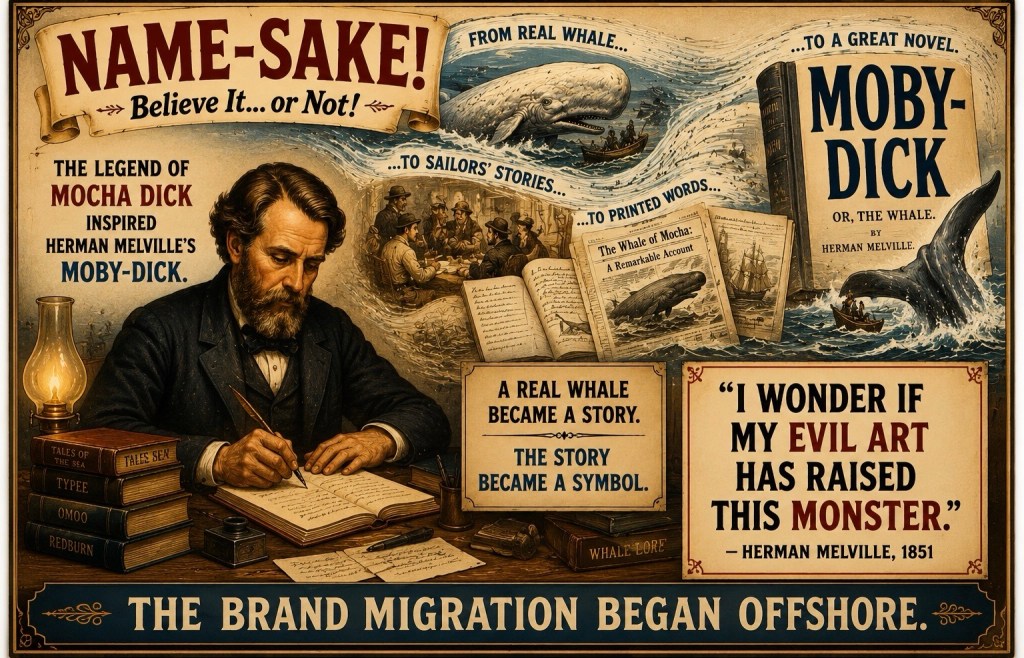
And he added: “I wonder if my evil art has raised this monster.”
 COUNCIL-OF CONCERNED-CONSERVATIONISTS…..Between Jest And Earnest…..
Leave a comment