UNITED STATES OF AMERICA v. COMEY, JAMES

—Guest Contribution:
Vito Haeckeler, C-of-C-C man-on-the-beach
I’m walking along the strand—someone told me that’s what you call it—and I’m in North Carolina where the Wright Brothers first powered flight got their start. Wind, sand, nothing fancy. Guys figured out how to fly here. Good for them.
I hear—don’t ask me where—that some of that glider canvas got turned into little girls’ dresses later. Fine touch. Things change jobs. Cloth is cloth. It may be poetic.
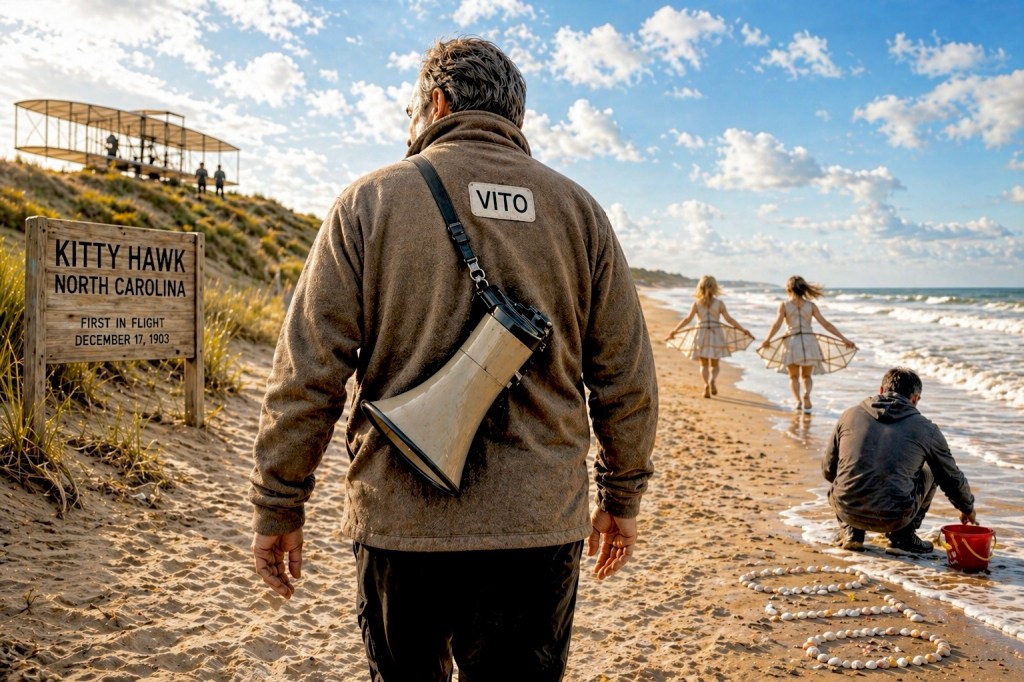
I’m looking down, like you do on a beach, and this stupid rhyme comes back to me:
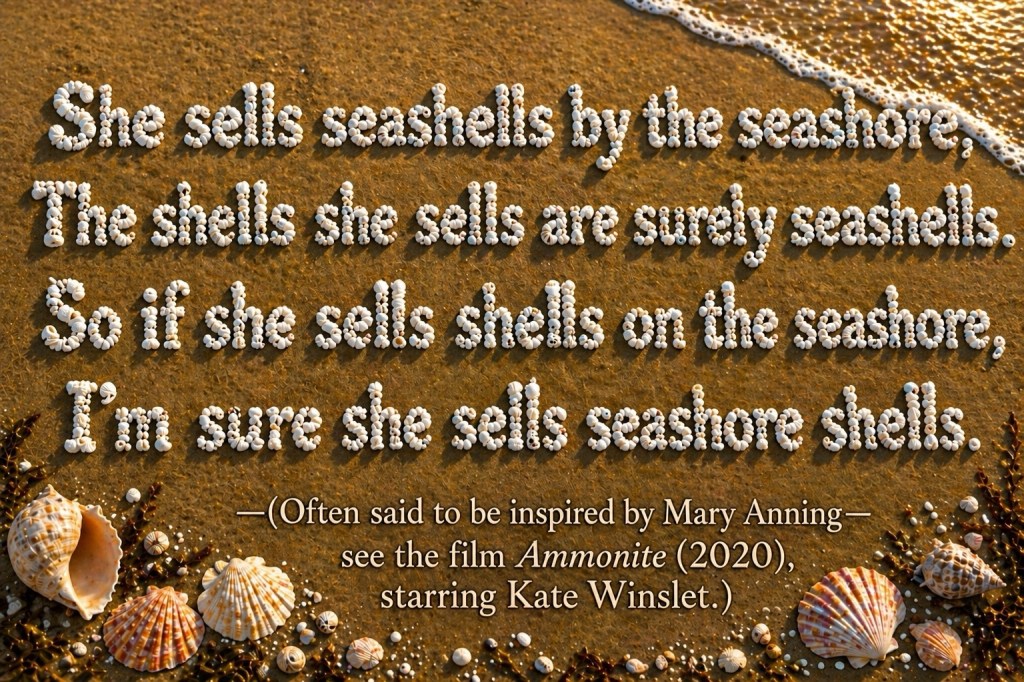
Can’t shake it. Probably because of that story about James Comey and the shells. Numbers in the sand. 8-6-4-7. Everybody suddenly very interested in what shells “mean.”
Look—I’m not saying the manchild Comey didn’t know what he was doing. You line up numbers like that, you’re not counting coconuts. He knew.
Fine.
That’s not even the interesting part.
So yeah, reminds me of kids on a playground arguing over nothing.
“You stepped on the line.” “No I didn’t.” “Yes you did.”
Back and forth like it matters, nobody giving an inch. And somehow they turned seashells on a beach into a federal case.
Used to be sticks and stones break your bones, words never hurt you. Now it’s shells. Apparently shells can hurt you.
Talking about arranging random bits. . .
I remember hearing about that writer—William Burroughs—cutting up pages, moving words around, making new meaning out of old stuff. The cut-up method.
Honestly, I always figured he got that from old gangster movies—guys clipping letters out of magazines to make ransom notes. Same move, just dressed up nicer.
I don’t pretend to get cutup, but I get this: you take pieces, line ’em up, and now it means something. Because it does—because you know it does. And we all can see it.
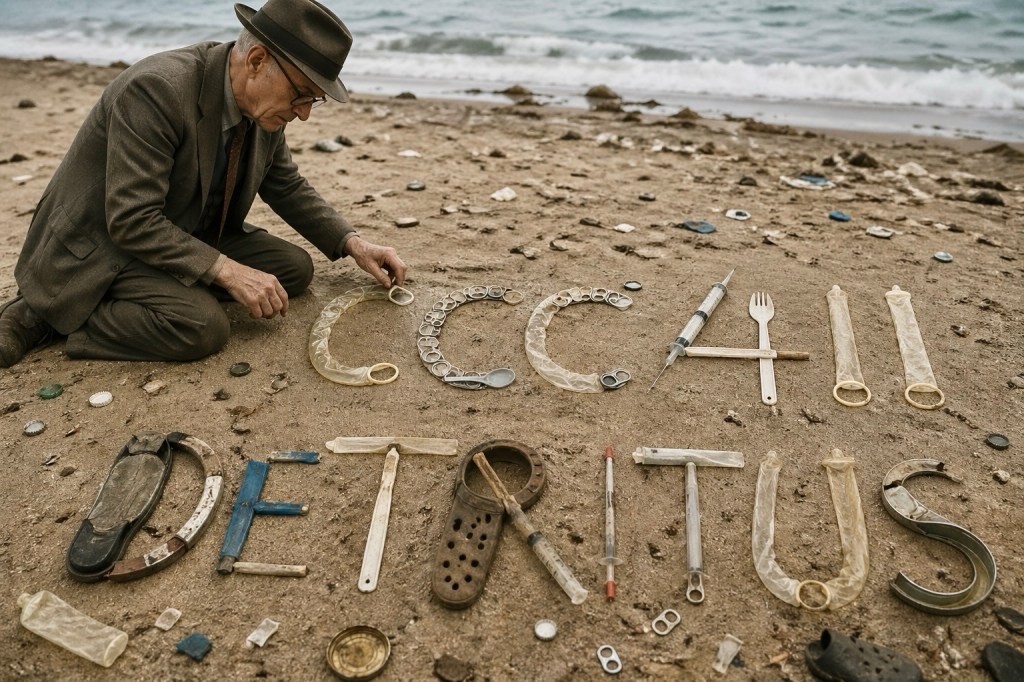
So now I’m looking at shells thinking:
I think this is that William Burroughs thing—only nobody cut anything.
Maybe Comey could say the beach did it. Or the eye did it. Same difference now, apparently. The ocean could become his defense—though it’d be tough to subpoena the tide.
See? So now a shell becomes a number. A number becomes a phrase. A phrase became intent.
Intent gets paperwork.
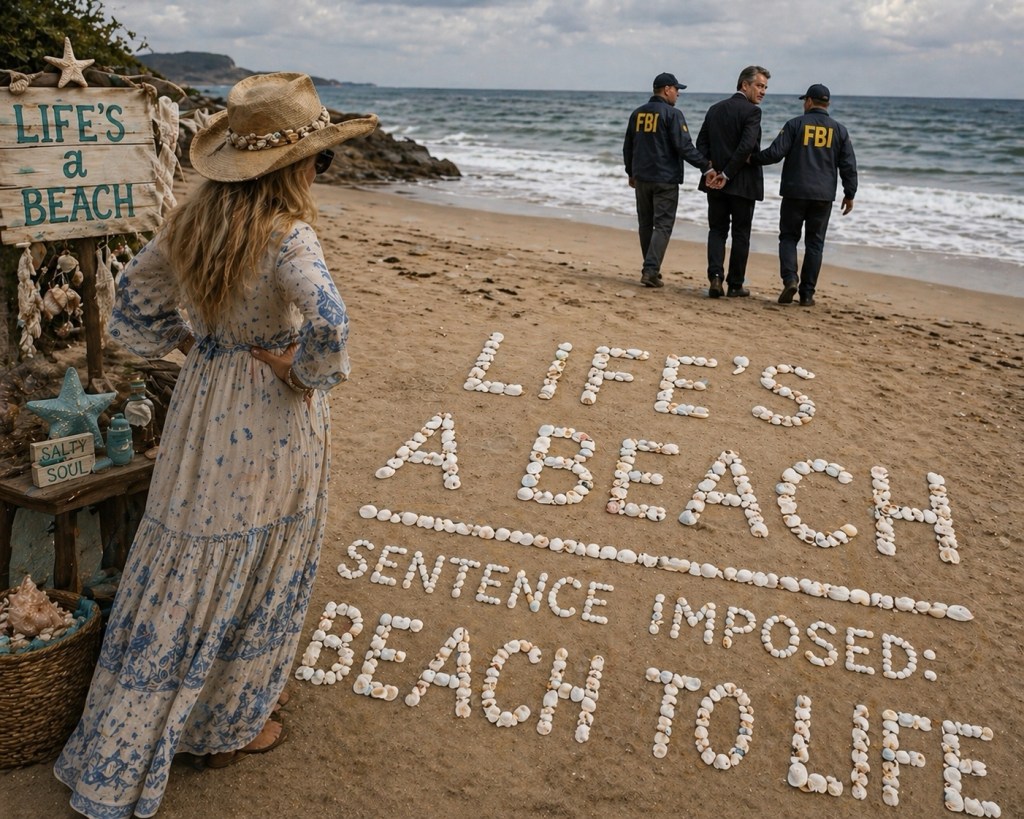
If the beach is writing now, we’re in trouble.
I’m free associating. Indulge me. I don’t know why, but I wrote this down:
—Like Sands Through the Hourglass, So Are the Lies of Our Days—Countless as the Grains Along the Shore.
I don’t know where that came from. Probably an old soap opera intro and the beach. Anyway, here goes:
SHELL GAMES ON THE SHORE
Comey saw seashells by the seashore,
Not just shells—looked like more.
Eight and six, then four and seven,
Waves don’t count—but people reckon.
They said: “Sir, what did you imply?”
He said: “Nothing. Just walked by.”
But once you see it, it won’t quit—
Hard to unsee something like it.
She sells seashells—no one cares.
He sees numbers—now it’s theirs.
So now it’s written, logged, and stored,
Sent on up—becomes a cause.
There’s a judge who’s trained to see
What something might be meant to be—
A judge who Long Marched, step by step,
Through halls that teach what signs accept;
Through journals, courts, and all those walls,
Till now he’s standing in those halls.
Now he hears the beach like proof,
Tries to pin it down as truth.
And if a jury says it’s so,
Locks it in and calls it known,
He’ll take a look, pull it apart—
See where thinking outran start.
Courts can test what people claim,
But proof’s not just a guessing game.
And when it’s done Appeal Away!
The shells remain. The charge. . . withdrawn.
I’m not looking down as much anymore. And I’m certainly not gonna rearrange seashells on the seashore.

Come to think of it, that’s about when I started this.
More from Vito : HERE
 COUNCIL-OF CONCERNED-CONSERVATIONISTS…..Between Jest And Earnest…..
Leave a comment