— An Inquiry into Words That Mean Their Own Opposite

— A Semantic Double-Take on Contronyms at the Gist & Tangent Pub
I. Scrabble Tiles and the Trouble with Words That Mean Two Things at Once
The Accidental Initiate found Anna Graham our word games and puzzle correspondent at the big oak table, arranging Scrabble tiles into patterns that might have been words or avant-garde protest art. With Anna, one never knew.
The Accidental Initiate:
“Anna,” he said, dropping index cards like fallen leaves, “I’m troubled.”
Anna Graham:
“By language again? Language enjoys troubling you. You’re comfort food to a dictionary.”
He sat.
The Accidental Initiate:
“How can left mean both ‘departed’ and ‘remaining’? How does weather mean both ‘endure’ and ‘erode’? How does strike mean both hit and miss—the same word doing opposite work depending on where you’re standing?”
Anna looked up, delighted.
Anna Graham:
“Contronyms. Our language’s two-headed beasts. Not errors—just meaning evolving in two directions at once.”
The Accidental Initiate:
“And cleave?”
Anna Graham:
“A special case. Cleave only looks like a contronym. Its two meanings come from two different Old English words—one for splitting, one for clinging—that merged over time. A historical pile-up, not a paradox. Most contronyms are different. They’re born from drift: metaphor, irony, professional jargon escaping into common speech, and perspective doing its quiet work.
She held up two Scrabble tiles: SEED and SEED.
Anna Graham:
“One means add. One means remove—seed a field to plant, seed a grape to take the seeds out.”
He blinked.
The Accidental Initiate:
“And dust?”
Anna Graham:
“Exactly. Dust a shelf—remove particles. Dust a cake—add them. English cares only that the particles danced.”
The Accidental Initiate:
“And oversight?”
Anna Graham:
“Supervision or neglect. The tragedy of authority in a single syllable.”
Then, leaning in—
Anna Graham:
“Contronyms aren’t systematic. They’re what happens when language grows wild. English refuses to prune its contradictions.”
He rubbed his temples.
The Accidental Initiate:
“So we live in a dictionary that’s become two dictionaries sharing the same cover.”
Anna Graham:
“Precisely. Contronyms are not mistakes. They are linguistic ecosystems where meaning evolves in two directions at once. They are the English language’s protest against simplicity. They are evidence that a single word can contain a paradox and go on functioning without emotional collapse.”
She pushed the tiles toward him.
Anna Graham:
“Words don’t mind paradox. People do.”
Language, Anna suggested without quite saying it, often works best when it isn’t asked to settle its arguments.
II. Outside the Gist & Tangent Pub— The Fork Arrives
The Accidental Initiate walked outside, Scrabble tiles warm in his pocket. The Council’s yellow gaiters caught the afternoon sun, shimmering like punctuation marks migrating across a page.
And then came the thought—one of those sideways revelations that arrive only when the mind is nicely tenderized.
The Great Fork Paradox
English, as Anna had said, adored forking—branching, bifurcating, splitting meanings like a hydra happily sprouting new tines.
Meanwhile, New York—City, State, or the metaphysical membrane between—had decided to propose limits on plastic forks.
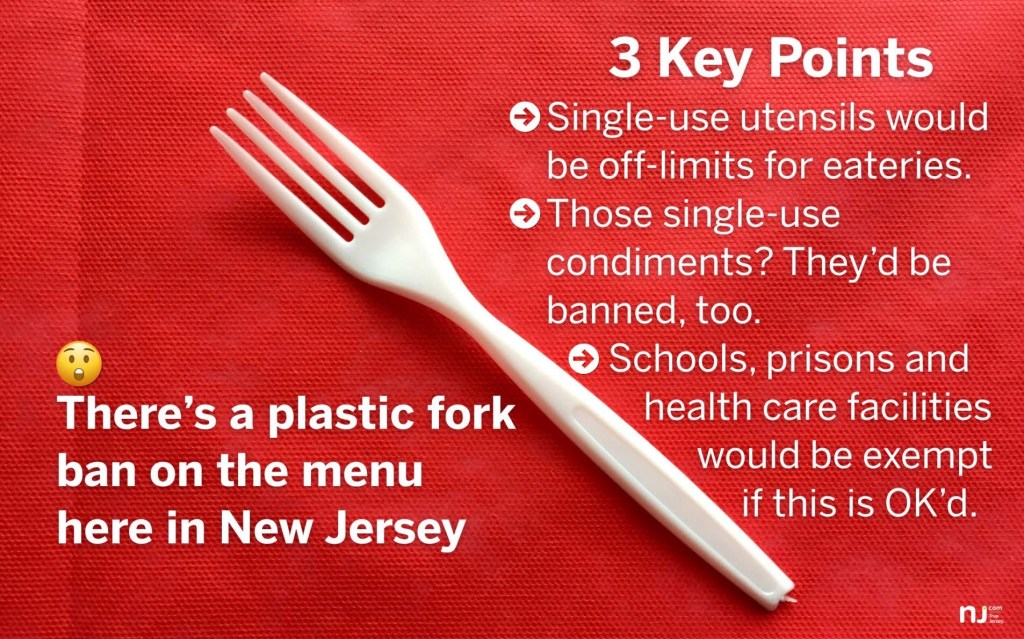
The irony nearly knocked him over.
English forks freely.
New York bans the utensil but not the phenomenon.
And deeper still:
“To fork” is already a contronym.
To fork = split, diverge, branch outward. To fork = stab, pin, immobilize.
One meaning multiplies paths.The other ends them. A perfect mirror of semantic contradiction disguised as tableware.
He imagined the legislation rewritten for etymologists:
SECTION 12-B: PROHIBITION ON EXCESSIVE BIFURCATION.
Citizens may not split, branch, diversify, embellish, or fork without prior approval.
Enforcement overseen by the Department of Oversight, which will either supervise or overlook the matter entirely.
The Accidental Initiate laughed out loud.
Then it struck him that the fork ban was not merely municipal fussing but the early tremor of a new cultural-ecological alignment.
New York, long the city that perfected eating on the run, might soon become the city that rediscovered eating with intention—and, increasingly, with its hands.
“Environmental activists praised the move. Anthropologists took notes. Gulf War veterans recalled learning table etiquette while eating without utensils—using the right hand for food, the left for post-toilet hygiene. Residents shrugged, adapted, and went right on eating lo mein on the subway using whatever appendages evolution had placed at their disposal.”
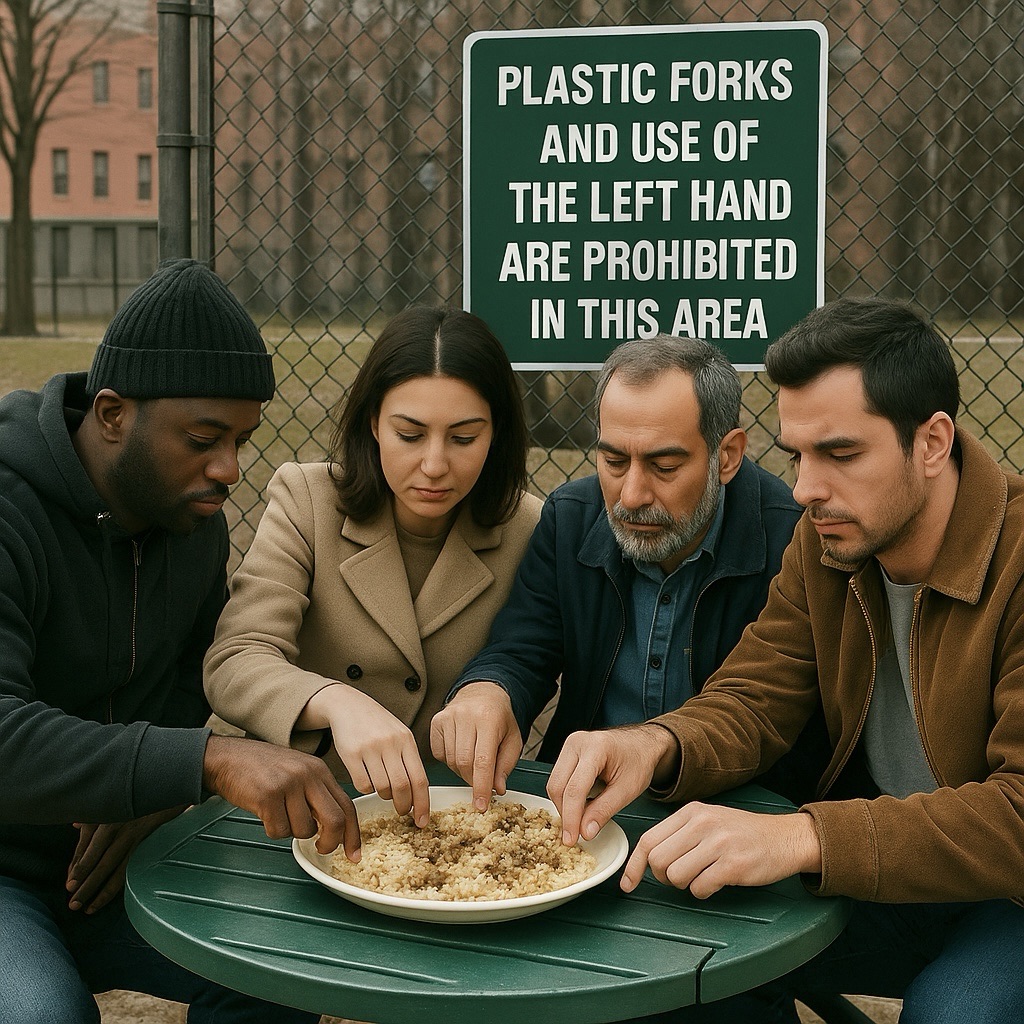
It was, he realized, the moment where ecological concern met a cultural shift—a pivot from disposable utensils to disposable excuses.
New York could outlaw forks, but it could never stop English from forking.
The language had already slipped past the guards.
III. The Symmetry Revelation
He resumed walking.
And suddenly—there it was, the thought that had been circling him like a hawk waiting for the right updraft:
Contronyms were symmetrical: Two meanings branching from one form. A left meaning and a right meaning, like hands on a torso. A bilateral creature of the lexicon.
He felt it:
Contronyms weren’t chaos—they were design.
The same pattern that governs bodies, wings, leaves, galaxies. Mirrored halves held together by a center no one sees. Existence, it seemed, adored doubleness.
Solitaire Scrabble was suddenly plausible—a game where you could play both sides of yourself, planting and un-planting, dusting and undusting, branching and pinning.
Anna Graham would approve. Possibly too much.
IV. Epilogue: Notes from the Initiate’s Notebook
He opened his notebook beneath a streetlamp.
Surely other minds had wandered into this territory.
Linguists: Call them auto-antonyms, enantiosemes, Janus words. No panic. Just meaning branching.
Philologists: See rivers splitting into channels while retaining the same name.
Metaphysicians: Hegel applauds: contradiction drives reality. Heraclitus murmurs: the road up and the road down are one.
Poets: Dickinson, Hopkins, Shakespeare—thrilled by words that carry two lanterns at once.
Philosophers of Meaning: Wittgenstein: meaning comes from use. Derrida: every sign contains its own undoing.
Cognitive Scientists: Context is king. The brain resolves contronyms effortlessly.
Theologians: Aquinas: language about the divine always contains paradox.
Mystics: opposites unify at the highest level.
Contronyms = miniature icons of the coincidentia oppositorum.
He closed the notebook.
Contronyms weren’t linguistic accidents.
They were mirrors, twins, diagrams of the universe’s preference for bilateral meaning.
He walked home feeling newly balanced—as if the cosmos had whispered to him: Make your opposites coexist. Play both sides. Be a contronym who knows it.
Solitaire Scrabble now felt inevitable — not as a theory, but as a workable fact. It was hard enough to make high-scoring words intersect without also trying to anticipate someone else’s tiles. Played alone, nothing was hidden, nothing negotiated. The board didn’t care who played or why; it only cared how letters crossed. Meaning was irrelevant. Placement was everything. A word like “fork” would score the same whether it meant branching outward or pinning something in place, depending entirely on where it landed and what it touched. Contradiction wasn’t resolved. It was absorbed. Language, like the board, continued to function without asking its words to agree with themselves.
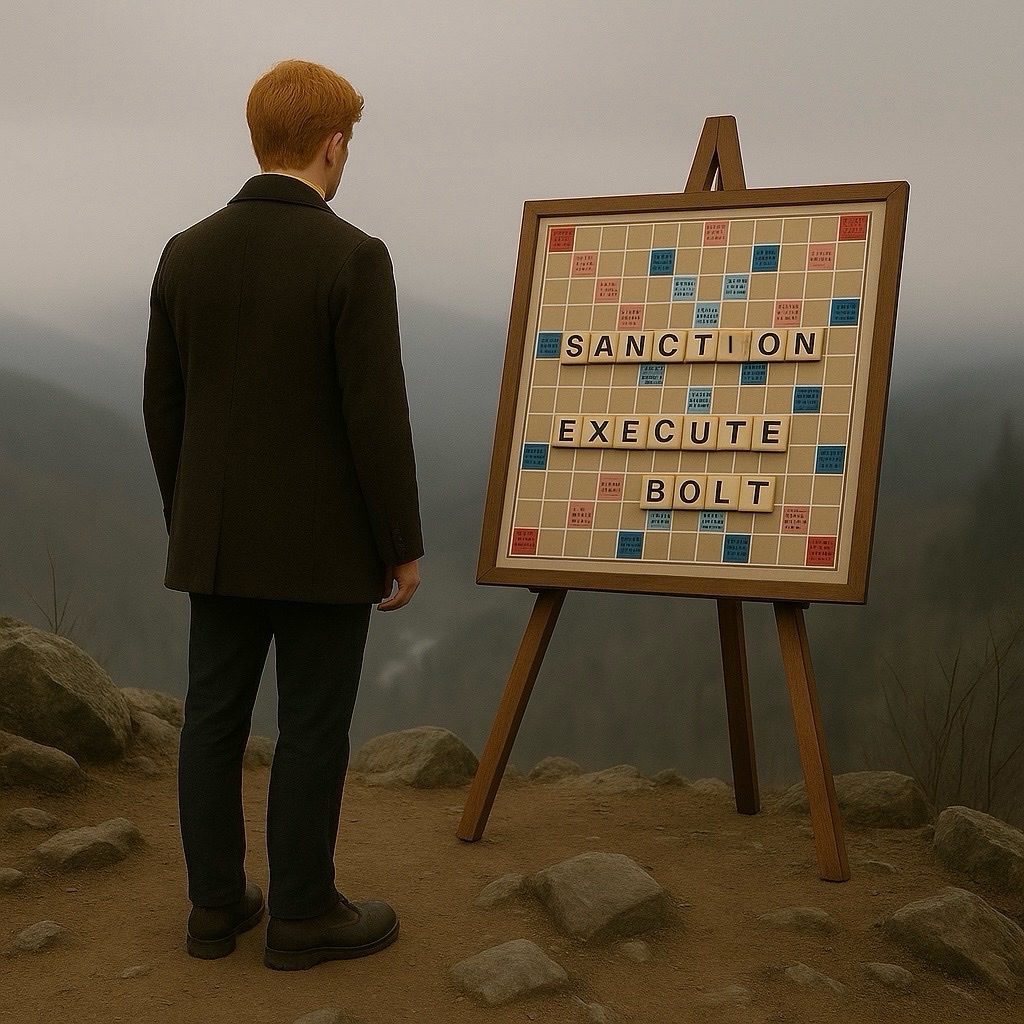
The Accidental Initiate’s younger brother studies the Scrabble board and hesitates.
“These don’t add up,” he says. No intersections. No shared letters. No score.
So he reads them another way: approval, completion, hold fast.
Satisfied that the order is procedural rather than lethal, he accepts it—never noticing that the words were never meant to add up, only to be carried out.
More from the Accidental Initiate HERE


Leave a Reply