—A Council-of-Concerned-Conservationists Podcast
—Hosted by Justin Aldmann
(First Episode. Last Episode.)
I’m broadcasting this from my garage. There are no sponsors here. There is a box of chargers for devices I no longer own. The chargers lasted longer than the devices they were meant to power. They keep showing up, energetic and hopeful, long after their original purpose disappeared. They’ve never claimed to explain the future, which already puts them ahead of most podcasts.
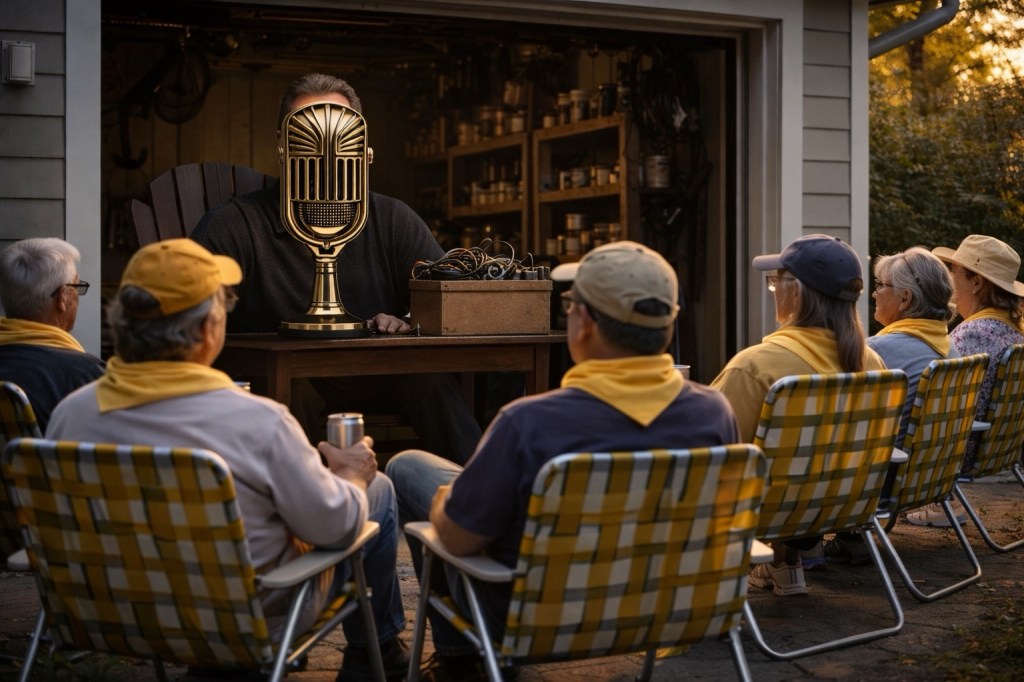
Several attendees appear to be listening.
This was supposed to be a podcast—plural. Episodes. A sequence. A plan. But after listening to the news, social media, and the ever-renewing supply of people with microphones and certainty, it felt unnecessary to contribute another voice explaining what’s “really” happening.
There are now more people explaining what’s happening than there are people anything is happening to.
Everyone has an announcement. Most of them are earth-shattering. A few of them even survive the afternoon.
We seem to be living in a permanent state of confusion, anxiety, and alarmism. And to be fair, the alarmists may be right.
The confusion seems earned. The anxiety appears rational. What’s harder to justify is the confidence. Every development arrives with a panel of experts ready to explain why this changes everything, usually before the thing itself has finished happening.
Explanation has become a kind of noise. And noise does not become meaning just because it’s confident.
Recently I stayed at a bed-and-breakfast in Cape May. The owners were admirers of Elbert Hubbard, which felt appropriate. Cape May preserves things well. Houses. Manners. Ideas that once felt sturdy.
Hubbard belonged to a moment when America was industrializing at full speed and feeling slightly unmoored by it. His response was not to slow things down, but to clarify them—firmly, confidently, and in sentences short enough to remember.
He founded the Roycroft community in East Aurora, New York: part printing press, part crafts workshop, part moral instruction manual. Books, furniture, lectures, aphorisms. It was an early lifestyle ecosystem before anyone used that phrase without irony. Hubbard didn’t just write advice; he designed it. He understood that in unsettled times people don’t want footnotes—they want orientation.
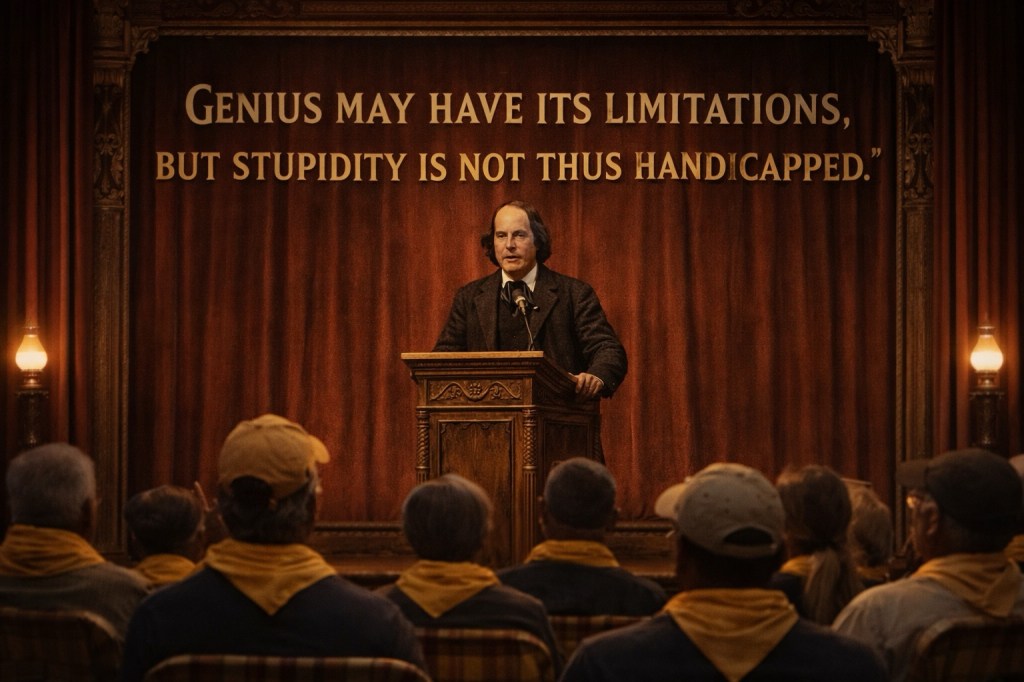
His warning about genius and confidence still echoes.
Hubbard made a living producing sentences that sounded like conclusions. And to be fair, he was very good at it. If he were alive today, he wouldn’t need a podcast. His quotes would simply appear, fully formed, on people’s feeds—usually over a picture of a lighthouse.
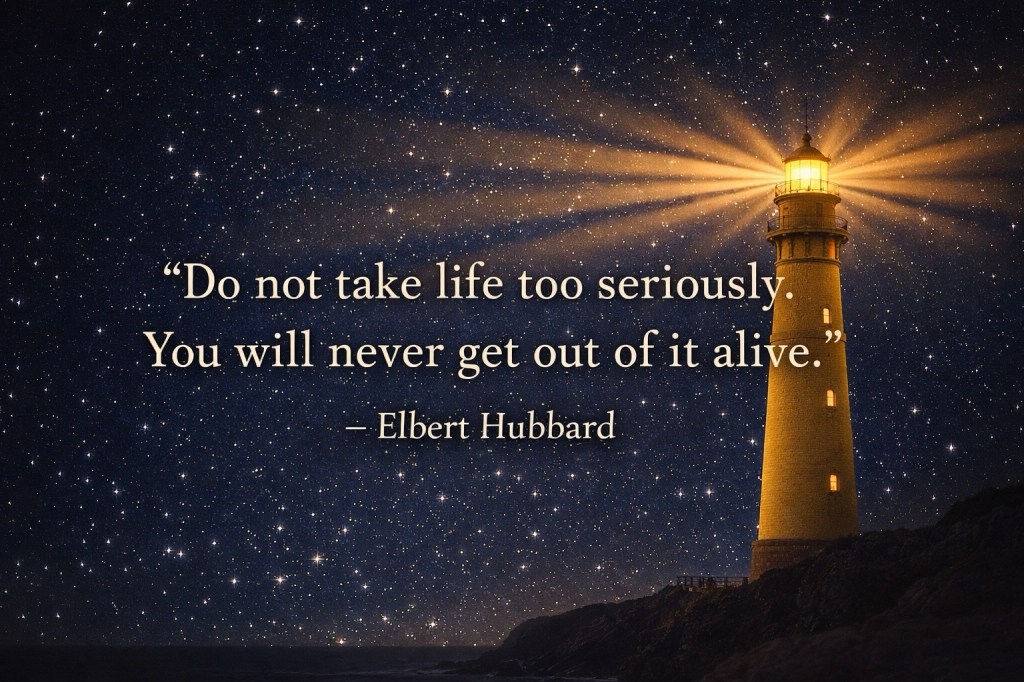
The problem is that life has never agreed to stay concluded.
I was in Cape May to watch a Victorian-era baseball reenactment. The uniforms were period-correct. The rules were historical. The pace was deliberate. At some point it became clear there weren’t enough reenactors to field a full team, so they asked for volunteers from the audience to fill in.
The volunteers—who were not dressed for the 1890s—were noticeably better athletes.
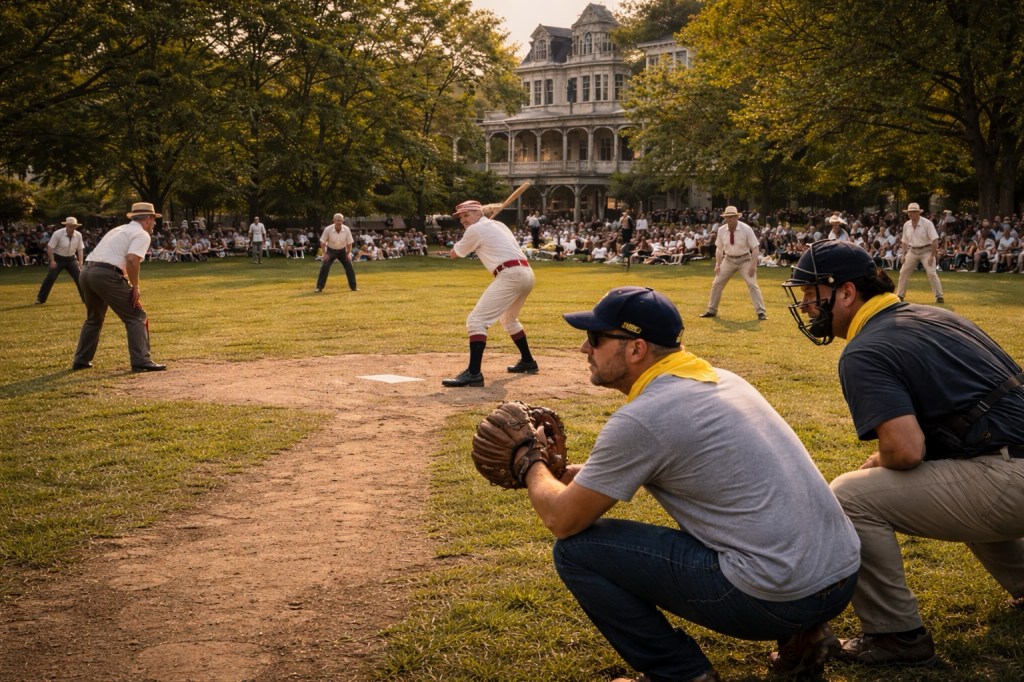
Historical accuracy wavered.
The Council volunteers seemed delighted by the wobble.
The people reenacting baseball needed help playing baseball, and the audience stepped in. The reenactors supplied the enthusiasm, the historical care, and the itchy wool uniforms. They were clearly invested in keeping the game alive. The fact that the game worked best when others helped may have been the most instructive part of the reenactment.
It felt instructive, though I’m not sure of what, exactly.
Maybe performance and competence aren’t the same thing. Maybe costumes age faster than skills. Maybe confidence is easier to rehearse than reality. Or maybe sometimes the people without the microphone just step in and do the work.
This podcast was meant to offer perspective. But perspective, like wisdom, tends to show up unannounced and leave early. Trying to schedule it felt like tempting fate.
So this will be the first episode, and also the last. Not because there’s nothing left to say, but because everything keeps resolving into the same pattern anyway.
“IT RAINS EVERYWHERE I GO. (A preliminary choice by way of a proposed selection of bumper music.)
I don’t have a framework. I don’t have a model. I don’t have a theory sturdy enough to survive the week.
What I have is a box of chargers. The chargers are still in good shape. Some of them light up when you plug them in. They’re ready. Eager, even. What’s missing is the device they were designed to serve. That part failed, or was replaced, or quietly stopped mattering. The chargers didn’t notice. They just kept showing up, supplying energy to nothing in particular.
That feels familiar. A lot of podcasts and influencers began as attachments to something real—talent, insight, a moment, a genuine skill. The moment passed. The device stopped working. The energy infrastructure remained. Now it hums on its own, energetic, confident, and slightly unmoored, mistaking persistence for purpose.
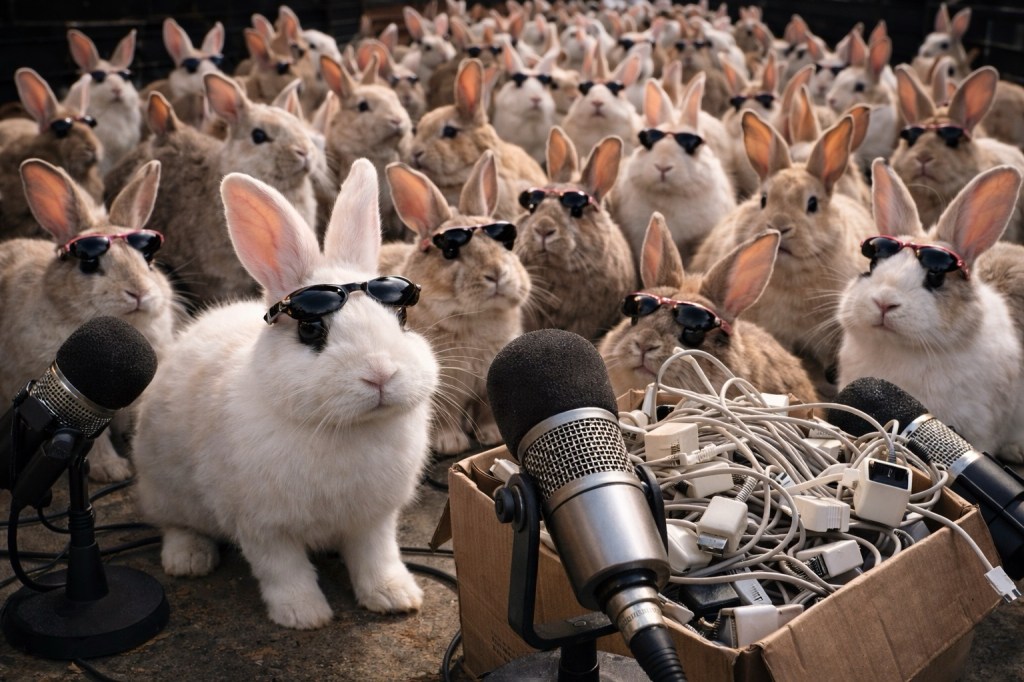
long after the devices they were meant to power stopped working.
I suppose every podcast is trying to explain what the one damn thing really is.
I don’t have an explanation. I just have a name.
If there’s ever a second episode, it will probably be called
LIFE: The One Damn Thing After Another Hour.
That feels more honest about the time involved.
But for now:
LIFE: it’s just one damn thing after another
That’s not a conclusion.
It’s an inventory.
***
ONE FINAL WORD

He died in 1915 aboard the Lusitania, inside one.
Those who speak most confidently about collapse might benefit from fewer predictions and more exposure to reality.*
 COUNCIL-OF CONCERNED-CONSERVATIONISTS…..Between Jest And Earnest…..
Leave a reply to ON INTRUSIVE THOUGHTS AS GENERATIVE— – COUNCIL-OF CONCERNED-CONSERVATIONISTS…..Between Jest And Earnest….. Cancel reply