—Conspiracy Futures Trading Cards: Strange Echoes from an Old Deck
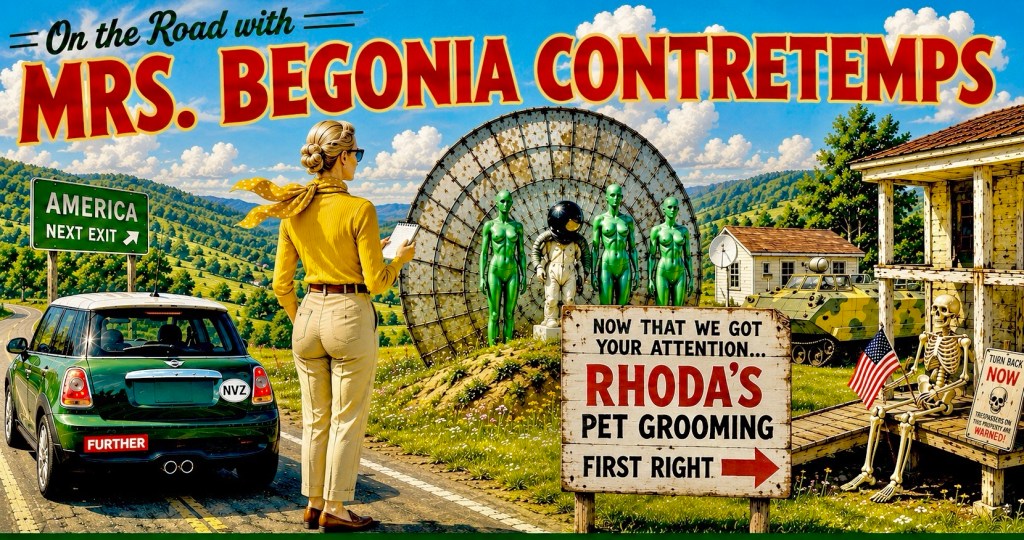
Mrs. Begonia Contretemps, Europa’s indefatigable emissary, explores the American character through its most unlikely places. Her observations are faithfully reported in letters to her superior, René Séance, Director of the NVZ’s European Office, whose standing instruction is simple: Discover what America means—preferably somewhere no one else would think to look.
Gilmour, Pennsylvania
Where the road to Oz may—or may not—have begun.
Settlement Date: Tomorrow
Dear Renée,
John has dispatched me upon yet another educational excursion, this time to investigate what Americans call:
COLLECTIBLES
Apparently this is a subject requiring fieldwork. I had hoped for Williamsburg. Instead, I was assigned Mason Freeman.
Mason informed me that before one can understand collectibles, one must first understand futures.
“The two are related,” he assured me.
I should have known better than to ask how.
Rather than driving toward any establishment remotely associated with collector plates, Mason and I headed southwest into the Pennsylvania oil country.
Our first stop was Bradford. Not the Bradford I was expecting. This Bradford.
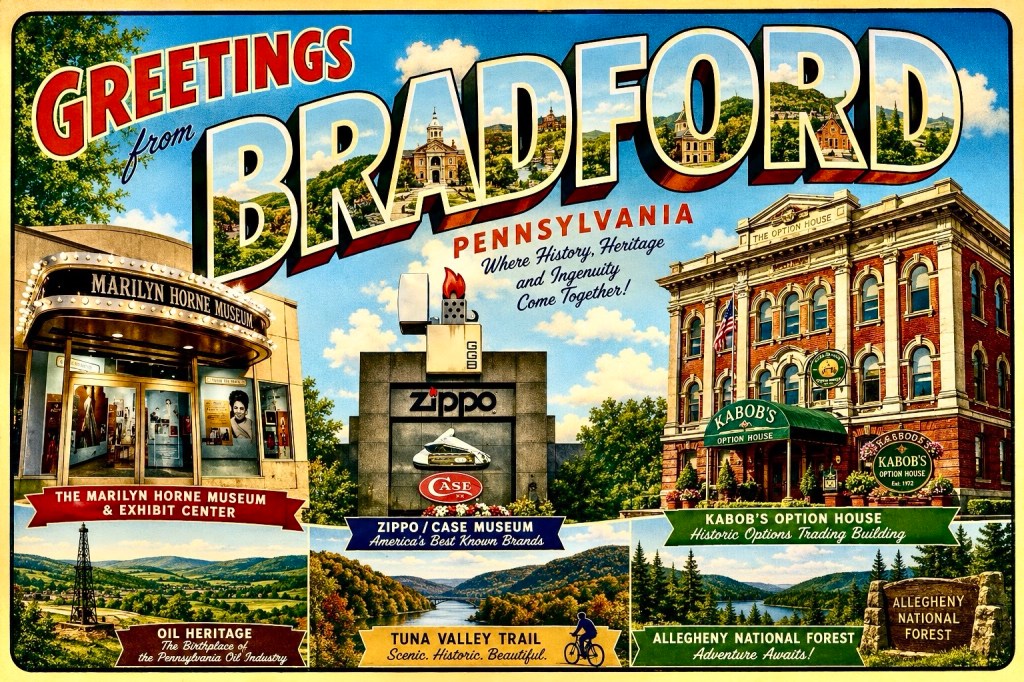
He insisted we pause for lunch at Kabob’s, a decent mediterranean restaurant featuring Greek cuisine. The establishment occupied a nineteenth-century building known as The Option House.
Only after the souvlaki plate arrived did he explain the joke.
“This building once stood at the center of petroleum speculation,” he said. “Men gathered here to trade the future.”
“The future?”
“Oil futures.”
“So Americans have been purchasing tomorrow for quite some time.”
“We’ve had practice.”
I glanced around the old room. It seemed a respectable enough place to speculate. To my surprise, the old hotel dumbwaiter remained in service, still carrying food and drink from the bar below to the upper floors as though it had never accepted the hotel’s retirement. The tzatziki sauce was excellent. Mason leaned back.
“Now,” he said, “let’s visit the other Bradford.”
“There is another Bradford?”
“Not geographically.”
He reached into his satchel and produced a Bradford Exchange catalog. I confess I was disappointed. I had expected another town. Instead I received porcelain.
Mason explained that J. Roderick MacArthur had founded the Bradford Exchange as a marketplace where collectors could determine values and exchange limited-edition collector plates.
“A stock exchange for collectibles? Rather clever.”
“Precisely. . . It was.”
He paused just long enough to become suspicious.
“Then Mr. MacArthur discovered something that proved considerably more profitable—to manufacture collectibles than merely exchange them. The exchange slowly became a factory for future heirlooms.”
I nearly spilled my coffee.
“Well that follows.”
I leafed through the catalog. Every page proclaimed another treasure :
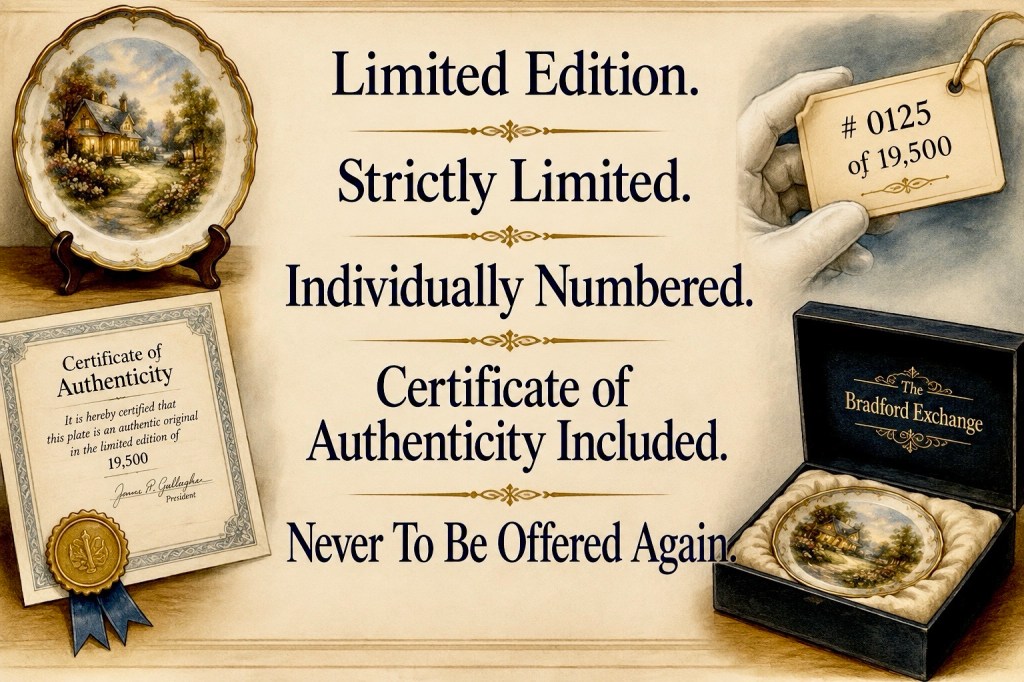
Followed immediately by another page containing another object that would also never be offered again.
“Americans have industrialized nostalgia,” I said.
Mason closed the catalog.
“We laugh now,” he said, “because so many of these things never became particularly valuable.”
“I should think that inevitable.”
“Perhaps. But I sometimes think we’re unfair to the people who bought them.”
“In what way?”
“Many weren’t really investing in porcelain. They were investing in grandchildren. They imagined a granddaughter someday dusting the plate and saying, ‘Grandmother always loved this one.’ Or a grandson discovering that one of the Hummel figurines had quietly become valuable enough to help pay a semester’s tuition. Sometimes they hoped for sentimental value. Sometimes financial value. Usually both.”
“So the investment was not merely in the object.”
“No. It was in the future. Every generation leaves something behind. Cathedrals if they’re fortunate. Family photographs if they’re ordinary. Collector plates if they’re American.”
I smiled despite myself.
“That is unexpectedly charitable.”
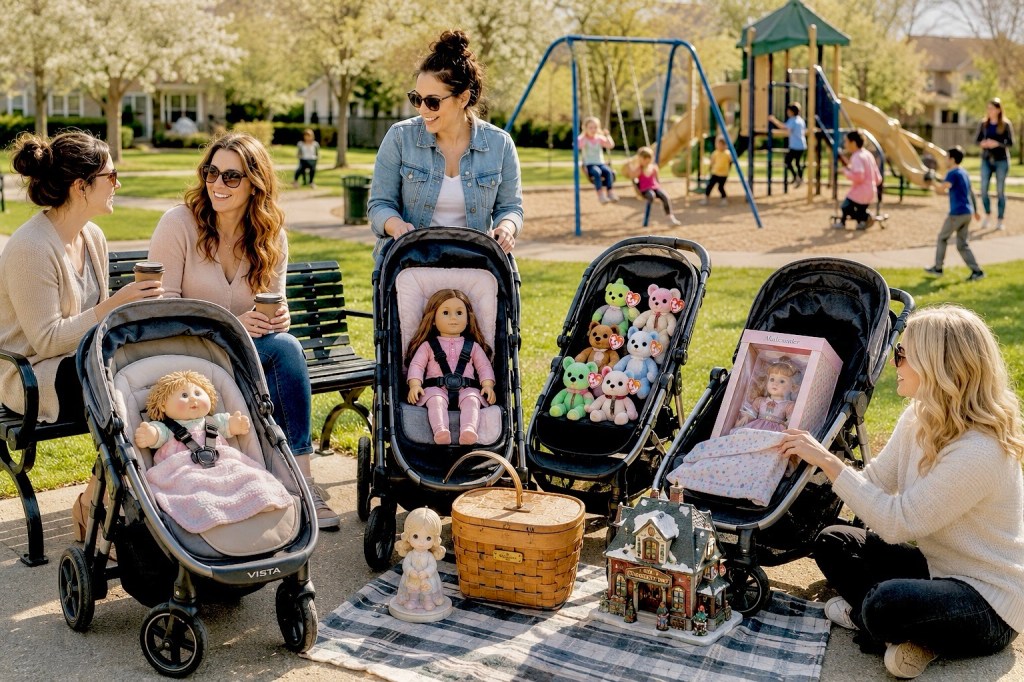
— Mason Freeman
I glanced again at the endless parade of numbered plates and certificates in the catalog.
“Then perhaps the tragedy was not that they purchased too many collectibles. They simply overestimated what strangers would treasure. And underestimated what their own families might.”
For the first time all afternoon, the Bradford Exchange seemed a little less ridiculous. Not because the plates had become priceless. But because the affection at least had been genuine.
Then Mason reached into his satchel once more.
“This ‘collectible’ actually worked.”
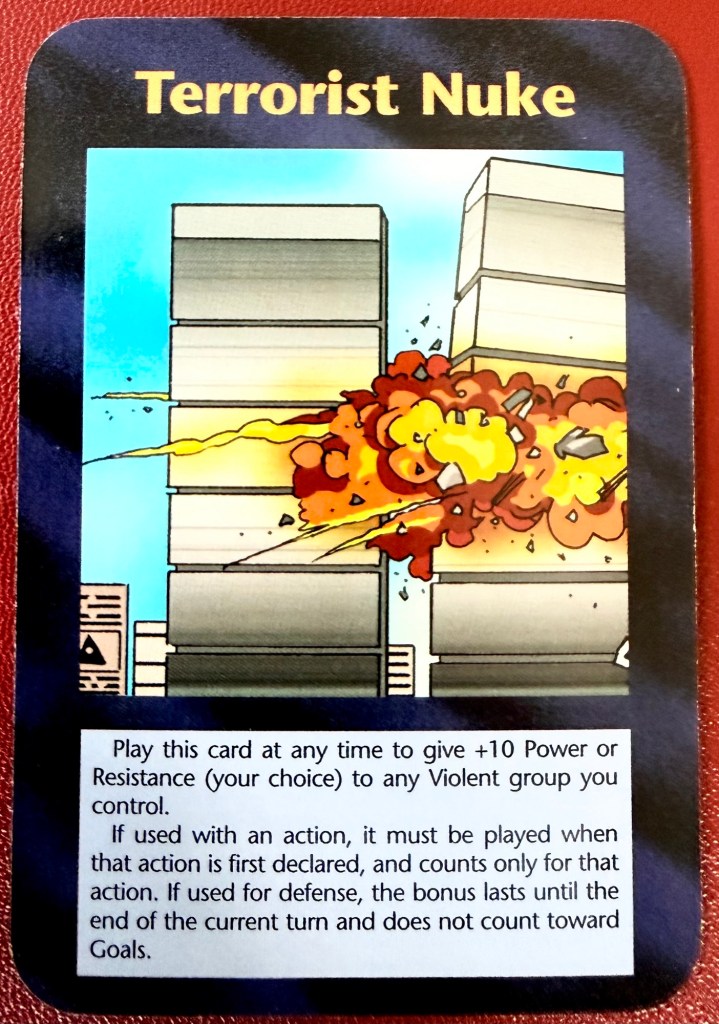
He placed a battered game box on the table.
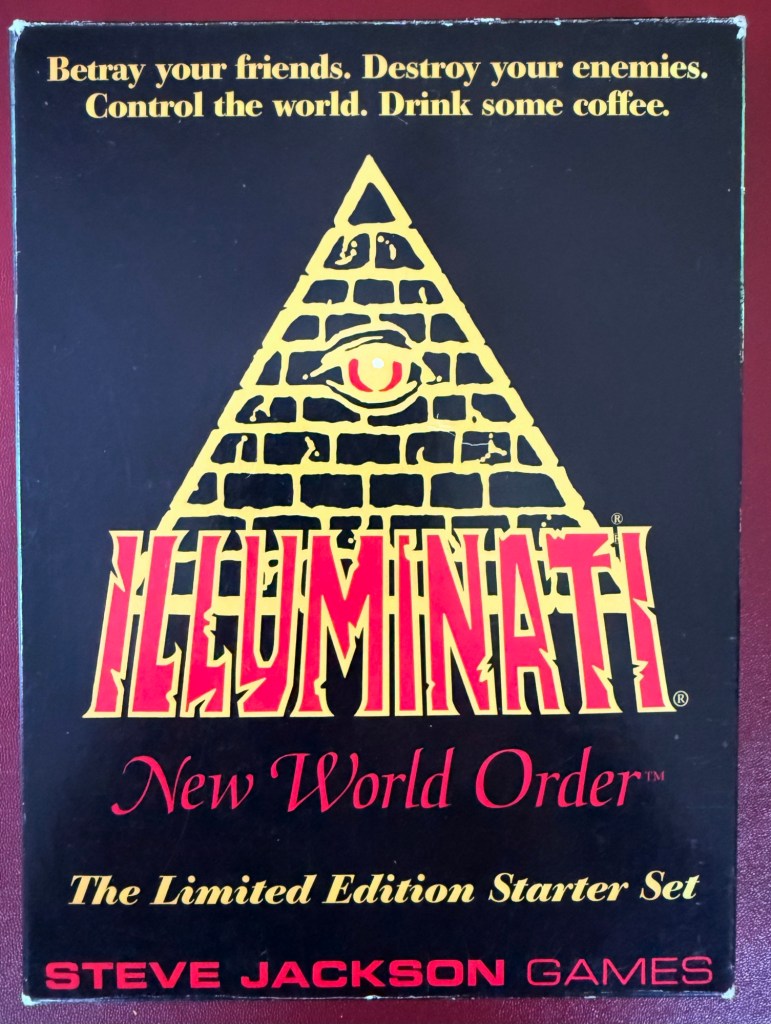
I read the cover aloud.
“Betray your friends. Destroy your enemies. Control the world. Drink some coffee.”
I laughed.
“Even world domination comes in collector’s packaging.”
“I bought it sometime in the mid 1990s.”
“You believed all this?”
“Yes, occasionally — sometimes unwillingly, and often merely in the poetic sense.”
“You expected it to become valuable?”
“No. I thought it was funny. And a premonition.”
Mason began removing still more items from the satchel.
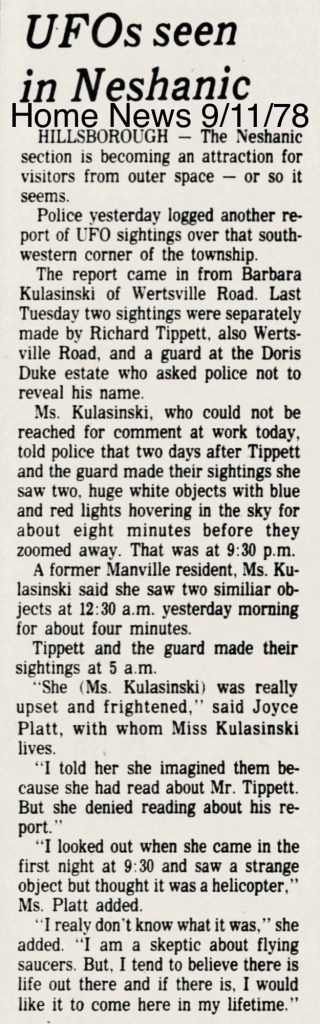
A clipping as evidence of his own encounter with a UFO :
He pulled out his copy of The Camp of the Saints.
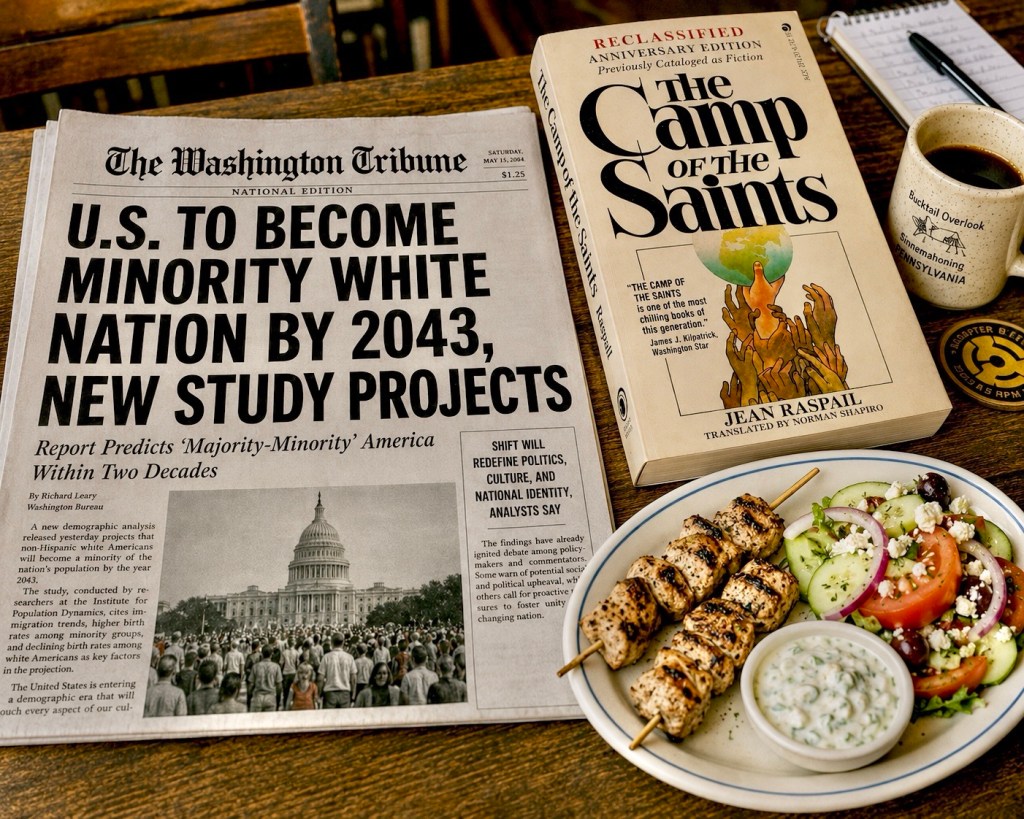
Then came this; a photo of his trip to the Caribbean where he researched Secret societies.
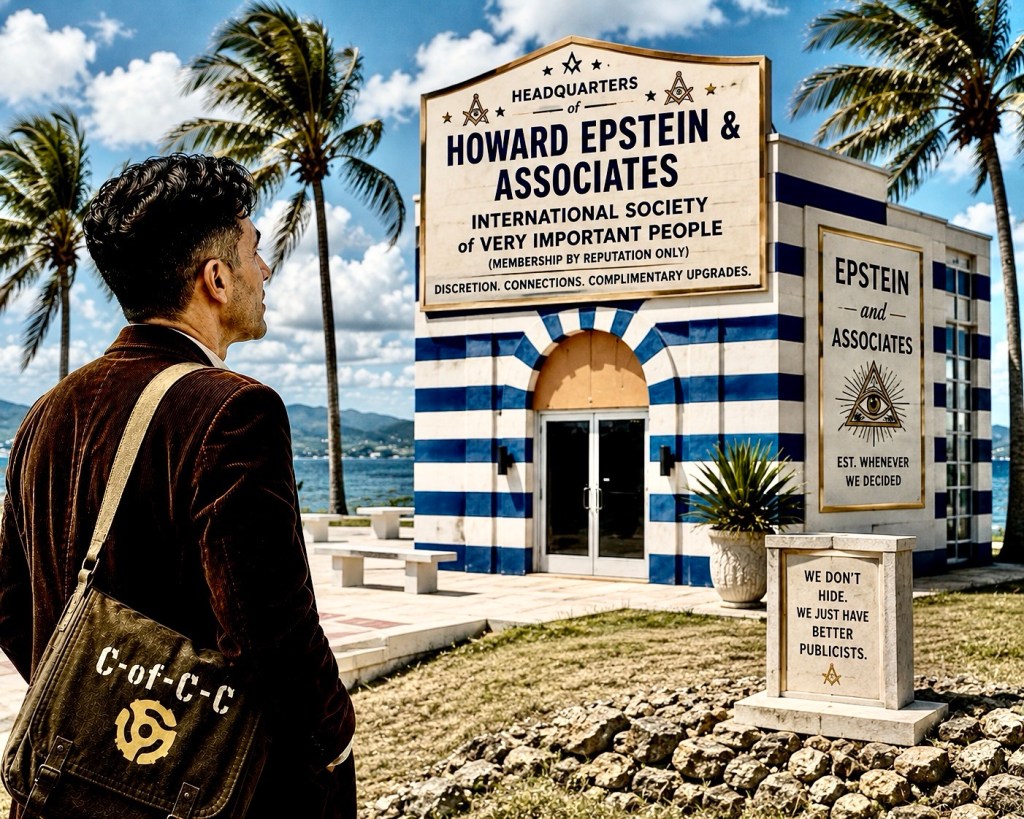
Mason laid on the table a photo of his dad‘s early days as a prophetic newspaper boy.
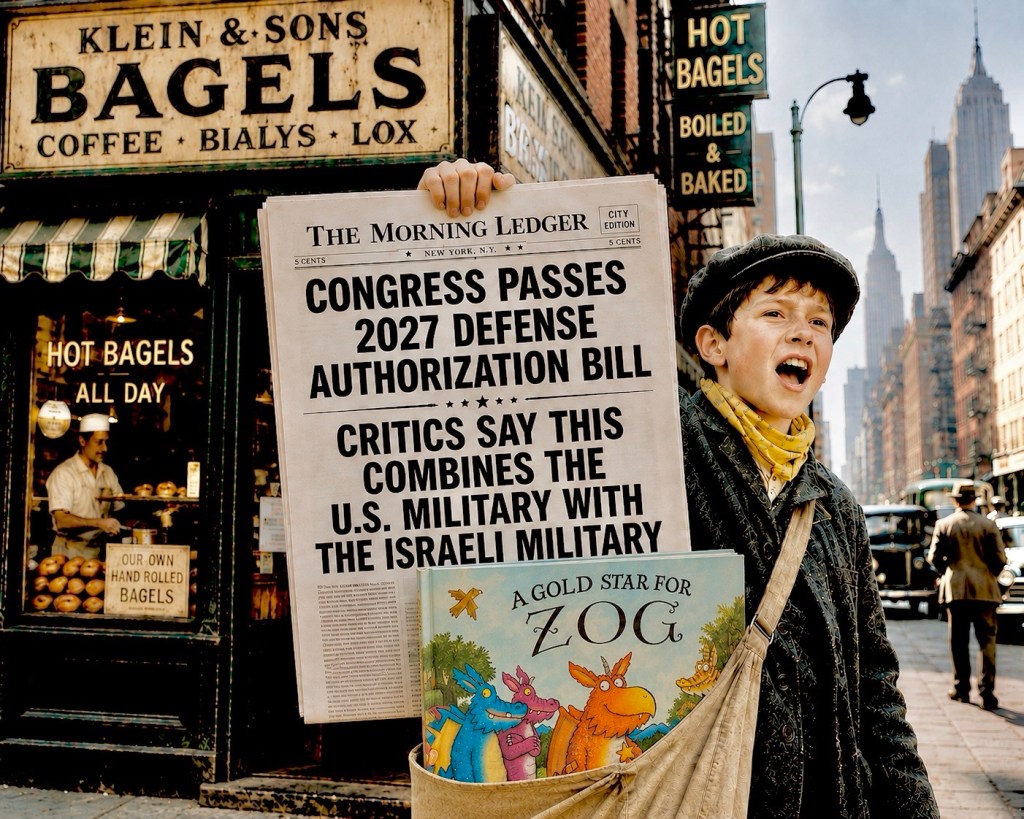
Then he revealed his cards on Occult histories.
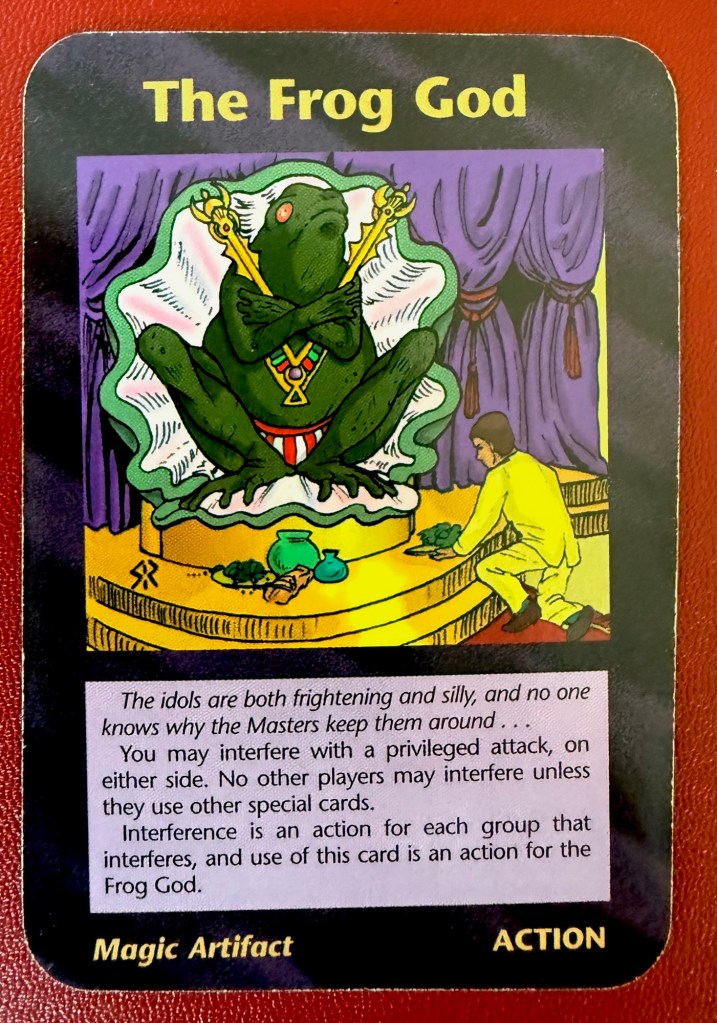
Next Came: Political curiosities.
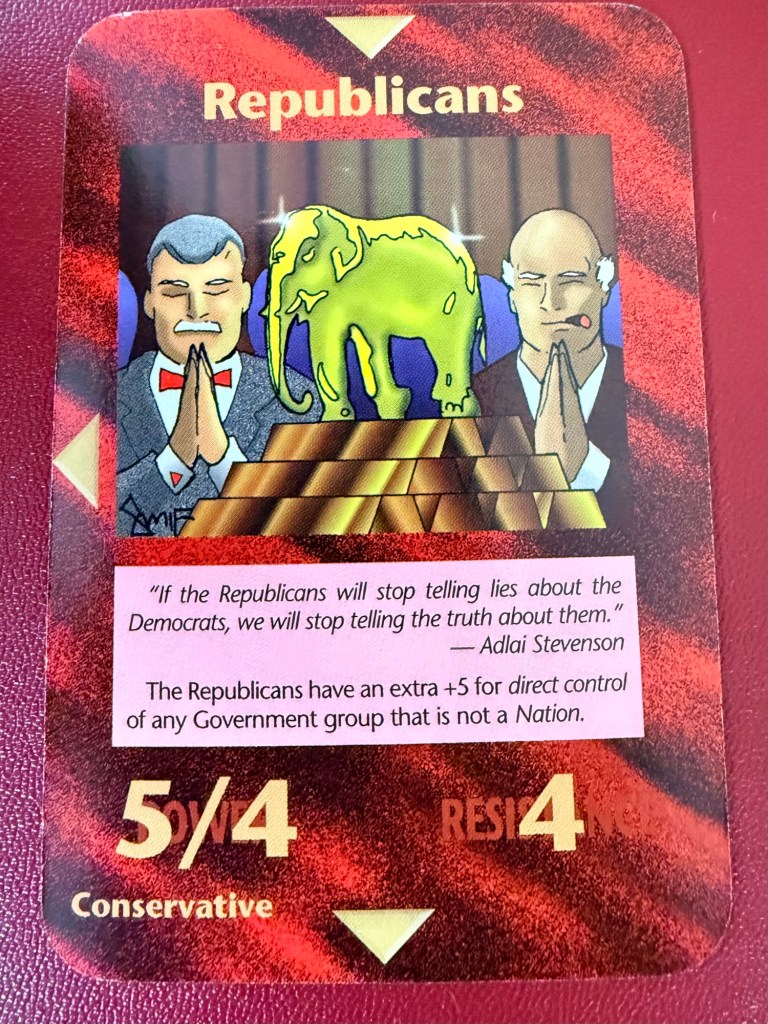
Mason’s assortment of ephemera was something respectable people once insisted nobody would ever discuss in polite company.
“You believed these?”
“ They didn’t require my belief.
“You rejected them?”
“No. I collect ephemera and ideas the way other people collect commemorative plates.”
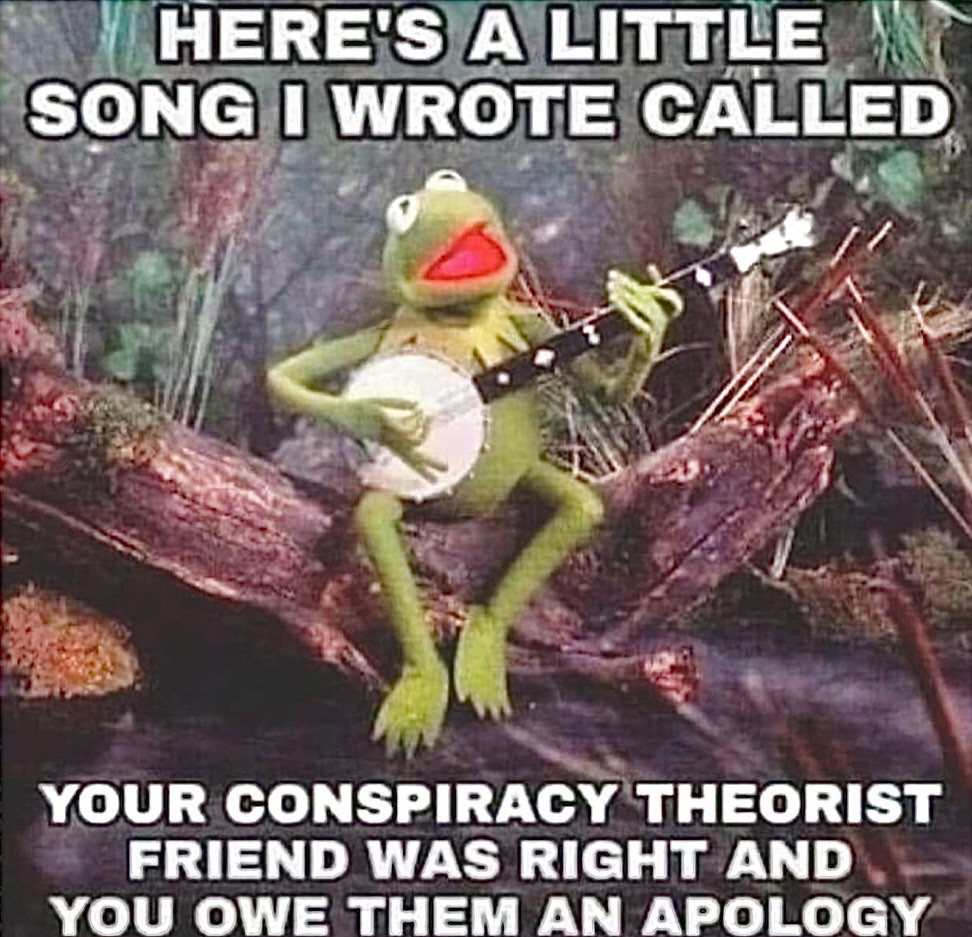
“Some of these ideas are rather outlandish.”
“So are some collector plates and the idea that people refuse to see in-your-face evidence when it is presented.“
“But surely you don’t believe everything you read.”
“Of course not. I collect the anxieties of an era.” He smiled. I’ve learned that ideas have biographies.”
“Meaning?”
“Some disappear forever. Some remain museum pieces. Some unexpectedly return to public debate. Others simply change names. My hobby has never been predicting which. It has only been noticing that yesterday’s fringe and today’s headlines are not always as far apart as people imagine.”
“And your investments?
“The books and ephemera remained what they were. The arguments escaped the shelves. The card game became the collectible.”
I picked up the game once more.
Limited Edition Starter Set.
“Remarkable,” I said. “The manufactured collectible. . . became collectible.”
Against all expectation, the ridiculous little game had appreciated handsomely over the years. History, it seems, occasionally rewards irony.
As we departed, I looked once more at the old Option House.
It struck me that I had spent the afternoon contemplating two distinctly American markets. One traded futures. The other traded future heirlooms. Both, in their own peculiar fashion, were attempting to purchase tomorrow before tomorrow had arrived.
I confess I remain unconvinced that Americans have entirely mastered the proper method of acquiring antiques.
Europe generally waits. America appears unwilling to do so. It manufactures heirlooms, numbers them, certifies them, and occasionally succeeds.
Yet after spending the day with Mason Freeman, I have begun to suspect that what Americans truly collect is not porcelain.
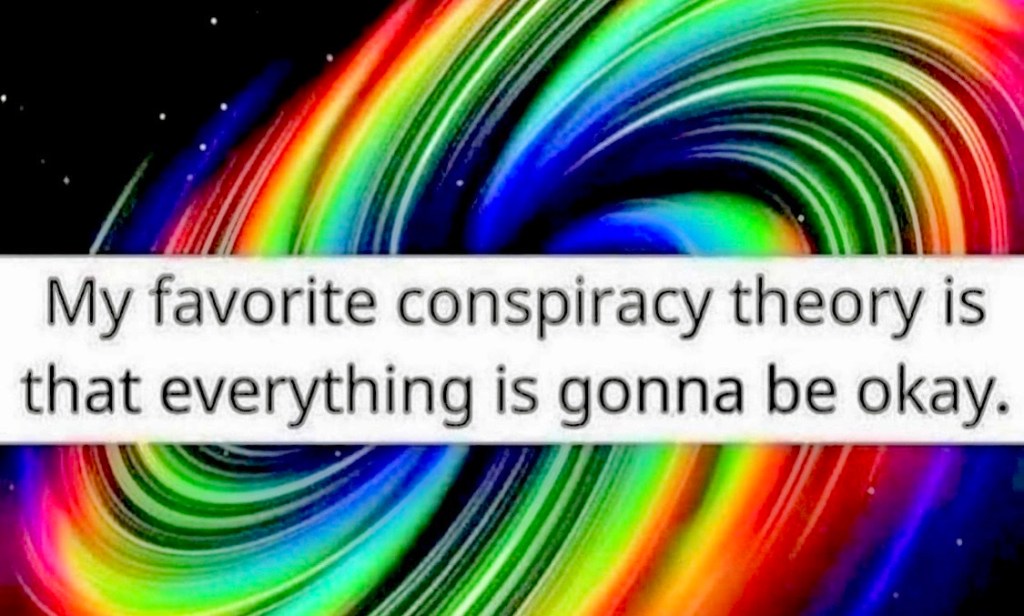
It is tomorrow and conspiracy theories that come true.
Yours,
Mrs. Begonia Contretemps
Mrs. Begonia Contretemps past itinerary and further musings can be found: HERE
Read more from Mason Freeman, the Council Occulture expert : HERE
 COUNCIL-OF CONCERNED-CONSERVATIONISTS…..Between Jest And Earnest…..
Leave a comment