—A Journey Into the Theatre of the Absurd yet Undeniable.
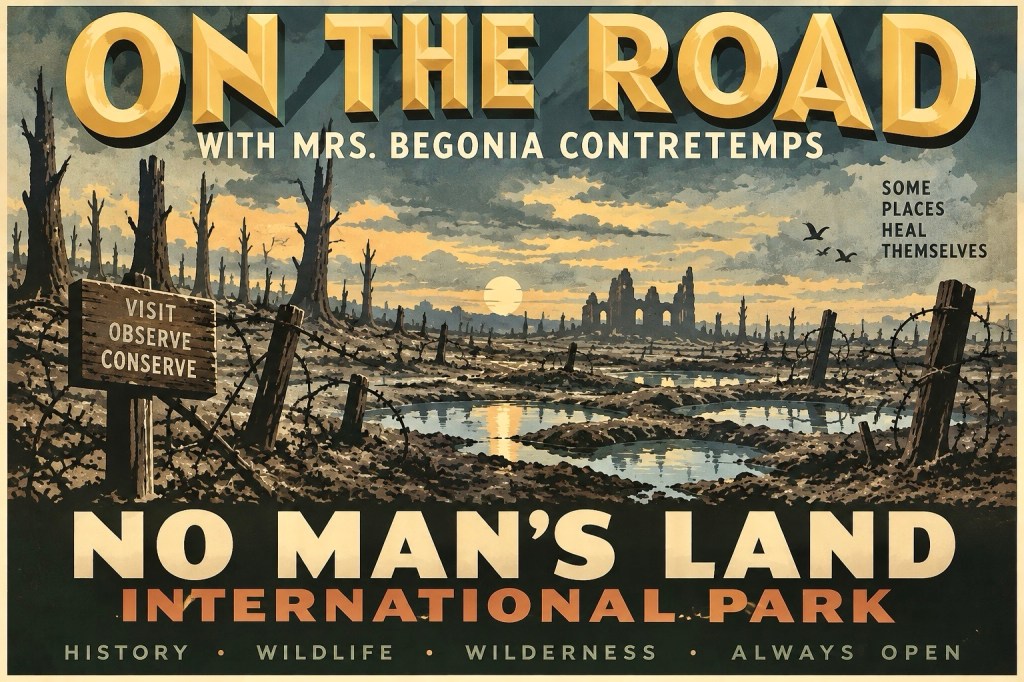
There are travels into the unknown, and then there are assignments from John St. Evola. This one would take Mrs. Begonia Contretemps in search of natural grandeur, wild places, things remarkably preserved and things that, against every reasonable expectation, had somehow managed to remain themselves.
John did not explain the connection. He merely promised her the wildest vacation tour she’d ever had.
FROM THE DESK OF JOHN ST. EVOLA
Begonia—
Pack a bag.
I’ve got a little tour for you. Think ancient trees, clear water, wild country, remarkable wildlife and a few things that have somehow escaped becoming everything else.
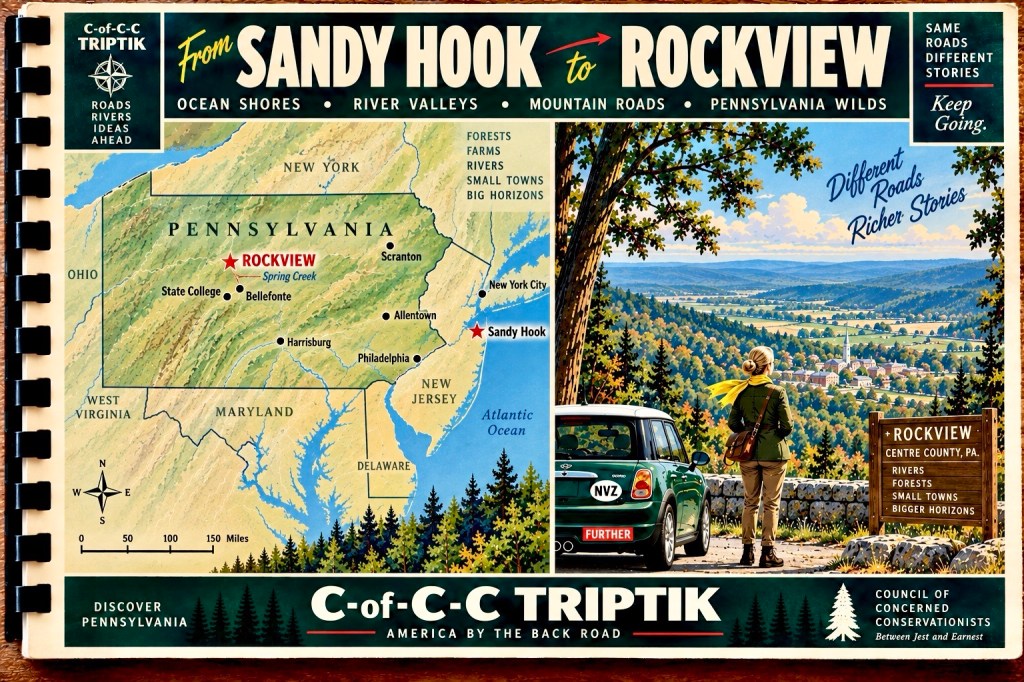
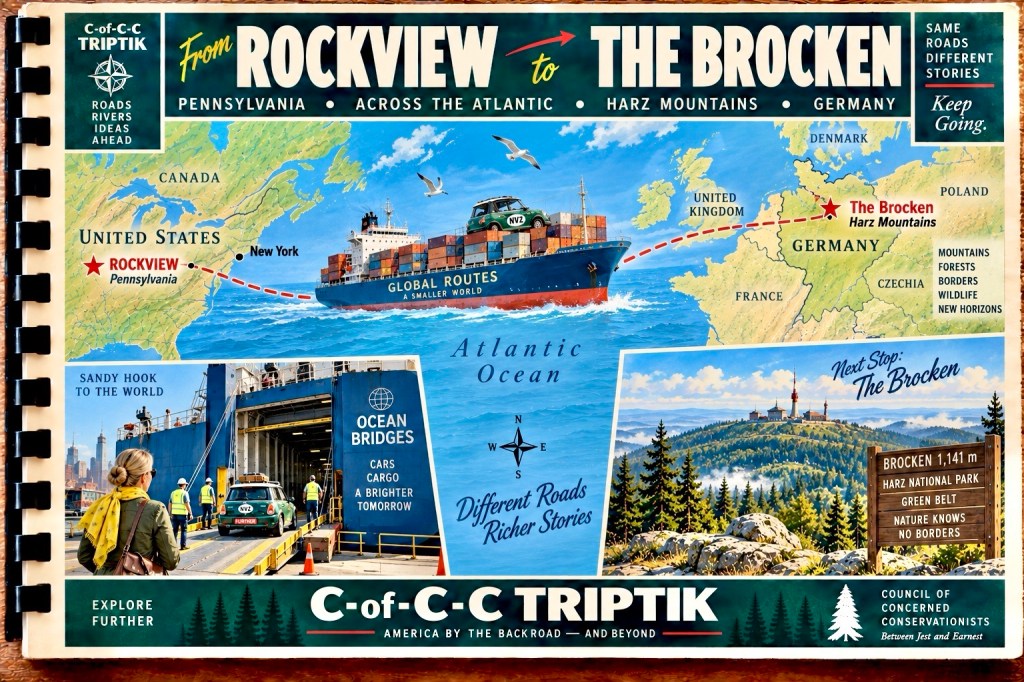
Natural grandeur. Preservation. Perhaps even a little freedom. You’ll love it. Take the Mini to Sandy Hook, New Jersey. Find the holly forest. When you get there, call me. I’ll have your next TripTik page ready.
—John
P.S. Keep your passport handy.

PAGE ONE — SANDY HOOK
A Federally administered strand jutting out into the Atlantic sounded harmless enough. Sea air. Beaches. An old holly forest. I packed accordingly.
I would shortly learn that John’s definition of a nature tour differs in several important respects from mine.
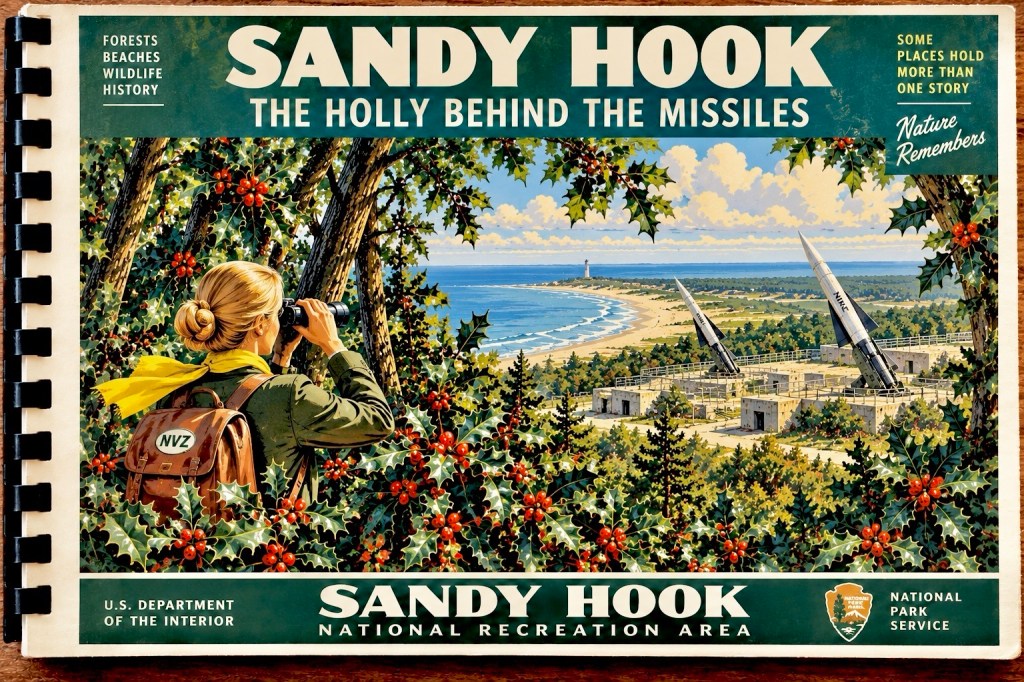
The holly had survived magnificently. It had also spent much of the twentieth century behind a military installation defending New York Harbor and later armed with missiles.
A sanctuary, certainly. But one which an enemy might once have placed rather high on his list of things to obliterate.
I telephoned John.
“Very nice trees. What’s next?”
“Pennsylvania.”
Naturally.
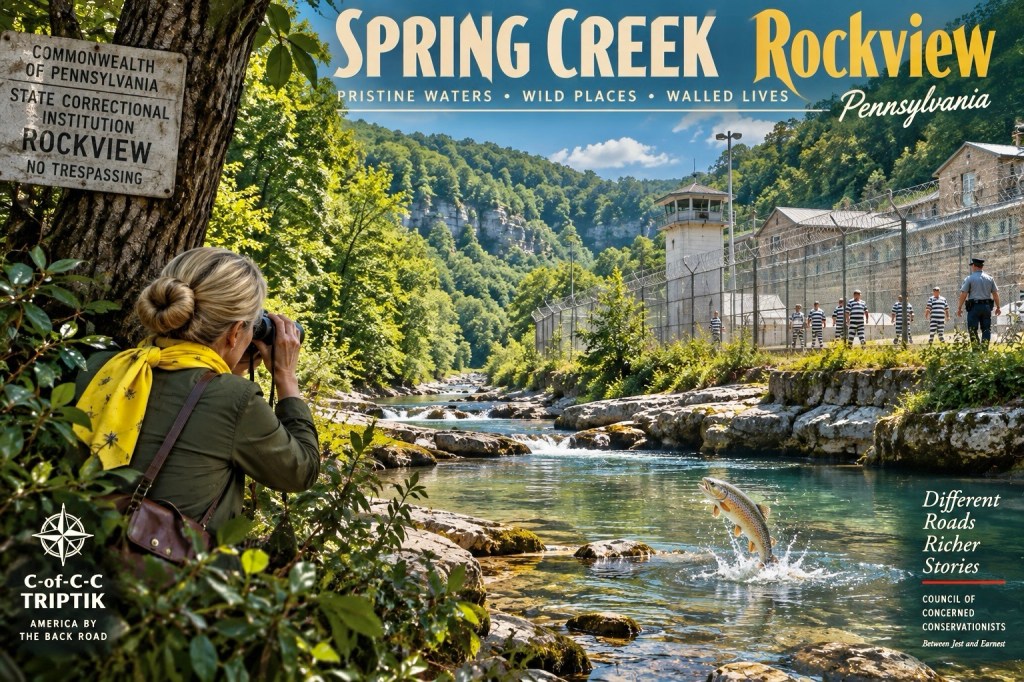
John had promised clear water. For once, there had been no deception.
I telephoned John.
“You neglected to mention the prison.”
“But you found the creek?”
“Yes. Eventually. I may also have committed a misdemeanor.”
“Excellent. Now go east.”
“How far east?”
There was a pause.
“Keep your passport handy.”
I was beginning to dislike this vacation.
THE IRON CURTAIN
At this point I should mention that the Mini is not amphibious. John apparently regards this as a detail.
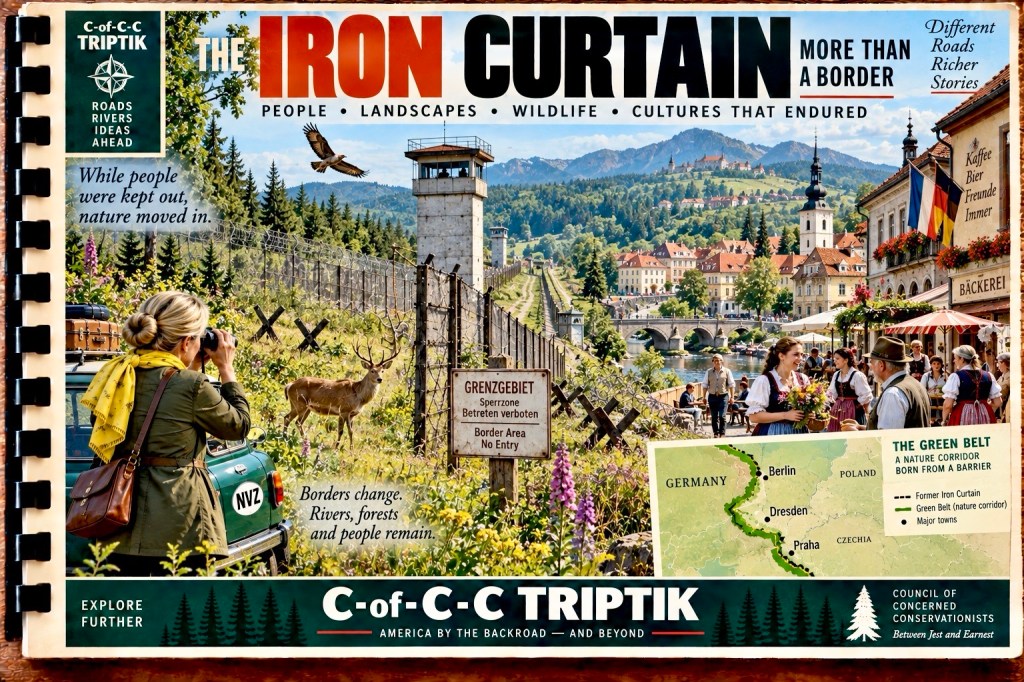
Here the joke became considerably less simple.
The old barrier had left behind an extraordinary corridor of comparatively undisturbed landscape. But looking beyond the former fence, I found myself wondering whether it had preserved something else as well.
Peoples who had spent decades insulated from the great wash of Western commercial culture emerged with national identities, customs and particularities that seemed, in many places, considerably less diluted than those farther west.
One may dislike the wall and still notice what remained behind it. Apparently John’s definition of conservation extended beyond trout and holly.
I rang him.
“John, are we still discussing nature?”
There was a pause.
“What else would we be discussing? People are part of nature.”
Then he sent the next page :
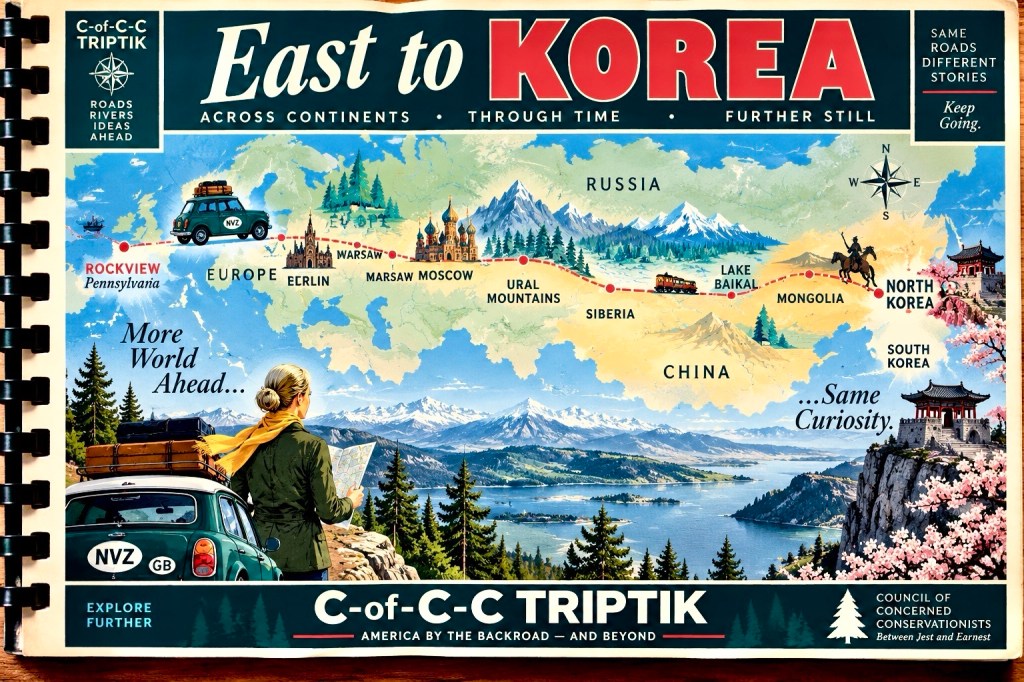
THE DMZ
There are destinations for which one consults a Michelin Guide. There are others for which one consults the military. John had chosen the latter.
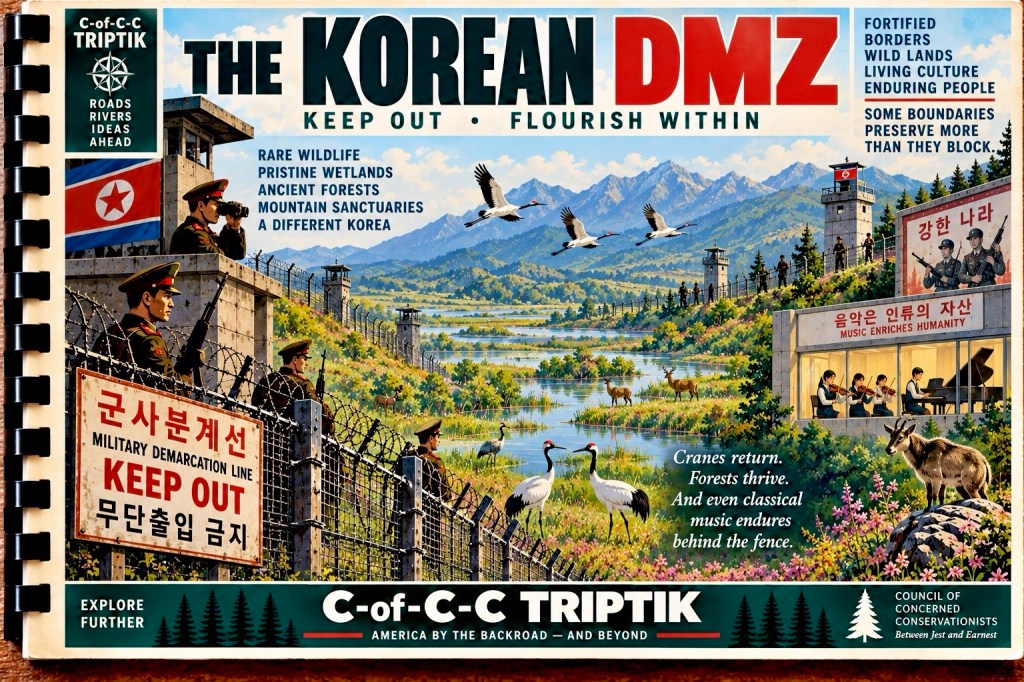
One of the most heavily fortified boundaries on Earth had accomplished something that conservationists spend fortunes attempting to achieve. It had kept people out. And behind the wire, other creatures had taken advantage of the vacancy.
I found myself entertaining an exceedingly uncomfortable thought. Perhaps it was just as well that North Korea had actually acquired the bomb, rather than spending the umpteenth year being accused of being on the verge of acquiring one. Iran had demonstrated the hazards of the latter position rather vividly. Apparently nuclear deterrence had become another unlikely instrument of habitat preservation
By now I understood at least part of John’s game. Everywhere he sent me, something seemed remarkably free precisely because somebody else wasn’t. I hoped Korea was the punchline.
It wasn’t.
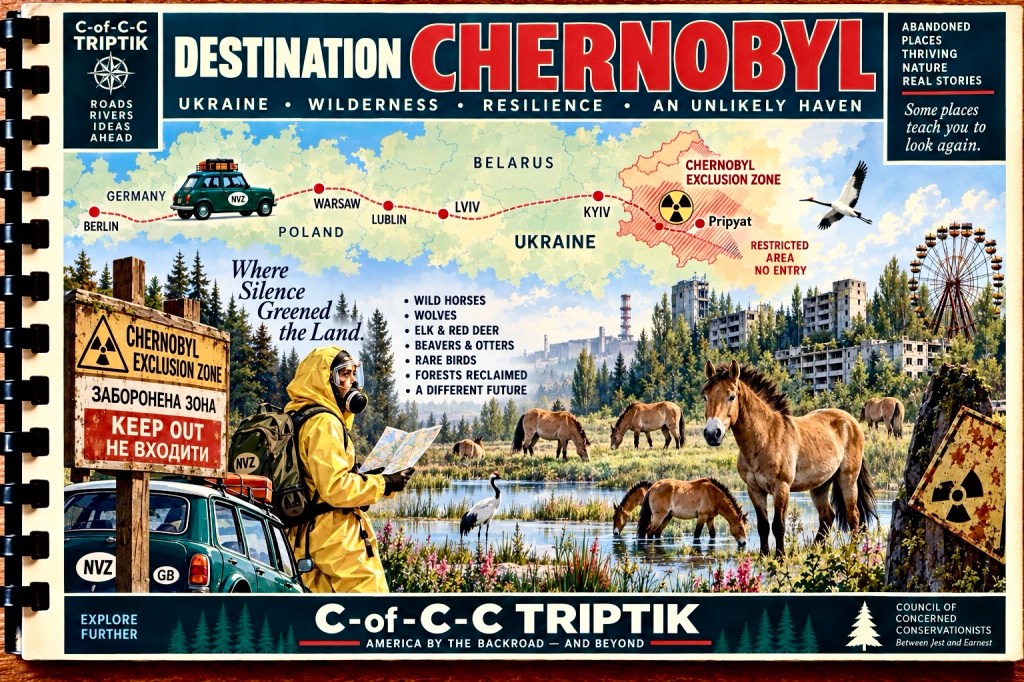
CHERNOBYL
John’s original promise returned to me:
Wild country. Remarkable wildlife. Things surviving against the odds.
Technically, the man had not lied once. I was beginning to resent this.
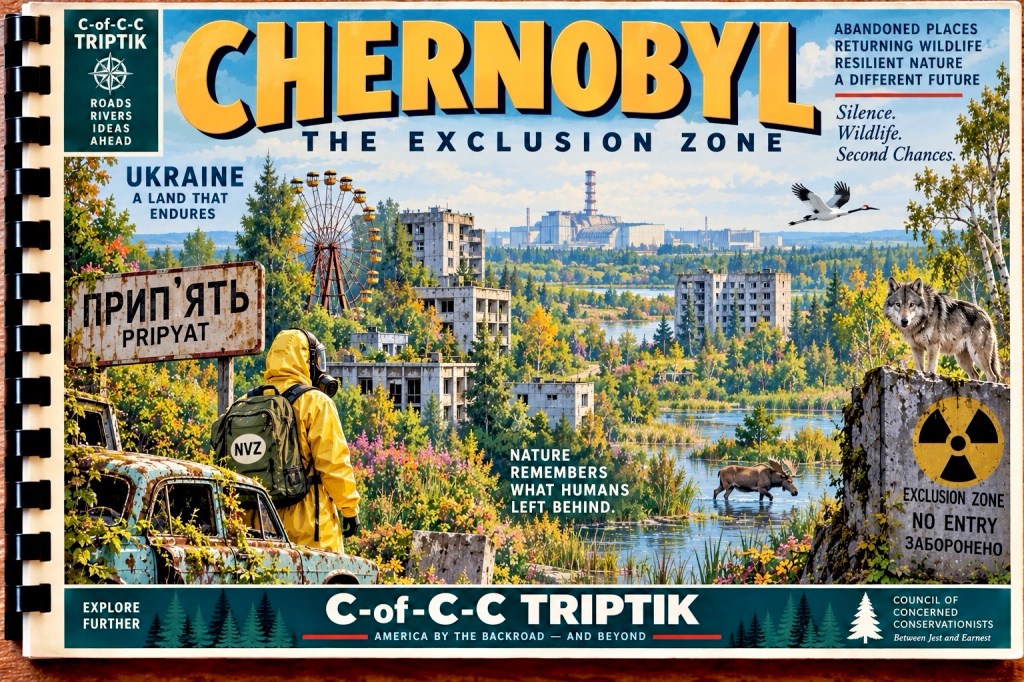
The catastrophe was no conservation program. It created something else: an exclusion zone.
People left. Roads emptied. Fields and settlements were abandoned. Forest and wildlife moved into spaces from which ordinary human pressure had suddenly vanished.
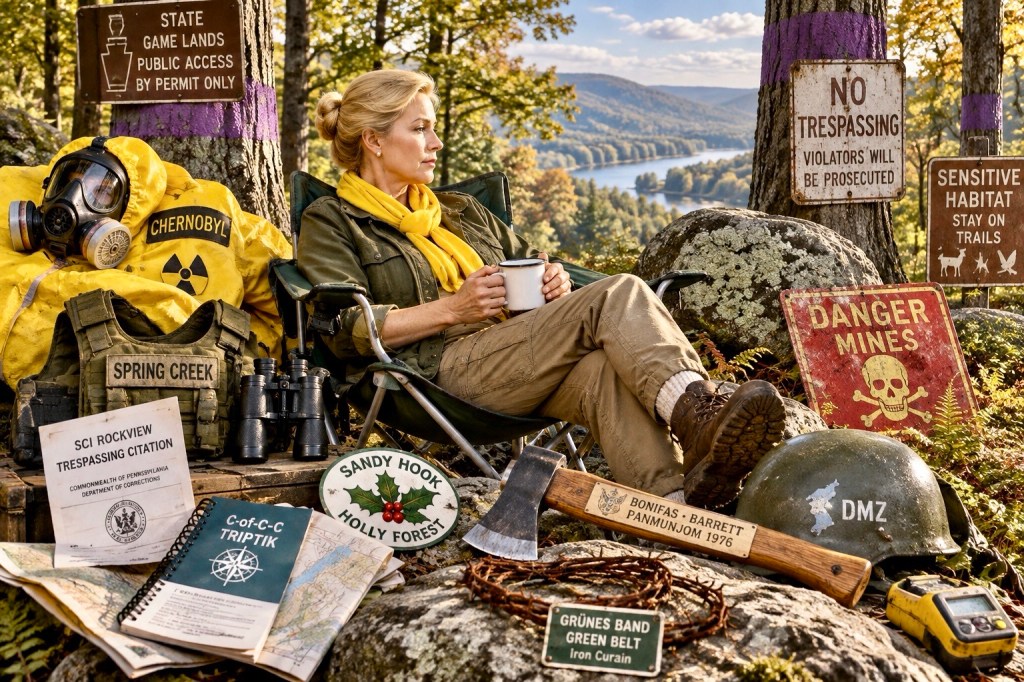
I stood at a prudent distance and finally understood the itinerary.
Sandy Hook.
Rockview.
The Iron Curtain.
The DMZ.
Chernobyl.
Different places. Different histories. Different dangers.
And everywhere, some variation on the same remarkably effective instruction:
KEEP OUT.
PRISON EARTH?!
Standing in the Chernobyl Exclusion Zone, surrounded by flourishing wildlife and considerably more radiation signage than I had ever expected to encounter on a motoring holiday, I telephoned John.
“All right, John. I concede the point. The fences preserved the forest. The prison preserved the canyon. The Iron Curtain left a green belt. The DMZ became a wildlife refuge. Chernobyl emptied the countryside and the horses came back.”
I looked across the abandoned landscape.
“Fine. Bring on the militarization. Bring on the exclusion zones. At this rate, perhaps we ought to make the whole world an armed camp and be done with it. Think what we might save.”
There was a long silence.
“Begonia—I was hoping you’d stop at ‘boundaries.’”


Leave a Reply