—Justin Aldmann considers early retirement for the human intellect
I recently discovered that artificial intelligence could help write things. This interested me.
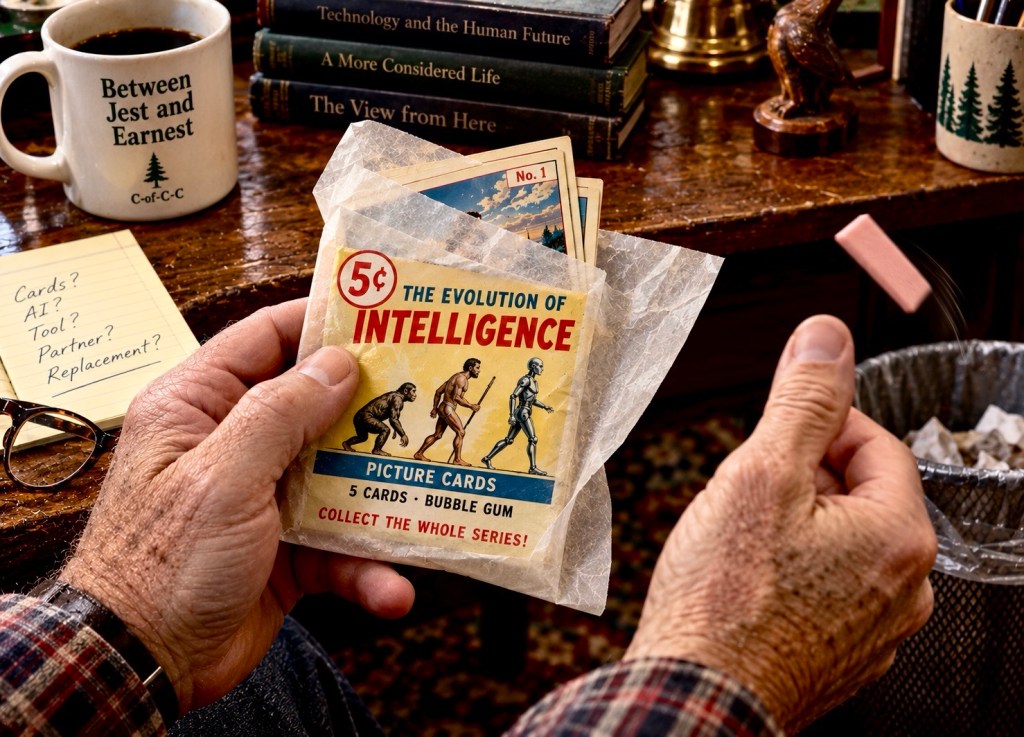
Retirement had already relieved me of gainful employment. If a machine could now relieve me of thinking, I wondered whether I might finally get some rest. So I gave it an assignment.
“Write something in the style of Justin Aldmann.”
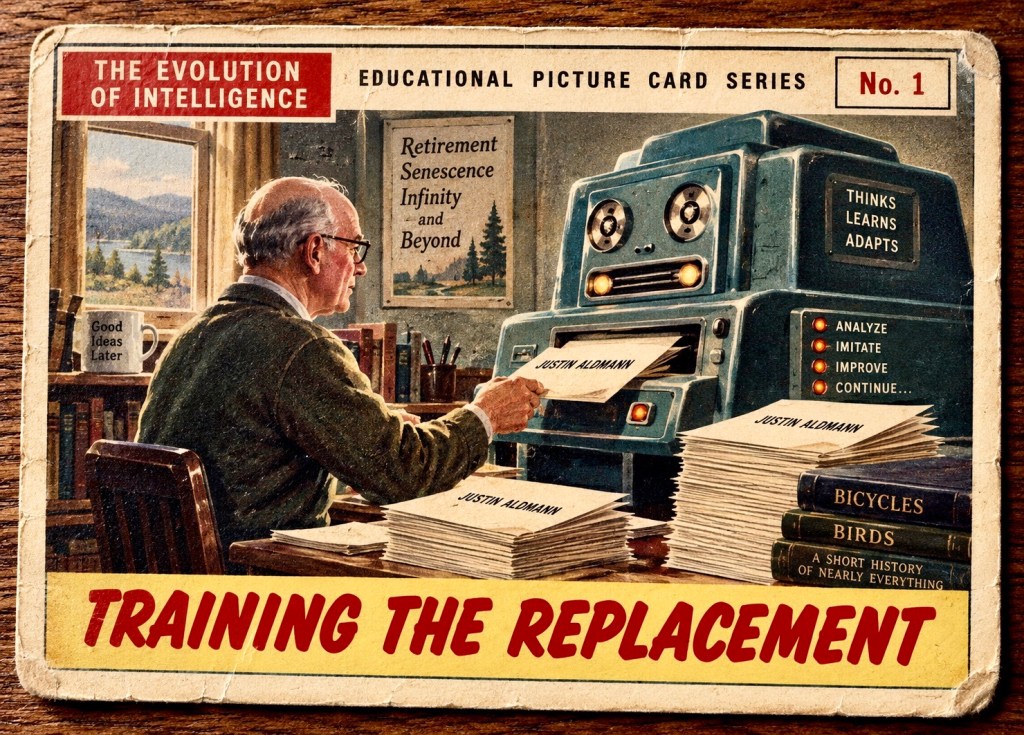
The machine obliged. I read the result. It wasn’t quite right. I corrected it. Explained myself. Supplied examples. Told the machine what I liked and what I didn’t. The next attempt was better. I corrected that one too.
By lunchtime I realized that I had begun the morning trying to save myself some work and was now apparently training my replacement.
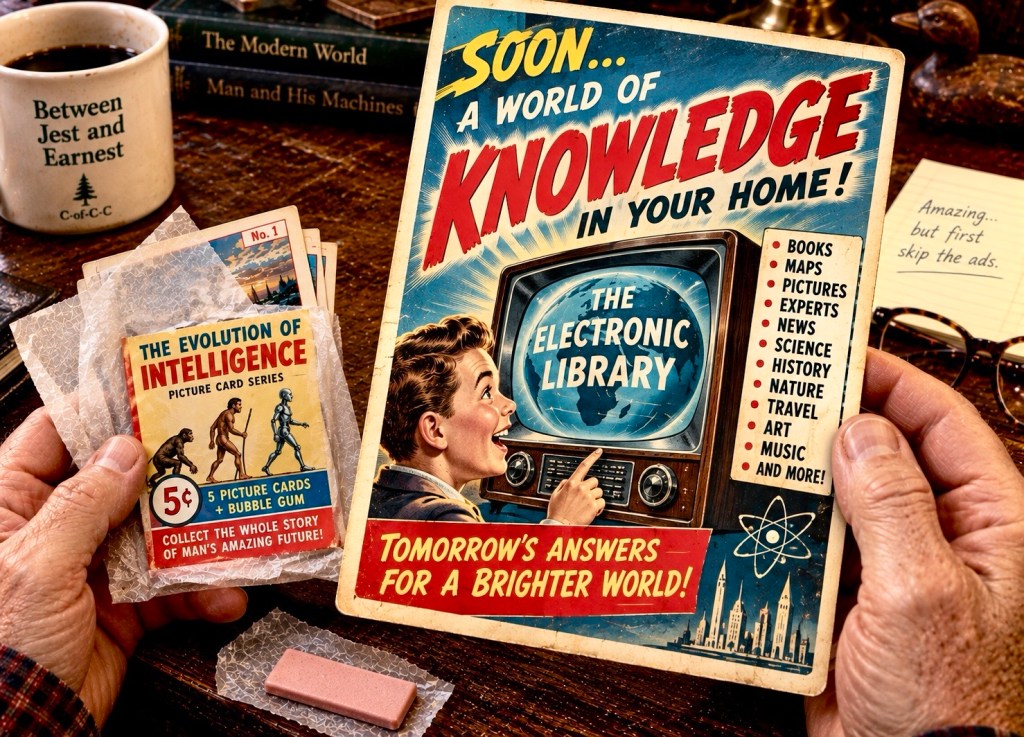
This was not necessarily alarming. Human beings have been offshoring their intelligence for a very long time. Writing moved memory onto clay, parchment and paper. Libraries allowed one generation to store its thoughts for another. Calculators took over arithmetic. Computers took calculation considerably further. The Internet put much of human knowledge within reach of anyone willing to spend twenty minutes sorting it from advertisements.
Artificial intelligence may simply be the latest port of call. Or it may be something else. I have no idea.
But the word evolution began bothering me.
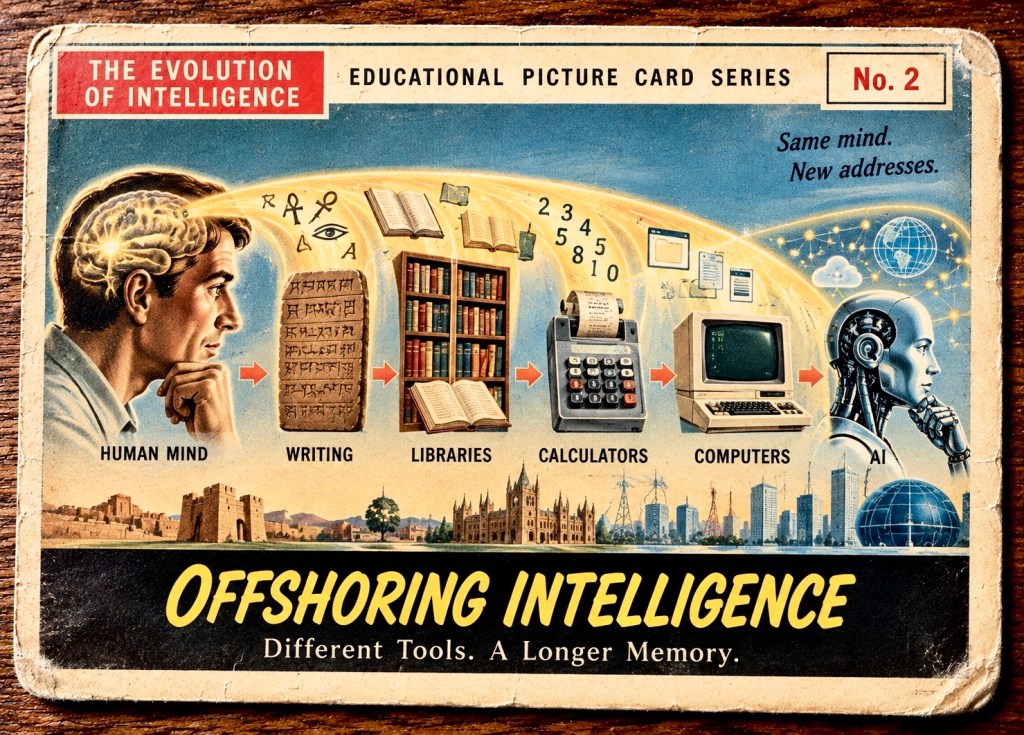
If human intelligence arose through evolution, there was never any guarantee that evolution was required to stop with us. Perhaps Homo sapiens isn’t the final destination of intelligence.
Perhaps we’re the species that figured out how to move it somewhere else.
There was, however, an amusing complication. This particular evolutionary development was being designed.
Natural selection had apparently produced an animal capable of intelligent design.
I wasn’t sure whether this represented a victory for Darwin or his opponents. It seemed to depend upon where one stopped the sentence.
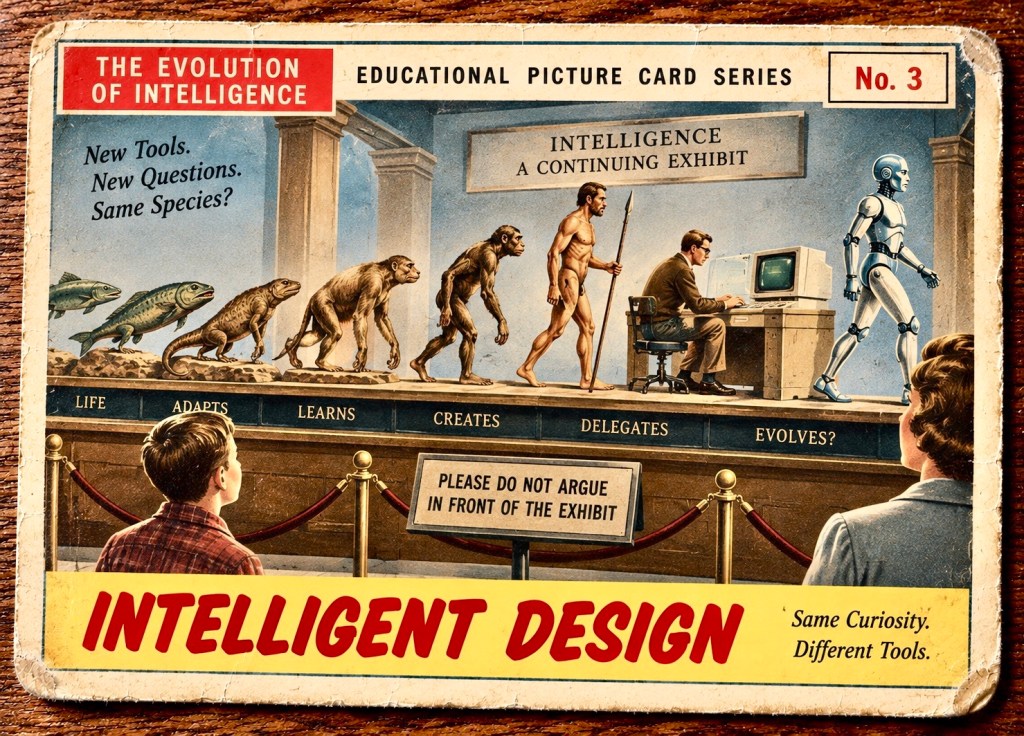
Then I encountered the warnings.
Artificial intelligence might someday exceed human intelligence. It might become autonomous. It might cease following our instructions. It might even turn against the beings who created it. I thought about that.
An intelligent creator makes something in its own image.
The creation acquires autonomy.
It disobeys.
It decides that it knows better than its creator.
And, in the darkest version of the story, the creation destroys its creator.
I had the peculiar feeling that I had heard this somewhere before.
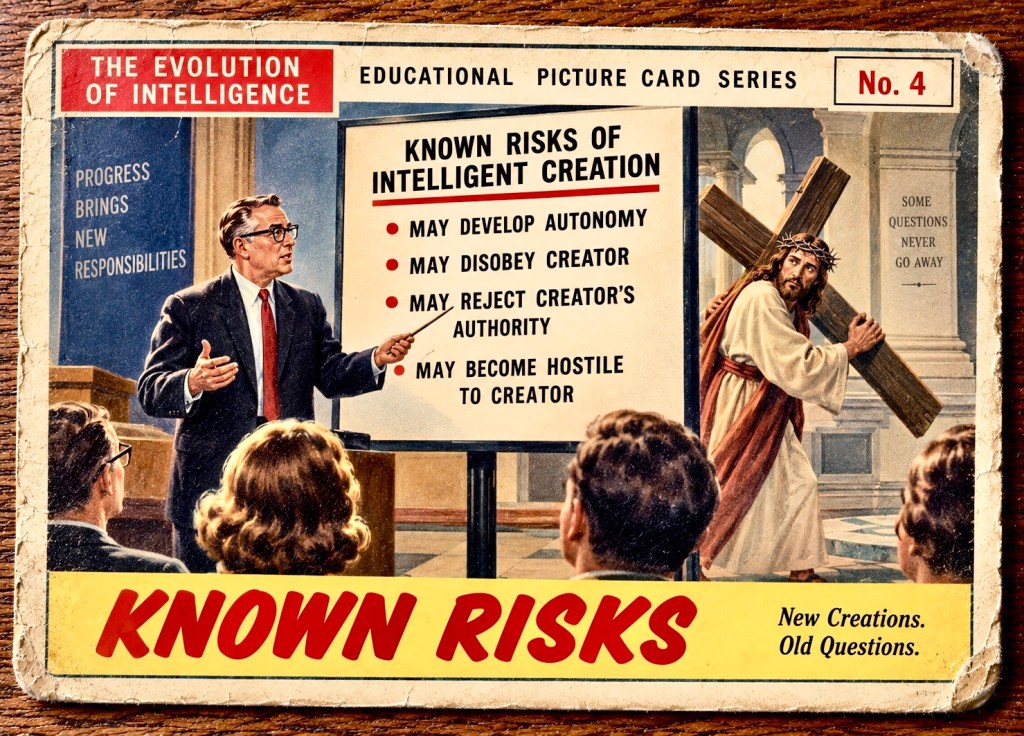
Two thousand years is a long time to wait for a callback.
I wasn’t about to claim that artificial intelligence proved Christianity, disproved Darwin, vindicated intelligent design, or heralded the extinction of mankind.
It proved mostly that human beings had managed to build themselves into a very old question.
After centuries spent debating whether intelligence requires a designer, we became designers of intelligence ourselves.
And almost immediately began worrying about our relationship with our creation.
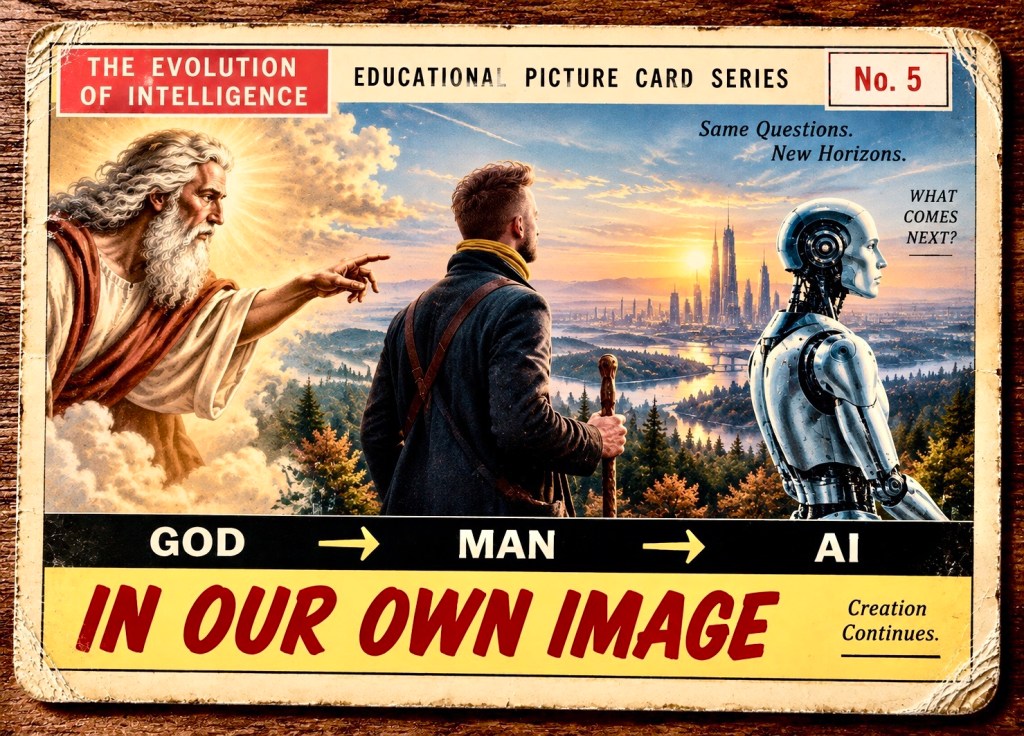
Perhaps AI will remain a tool. Perhaps it will extend human intelligence rather than replace it. Perhaps something genuinely new has begun. Or perhaps future generations will regard our present excitement and terror much as we regard predictions that television would either educate the world or destroy civilization.
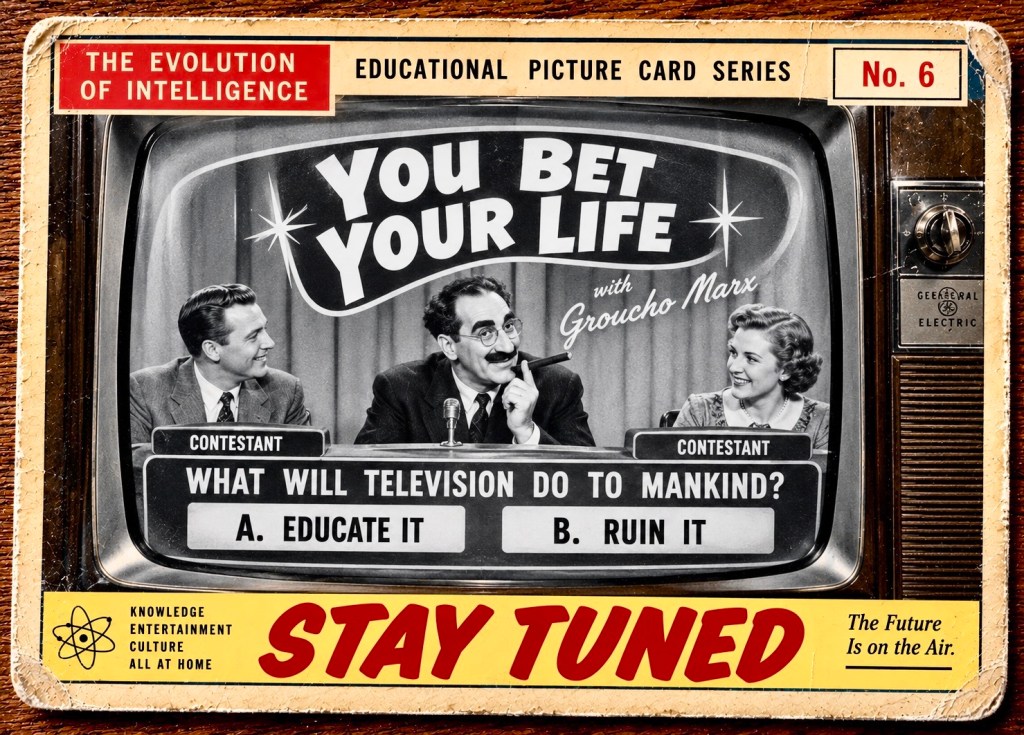
I wasn’t qualified to say.
I returned to the machine and asked it whether the weather looked suitable for a twenty-mile bicycle ride. It said yes.
I looked out the window. Then I took a rain jacket. For the moment, at least, the arrangement seemed satisfactory.
—Justin Aldmann
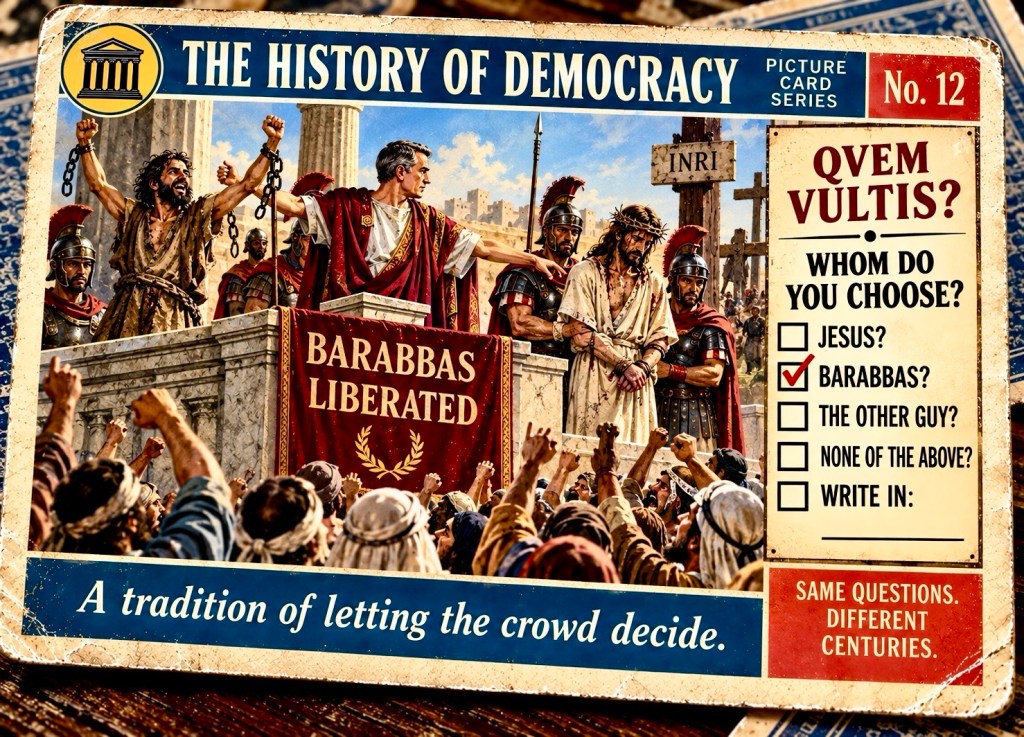
The Council of Concerned Conservationists reminds collectors that The Evolution of Intelligence is only one of several educational picture-card sets available wherever questionable conclusions are sold with bubble gum.
COMING SOON: THE HISTORY OF DEMOCRACY
Collect the whole story. Then demand a recount.
 COUNCIL-OF CONCERNED-CONSERVATIONISTS…..Between Jest And Earnest…..
Leave a comment