
There once was a time when pop music celebrated innocent, wholesome and joyful love.
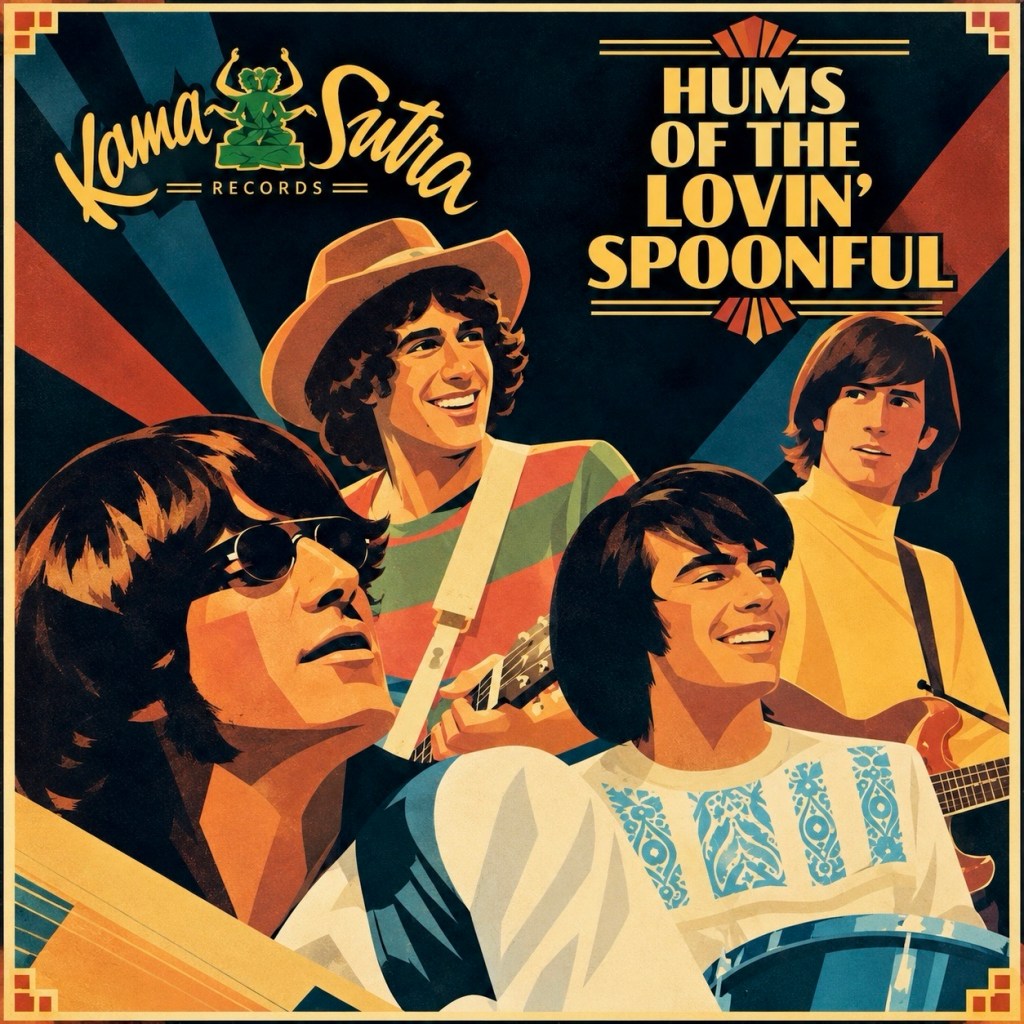
Of course, it could also be playfully risqué—as the very name of the band, The Lovin’ Spoonful suggests—because love, sex and the continuation of life had not yet been separated into entirely different departments.
It more often than not, intentionally or unintentionally, led somewhere.
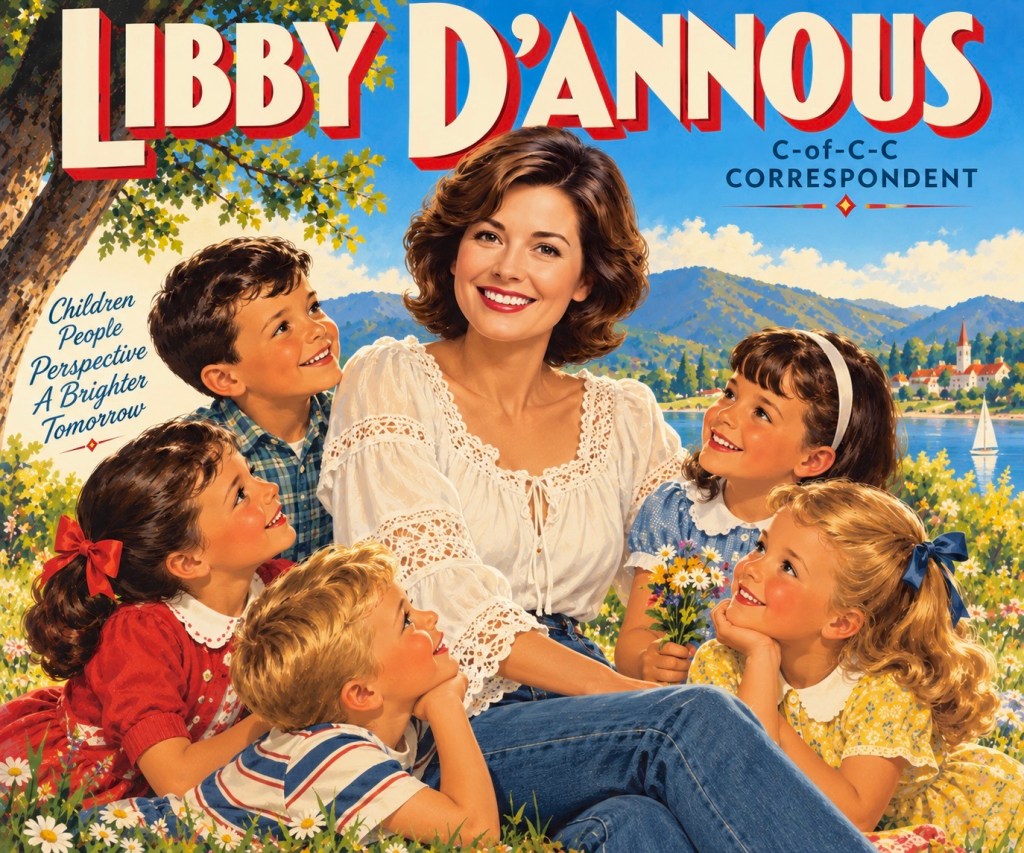
“It was ultimately in the service of something greater,” as our correspondent Libby D’Annous puts it.
That observation is as good a place as any to explain both Libby and her occasional dispatches from PLANET PARENTHOOD.
The old love songs weren’t necessarily profound. They didn’t have to be. Boy meets girl was already quite a plot. They were constructed, joyously, around attraction, longing, courtship, heartbreak and the possibility that two people might actually build something together. Even the suggestiveness remained anchored in human connection.
The Lovin’ Spoonful provides an almost suspiciously perfect example. The band’s name carried a sexual joke, while songs such as “Lovin’ You” could remain cheerful, melodic and almost innocent. The erotic and the wholesome had not yet been informed that they were enemies.
This is Libby’s territory.
There are coincidences, and then there are those little arrangements of the universe that seem almost too neatly arranged to be accidental.
Consider our correspondent Libby D’Annous.
Say the name aloud and then consider her beat: attraction, courtship, sex, fertility, children, family and the continuation of generations. We are not prepared to explain this. We merely report it.
Perhaps there really is something to nominative determinism.
Whatever the explanation, Libby represents what might be called,
biological optimism: the suspicion that attraction, courtship, sex, children, family and the continuation of generations are not unrelated phenomena that civilization accidentally bundled together, but parts of one very old human arrangement.
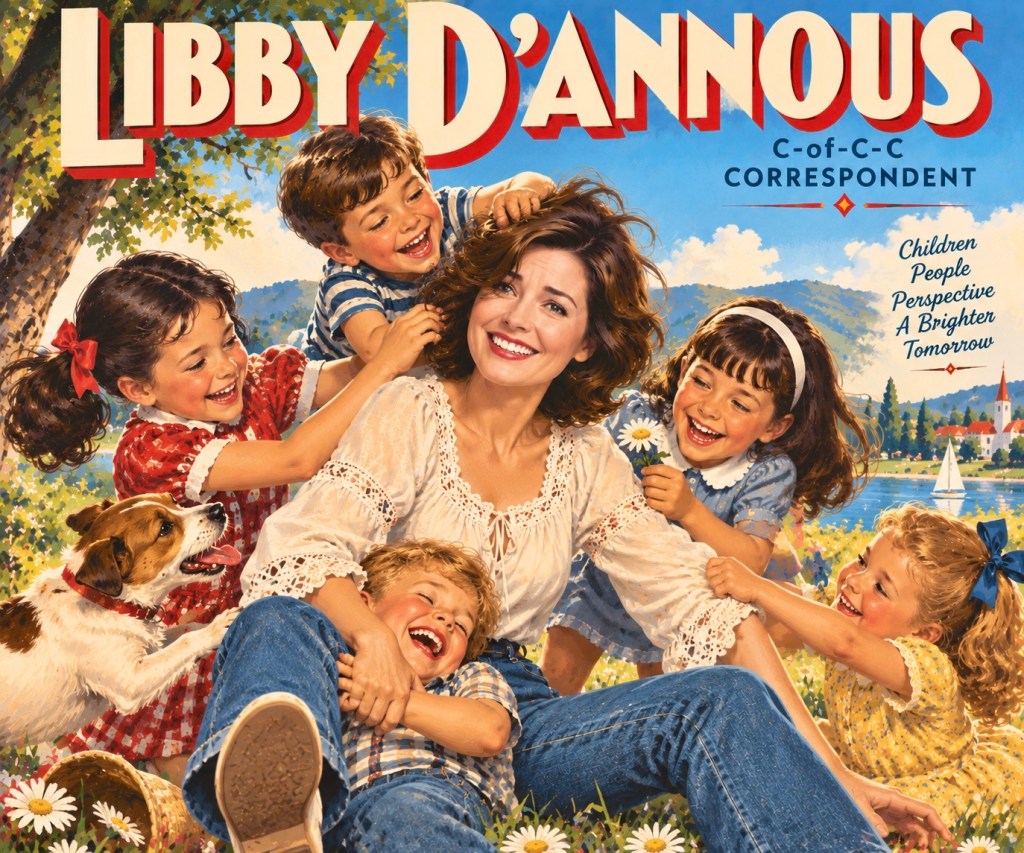
Libby therefore regards fertility neither as a political program nor as an obligation. She sees it as one possible flowering of eros—the great biological vote of confidence cast by one generation for another.
Her particular variety of libidinousness, if we may use the word, turns out to be oddly traditional.

It was perhaps inevitable that Libby would eventually find herself filing dispatches from Planet Parenthood.
Here again, we can only marvel at the appropriateness of the name.
Where modern discussions of reproduction tend toward management, planning, rights, procedures, statistics and bureaucratic language, Planet Parenthood attempts something almost embarrassingly unfashionable:
to re-enchant the whole business.

On Planet Parenthood, motherhood and fatherhood may be burdens, but they are joyful burdens. Children are not lifestyle accessories. Sex is neither dirty nor sacred merely because someone declares it so. And the continuation of human life is regarded as something considerably stranger, funnier and more magnificent than a demographic chart can convey.
Which brings us back to Phil Ochs :
“In such ugly times, the only true protest is beauty.”
That has become something close to an unofficial principle around here. Beauty produces attachment. Attachment produces love. Love sometimes produces life. And life, despite all available evidence and repeated discouragement, keeps insisting upon more life.
That is the territory Libby has been assigned to cover.
Her reports may therefore wander through love songs, marriage, motherhood, fatherhood, fertility, children, demographic collapse, changing relations between the sexes, or whatever other evidence she happens to encounter while surveying this one peculiar planet among others.
She is not quite our family-values correspondent. That sounds much too respectable. She is our libidinous conservationist.
And Planet Parenthood is her field report from the oldest conservation project on Earth:
keeping the human story going!
—The Council of Concerned Conservationists
Between Jest and Earnest

—Phil Ochs


Leave a Reply