—Invasion of the Film-School People!
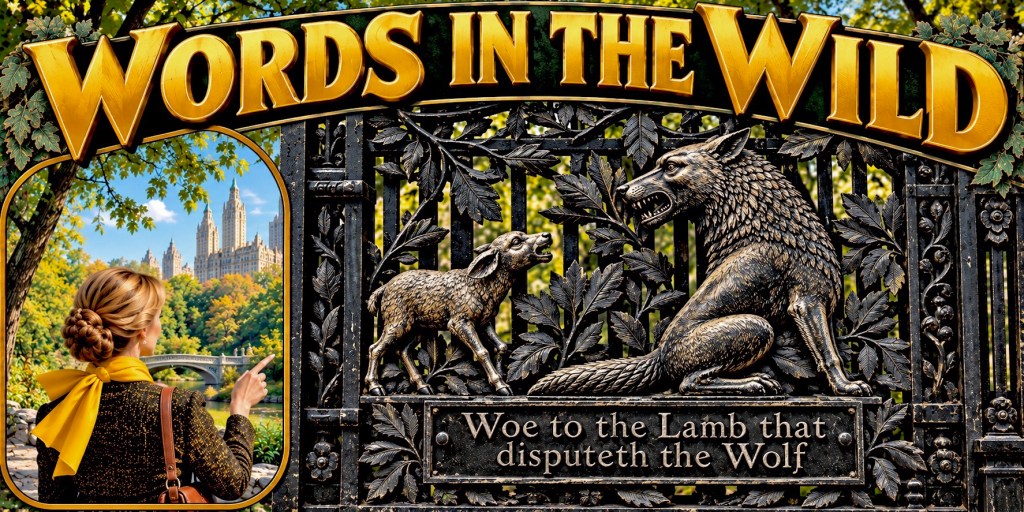
EDITOR’S NOTE — John St. Evola
It had been a dry spell for WORDS IN THE WILD. The words, presumably, were still out there. We just weren’t finding them.
So I invited Mrs. Begonia Contretemps to sit in on the research. Begonia spends a good deal of time on the road, possesses an unusually good ear, and has the increasingly uncommon habit of listening when other people are talking. I gave her no particular word to look for. In fact, I told her not to look for one at all.
Take the Mini. Stop wherever you like. Keep your ears open. Write down anything that strikes you as curious.
She came back with rather more than a word. She came back with an entire academic department. What follows is her field report.
By Mrs. Begonia Contretemps
The Editor’s instructions were unusually vague.
“Take the Mini. Go somewhere. Keep your ears open. See what people are saying.”
This is what passes for a field assignment at the Council.
I was not to conduct interviews. No questionnaires. No microphones pushed beneath unsuspecting noses. I was merely to travel, stop here and there, and listen to ordinary people talking about ordinary things.
The object, insofar as there was one, was to take the temperature of ordinary conversation.
I packed a notebook.

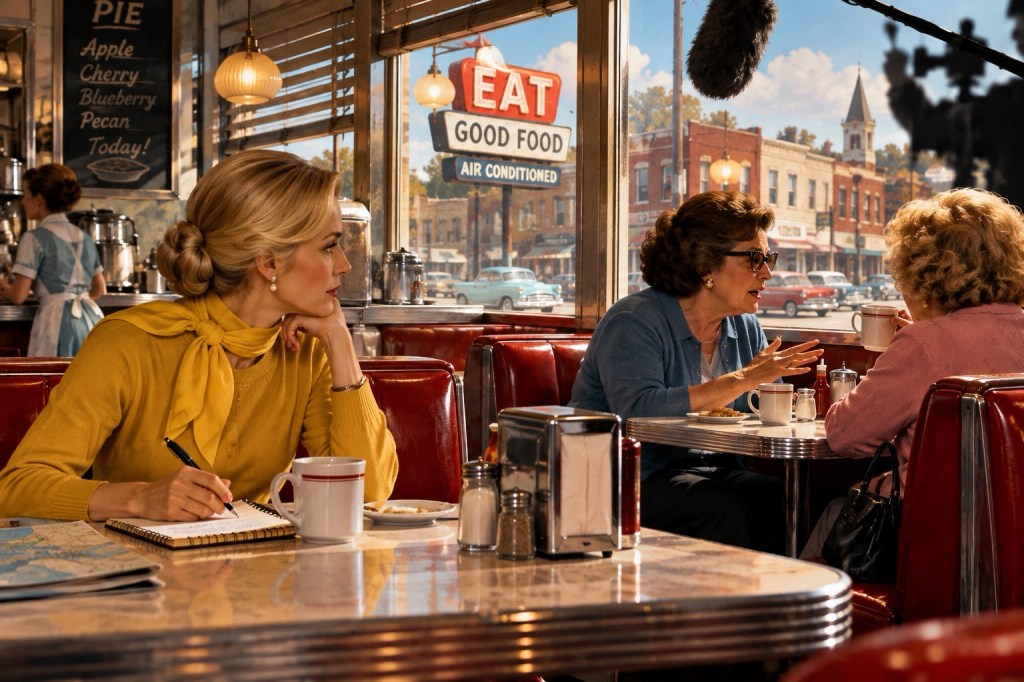
FIRST STOP: A DINER
At the next table, two women were discussing the collapse of somebody’s marriage. Apparently everyone had known it was coming.
“There was so much foreshadowing.”
I looked up.
Foreshadowing?
He had been sleeping with his secretary. Once upon a time, this was called a clue. I wrote foreshadowing in the notebook.
SECOND STOP: MOTEL BREAKFAST ROOM
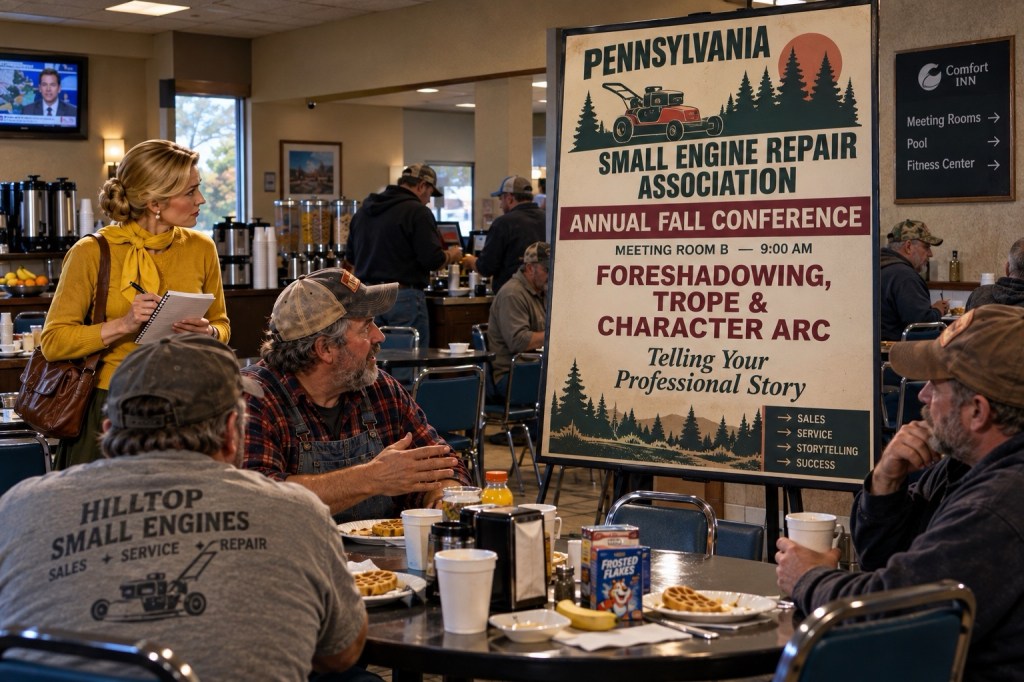
A gentleman at the waffle machine was telling another gentleman about someone who had quit his job, sold his house and moved to Arizona.
“It completes his character arc.”
I put down my coffee.
The man moved to Tucson. Nevertheless:
CHARACTER ARC
Into the notebook it went.
I was beginning to suspect that at some point during the past twenty years the entire population had quietly enrolled in Film Studies without telling me.
People no longer simply change. They undergo character development.
Something that happened earlier isn’t merely something that happened earlier. It was foreshadowing.
Something familiar isn’t familiar. It’s a trope.
People don’t disagree about what happened. They have competing narratives.
Something isn’t implied. It has subtext.
A coincidence becomes a callback.
A surprise is a plot twist.
How something is presented is its framing.
And apparently almost anything can now be coded.
THIRD STOP: SOMEWHERE WITH MORE COFFEE
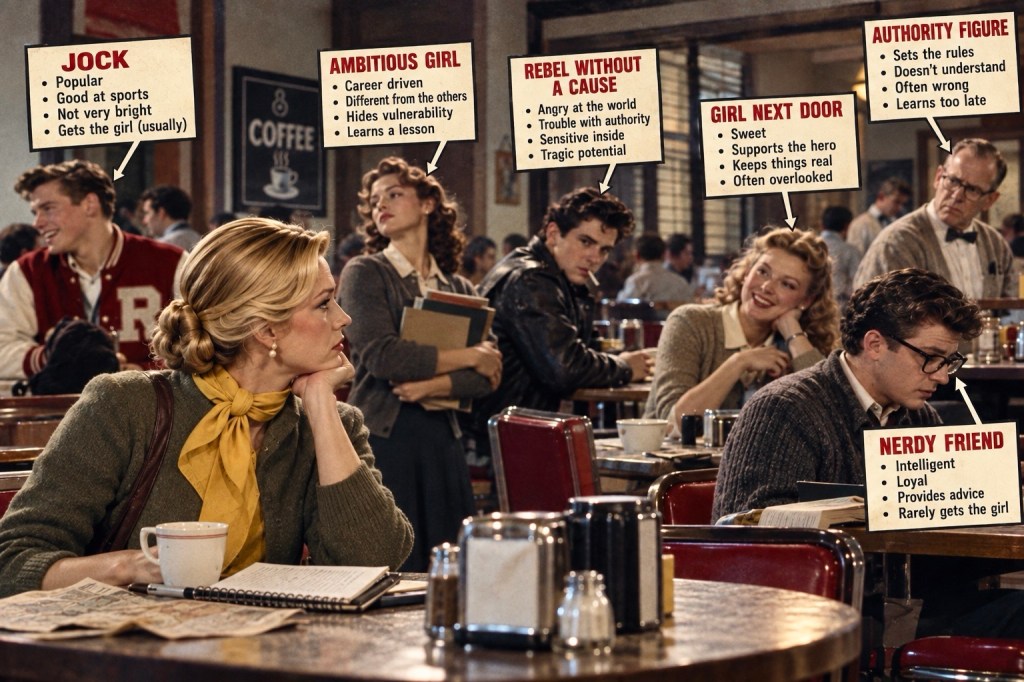
Here I encountered trope in its natural habitat.
Everything was a trope. The difficult father. Trope. The ambitious woman. Trope. The small town. Trope.
The large town. Probably another trope.
At this point I began to understand what bothered me. Once something becomes a “trope,” you don’t have to examine this particular thing anymore.
You’ve already identified the movie it’s in.
Classification has relieved you of observation. This seemed rather important, so I underlined it twice.
A ROADSIDE REVELATION
Back in the Mini, I decided that this was what was wrong with people nowadays.
Then I put the brakes on that thought. Literally, as it happened. Because we had been doing this long before anyone had a degree in Film Studies.
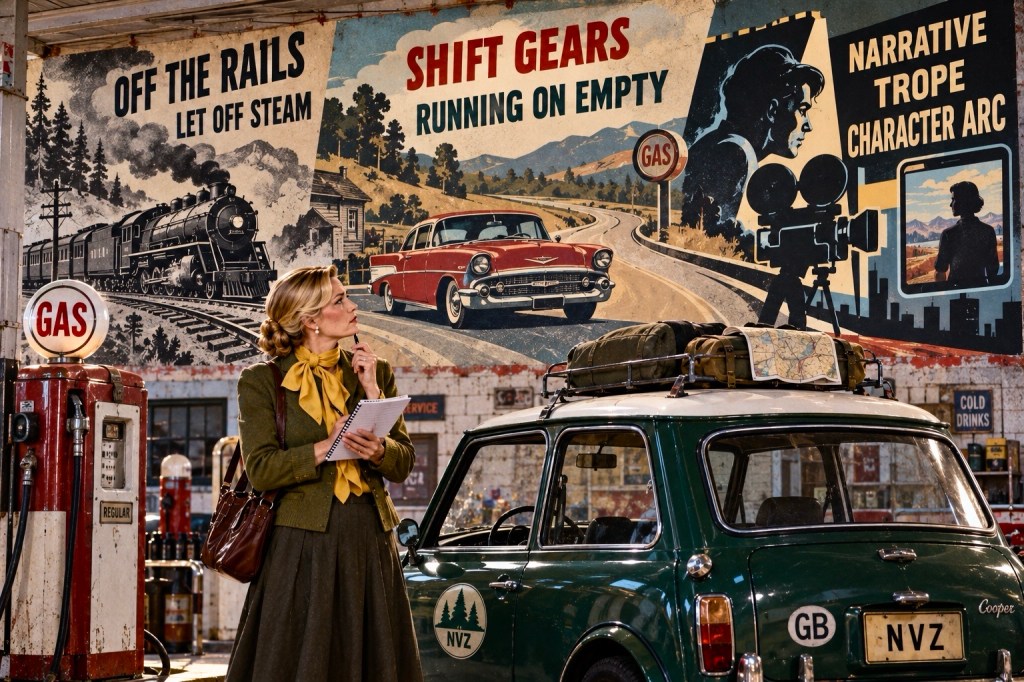
My generation knew where the rubber met the road. We shifted gears, put the brakes on things, ran out of gas, went into reverse, took the driver’s seat, got considerable mileage out of an idea and occasionally had trouble getting something started.
We described life as though it were an automobile.
Our parents and grandparents had done much the same thing with the machinery around them. People got sidetracked. Something went off the rails. Someone had to let off steam. Another fellow was asleep at the switch.
Perhaps everybody goes to school after all. We just don’t notice the school because we’re living inside it.
The railroad gave us one vocabulary for understanding life. The automobile gave us another. And now, apparently, the screen was giving us the next one.
I had mocked a man for having a character arc while congratulating myself for knowing where the rubber met the road.
Fair enough.
THE PROBLEM
But there was a difference. We no longer merely watch movies.
We have learned to watch reality as though it were one.
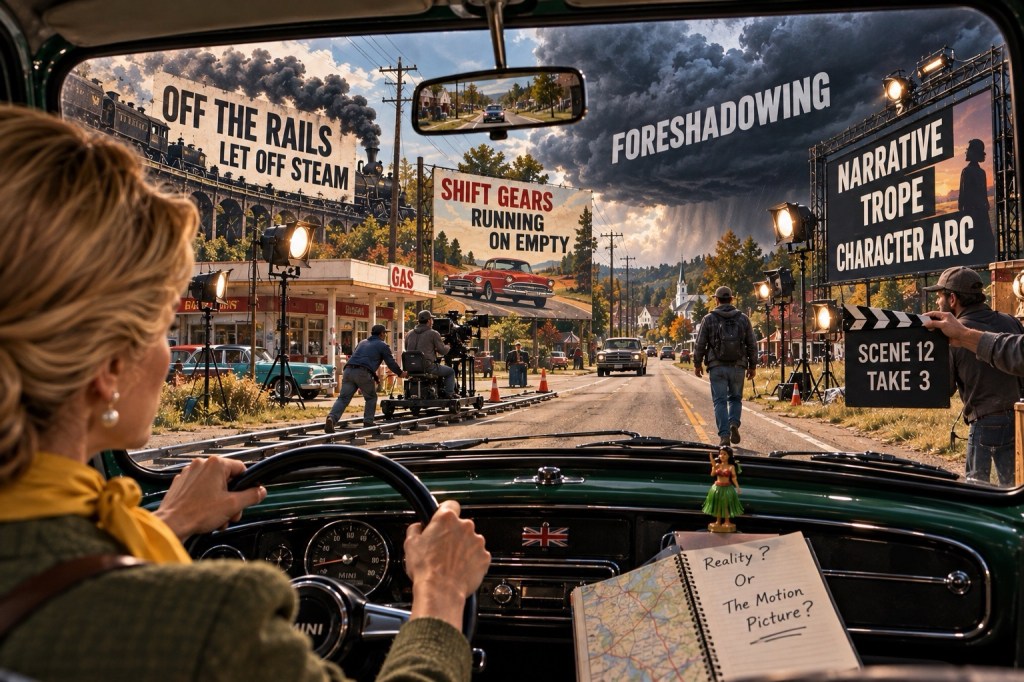
Perhaps screens have something to do with it. Increasingly, events reach us already clipped, edited, captioned, replayed, interpreted and accompanied by reaction shots. We don’t merely experience what happened. We consume what happened. And once you begin thinking this way, reality itself starts looking suspiciously scripted.
A storm cloud is foreshadowing.
A repeated phrase is a motif.
A politician entering a room gets an entrance.
A man’s misfortune becomes his character arc.
Nothing is permitted simply to happen.
Worse, we seem to think we’ve seen it before.
LAST STOP: THE UNITED NATIONS
By the time I reached New York, I had acquired enough Film Studies vocabulary to be dangerous.
The General Assembly was in session. Presidents, prime ministers, motorcades, flags, security barriers, television cameras—the world’s largest cast had assembled on a single set. And then Israeli Prime Minister Benjamin Netanyahu took the podium.
I opened my notebook. I should not have.
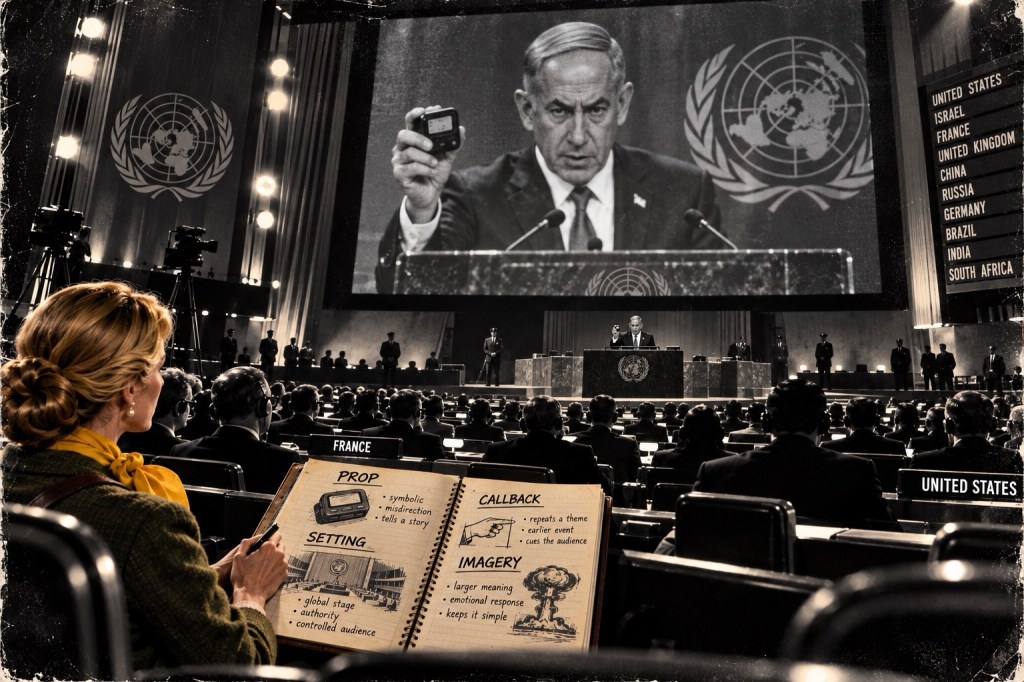
Netanyahu asked the people sitting in the General Assembly to imagine a one-ton ballistic missile striking the United Nations building itself. He said that two such missiles could obliterate it.
Then he produced a pager.
Not metaphorically.
An actual pager.
The object deliberately recalled the 2024 operation in which explosive pagers used by Hezbollah detonated in Lebanon, killing and injuring people.
My pencil began moving by itself.
PROP: Pager.
CALLBACK: Exploding pagers.
SETTING: United Nations.
IMAGERY: Ballistic missile striking the building presently occupied by speaker and audience.
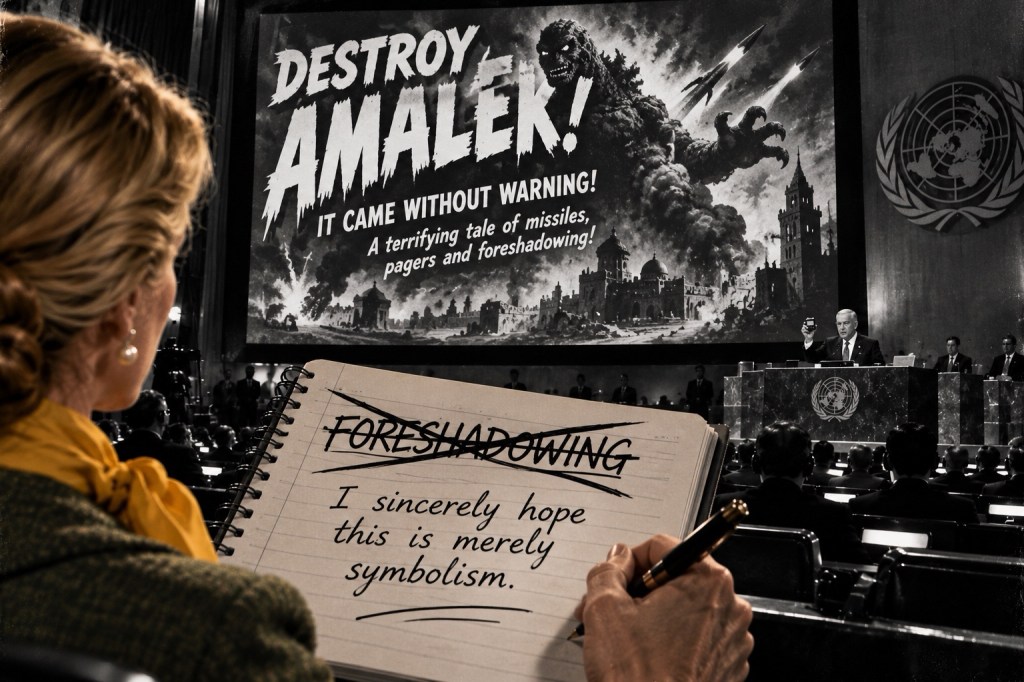
IT CAME WITHOUT WARNING!
—A terrifying tale of missiles, pagers!
And then I wrote:
FORESHADOWING:
I stopped. I stared at the word. Foreshadowing is an interesting little conceit when one is discussing Citizen Kane. It becomes rather less amusing when the person supplying it commands an army.
Was it foreshadowing? I had no idea. Nobody could. And that, suddenly, was the problem. The vocabulary that had seemed merely pretentious back at the diner was now encouraging me to treat something that hadn’t happened as though I already understood its place in the screenplay.
I was no longer describing the scene. I was beginning to write the next one myself.
I crossed out FORESHADOWING.
Underneath it I wrote:
I sincerely hope this is merely symbolism.
Then I closed the notebook.
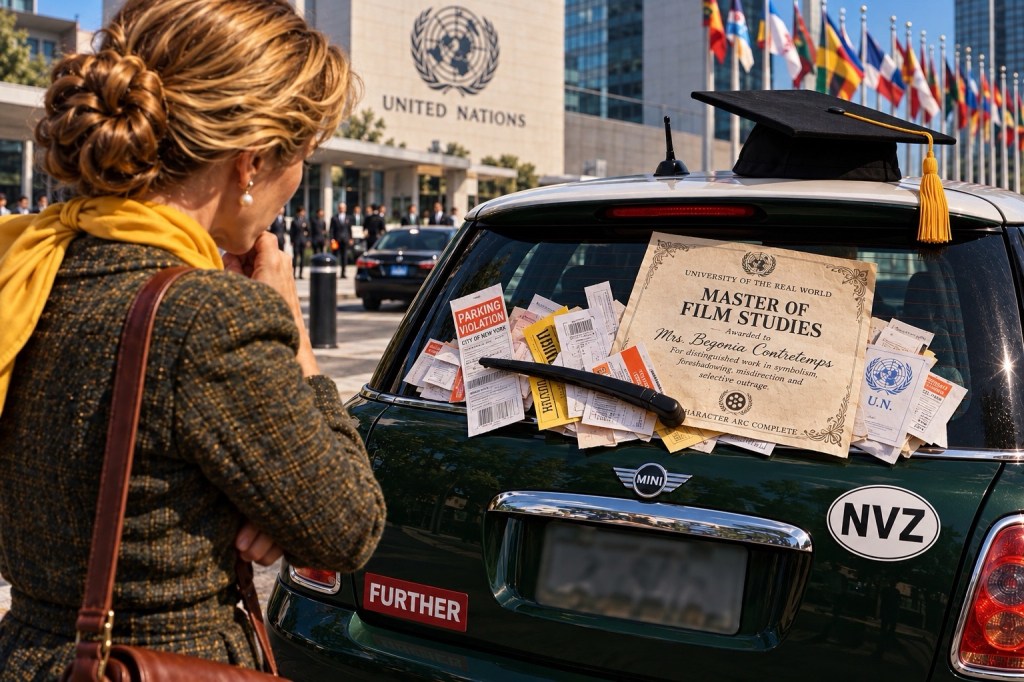
Somewhere between the diner and the United Nations I had become one of them.
I had gone looking for ordinary conversation and returned with a degree in Film Studies.
I suppose you could call that a character arc.
Please don’t.
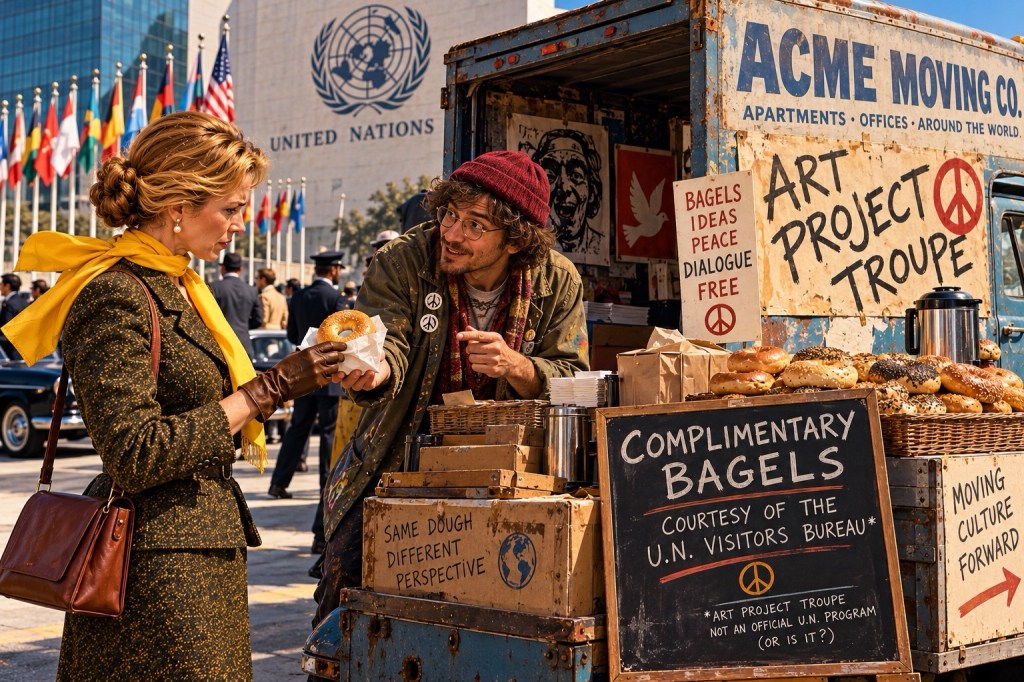
“That is precisely what a bagel with subtext would want me to think.” —Mrs. Begonia Contretemps


Leave a comment