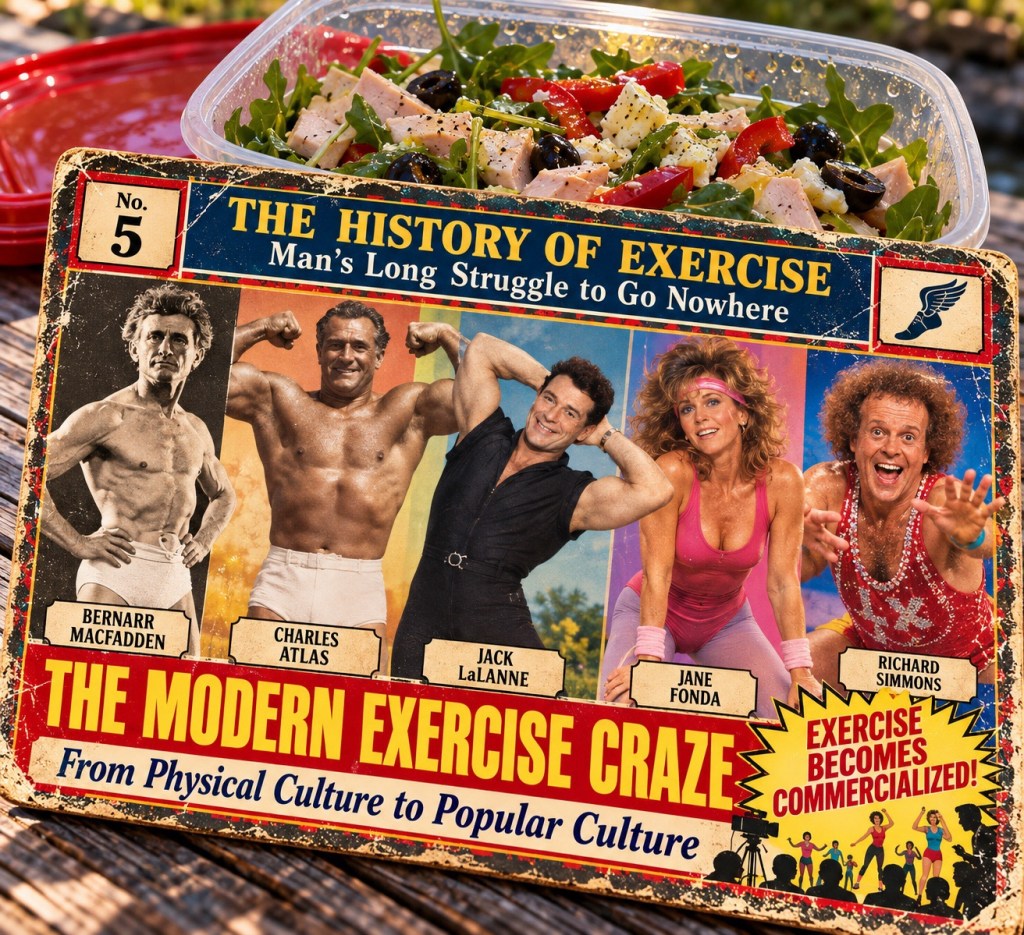
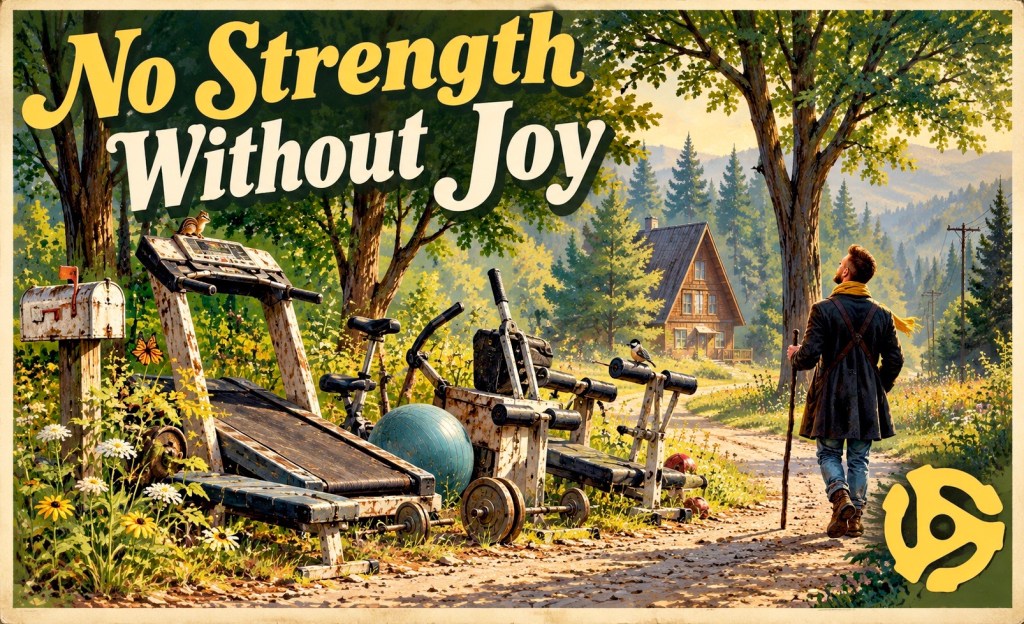
—An Exercise in Futility.

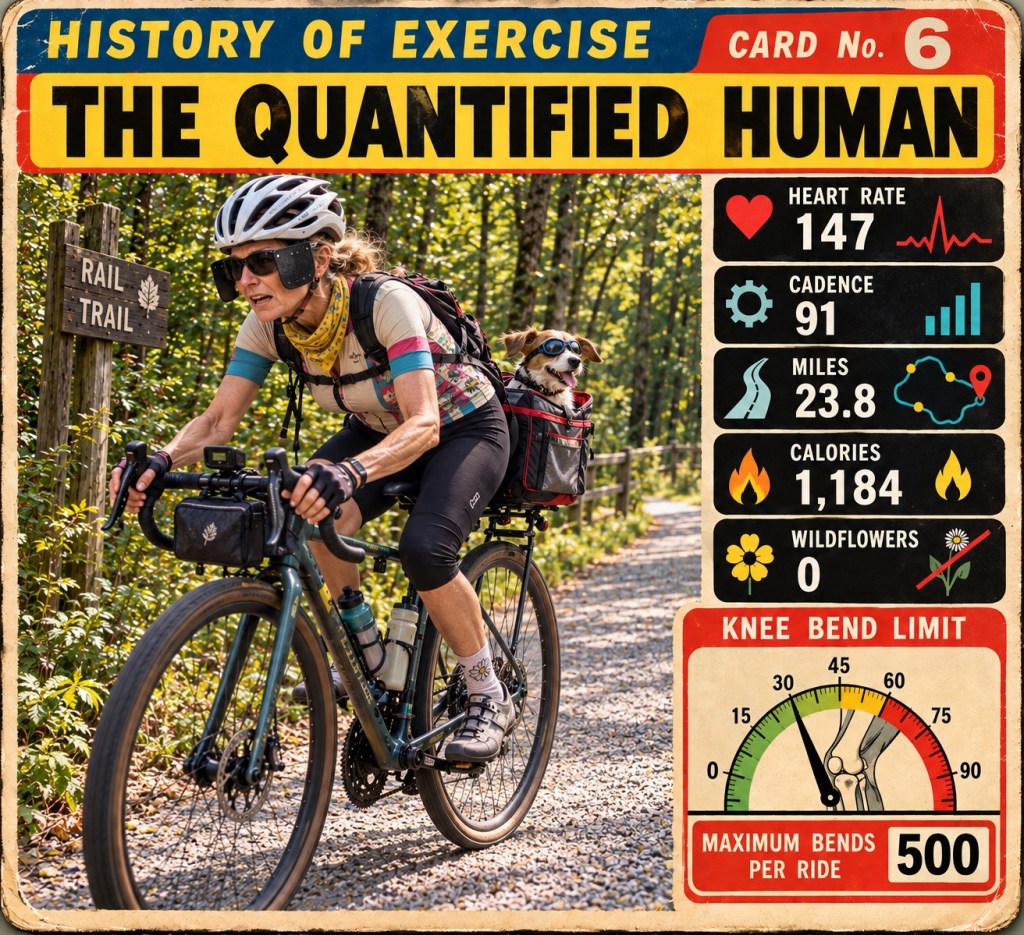
I have never quite been able to rid myself of the suspicion that a knee contains only so many bends. No physician has confirmed this. Neither, I would point out, has anyone completely disproven it.
We are finite creatures. Hearts beat, joints flex, cartilage wears, muscles weaken and eventually the entire apparatus is returned to its manufacturer without possibility of warranty repair. It has therefore always seemed curious to me that we deliberately accelerate portions of the machinery in hopes of keeping the machinery operating longer. We suspect it doesn’t always work out that way.
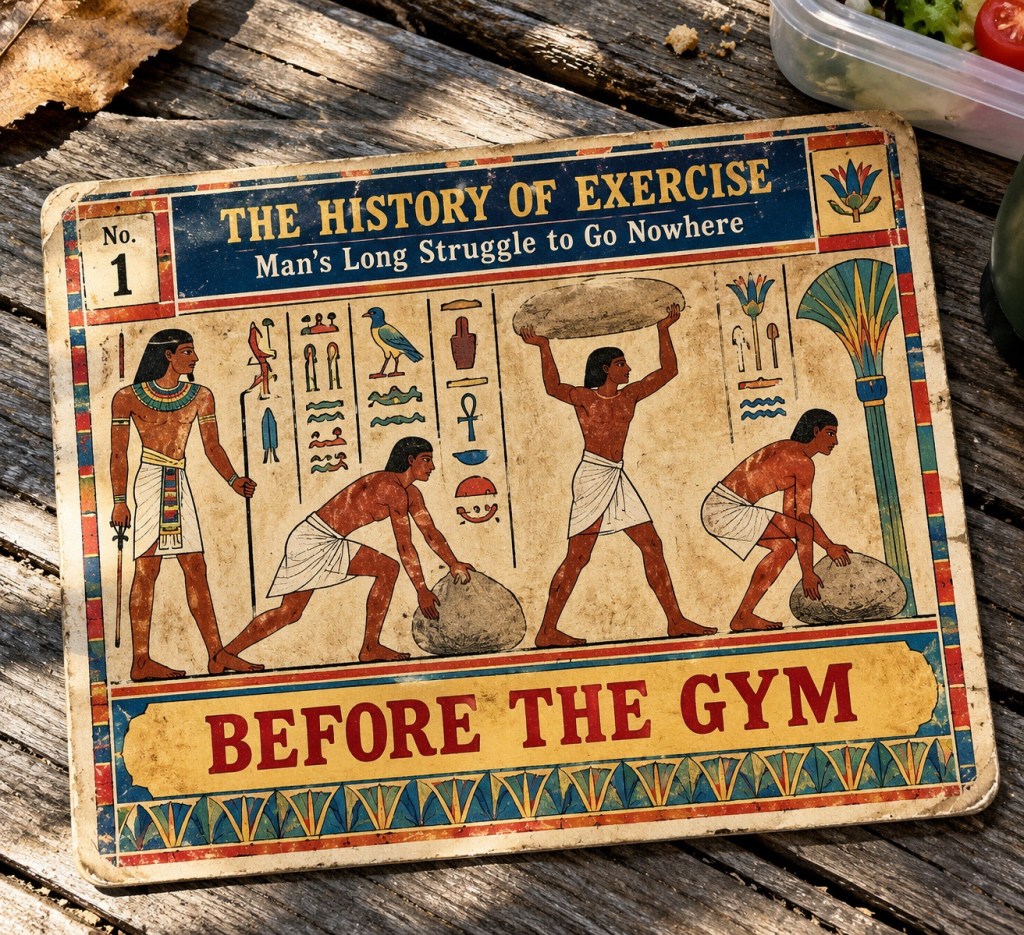
I know the answer. Exercise is good for us.
The evidence is annoyingly persuasive. Muscles require use. Hearts benefit from exertion. Bones and joints generally fare better with movement than without it. If you don’t use it, you lose it.
The Council accepts this.
We merely suspect that somewhere between use it and/or lose it there ought to be a Golden Mean.
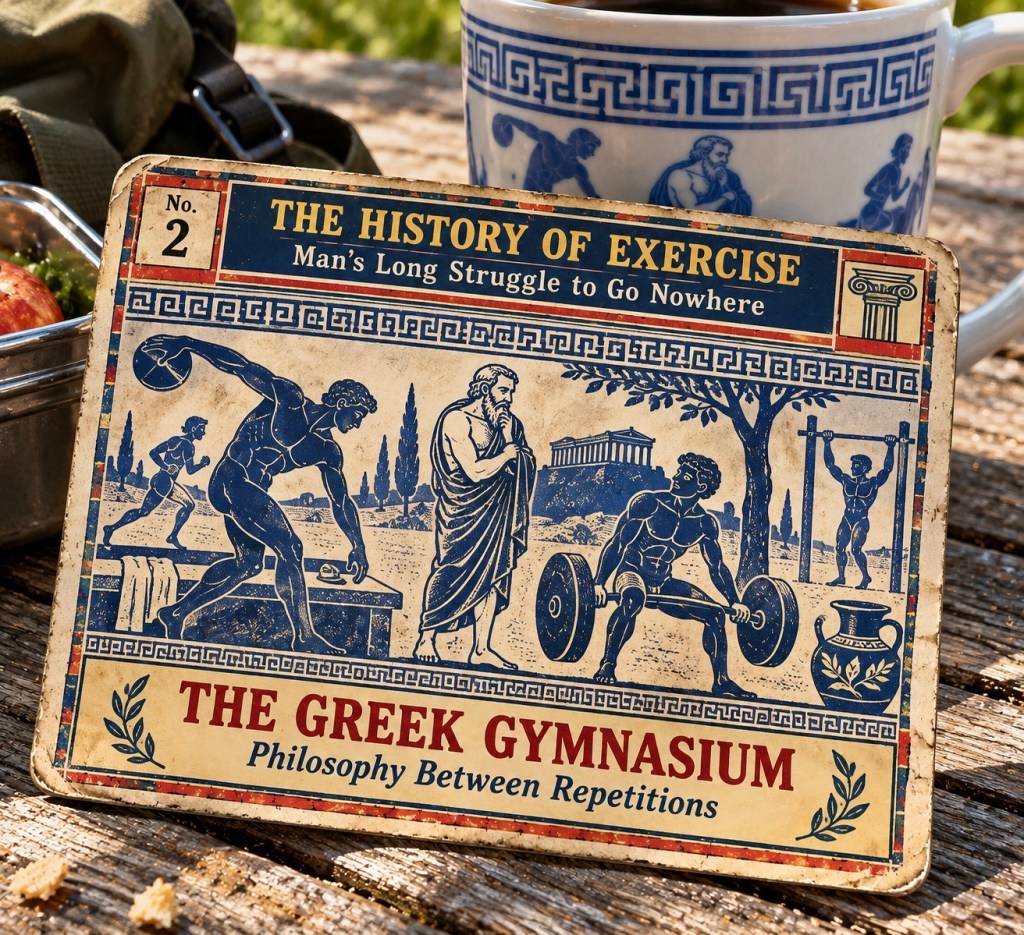
There was a time when most people got their exercise by doing something else. They walked because somewhere needed reaching. They lifted because something needed moving. They bent because something was down there.
My southern Italian ancestors had exercise incorporated into the architecture of daily life. For centuries they lived up the sides of mountains and walked down to tend their fields, then walked back up again. The high ground put them nearer dependable water, above the mosquito-ridden flats and in a more defensible position in a country whose coastal watchtowers still recall the days when Muslim raiders might arrive from across the Mediterranean.
Nobody came home from the fields and decided he ought to get in a little cardio. They had already climbed the mountain.
This strikes me as an admirable arrangement.
A walk through the woods needs no justification beyond the woods. Neither does gardening, climbing a hill, splitting firewood or wandering off to discover where a path goes. The body is being exercised, certainly, but as a consequence of living.
Exercise introduces a curious abstraction: movement undertaken for the purpose of becoming better able to undertake movement.
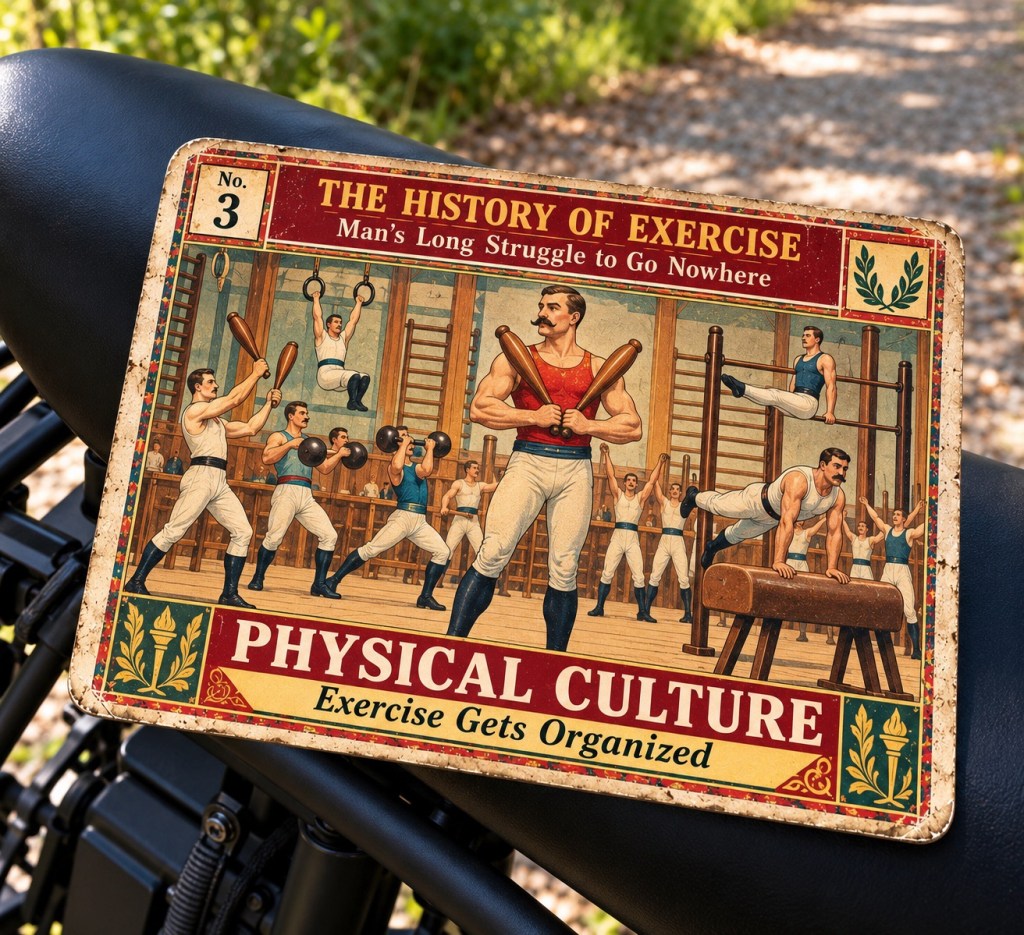
Eventually we improved upon the old arrangement. We invented machines upon which a man could walk several miles without getting any farther from where he started.
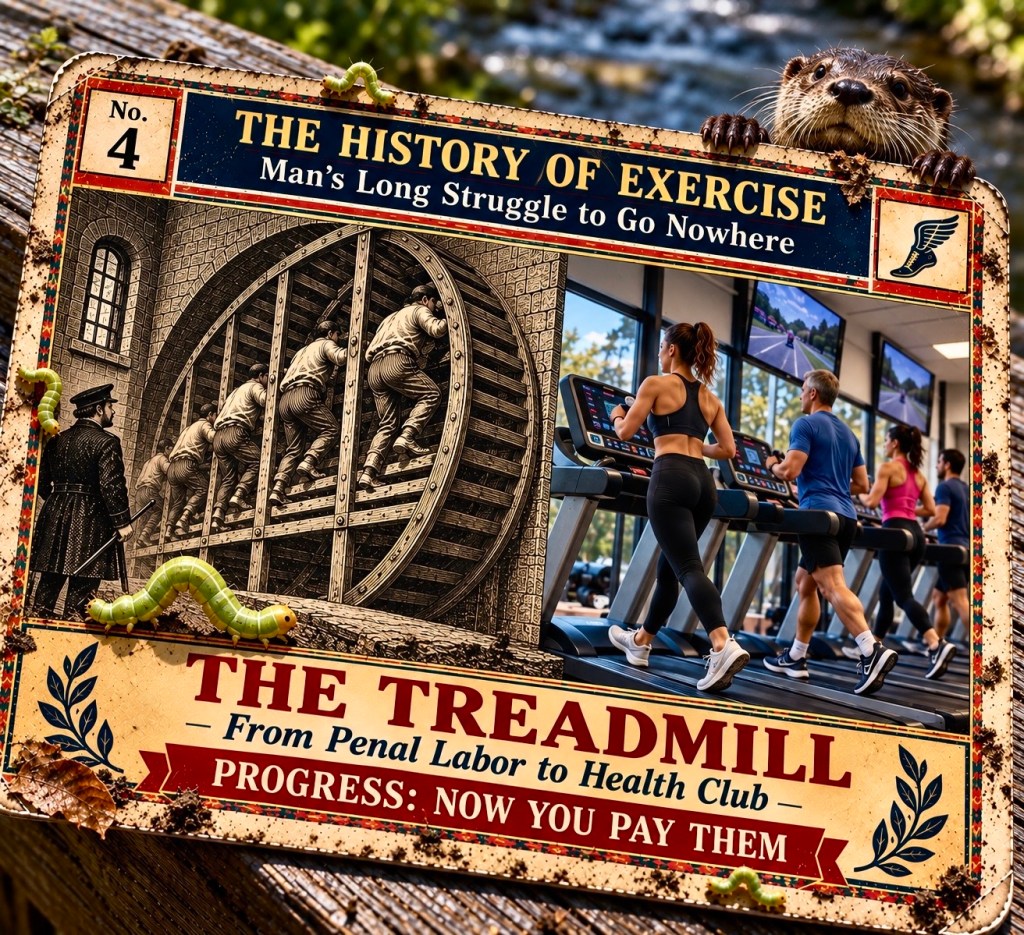
I find it difficult to improve upon history’s joke there, so I shall not try.
Still, the medical evidence insists that regular exercise tends to prolong life. Very well.
This raises what seems to me the more interesting question.
What is the prolonged life for?
I had occasion to consider the purpose of exercise recently while riding an old railroad grade that has been converted into a trail.
I should disclose that I was traveling by bicycle myself. Mine is electric, heavy and rather clumsy-looking, with shocks front and rear. I bought it principally for logging roads, where gravel gives way to ruts, rocks, fallen branches and the general refusal of the forest to provide a properly engineered recreational surface.
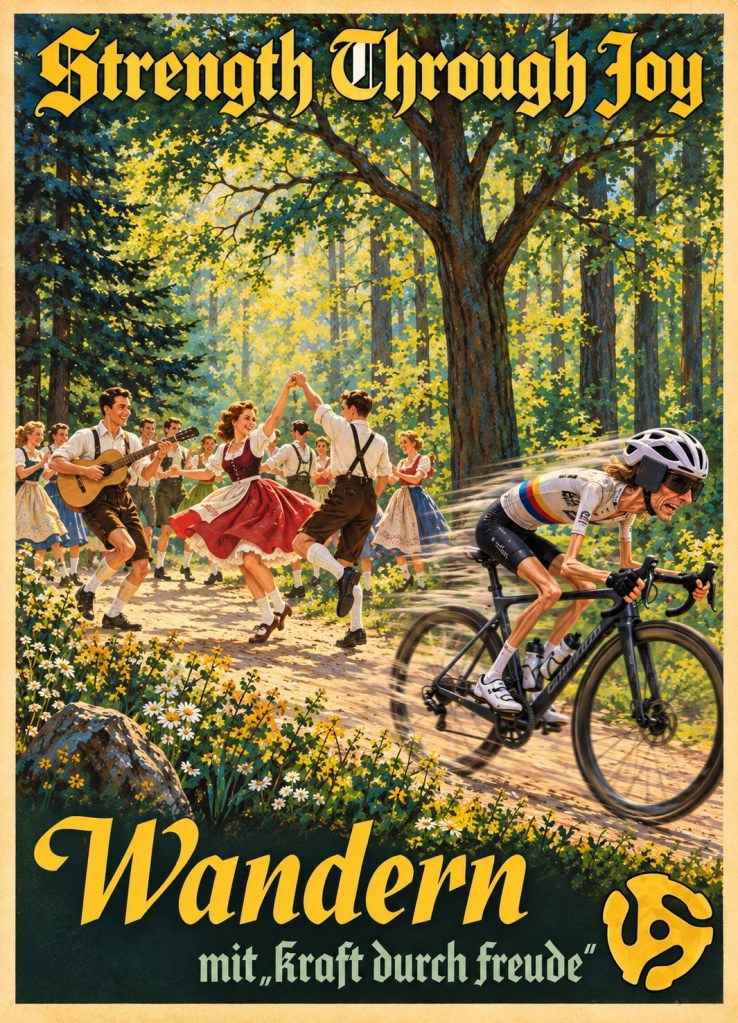
It bears little resemblance to the elegant machines I encounter on rail trails. Those bicycles seem to consist mainly of two enormous wheels connected by several pieces of linguine. Their riders have undergone much the same engineering process.
They arrive helmeted, streamlined and dressed for competition, although I have yet to determine with whom they are competing.
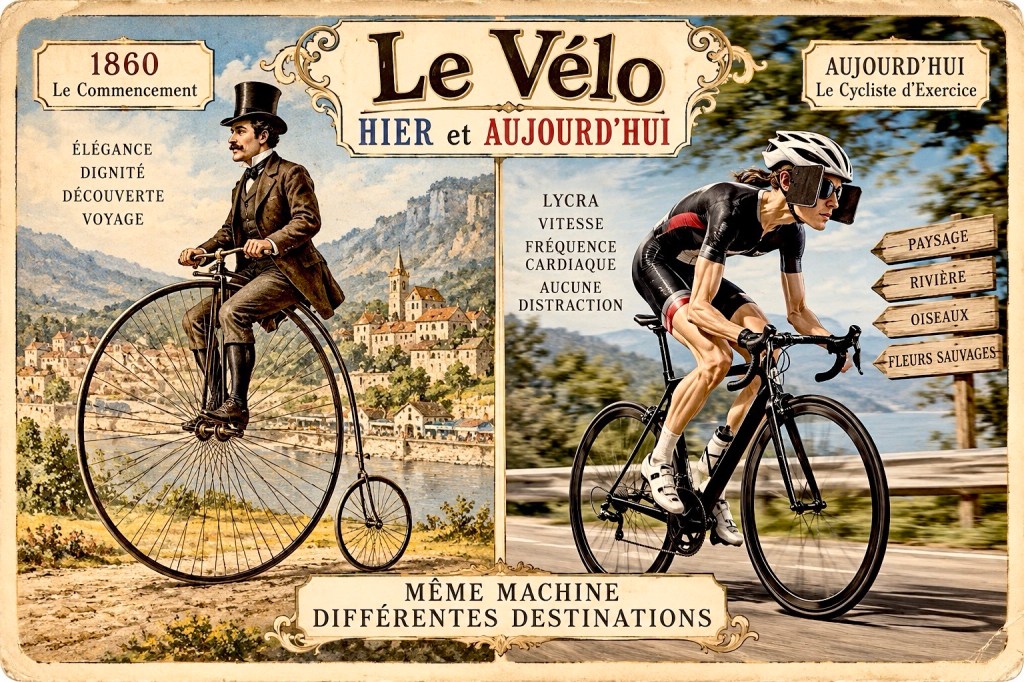
I don’t ride mine merely to get somewhere. I ride it to get somewhere so I can see or encounter something. This distinction may be philosophical rather than mechanical.
That day I stopped for lunch on a little wooden bridge. I had brought a salad with some meat in it, packed in a plastic container, and sat eating while watching the water pass underneath.
Earlier I had heard a tremendous roar coming through the woods on the other side of the river. For several seconds I took it for a fighter jet, perhaps rehearsing for the next invasion of somewhere.
Eventually I recognized it as a freight train. The roar continued until the train had gone wherever trains are still permitted to go. Later, halfway through my lunch, there came another sound.
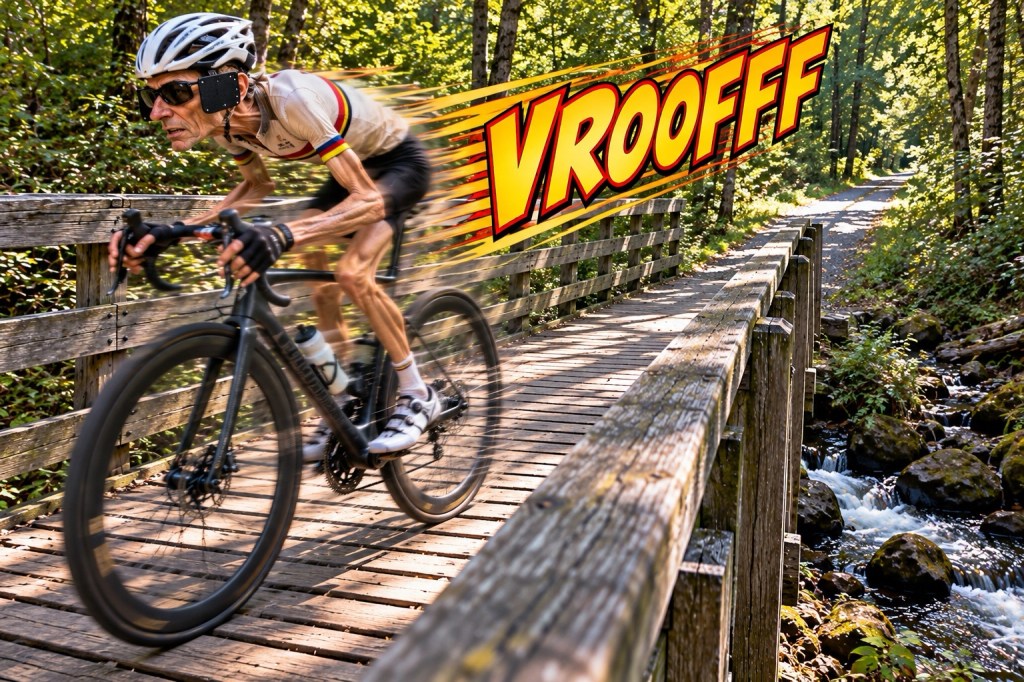
It lasted perhaps a second. I looked up, having no idea what had happened, and caught sight of a very small figure already disappearing down the trail.
A bicyclist. I didn’t hear him coming.
His tires crossing the wooden slats had announced his arrival and departure almost simultaneously. I had seen no face. He had seen, so far as I could tell, no bridge, no stream and very little of the country through which he had just passed.
There was something admirable about the amount of human effort being expended. I remained uncertain about the destination.
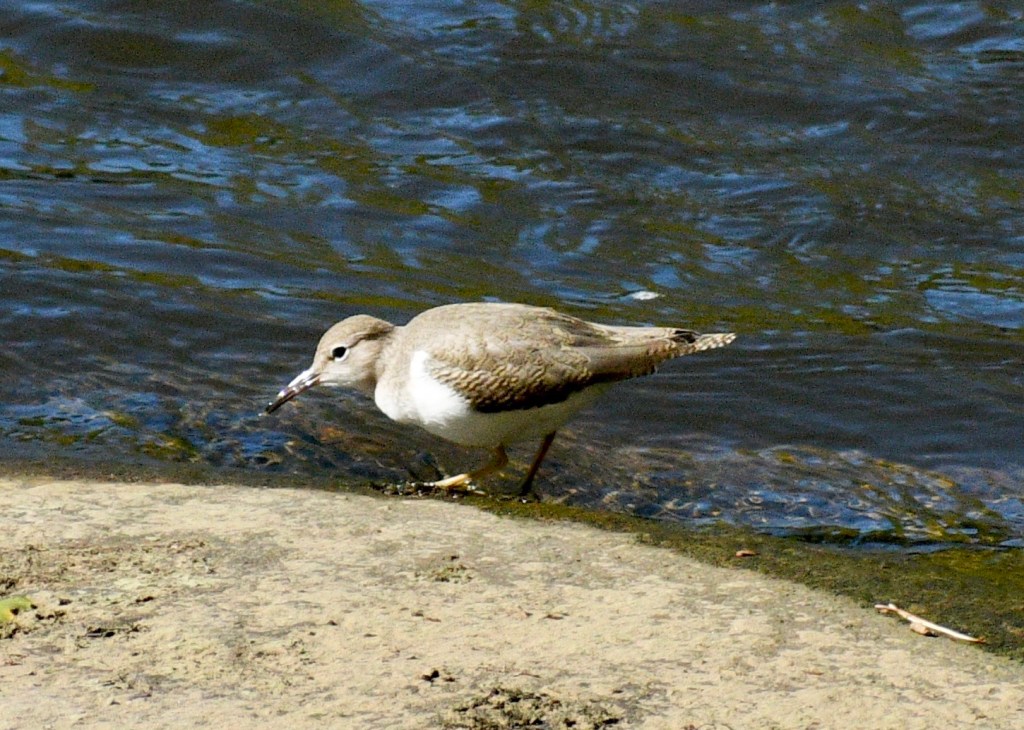
On my return I stopped along the river. Out on a rock was a spotted sandpiper.
It walked a few steps and bobbed its hindquarters up and down. Then it walked a little farther and did it again. And again.
I found myself chuckling at the performance and took out my camera.
Walkers passed. Bicyclists passed. I was rather obviously photographing something in the river and occasionally laughing at it. Nobody stopped. Nobody even seemed curious about what another human being had found worth looking at.
The sandpiper kept bobbing.
Later I looked up this peculiar behavior. Ornithologists don’t know why it does it. This pleased me enormously.
The bird begins doing it almost as soon as it hatches and continues performing this apparently unnecessary motion for reasons presently unknown to science.
Perhaps I had been unfair to the bicyclists. Perhaps the urge to expend energy in repetitive motion for no immediately apparent purpose is not peculiar to modern man after all.
Perhaps it is nature.
Then again, the sandpiper wasn’t wearing a heart-rate monitor.
Perhaps this is the Golden Mean the Council has been looking for. Not a prescribed number of miles, steps or minutes, but some distinction between maintaining life and making maintenance the purpose of life.
It is possible, I suppose, to become so occupied with extending one’s life that one neglects to live it.
The Council is not opposed to exercise. We merely prefer, whenever possible, that locomotion include going somewhere for a purpose intended or otherwise.
Walk because there is something worth seeing. Climb because there is something at the top. Bend down because something small has caught your attention.
As for me, I intend to remain reasonably active for as long as I am able. I simply don’t intend to exhaust myself in the attempt. There are, after all, only so many keystrokes in my fingers.
More Thinking Outside The Box Can Be Found: HERE


Leave a comment